
More

Newly Discovered Genes Are Linked To World's Biggest Killer

Heart Disease Gene

First Posted: 03/07/11 11:51 AM ET Updated: 05/25/11 07:35 PM ET

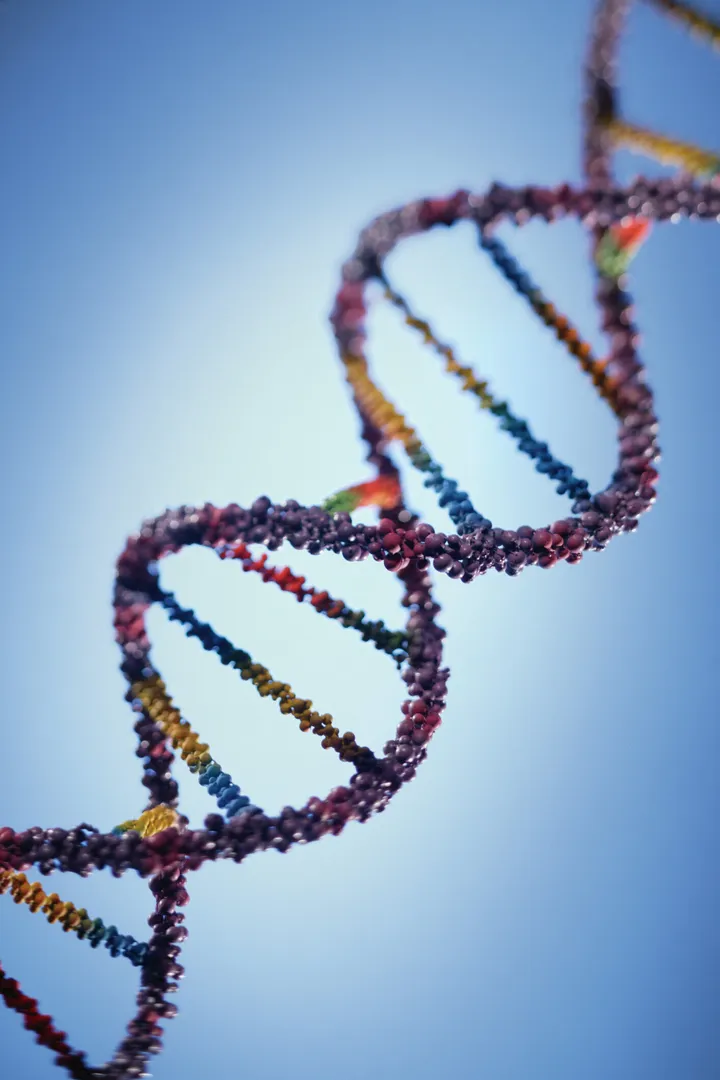
Scientists have found 13 new gene variants that increase a person's risk of developing heart disease, the world's number one killer, in a series of large-scale international genetic studies.

The discovery of 13 previously unknown gene variations and the confirmation of around 10 more should offer clues about how heart ailments such as coronary artery disease develop, and lead to new and more effective treatments, the researchers said.

The findings also suggest it may be worth mapping someone's profile of genetic variants for heart problems as part of routine clinical care in the future, with an eye to being able to offer more personalized prevention or treatment plans.

"With such information we should be able to better identify people at high risk early on in life and quickly take the steps to neutralize that excess risk," said Themistocles Assimes of Stanford University School of Medicine in the United States, one of many scientists across the world who worked on the study.

"Although we are inching closer to that day, we will probably need to reliably identify many more variants ... over the next few years before it becomes useful to perform this genetic profiling in a doctor's office."

According to the World Health Organization (WHO), cardiovascular diseases are the world's largest killers, claiming 17.1 million lives a year. Billions of dollars are spent every year on medical devices and drugs to treat them.

Lifestyle factors such as smoking, drinking alcohol, unhealthy eating and a lack of physical exercise are known to increase the risk of heart attacks and strokes, but scientists also have been examining DNA maps to find genes that may also put people at higher cardiovascular risk.

For this study, published along with two additional papers on heart disease risk variants in the journal Nature Genetics on Sunday, an international consortium analyzed data from 14 previous so-called genome-wide association studies, which scan people's genetic profiles.

Investigators examined the complete genetic profiles of more than 22,000 people of European descent with coronary heart disease or a heart attack history and 60,000 healthy people -- making this study close to 10 times bigger than the next largest whole-genome study to date.

Combining data from multiple studies is critical to finding gene risk variants, as the genetic architecture of heart diseases is very complex.

"The signals from these gene regions are all rather subtle, making large-scale collaborations a prerequisite for any meaningful progress," Assimes said in a statement.

Researchers said their results showed that of the total of 23 variants now known, seven are linked with levels of "bad" or LDL cholesterol and one is linked with hypertension, or high blood pressure -- both known risk factors for heart disease.

But the others have no relation to known cardiovascular risk factors -- a finding the scientists said opened up new opportunities for future research and discovery.

"The lack of apparent association with the risk factors we know so well is the source of a lot of excitement concerning these results," said Sekar Kathiresan of Massachusetts General Hospital in the United States, who worked on the study.

"If these variants do not act through known mechanisms, how do they confer risk for heart disease? It suggests there are new mechanisms we don't yet understand."

(Editing by Michael Roddy)

Copyright 2011 Thomson Reuters. Click for Restrictions.

FOLLOW HUFFPOST HEALTH

Scientists have found 13 new gene variants that increase a person's risk of developing heart disease, the world's number one killer, in a series of large-scale international genetic studies. The di...
Filed by Nicholas Miriello  | 
 
 
  • Comments
  • 18
  • Pending Comments
  • 0
  • View FAQ
Comments are closed for this entry
View All
Favorites
Recency  | 
Popularity
HUFFPOST SUPER USER
onionboy
Blessed are the Cheese Makers
04:26 PM on 03/11/2011
Oh, dang. They meant "gene".

I was hoping they meant "Gene". I was like, yeah! Siskel & Ebert are back, baby.
photo
HUFFPOST SUPER USER
Max Shaw
My micro-bio is no longer empty.
04:15 PM on 03/11/2011
Great...you wanna tell me what those genes are??
HUFFPOST SUPER USER
ddanimal
01:02 AM on 03/08/2011
This is news? Genes are linked to every disease.
This user has chosen to opt out of the Badges program
12:55 AM on 03/08/2011
Great news, now insurance companies can use this data to cut millions from their rolls and make greater profits for their share holders.
photo
HUFFPOST SUPER USER
Dustin Rudolph
Clinical Pharmacist & Certified Nutritionist
12:07 AM on 03/08/2011
Regardless of what your genes are heart disease can be prevented and reversed by adhering to a 100% nutrient dense, plant-based diet with no processed foods or oils. And keeping your fat intake to less than 15% of your total calories. It's articles like these that keep people thinking they are "victims" to heart disease but really we all have so much more control over our own destiny.
HUFFPOST SUPER USER
ddanimal
01:03 AM on 03/08/2011
Fat less than 15%? Thats complete nonsense.

Some types of fat are essential, and high fat diets do not cause heart disease, if transfats and oxidized fats are avoided.

Also, animal fats contain essential nutrients, like vitamin K2, that prevent heart disease.
photo
HUFFPOST SUPER USER
Dustin Rudolph
Clinical Pharmacist & Certified Nutritionist
09:15 AM on 03/08/2011
You have a great point with trans fat but take a look at Dr. Esselstyn's work. He's published many studies reversing severe coronary heart disease by putting his patients on a low fat diet (less than 15%) - http://fb.me/vsPo9e28
HUFFPOST SUPER USER
odyssey58
09:28 AM on 03/08/2011
I tried that and I was miserable. I was tired, fat and hungry all of the time. Atkins works for me.

But you're right; we do have control over our own destiny. But your method of control doesn't work for everyone.
This user has chosen to opt out of the Badges program
photo
10:13 PM on 03/07/2011
from the article: "The findings also suggest it may be worth mapping someone's profile of genetic variants for heart problems as part of routine clinical care in the future, ....."

geeze wouldn't insurance companies love that. denied coverage!
photo
WoodsideCraig
Author of the blog "The Weiler Psi"
08:45 PM on 03/07/2011
Universal Health Care first. Then let's talk about medical miracles.
photo
HUFFPOST SUPER USER
Dragun
Memento Mori
02:22 PM on 03/07/2011
Interesting research and theory. Pros and cons to the end results/usage.
I would suggest Mr.Cheney would instead suffer from a "heart two sizes too small" rather than one with genetic tendencies for failure....
02:22 PM on 03/07/2011
Intervene with natural selection and our gene pool further pollutes. Our solution: we "experiment" on other animals to remedy our pollution. This plays humanity against itself.

When we put precedence to "human law" over "natural law" we will lose. Nature intended this to be a self-cleansing pool. It sounds harsh but it is the reality of life.

Don't smoke; drink alcohol in moderation, eat "nature's food" not "human processed food" and exercise. This is natures way.
photo
ThreadKiller
It's too bad that ignorance isn't painful
01:46 PM on 03/07/2011
Another way for insurance companies to screen and exclued anyone who might actually need the services the "provide"
photo
HUFFPOST SUPER USER
drkazmd65
Mom Taught me - Question Everything - Thanks Mom!
02:38 PM on 03/07/2011
Sadly - I can easily see results of these 'preventative' screenings being added to a list of 'preexisting conditions' for which you can be labled as a high-risk case.
cdianek
An antibiotic-resistant micro-bio
05:10 PM on 03/07/2011
Since genetic research has made such advances I've worried about this too. I believe it's necessary research, but, if allowed, insurers are definitely going to use it to line their own pockets by denying coverage, or dropping coverage at a later time.
jokerdanny
my other bio is a macro
12:38 PM on 03/07/2011
seriously, i thought the number one killer in the world was diarrhea?
HUFFPOST COMMUNITY MODERATOR
johnqpublik
01:41 PM on 03/07/2011
Actually laughing to death is the number one killer.
photo
HUFFPOST SUPER USER
WhatDaBleep
Left is Right and Right is Wrong
12:38 PM on 03/07/2011
And wouldn't you know it - both bush and cheney have 15 of these genes!