iPhone app iPad app Android phone app Android tablet app More

Government Releases Food Desert Locator


First Posted: 05/03/11 01:00 PM ET Updated: 07/03/11 06:12 AM ET

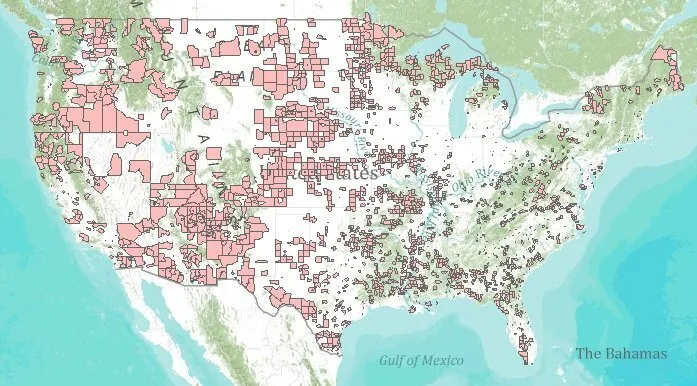
The USDA has launched a food desert locator that indicates areas in which there is low access to supermarkets or other sources of fresh food.

About 10 percent of the 65,000 U.S. census tracts are food deserts, containing 13.5 million people, 82 percent of whom live in urban areas. On the food desert locator website, areas in red are considered food deserts. They are more heavily concentrated in the midwest and toward the west coast of the United States. One can zoom in very close, to identify areas within counties that are considered food deserts. Downloadable spreadsheets and search-by-address features are also included.

This initiative has been encouraged by Michelle Obama as part of her "Let's Move!" anti-obesity campaign. She has previously voiced her desire to eliminate food deserts within the next seven years.

FOLLOW HUFFPOST FOOD

Filed by Carey Polis  |  Report Corrections
 
 
  • Comments
  • 12
  • Pending Comments
  • 0
  • View FAQ
Comments are closed for this entry
View All
Favorites
Recency  | 
Popularity
photo
HUFFPOST SUPER USER
Heidi Hoerman
01:39 PM on 05/06/2011
I wonder about their selection criteria, too. I live in one of the identified tracts yet we have numerous competing stores from three different supermarket chains plus a big box supercenter and an off-label grocery place. There are also seasonal farm stands. So I really don't get it. Yes, many of us are more than a mile away but zoning clusters the stores on the main drag and keeps them out of the housing developments.
Oginikwe
I think therefore I'm dangerous
10:23 AM on 05/05/2011
What this didn't take into account is how many people grow much of their own food. We are in a food desert but we grow 75% of our own food and we feed other people as well. A grocery store or Walmart isn't the only place to get food.
HUFFPOST COMMUNITY MODERATOR
JScott
John Galt's last name is McGuffin-Smithee
11:26 AM on 05/04/2011
Wonder if this is really all that correct-'the food deserts' in so cal. seem to me mostly located where no one lives anyway or almost no one lives-aka industrial areas, military installations and ports.
This user has chosen to opt out of the Badges program
02:37 AM on 05/06/2011
not really. In the heavily populated San Fernando Valley, the city council has increased density so that once pleasant and desirable areas like Studio City are now instant overcrowded neighborhoods with no parking, inadequate infrastructure and the same number of grocery stores that once served a small town now expected to service a popultion of hundreds of thousands.....poor planning is creating tenements....
HUFFPOST SUPER USER
rightasrain
06:17 AM on 05/04/2011
I knew there were areas that had little habitation in the West and expected exactly what I saw. It isn't feasable for a food chain to open a facility there. But in areas of large populations, I am truly shocked to see them considered "food deserts".
This user has chosen to opt out of the Badges program
02:37 AM on 05/06/2011
land has become too scarce and expensive....
photo
HUFFPOST SUPER USER
LaurieAnn
Charity is NOT a substitute for justice.
01:48 AM on 05/04/2011
Very interesting.  My San Joaquin Valley County is on this map.  Guess what our highest grossing industry is:  yep, agricultural commodities.
This user has chosen to opt out of the Badges program
02:38 AM on 05/06/2011
cotton....gimme a cotton san to go.
photo
HUFFPOST SUPER USER
LaurieAnn
Charity is NOT a substitute for justice.
10:29 AM on 05/06/2011
:chuckle:
09:17 PM on 05/03/2011
I like the idea, but I think it may need some tweaking, maybe along the lines of average incomes in the tracts, presence of farmers markets, etc.

"To qualify as a 'low-access community,' at least 500 people and/or at least 33 percent of the census tract's population must reside more than one mile from a supermarket or large grocery store (for rural census tracts, the distance is more than 10 miles)."

In some areas, a mile from the store would be huge, in others, not so much, depending on the relative income of the residents, how much space individual housing takes up (standard 1/10th acre lot for family of four vs multiplexes and apartments) and whether or not they depend on public transportation. It shows much of the city I live in, including some wealthy areas, to be deserts, but then some rural areas not.
photo
HUFFPOST SUPER USER
frank day
Obama cares about all of U.S.
04:45 PM on 05/03/2011
Very interesting.

Especially how many of the food deserts are in agricultural areas.

Monocropping food like corn in Iowa can leave even farm families lacking in food.
photo
HUFFPOST SUPER USER
Finnegans Wake
riverrun, past Eve and Adam's, from swerve of shor
03:25 PM on 05/03/2011
Great idea, not sure if the execution is there.

"The USDA has launched a food desert locator that indicates areas in which there is low access to supermarkets or other sources of fresh food."

Well, I've spotted some counties nearby where supermarkets are more scarce, but farms are plentiful, and you can get the very freshest produce and meats and dairy.

Are supermarkets always the best supplier of nutritious foods, considering how many processed and refined foods they also sell?

Perhaps if there were separate breakouts for supermarkets and farm-to-consumer locations, this would be a more cogent map.