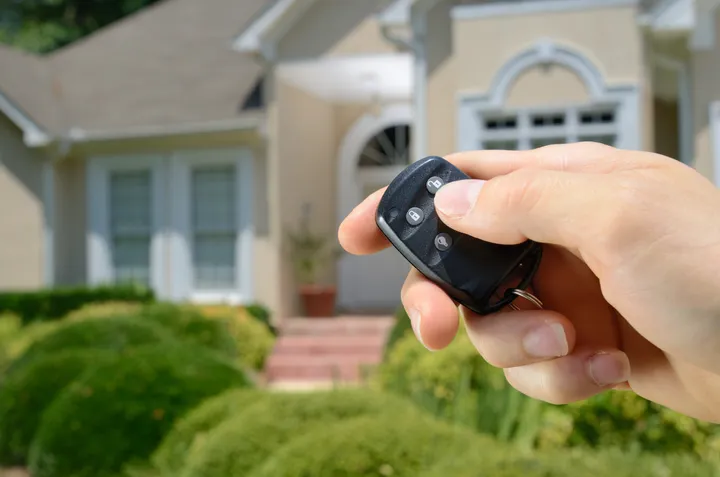
As design technology progresses to the point of enabling inanimate objects with Wi-Fi, we're bound to see some highly intelligent houses popping up. Automated lights, curtains and home entertainment systems have been on the market for a while, but recently, tech companies around the world have debuted advanced home technology from Wi-Fi-enabled pavement to tweeting refrigerators.
Though we certainly have the capability of producing a house filled to the brim with tech gadgets, very few have actually put forth the effort to tie all of these devices into one property. Instead, there's a growing trend to develop smart homes with a focus on energy and health.
Honda revealed a test smart home system in Japan this month that controls energy usage. Solar cell panels and a rechargeable battery power the house, while a management device monitors the total power supply.
Washington State University's professor Diane Cook foresees smart houses going a step beyond energy control and monitoring resident's well being as well.
"In the home, the idea is that computer software, playing the role of an intelligent agent, perceives the state of the physical environment, reasons about this state using artificial intelligence, and then takes actions to achieve specified goals, such as maximizing comfort of the residents and maintaining health and safety," Cook wrote in an article recently published in Science.
Through ambient intelligence, appliances and devices in homes would be equipped with microprocessors in order to respond to human motions. One day, when technology advances to such a degree, these sensors may even be able to pick up on human emotion.
Aside from well being, smart houses can also be used to access health and hygiene.
Val Curtis of the London School of Hygiene and Tropical Medicine uses her smart house as a testbed for her research. Curtis wears a wrist monitor that corresponds with similar sensors placed on appliances and objects around the house so that she can digitally track hygiene habits. For example, the system monitors when Curtis, or one of her family members, brushes their teeth with sensors on the toothbrush holder and toothpaste.
Though smart home are popping up all over the world, it will likely take some time before we see a home fully controlled by artificial intelligence like the fictional smart house SARAH -- Self Actuated Residential Automated Habitat -- in Syfy's "Eureka."
One day almost everything in our homes will be automated and controlled by speech or gesture, but until that time, check out the gallery below to see our vision of what to include in the ultimate smart house today.
