The word "allergy" did not even exist a century ago, and yet, respiratory allergies today are the 5th leading chronic disease in the U.S. and are the 3rd most common chronic disease among children under 18 years old. [1] It has been estimated that one in seven Americans had a respiratory allergy in 1950, but one in four have one now.
To those of us who do not believe in coincidences, it is not surprising that my father was a physician who specialized in allergy. Allergy is the medical specialty that commonly uses small doses of an allergen in order to desensitize a person to that allergen. This concept of using small doses of what might cause a problem in order to help prevent or heal the person is an ancient observation of healers/physicians all over the world, and it is the basis for a type of natural medicine called homeopathy.
It is therefore not surprising that one of the three physicians who founded the American AcadeÂmy of Allergy was a San Francisco homeopathic physician, Dr. Grant L. Selfridge. [2] Another small and forgotten footnote in medical history involves a homeopathic physician from Scotland, C.H. Blackley, who in 1871 was the first physician to identify pollen as the cause of hay fever. [3]
Although homeopaths have a history of being at the forefront of medical research and discovery, it is particularly appropriate and even predictable that they would lead the way in the field of allergy. Because the primary principle of modern allergy treatment derives from the homeopathic principle of "treating like with like," the spirit of homeopathy has lived on, despite the tendency of orthodox physicians to ignore it.
Research in Leading Medical Journals
Respiratory allergies represent the condition for which there is a relatively strong research base for efficacious treatment with homeopathic medicines. A group of researchers at the University of Glasgow published four studies, three of which were published in the BMJ (British Medical Journal) and the Lancet, two highly respected medical journals. Each study was randomized, double-blind, and placebo-controlled. Each trial used an oral 30C homeopathic preparation. The first two trials involved patients with hay fever, [4] [5] where patients were either give a placebo or homeopathic doses of 12 common flowers to which people are allergic.
The third trial involved patients with asthma, where patients underwent conventional allergy testing to determine to what substance they were most allergic. [6] Half of the patients were given a placebo and half were given a homeopathic dose of the substance to which they were most allergic (the most common allergen was "house dust mite" and thus, these patients were given House Dust Mite 30C).
The fourth study was the treatment of patients suffering with perennial allergic rhinitis (a broad technical term for respiratory allergies that are not seasonal). [7] Like the previous study, half of the patients were given a placebo, while the other half was given a homeopathic dose of whatever substance the person was most allergic. The patients given the homeopathic medicine experienced significant improvement in nasal inspiratory flow comparable with the improvement typically experienced by patients given steroidal drugs...without side effects!
When evaluating all four trials together (there were 253 patients in all of their clinical trials), there was a 28 percentimprovement in homeopathic subjects versus a 3 percent improvement in placebo subjects.
Following in the footsteps of the above research, a 4-week, double-blind clinical trial comparing homeopathic preparations with placebo was conducted in the Phoenix metropolitan area during the regional allergy season from February to May. [8] The treatment group was given a homeopathic preparation (6X) of common allergens in the Southwest region of the U.S. Participants included 40 men and women, 26-63 years of age, diagnosed with moderate to severe seasonal allergic rhinitis symptoms.
In addition to the above research, a group of German researchers conducted annual controlled clinical trials using a single homeopathic medicine (Galphima glauca) on over 1,000 hay fever subjects. The last six clinical trials were randomized, double-blind, and placebo-controlled. These studies consistently showed benefits from this homeopathic treatment as compared with those patients given a placebo. [9]
It should be acknowledged that not all research has confirmed success in the treatment of respiratory allergies using homeopathic medicines. For instance, one study tested homeopathic doses of birch trees to treat people with birch tree allergies, but such treatment was not any more effective than a placebo. [10]
Specific Treatment Options
What this research suggests is that homeopathic medicines provide an often effective and extremely safe means of treatment for patients with respiratory allergies. Further, due to the widely recognized safety of homeopathic medicines, it makes sense to consider safe methods before resorting to more risky treatments. There are specific treatment options using homeopathic medicines that people can consider:
1) Follow the studies of the Glasgow researchers and use conventional allergy testing to determine to what you are allergic and then take the 30C dose of this substance (these products are available through select homeopathic pharmacies).
2) Two of the Glasgow studies involved subjects with hay fever, and these studies used a combination homeopathic medicine that included flowers to which the patients were allergic. People might consider prescribing a homeopathic medicine that contains many of the common flowers to which the hay fever subject is sensitive (most health food stores have homeopathic combination remedies that include such ingredients).
3) People with hay fever could consider taking Galphimia glauca 3X, 4X, 4C, or 6C as long as hay fever symptoms persist, or use a homeopathic combination remedy in which this remedy is an ingredient.
4) People with allergies could consider prescribing an individualized single homeopathic medicine as recommended in various homeopathic acute care guidebooks. [11] Individualizing a homeopathic medicine to a specific person and his/her unique syndrome of symptoms is the preferred method of "classical homeopathy" and has a long-time history of significant success.
Generally, these treatment options provide safe and effective care for patients suffering from respiratory allergies, but it is uncertain how long-term the therapeutic benefits will last. It may be necessary to refer the patient to a professional homeopath who will prescribe a homeopathic constitutional medicine that is, a remedy that is highly individualized to the patient genetic makeup, personal health history, and totality of physical and psychological symptoms. Clinical experience commonly observes more long-term results.
Skeptics commonly assert that homeopathic medicines comprise of too small of a dose to have any effect, and yet, there have been 200+ clinical trials that have evaluated homeopathic treatment, most of which found positive results from homeopathic medicines. Although it is not presently known with certainty how homeopathic medicines work, conventional medicine has a long history of using treatments for which they didn't understand but that worked anyway.
Future blogs will discuss more clinical research, some modern theories about how and why homeopathic medicines work. I also plan to discuss why so many of the most respected cultural heroes since the early 19th century have used and/or advocated for homeopathy, including 11 U.S. Presidents, two British prime ministers, six popes, and many of the most respected physicians, scientists, literary greats, corporate leaders, heads of state, sports superstars, musical and artistic geniuses, women's rights leaders, and clergy of the past 200 years.
REFERENCES:
[1] Allergy and Asthma Foundation of America
[2] Cohen SG. The American Academy of Allergy: a historical review. J Allergy Clin Immunol 1979;64: 332-333.
[3] Reilly D, Taylor MA, McSharry C, Aitchison T. Is homoeopathy a placebo response? Controlled trial of homoeopathÂic potency, with pollen in hayfever as model. Lancet October 18, 1986; ii: 881-886.
[4] Reilly, DT, Taylor, MA, Potent placebo or potency? A proposed study model with initial findings using homoeopathically prepared pollens in hayfever, British Homoeopathic Journal 1985,74:65-75.
[5] Reilly D, Taylor MA, McSharry C, Aitchison T. Is homoeopathy a placebo response? Controlled trial of homoeopathÂic potency, with pollen in hayfever as model. Lancet October 18, 1986; ii: 881-886.
[6] Reilly, DT, Taylor MA, Beattie NGM, et al, Is evidence for homoeopathy reproducible? Lancet 1994,344:1601-1606.
[7] Taylor MA, Reilly D, Llewellyn-Jones H, McSharry C, Aitchison TC, Randomised controlled trial of homoeopathy versus placebo in perennial allergic rhinitis with overview of four trial series, BMJ August 19, 2000,321:471-476.
[8] Kim LS, Riedlinger JE, Baldwin CM, Hilli L, Khalsa SV, Messer SA, Waters RF. Treatment of seasonal allergic rhinitis using homeopathic preparation of common allergens in the southwest region of the US: a randomized, controlled clinical trial. Ann Pharmacother. 2005 Apr;39(4):617-24.
[9] Wiesenauer M, Ludtke R, "A Meta-analysis of the Homeopathic Treatment of Pollinosis with Galphimia glauca," Forsch Komplementarmed., 3(1996):230-234.
[10] Aabel S. Prophylactic and acute treatment with the homeopathic medicine Betula 30C for birch pollen allergy: a double-blind, randomized, placebo-controlled study of consistency of VAS responses. Br Homeopath J 2001;90:73-78.Â
[11] Cummings S, Ullman D, Everybody's Guide to Homeopathic Medicine, New York: JP Tarcher/Putnam, 2004.
>
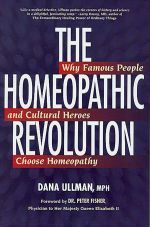
Dana Ullman, MPH, is America's leading spokesperson for homeopathy and is the founder of Homeopathic.com He is the author of 10 books, including his bestseller, Everybody's Guide To Homeopathic Medicines His most recent book is, The Homeopathic Revolution: Why Famous People and Cultural Heroes Choose. Dana lives, practices, and writes from Berkeley, California.
Follow Dana Ullman on Twitter: www.twitter.com/HomeopathicDana
Dana Ullman: How Scientific Is Modern Medicine Really?
Homeopathy - Wikipedia, the free encyclopedia
North American Society of Homeopaths
National Center for Homeopathy - Home Page
How To Create Your Own Pandemic: Infectious Creativity Used By Big Pharma
Homeopathy interactive discussion Friday
Homoeopathy is .......less than superb
I have to say it's been the greatest blessing of my life. Without homeopathy I would not have had a second chance at life after sustaining two head injuries (and I have a study showing it's efficacious for head injuries). But that isn't really accurate either. Homeopathy did not just give me a second chance at life (survival), it gave me a good and satisfying life. (You've already commented about my mind being "boggled with the wrong things" so no need to go there again.)
If you tried homeopathy, you would discover the magic it works for yourself.
Thank you for sharing.
Homeopathy Works
http://homeopathyworks.net
1) The report by GUNA: Homeopathy the Scientific Proofs, providing studies proving that homeopathy works beyond placebo. See: www.atms.com.au/Homeopathy the scientific proofs of efficacy.pdf
2) Many studies and clinical work evidencing for homeopathy at www.NationalCenterForHomeopathy.org
One study of particular interest is "Long Term Results of a Cohort Study with 3,981 Patients", Witt, Ludtke, Bauer, Willich. Additionally, a study of the benefits of homeopathy in treating fibromyalgia concluded "Disease severity and quality of life demonstrated marked and sustained improvements following [the] homeopathic treatment period." See www.ncbi.nlm.nih.gov/pubmed/16266440.
It is impossible to logically or rationally deny the benefits of homeopathy after looking at all the evidence coming from around the world of its successful treatment of serious, chronic diseases (for cured cases google cured cases homeopathy), acute illnesses, treatment of injuries and success in epidemics both preventative and in treating existing cases.
The following link has some excellent articles on homeopathy:
http://www.hpathy.com/papersnew/
We are discovering that homeopathy works in a dual time continuum. It involves quantum physics and material chemistry. We are learning more about it every day.
I live in an area with a high incidence of swine flu. A young man came down with it recently, as confirmed by his family doctor. After taking a combination of three anti-inflammatory homoeopathics, he recovered within a day. Another acquaintance, a sceptic, didn't try the formula. He was off from work for a whole week.
Will that ever convince some people here? Perhaps not. They want the gold plated study. Who cares?
"The word 'allergy' did not even exist a century ago, and yet, respiratory allergies today are the 5th leading chronic disease in the U.S. and are the 3rd most common chronic disease among children under 18 years old."
Is the author implying allergies didn't exist a century ago? http://www.allergyclinic.co.nz/guides/39.html
A few paragraphs later "Although homeopaths have a history of being at the forefront of medical research and discovery, it is particularly appropriate and even predictable that they would lead the way in the field of allergy." I'm calling major b.s, forefront of getting money from people without having to study to be an actual medical doctor and give professional care.
1902 – Charles Richet and Paul Portier invented the word 'anaphylaxis'
1906 – Austrian Pediatrician Clemens von Pirquet first used the word 'allergy'
The article said "The word "allergy" did not even exist a century ago"
Based on that, the author was wrong. A century ago would be 1909. As you state, the word was coined before that.
How do we know the vaccine is safe.?
Answer: All 4 US vaccines have at least 2 years of US use.(2007-2008 and 2008-2009) . An examination of adverse event reports and more active monitoring proved those vaccines safe in millions of uses. That's the best way to know that this year's vaccine is safe.
Vaccines get approved in 2 ways: Either as a new vaccine. Or as with all US vaccines as a strain virus chain approval. Make the vaccine the way you did last time and produce the same vaccine as you did last time, except use a different virus strain, A/California/7/2009 (H1N1)v
The only substantial difference this time for all 4 US and 1 Canadian vaccine's was: "[T]he discovery that virus yields were lower for the H1N1 vaccine than for seasonal flu vaccines - one dose of swine flu vaccine for every two eggs, compared with two doses of seasonal flu vaccine per egg - delaying shipments until later than initially hoped for." The link proves vaccine maker make a good profit saving human lives. Shame on evil, rotten, parent hating, nasty, nasty Big Pharma. http://www.boston.com/business/healthcare/articles/2009/10/22/quest_for_swine_flu_vaccine_giving_some_firms_a_boost/
That's why the 2009 H1N1 vaccine is just another boring, ho-hum, influenza vaccine. Aren't you glad to know.
May I make a suggestion? This is a new article on a different subject -- it is allergies. Would you consider trading in the Jonas Salk image for a photo of rag weed?
http://www.globalresearch.ca/index.php?context=va&aid=14950
"In 1976 roughly 40 million Americans received the vaccine and some 4,000 developed GBS"
No thanks, but I'll be vaccinating my kids with homoeopathics.
Many thanks to Dr. Hahnemann!
The British government has sent letters to 600 neurologist in England asking them to identify any new cases of GBS in their patients who get the shot.
80% of people who develop Guillain Barre recover and the death rate is 4%. Therefore you have a 0.00004% chance of developing Guillain Barre and dying from it from an immunization. This equates to a risk of 1 in 2.5 million chance of dying from Guillain Barre due to flu vaccine.
The chance of dying from the flu is 0.12% and of being hospitalized 0.67% if you develop the flu. There are approximately 30million infections a year equating to 10% of the population. Therefore living in the US you have a 0.14% chance of hospitalization and 0.012% chance of dying. That equate to a risk of 1:714 chance of being hospitalized and a 1:8333 chance of dying from the flu. Therefore your risk of dying from the flu is 300 times greater than dying of Guillain Barre and 12 times greater than even contracting Guillain Barre. And the flu is a relatively low risk disease. If we do the risk/benefit analysis for something like Hib, measles, or polio the data becomes even more striking.
No medical procedure is without risk. Anything you do in this world carries some risk. People tend to be very poor at actually evaluating their risk and determining what the actual risk/benefit ratio is for them.
Feel free to do with your kids whatever you would like. It's your decision, just keep them away from my kids.
She would end up missing a lot of school. Since a good homeopathic remedy prescribed by her homeopath she has not missed school, no sinus discharge going on. Not only we noticed a big change in her general disposition and positive social changes. Thank you to her homeopath and homeopathy!!!
I also was very allergic and it has been many years- over 10 that I have been free of allergies. I spent much of my childhood with allergy shots, inhalers etc and now no allergies. It changed dramatically after homeopathic treatment.
I have referred many others to the homeopath and they have experienced the same thing. It is not just improvement but complete elimination of the allergies. I am told it is related to the homeopath's skill and the length of treatment depends on the health of the person.
""Dean W.A. Pearson of Philadelphia (Hahnemann College) collected 26,795 cases of (191 influenza treated by homeopathic physicians with a mortality rate of 1.05 percent while the average old school (traditional medicine/drugs) mortality was 30 percent."
"The Journal of the American Institute for Homeopathy, May, 1921, had a long article about the use of homeopathy in the flu epidemic. Dr. T A McCann, from Dayton, Ohio reported that 24,000 cases of flu treated allopathically had a mortality rate of 28.2% while 26,000 cases of flu treated homeopathically had a mortality rate of 1.05%. This last figure was supported by Dean W.A. Pearson of Philadelphia (Hahnemann College) who collected 26,795 cases of flu treated with homeopathy with the above result..... Dr. Herbert A. Roberts from Derby, CT, said that 30 physicians in Connecticut responded to his request for data. They reported 6,602 cases with 55 deaths, which is less than 1%. Dr. Roberts was working as a physician on a troop ship during WWI. He had 81 cases of flu on the way over to Europe. He reported, "All recovered and were landed. Every man received homeopathic treatment. One ship lost 31 on the way."---Julian Winston "
"Dr. Herbert A. Roberts from Derby, CT, said that 30 physicians in Connecticut responded to his request for data."
So this is based on physician responses, not any kind of record research, or any other kind of independently verifiable information. If you are unable to verify the information contained how can you accept the conclusions, as you can't be sure of the data integrity. If any individual published an article, whether about homeopathy or the pharmaceutical industry, without independently verifiable data sources it immediately becomes suspect.
Thank you so much human physiology! I am forever in your debt!
And talk to your doctor about homeopathy.
Ergon. She asks you if this would work on fish and nut allergies and you say "possibly" – without even mentioning that this article says nothing about those types of allergens. This post was all about pollen. And it claims that some homeopathic solutions work better than nothing. That's all it claims. That is some serious bias at work. I'm glad you had the good sense to suggest she keep the Epi. There's hope for you yet.
This is the quality of advice a homeopath dispenses?
You've just explained why the skeptics care about the practice of homeopathy.
did you even read this before copying and pasting out of it?
http://www.atms.com.au/homeopathy/Homeopathy%20the%20scientific%20proofs%20of%20efficacy.pdf
as you said:
"The table on the next page shows the salient data and references of the 98 publica-tions which demonstrated that a homeopathic medicine was superior to the placebo or not inferior to the corresponding allopathic reference drug."
7 of the 98 publications are listed as thesis. They are "upublished". how do you explain that?
it even includes in the 98 as evidence:
Fisher, P., Greenwood, A., Huskisson, E. C., Turner, P., & Belon, P. (1989). Effect of homoeopathic treatment on fibrositis (primary fibromyalgia) British Medical Journal 299, 365-366.
the problem with this original paper was that the crossover trial had been analysed incorrectly, each patient had been counted twice.
see for more detail: http://www.dcscience.net/?p=201
combined with these flaws and some really poor statisical analysis it does not look very good at all. basically its flawed and worthless
but i guess it shows good evidence for peer reviewed journals to spot mistakes. how not to judge everything on face value and what constitutes poor reseach.
None of the believers will touch this one.
Prove me wrong people.
"The results were evaluated by a rheumatology professional who was not a homeopath. The study found that the h. remedy provided HIGHLY STATISTICALLY SIGNIFICANT IMPROVEMENT in both subjective and objective symptoms." www.holistic-online.com/Homeopathy/homeo_clinica.htm.
Further info on this study and studies on flu, RA, allergies and asthma from the University of Minnesota evidencing FOR h. with a discussion of how a trial should be conducted on h. remedies can be found at http://takingcharge.csh.umn.edu/explore-healing-practices/homeopathy/-there-good-scientific-evidence-homeopathy. I certainly did NOT see any reference to mistakes in the no. of subjects!
What I did see at www.atms.com.au/homeopathy/Homeopathy the scientific proofs of efficacy.pdf (GUNA, H.: Scientific Proofs of Efficacy) are studies evidencing FOR h. with the authors' statement that only studies complying with the strictest scientific methodologies are included in their report.
GUNA also states: "Very briefly, a large body of studies demonstrate that the efficacy of homeopathic medicine is NOT due to the 'mythical' placebo effect, thus finally dispelling a series of superficial, prejudiced attitudes." GUNA studies who h. meds as efficacious as allopathic meds and superior to placebo.
"As far back as the 1800s, researchers have examined the impact of low-dose, high-dilution substances in living organisms from cells in Petri dishes to plants and animals. But, although it is found in conventional peer-reviewed scientific journals, much of this literature may not be of sufficient quantity or quality to enable the justification of definitive conclusions."
and
"....in order to accurately assess the effectiveness of the intervention, researchers need to design studies that are congruent with the way homeopathy is practiced clinically.
This means that the gold-standard, biomedical research model for drug interventions (one disease or symptom, one drug, double-blind, placebo-controlled, prospective trial) is not an ideal research process for homeopathy. " They have let themselves off from the whole scientific process!
Yet, you have directed us to read the critique of standard biological at the University of Minnesota website.
The article here states that there are peer reviewed papers on homeopathy. But they are inconclusive –– "But, although it is found in conventional peer-reviewed scientific journals, much of this literature may not be of sufficient quantity or quality to enable the justification of definitive conclusions."
Then they theorize as to why –– "This means that the gold-standard, biomedical research model for drug interventions (one disease or symptom, one drug, double-blind, placebo-controlled, prospective trial) is not an ideal research process for homeopathy"
So, how is GUNA finding all this glowing data using regular old research standards? It would appear that GUNA is fabricating results to sell their products or University of Minnesota has it all wrong.
Which one is it? You can't have it both ways.
Personally I don't buy it. You can throw all the studies you want at me. There are studies that show bone adjusters work wonders, and I'm sure there are studies that show that reading the lumps on your head can be a diagnostic tool. You know snake oil when you see it, and as I walk down a natural foods store aisle I see some wacky stuff. Eventually we'll have all these fancy bottles with titles like "find your soul mate", "Win the Lottery", like the other side of town.
Sorry not in the scientific mood this morn. :)
http://en.wikipedia.org/wiki/N_ray