Jeffrey Sachs

Jeffrey Sachs

Posted February 12, 2009 | 08:58 AM (EST)

A Proposal on How to Clean Up the Banks

digg Share this on Facebook Huffpost - stumble reddit del.ico.us RSS

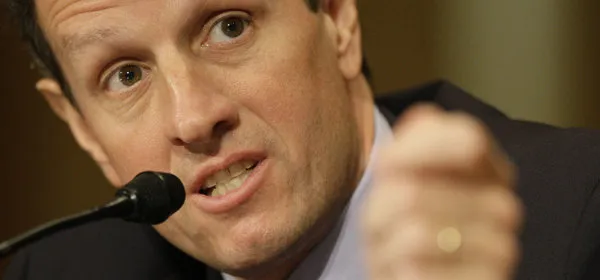
The Treasury is still without a plan to clean the banks. Treasury Secretary Tim Geithner told us yesterday that a new "Public-Private Investment Fund" would remove up to $1 trillion of toxic assets from the banks' balance sheets, but he didn't tell us how. In fact, they're still trying to figure that out. If the government pays too much for the bad assets, it bails out the banks. If it pays too little, it de-capitalizes them, leading to a further squeeze on lending.

There is a way, however, to be both fair and efficient. The taxpayers should take over the bad assets in return for bank equity, but with a twist: the amount of equity transferred to the taxpayers would not be determined immediately, but only after the government has sold off the toxic assets. Rather than guessing their eventual market value, or forcing a "fire sale" of the toxic assets now, the bad assets would be sold off gradually, with the realized losses "booked" against the holdings of the private shareholders by transferring equity to the government. The lower the sale price of the toxic assets, the more equity will be transferred to shareholders to make up for the losses. In the meantime, the banks would be fully re-capitalized and back in business.

Here's how the process would work. Consider a bank balance sheet with 100 in assets at face value, 90 in liabilities, and 10 in shareholder equity. For simplicity, suppose that the 90 in liabilities are in government-insured deposits. The assets are worth less than face value. Suppose that 80 of the assets are actually worth face value, while 20 are at a deep discount. If the true value of the 20 is 15, the true shareholder value is 5, while if the true value is only 5, the bank is insolvent, with zero true shareholder value and a government net liability of 5 to honor the deposit guarantee (once the bad assets are realized).

The problem is that the market value of the assets is not known now because the credit squeeze has temporarily eliminated the liquidity in the markets of the toxic assets. There is an added problem. If the government pays fair value for the 20 of toxic assets, it willy-nilly forces a severe write down on the balance sheets even if it pays fair price. This in turn can lead to a further squeeze of lending. If the toxic assets are indeed worth 15, and these are swapped for 15 of government bonds, the recognized bank capital falls to 5, and capital adequacy standards would induce a further retrenchment of loans.

The bank can be recapitalized at fair value to taxpayers and without inducing a squeeze on bank capital and lending in the following way. The government would swap 20 in government bonds for the 20 in toxic assets plus contingent warrants on bank capital, the value of which depends on the eventual sale price of the toxic assets. The government would then dispose of the 20 in toxic assets at a market price over the course of the next year or two and exercise its contingent warrants at that time.

The cleaned bank now has true market capital of 10, equal to 100 in good assets minus 90 in deposit liabilities. The 10 in equity would then be shared between the original shareholders and the taxpayers, with the division to be determined by the eventual sale price of the toxic assets. If the 20 in toxic assets end up selling at their face value, the taxpayers end up with zero ownership of the bank. If the toxic assets end up selling for less than 10, the bank ends up wholly owned by the taxpayers, because the bank is in fact insolvent at the time of the swap.

If the toxic assets end up selling for over 10 and less than 20, the taxpayers get an equity stake equal to 20 minus the eventual sale price. A sale price of 12 (of the 20 face value) leaves the taxpayers with 8 in stock ownership (20 minus 12) and the original shareholders with the remaining 2 (10 minus 2). The taxpayers are thereby fully compensated as long as the bank is solvent, and are left to cover the deposit liability in the event that the bank is in fact insolvent. The shareholders also get the true value of their claims, ranging from zero (if the bank is insolvent) to the face value of equity (if the toxic assets turn out to be good assets).

In this process, there are no taxpayer bailouts, and there is also no squeeze on bank capital resulting from the exchange of toxic assets at less than face value. In practice, the conversion of taxpayer warrants into bank equity would proceed step by step. Suppose that the taxpayers already own 2 and the shareholders own 8 as a result of partial liquidation of the toxic assets. Now, at a later date, additional sales of the toxic assets cause a further realized loss of 1. The bank would then issue further equity at that date equal to 1 (at the contemporaneous market value), further diluting the existing shareholder claims by 1 and raising the taxpayer stake to 3.

During the period of liquidating the toxic assets, the government would exercise a kind of receivership over the banks, preventing the stripping of remaining assets through bonuses, balance sheet transactions, or "Hail-Mary" lending (in which shareholders of zombie banks gamble recklessly because they have nothing to lose and possibly something to gain). In practice, this could be exercised in the form of a "golden share" which gives the government the right of refusal over major bank decisions, including executive compensation. Once the warrants are exercised, the government would sell its ownership stake to private investors.

The bank cleanup has been stymied to this point over the valuation conundrum, stuck between paying an unduly high price for the toxic assets, and thereby bailing out the shareholders, and paying a low price, and thereby expropriating them while inducing a further credit squeeze. A "contingent warrant," as recommended here, can combine bank recapitalization with a fair value divided between the taxpayers and original bank shareholders.

The Treasury is still without a plan to clean the banks. Treasury Secretary Tim Geithner told us yesterday that a new "Public-Private Investment Fund" would remove up to $1 trillion of toxic assets f...
 
Comments
87
Pending Comments
0
iPhone App Promo

Want to reply to a comment? Hint: Click "Reply" at the bottom of the comment; after being approved your comment will appear directly underneath the comment you replied to

View Comments:
Page: 1 2 3 Next › Last » (3 pages total)

This is an interesting proposal to limit the downside for taxpayers and give bank shareholders some hope to keep their investments from going to zero.

I have two concerns about the plan:

1. It assumes that the government can sell these toxic assets for something like their hold to maturity value sometime within the next two years. I am not sure that this is a valid assumption given that most of the MBS's and CDO's were not really meant to trade in the aftermarket. They were meant to be sold once, at their par value, and then held to maturity. Now that we know that these assets are not worth their par value, any buyer would only pay a significant discount to their hold to maturity value, which I believe is non-zero. It is not clear to me that a realistic value can be put on these assets anytime in the next two years. More likely we would have to wait 10 years to see how the assets actually performed and then calculate their value from that.

2. A related point is that this plan also assumes that bank executives and shareholders would be willing to give the government control over their destinies. Granted, they may already be past the point of stopping bankruptcy or nationalization, but if they participate in this plan they are essentially betting their jobs and/or their money on how much their assets can fetch.

    Favorite    Flag as abusive Posted 03:52 PM on 02/24/2009

Why Nationalize Banks
There is a growing consensus that certain major banks are insolvent because of the housing crisis. Ben Bernanke acknowledged this de facto insolvency on Wednesday. He implied that to forestall devastation in the credit markets and the real economy --- a situation that, by comparison, would make the current recession seem like a period of great affluence --- it is inevitable that some banks would have to be temporarily nationalized. Nouriel Roubini and many mainstream economists also think that nationalization is bound to happen and that it should be done now.

In sum, the banks about to go under like The Bank of America, Citigroup, and Wells Fargo should be taken over by the government. Then the government carve out their bad assets. Most important, the government would break the banks into smaller units and sell the various units to the private sector.

If indeed nationalization is accompanied by a change the structure of the industry, by breaking banks into smaller units, that in turn would reduce the cost of capital. The financial services industry has become highly concentrated (oligopolized) at the top. By making the industry more competitive, the cost of capital to borrowers would be lower after the banking units revert to the private sector.

There are many ways this scenario could go astray. But if the nationalization does occur and it breaks up the oligopolistic structure, here is the irony: government ownership of some financial firms would make the free market more competitive.

    Favorite    Flag as abusive Posted 06:46 PM on 02/22/2009

When are we going to make people who write mortgage loans responsible for collecting on them? There is no incentive to write loans that can be repaid if the loan can immediately be bundled with other loans and sold to someone else. Where were the auditors during these shenanigans? Are any ratings companies being held responsible for their ratings-for-a-price antics?

    Favorite    Flag as abusive Posted 09:42 PM on 02/20/2009
- drkazmd65 I'm a Fan of drkazmd65 51 fans permalink
photo

Mr. Sachs,...

An excellent, simple and straighforward idea as to how best to try and resolve the problems faced by both taxpayers and banks,...

So of course,... it is not the course that will be followed.

    Favorite    Flag as abusive Posted 10:31 PM on 02/15/2009
- Henryk A. Kowalczyk - Huffpost Blogger I'm a Fan of Henryk A. Kowalczyk 16 fans permalink
photo

Dear Prof. Sachs,

I have an engineering degree in electronics and all my life I made every effort possible to understand dynamics of social processes, economy in particular. Despite the above, I do not understand your proposal. Please advice what I should learn more in order to become capable of comprehending your proposal.

In my view, http://www.huffingtonpost.com/henryk-a-kowalczyk/its-time-for-financial-di_b_128466.html , we got in hot water as in our system bankers were able to collect hefty commissions on moving around inflated (you call them toxic) assets.

The most what the government can do is buying some time, so bankers can figure it out between themselves what they are worth. The simplest way of buying time is by issuing at hoc emergency loans to individuals who cannot afford paying their mortgage. If by issuing these loans, the government would guarantee that no one house would be foreclosed within the next six months, but six month only, than within this time banks would figure it out the real value of their assets. Just to be clear, if an individual receiving a loan to cover the next six months mortgage would fail in paying mortgage afterward, bank would repay government first before getting any money from the foreclosure.

    Favorite    Flag as abusive Posted 01:18 PM on 02/15/2009

The proposal seems quite straight forward. I am not sure if it is legally workable.

I am afraid if you still don't understand it, another degree in engineering will not help. You just need a higher IQ.

    Favorite    Flag as abusive Posted 09:31 PM on 02/15/2009
- Henryk A. Kowalczyk - Huffpost Blogger I'm a Fan of Henryk A. Kowalczyk 16 fans permalink
photo

Disagree, if an engineer cannot understand it, I doubt it is a workable proposal.

On the IQ issue, tell me what IQ is required and how many Americans, and politicians deciding about this issue, can understand this proposal.

    Favorite    Flag as abusive Posted 10:56 PM on 02/15/2009
- rfshunt I'm a Fan of rfshunt 46 fans permalink

Why don't we do something even simpler. The execs of these banks are crying because their new owners, the American Taxpayers, don't want them to get bonuses.

Take the toxic assets and make them the bonuses. Give them to the execs as "Performance Awards" in lieu of bonuses. Hell, in lieu of salary. That way, we can be sure the execs are getting paid what they are really worth.

    Favorite    Flag as abusive Posted 11:26 AM on 02/15/2009
- schatsie I'm a Fan of schatsie 71 fans permalink

I love it.. but really I want a tax solution for the foreclosures.. We give tax credits to people who own their homes....this would be an offset for the property taxes, the interest, or anything else...AFTER ALL the real estate investors with the big bucks write off all these expenses and get a 35% reduction in their taxes for these write offs... We want the 35% writeoffs as well and make that credits!!! I figure that would be an increase in income of $5000 per year for someone who is working at Walmart and is buying a house and paying 3 grand in taxes and 12 grand in intererest...
and I don't care if the interest is on the mortgage or the Credit Card... 5 grand a year is enough to ththink about staying for the 25% who are under water...and this would be helpful to families...

    Favorite    Flag as abusive Posted 09:18 PM on 02/15/2009

A potentially very useful idea.

    Favorite    Flag as abusive Posted 06:56 PM on 02/13/2009
- research I'm a Fan of research 243 fans permalink

"Here's how the process would work. Consider a bank balance sheet with 100 in assets at face value, 90 in liabilities, and 10 in shareholder equity."

Banks are leveraged.

Typical balance sheet is 100 assets (liquid assets) , and 1000 in potential liabilities (loans).

The intractable problem is the 500T$ in derivative debts.

Only invalidation of all derivatives can work.

CDS has instead become that actual measure of a banks worth.

    Favorite    Flag as abusive Posted 03:21 PM on 02/13/2009

The derivatives won't pay out. No problem. Neither is leveraging since the deposits are insured.

:-)

    Favorite    Flag as abusive Posted 03:50 PM on 02/13/2009
- research I'm a Fan of research 243 fans permalink

you kidding right?

    Favorite    Flag as abusive Posted 05:33 PM on 02/13/2009
- Dave27 I'm a Fan of Dave27 31 fans permalink

This says nothing about the core of the problem. The "assets" talked about here are American homes. Recapitalization is not the core issue. Banks have capital, but are not using it productively. They are hedging, waiting to see how much they can hold on to.

The only solution is to force the banks to write down principle and interest on troubled mortgages to end the slide in housing prices by establishing a legitimate bottom -- in most cases 35% below the written mortgage.

This has to happen now, so that markets can know what the bottom is and people can stay in their homes.

    Favorite    Flag as abusive Posted 02:54 PM on 02/13/2009

Banks right now are indeed not hedging (what do you hedge a home against that was sold for more than what it is worth?). They are simply avoiding risk that could expose them to failure and liquidation.

Banks can only write down bad assets at rates which are commensurate with their income. And since that is currently low, it will take a long time to clear the toxic assets.

There is no magic button to push here. This problem has been built over decades and it will take years, maybe decades to clear.

    Favorite    Flag as abusive Posted 03:53 PM on 02/13/2009
- schatsie I'm a Fan of schatsie 71 fans permalink

Not true, the real estate bubble was only in the last few years and was triggered by the FEDERAL RESERVE holding the interest rate artificially low... When the interest rate is low, then people can afford a higher price.....The deal is that both the banks and the borrower took the risk...both.. so the payment rate should not be allowed to be adjusted more than something when the short term rate expires.... Everyone knows the banks are now out of control with the interest rates, making us feel like a south american country...where the banks rule. Do something real, and cap the interest rates to something reasonable....

    Favorite    Flag as abusive Posted 09:26 PM on 02/15/2009

Mr. Sachs' "earnout" proposal, as I believe this sort of valuation fix is called, is very interesting. If there were any doubt as to what the true value of the toxic assets is, we might want to try what Sachs is suggesting.

But there isn't any such doubt. Using the value scheme Sachs works with here, for simplicity, the toxic assets of the New York banks are not going to rise above 3, at the very very most optimistic -- 5, that is, for the forseeable future, for at least the next two years. There is in fact zero shareholder equity in these banks.

These banks are effectively insolvent and there is no real alternative to nationalization. Every other idea is just some form of shareholder welfare. Read the New York TImes article today about the Japanese scenario: the only way to deal with a deleveraging, deflation scenario like this is to go for a "merciless accounting" of where things stand, and to let weak banks fail. Then you pick up the pieces and start over at a much reduced baseline for all future valuations, throughout the economy.

There will be a human cost to this - that's why they call it "shock therapy". This will call for a Rooseveltian new deal; or call it "socialism" if you will. The point is to dispense with everyone's ideological ego, to get real and move on.

    Favorite    Flag as abusive Posted 11:53 AM on 02/13/2009
- saami I'm a Fan of saami 15 fans permalink

Nationalize the banks; they can always be returned to private ownership in the future once they are solvent. AND fire all of their senior management (anyone above Director level); they are the ones who got the banks in trouble and can't be trusted to do anything anyway.

    Favorite    Flag as abusive Posted 01:20 PM on 02/13/2009
- mheister I'm a Fan of mheister 47 fans permalink
photo

Interesting idea. But, how does this force the banks to actually start making loans again going forward?

    Favorite    Flag as abusive Posted 12:18 AM on 02/13/2009

LET THEM FAIL DAMN IT!!!
Only the strongest should survive!
In the 1980's through the Resolution Trust Corporation we bought all the bad assets of the failed Savings & Loans and resold them. Well folks we can do the same with failed banks.
Best part - the assets should be purchased by American citizens and the private sectors as bonds. As the assets appreciate other banks can buy the bonds back from the citizen and private sector.

    Favorite    Flag as abusive Posted 09:07 PM on 02/12/2009

If you let a bank fail, you have to pay out the FDIC insured bank accounts. That money would have to come from the government and it would have absolutely no stimulating effect. So you have the choice between propping up for $1 trillion with money that can actually do something or paying out $4 trillion after which everybody is exactly where they are now.

This is a cold numbers problem. Feelings of revenge are absolutely not useful as a problem solving tool.

    Favorite    Flag as abusive Posted 12:33 AM on 02/13/2009

Darwinism is not about the strongest surviving but the best adapted or most adaptive.

"Well folks we can do the same with failed banks."

Not even close. The Saving and Loans were a mere $130 billion. Here we are talking several trillion, at least some 20-30 times more.

"Best part - the assets should be purchased by American citizens and the private sectors as bonds."

These assets are not worth anything. Do you want to screw the people twice by first taking over the bad assets on government cost and then selling worthless bonds to them for real money a second time????

Somehow a lot of these proposals sound like desperate attempts to shoot at feet because there is no other target to shoot at and the trigger fingers are itchy.

    Favorite    Flag as abusive Posted 01:38 AM on 02/13/2009
photo

I think the best idea to clean up the banking industry is for the Obama Administration to create a National Bank of the US (it's been done before) and capitalize it with TARP money. Then use that bank to start lending money to main street at good interest rates. If the banks want to survive as anything other than casinos, they will start lending again or go broke.

One thing that "we the people" can do to clean up the banking industry is to take our money out of their banks and put it into a local bank (if you can find one) or your local Credit Union. I have all my assets in my local Credit Union and have had for 20 years. I find them less expensive (very few fees) and highly competitive in things interest rates and loan rates. I have a credit card through my CU and they recently lowered my interest rate on that card from 8% to 6.5%. I have two other credit cards, which I rarely use (Home Depot and Sears) and both have raised my interest rates in the last month to more than 20%. So tell me, why should I use those cards when I have one with a 6.5% interest rate?

    Favorite    Flag as abusive Posted 08:08 PM on 02/12/2009

"...they will start lending again or go broke."

For simple accounting reasons these banks would go broke in either case. And then the government would have to pay out essentially all of the deposits through the FDIC. It's a no win.

"One thing that "we the people" can do to clean up the banking industry is to take our money out of their banks and put it into a local bank (if you can find one) or your local Credit Union."

Why would I do that? To destroy a large bank? I am not in the business of executing someone's desperate need for revenge. My deposit is just as safe in a large bank as it is in a small one.

My bank charges no fees. So that's better than "very few fees". Right? The only line of credit we keep open was offered to us at an interest rate of slightly over 2%. And why does our bank do that? Because it helps them with their balance sheet! Can your credit union compete with that? In terms of savings we have a bunch of highly competitive CDs. I doubt a CU could offer much more right now. I have a bunch of credit cards which I never use. So why should I care about interest rates?

Tell me, Miss Molly, why does anybody need to use credit cards? If you can't pay cash, just don't buy.

    Favorite    Flag as abusive Posted 01:33 AM on 02/13/2009
- DMEEPhD I'm a Fan of DMEEPhD 4 fans permalink

No fees?!? Is this an imaginary bank? According to Consumer reports, bank earnings are 53% based on fees. They make more money on fees than they do on loans.

Please name this 'bank' so that we can know that you're not smoking something illegal.

    Favorite    Flag as abusive Posted 11:20 AM on 02/13/2009

If Geithner had spelled out a detailed plan, the banks and the market would have made a liar of him within a week, and the pundits (God bless themark!) would ha been all over him. They're all over him now, but at least he doesn't have to come forward with yet another plan right away. The whole mess is still too complex to unravel yet. Some banks may be worthless, some may be in good shape. They may all be sitting shtum hoping for more taxpayer money. Treasury must wait them out. And then form a partnership with some, and let the rest go under or hike it alone.

The purpose of a partnership would be to provide loans. Call the parthership nationalization, or whatever. Those banks could be sold in 3-5 years as going concerns. Meanwhile, they could function as Credit Union USA.

While the whole mess sorts out, and the gears begin to mesh again, the stimulus bill must provide a living (jobs) to as many as possible and a safety net to others. Cops, firemen, teachers, construction workers, auto workers etc etc.

The stimulus bill should be called a Civil Society Bill.

    Favorite    Flag as abusive Posted 05:52 PM on 02/12/2009
- peterg76 I'm a Fan of peterg76 30 fans permalink
photo

But the banks do not have a "valuation conundrum." They know perfectly well what their toxic assets are worth - that's the whole reason they are avoiding assigning value. If you knowingly trade actual money for a fictitious asset, that's money-laundering.

I don't think it creates the right incentive to leave the same incompetent and/or criminal executives running the banks, knowing that at some indeterminate future date it will be the taxpayers on the hook for the bank's liabilities.

    Favorite    Flag as abusive Posted 05:51 PM on 02/12/2009

Everybody knows what these assets are worth: 0. If you buy them you are sure to lose money on them at any price. Therefor nobody will buy them, which makes them worthless. As long as they keep them, they can assign a book value to them and if we slowly deflate that book value, banks can write these assets off without ever being insolvent. Of course, while they are doing that, they can't lend as much. And that means the fat days of borrowing on a whim are over.

    Favorite    Flag as abusive Posted 12:30 AM on 02/13/2009
Page: 1 2 3 Next › Last » (3 pages total)
Comments are closed for this entry

 You must be logged in to comment. Log in  or connect with 

Connect