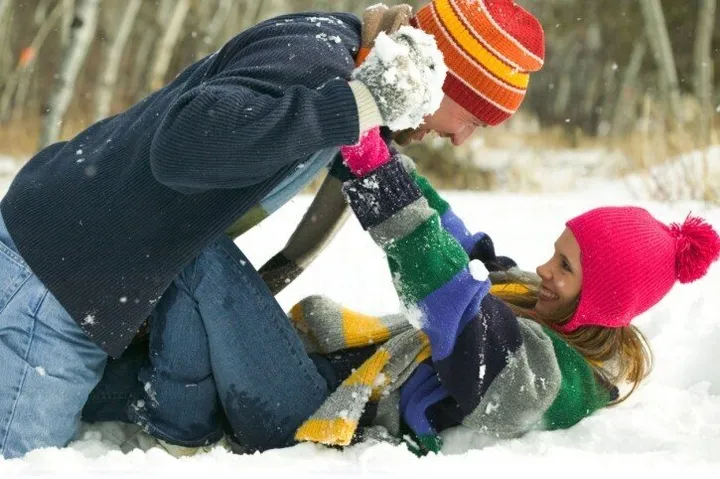
It's in the adult handbook. You have to be in control, or look like you are, every waking moment, or pay the price in vulnerability or foolishness, risky and unseemly for grown-ups. As a result, many of us become experts at holding at bay the very things that unleash a life worth living -- the opposite of lockdown mode: surrendering to spontaneity, not knowing, and, yes, foolishness.
While there are plenty of things we need to be in command of -- income, roof over the head, well-being -- defaulting to the control bunker in your nonobligational life seals out the experience of living. What we can't see from inside the adult force field is that fools have more fun. It's why kids have more fun. They're not afraid to be foolish, trying new things relentlessly, also known as learning.
Control seems like the way to go, but the forces of safety shut down precisely what our brain neurons crave for fulfillment -- novelty and challenge -- and one of the best producers of those items, play. When we let the grown-up straitjacket run the show, it rules out all manner of activities that are spur-of-the-moment, out of character, new, light, uncynical, or that threaten to reveal the non-know-it-all that we all are.
Control is overrated, if your idea is to actually truly live your life. Whether it's learning how to dance or having the richest travel experience, life's enjoyments are fueled by letting go of the safety equipment, something I detail through a host of people doing just that in the new book, "Don't Miss Your Life", on the missing link to an extraordinary life -- participant experiences. Otherwise, the klutzy learning phase of dance drives you to quit, or you stay cooped up at a resort that keeps the real world of discovery out. You have to actually do the traveling yourself to get something out of it.
I met an American couple in Belize who made exactly this point on a flight from Placentia, a small coastal hamlet. They asked how I liked the place. I had stayed in the town in a local apartment and met some great friends, including a German couple I'm still in touch with. We trekked/slid in a rainforest in the rain, took a skiff out to snorkel, and spent hours musing on the mysteries of life over the local brew. The couple hated their trip. They stayed at the big resort outside town, had met no one, had no experiences other than being served food and drinks. "We were captives," the guy said. Safe from life.
Travel is one of the best ways to see that the world gets along perfectly well without you in control -- both at home and on the road. The job doesn't fall apart when you're gone, and you, hopefully, scramble out of the bunker. It's a relief to not know where you are, perfectly acceptable when out of our element on the road. We try things we never would at home, adapt to the unfamiliar and unpredictable, and in the process feel empowered from new experiences we handled.
It's just what your brain has been hoping you'd do. Our core needs of autonomy and competence demand that we scrap the armor and allow ourselves to forge unprotected into realms that allow us to learn, grow, and connect closely with others. You can't do any of that without some vulnerability, without springing yourself from the code of conduct you get locked into by what friends might think, or the preconceived notions that tell you that you can't take up a musical instrument or travel solo before you've even tried it. It's the job of the control police to make sure you never have a chance to be vulnerable, thereby locking you out of the precondition to learning, fun and friendship.
Acting foolish flies in the face of everything you were raised to be -- serious, purposeful, bored -- and that makes it a very unexpected skill of "life intelligence," an acumen that is the polar opposite of the control skills we use for the job. Foolishness automatically removes the security blanket holding back the authentic expression of your life through play. It's a kind of active not-knowing, a basic step on the way to fun, learning and a less ego-driven life. It frees you from the ability of stone cold strangers or friends to determine your life for you by looks or comments that keep you frozen in familiarity.
Not caring whether you look foolish opens up the living potential exponentially. Instead of having the majority of the exhilarating experiences on the planet ruled out because they're out of your comfort zone, suddenly, everything this side of a trip to Mars is in. That's a good thing, since experiences are where life satisfaction and you live. Researchers say we're at our happiest when we're immersed in engaging recreational experiences, i.e., play.
Loss of control is one of the hallmarks of optimal experiences, or flow. It's surrender to the moment that makes the magic happen, as your skills meet a challenge and focus your mind so intently there's no room for any of the self-talk and self-consciousness that keeps the living out of your life. You go with what's thrown at you and don't try to fight it. By not trying to control the course of events or outcome, you give yourself a chance to satisfy competence -- at dance, kayaking or aikido. As soon as the ego and its control squad -- Am I doing it well enough? How do I look? -- appear, you are no longer in the experience.
Trying to control whatever people think about what you are doing is futile but very effective at creating missing lives. As Pema Chodren has observed, fixating on our image "is like standing in the middle of a vast field of wildflowers with a black hood over your head. It's like coming upon a tree of singing birds while wearing earplugs."
Life intelligence practitioners leave the judging to superior courts. Being out of control in the service of learning, fun and growth, oddly enough, places you in control of your life, because you are self-determining its content. Keep the beginner's mind on, and there is no shame in being out of your element. You can see that your element is, in fact, just a box, one that doesn't move forward. Foolishness busts you out of lockdown.
Joe Robinson is author of the new book, "Don't Miss Your Life", on the science, skills and spirit of full-tilt living. He is founder of Work to Live, and is a work-life balance and stress management trainer and coach.