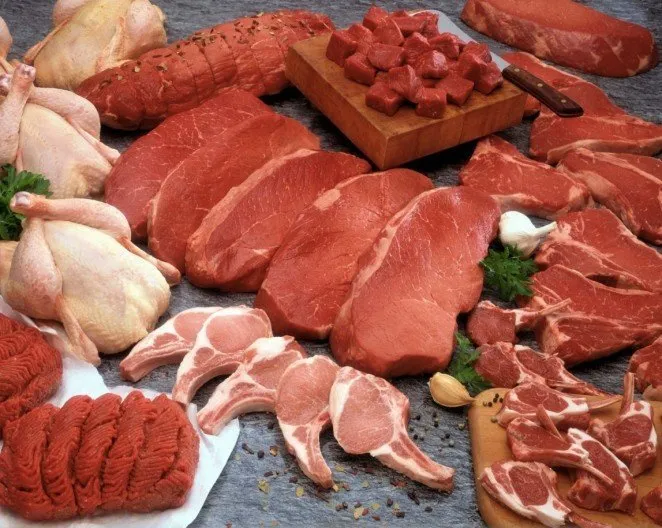
Are you addicted to meat? I see it all the time -- people who want to break the meat habit, but who just keep eating those nuggets, burgers and hot dogs. In fact, as I travel the country talking about veganism, meat addiction (acknowledged and not) may be the biggest barrier I see to a societal shift toward healthy, sustainable and kind eating patterns. So I decided I should reflect on what meat addiction looks like -- and how you can break it. If you don't have any urge to stop eating meat, this column really isn't for you. But more and more Americans do want to cut back or cut out meat, and some of them find it difficult. If this is you, please keep reading.
First, let's consider how we identify a meat addiction. You know you are addicted to something if, despite knowing that it's bad for you or doesn't jibe with your ethics, and despite wanting to drop it from your life, you keep consuming it. Addiction entails a craving that has more control over our behavior than our rational mind and desires. Of course, breaking an addiction can be extremely challenging -- you don't just snap your fingers and lose a craving. But in more than a few ways, those who struggle the most to break an addiction are, often, those who benefit the most.
In the case of being addicted to certain foods like meat or cheese, the addiction can manifest as obesity, disease, or loss of sex drive, energy or self-esteem. It can deaden our awareness of the impact of our actions and our capacity for empathy. When we fully understand and own the end results of poor food choices, we can challenge ourselves to break free, in the same way we might stop consuming other addictive substances. Nothing -- no habit or food or substance -- should ever own us.
Before beginning, it's important to remember that, like any addiction, an addiction to animal products is both physiological and psychological. The culture and family traditions have held that indulging in meat and dairy and eggs is good and right. And omnipresent marketing and advertising campaigns constantly tell us that we should feel good about eating animals. So while it's certainly critical that we take responsibility for our current state of health, we should also give ourselves a bit of a break.
Now, on to breaking the habit:
1.Recognize that you are addicted. By simply calling it out for what it is, you will no longer blindly and unconsciously keep indulging. You will be aware, alert to the denial that wants to repress any effort to change. When I first wanted to stop eating meat -- for reasons of health and ethics -- I did battle with my urges. I wanted to be a vegetarian, but I also wanted that taste of steak in my mouth. Or the tuna sandwich wolfed down with a root beer. I thought, "Wow, I can't seem to stop myself from eating this stuff, even though I know it's not right." So I labeled it. I thought, "I must be addicted." Which lead to, "I really don't want to be held hostage by any addiction or attachment. I need to handle this. If I don't handle this, I will not rise to my best potential."
2.Be willing to do things differently. There is a magic quality to willingness; when you are willing to be different, you don't have to know exactly what that looks like, but only remain open to change. When I was moving toward a plant-based diet, I said to myself, "I don't know how I'm going to find foods that taste as good to me as the steak and tuna fish that I love, but I'm willing to believe there might be some other foods that are just as satisfying that don't do that kind of harm. I'm willing to just try a few different menu choices when I go out, and I'll at least pick up a few new items at the grocery store that would fit in to my new world view."
3.Stay in the moment. Remember everything you've learned and seen. Every time you look at meat or cheese on your plate, even if you are still eating it, think about the process that went into making it. On my way to giving up animal products, I would try and see a quick visual of who the animal once was and what she went through before becoming the meal on my plate. That way, I was not in denial; I was aware. I did that enough times until it was just naturally distasteful to me, and the addiction no longer had a hold on me. I just didn't want it anymore.
4.Replace the old habit. Do not deprive yourself so that you end up going back to your old habits. Find delicious food and enjoy the old traditions you always had with family and friends. Substitute hamburgers with veggie burgers, hot dogs with soy dogs, chicken enchiladas with bean and guacamole enchiladas. Have your familiar looking meals but make (or order) them with better ingredients.
5.Make yourself useful. This is the fun part, because you start feeling so empowered by the change you've undergone that you naturally want to give back. Cook some vegetarian meals and invite friends over; volunteer to bring cake or cookies that are made without eggs or milk to your kids' schools; volunteer at an animal sanctuary so that you can feel even better about what you are not eating. This will make you feel good, even while it opens the eyes of people who might never even considered this way of eating.
6.Re-invigorate your path of healing. As I mentioned earlier, there is a huge sector of the economy that relies on people continuing to eat animal products; this means that there will be a constant onslaught of advertising that attempts to keep the business of animal agriculture and factory farming going strong. So it's a good idea to stay on top of peer-reviewed nutritional reports, news about the environment and the economy, along with alerts from farm animal protection groups so that you remain informed and bolstered. I like Farm Sanctuary, the Humane Society of the United States, the Physician's Committee for Responsible Medicine and PETA.
7.Watch out for the little addictions. One thing I've found to be true: healthy practices support other healthy practices. And of course, unhealthy ones do the reverse. If you want to be healthy and steer away from animal products, you might also consider how you feel after eating junk food or sugar. When I eat sugar I get depressed, slothful and anxious. Those feelings weaken me -- and could weaken my resolve to be healthy. Of course we don't have to be perfect or give up every little thing we've ever indulged in, but it's a good idea to note what makes us backslide and then curtail it. Getting sugar out of my system, for instance, made me feel so good that I just started considering myself a healthy person. Once I began to perceive myself as healthy, it was easier to remain that way.
One thing about breaking your animal product addiction (that is less true of some other addictions) is that it's okay to lean into a vegan diet -- you don't have to beat yourself up over small backsliding, and you don't have to go (ahem) cold turkey right away. Many people have success with Mark Bittman's "Vegan until 6," and then they progressively move to "Vegan 24/7." Some start with Meatless Mondays, and then move to three days per week. Before they know it, they're vegan all the time. I encourage people who can't (or don't want to) adopt a completely vegan diet all at once to "lean into it" in whatever way makes the most sense for you.
Happy Eating!