
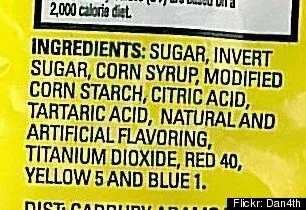
Think back to what you had for dinner last night. Try to remember everything on your plate -- the protein, the carbohydrates and the fat. Now ask yourself -- where did it all come from? If you had a vegetable, do you know if it came from a farm near your house or perhaps did it travel hundreds, even thousands of miles to make it into your grocery store? If you had chicken, do you know if it grazed outdoors or was locked up? If your food came from a box, did you read the label first and if so, did you understand all the ingredients? The fact is most of us either don't know or don't want to know where our food comes from. To many of us, food is something that can be found in a box, thrown in the microwave and consumed in front of the TV. Two questions I encourage everyone to ask when they sit down for a meal or snack are: 1. Where did my food come from and 2. Is it a whole food or is it processed?
What is food and where is it coming from?
Celebrated author Michael Pollan once said that if food came from a plant, eat it and if it was made in a plant, do not. Although humorous, this phrase sums up the current state of our food industry. Pollan's advice actually has widespread implications and examines the very question: What is food? A strong argument could be made that even though processed foods may begin as whole food, it is altered in such a way that the end result does not even resemble food.
Advances in science have allowed the food industry to evolve -- making food easier and cheaper to grow and with more desirable characteristics in terms of shelf life and freshness. These advances sometimes cost you as well. Consider the average cracker on the market today. It has on average eight or more ingredients, several of which are additives for taste, color or shelf life. Additionally, the cracker is most likely made with refined non-whole grains and will cause a rapid rise in blood sugar and insulin followed by a rapid fall. This rise and fall may cause you to be hungry again soon and overall less satisfied. It also may contribute to inflammation if foods such as the cracker are typical in your diet.
Finally, that cracker may be loaded with saturated fats, trans fats (hydrogenated oils) and a whopping amount of sodium. All of these put you at risk for heart disease, stroke and hypertension. Think about it, that's just your cracker -- what else are you eating throughout the day that has numerous ingredients, many of which you don't have a clue even what they are?
The Encyclopedia Britannica defines food processing as the following: Any of a variety of operations by which raw foodstuffs are made suitable for consumption, cooking or storage. Food processing generally includes the basic preparation of foods, the alteration of a food product into another form (as in making preserves from fruit), and preservation and packaging techniques.
White bread is made by taking a fabulous piece of wheat and stripping it of the bran and the germ; two components responsible for providing fiber and B vitamins. What's left is the endosperm. In this example, food (wheat) has been stripped to make something else (white bread).
The loaf of white bread and box of crackers are just two examples of many where food has been processed to the point where it does not even resemble the original form. Other than boxed or bagged whole grain pasta, rice or bread, try to get all your foods from sources that are minimally processed or better yet, have undergone no processing at all. In other words, try and consume whole foods as much as possible.
"Whole" foods are foods that have not been processed or altered prior to "packaging" and may include meat, poultry, fish, fruits, vegetables, legumes, seeds and nuts. Meat, poultry and fish that are considered "whole" are those that were provided natural feed (grass as opposed to corn for a cow), provided amble space and humane living conditions, and void of antibiotics, hormones or coloring. Plant-based foods are the most easily identifiable whole foods available for consumption. For example, I like having a handful of walnuts every day. This whole food provides a great source of ALA omega-3 fatty acids, magnesium and phosphorus. In addition, walnuts provide four grams of protein and two grams of fiber per serving. These benefits are produced in nature, by the plant -- not in a plant.
Decoding the Current Food Label
Many of us are concerned about how many calories we are consuming and we sometimes get so fixated on those calories that we begin to lose sight of the quality of those calories. In addition, the aisles in the grocery store are filled with confusing health claims, often making the food label a foreign language. First, foods that do not have a label are usually the healthiest. Your local produce section would top this list with all of its cancer fighting phytochemicals. None of the items here will have a label. The more ingredients a food has, the higher the chances that it has been processed.
Additionally, I take my Lifestyle 180 participants to the grocery store and show them how to shop. I ask them to avoid food that lists any of the following among the first five ingredients:
- Saturated fats (on labels most would be displayed as plant based saturated fats such as palm or cottonseed oils).
- Trans fat (anything containing partially hydrogenated oils).
- Simple sugars and syrups such as high fructose corn syrup, cane juice, honey, etc.
Simple carbohydrates.
- If sodium is above 600 mg per serving, put it down (you should limit your sodium consumption to 1500mg to 2300mg daily).
- If the ingredient label contains several words you can't pronounce, it means it's full of food additives and most likely not good for you.
The grocery store can be a confusing place filled with front of package claims meant to disguise foods high in fat and sugar as "healthy." Following these simple tips may help you on your way toward being a more savvy food shopper.