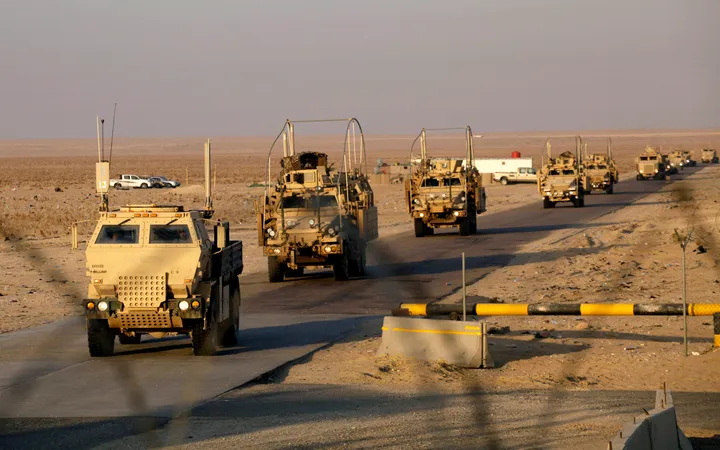
As the last of our troops return home from Iraq, the greatest tragedy of this misguided war is if we learn nothing. The Republican frontrunner, Newt Romney, has taken home the wrong lessons, while the historians and press imply that it is too early to make judgments: 'an uncertain legacy' to quote the New York Times front page post mortem, reminiscent of "It is too soon to tell," as Chou En Lai famously responded when asked for his verdict on the French revolution -- 200 years later. America is facing an election where voters hopefully know it is not too soon to posit that the invasion of Iraq needlessly cost our country in blood and treasure, weakened our strategic standing in the region, and distracted us from nation building at home. Chou En Lai's great grandson might note fifty years from now that while America was mired in Iraq, China took advantage. It is not too early to state that our ill fated rush to war was a tragic blunder for our country. What have we learned? Lesson # 1: Get the facts, do not rush to judgment and never rush to war. Mitt Romney loves to repeat that such verdicts on the war are easy to say with hindsight, and that everyone in 2003 believed that Iraq had weapons of mass destruction. That is wrong; Hans Blix the Chief UN Weapons Inspector said at the time and thereafter that there was no current evidence of WMD , and more importantly during the lead up to the war, the Saddam Hussein regime was opening all restricted areas to inspection and allowing scientists to leave the country for interrogation. Blix asked for more time to complete his mission, but he was denied and denigrated by the Bush operatives. But wasn't Secretary of State Colin Powell also fooled about the WMD by the Iraqi mole code named 'Curve Ball '? Actually, Powell's chief of staff at the time, Lawrence Wilkerson, later testified that his boss was more likely fooled by the same Bush operatives who sought a pretext for war, who 'manipulated' the data being presented to Powell, who was 'flat out lied to.' Lesson #2: Listen to the military. When asked about next steps in Iraq and Afghanistan, Mitt Romney loves to repeat that unlike President Obama, he will listen to the generals. That is better advice for President Bush, who not only stiff armed General Powell, but refused to meet with General Scowcroft, his father's NSC adviser who opposed the invasion publicly. President George Bush later redeployed (fired) Army Chief of Staff Eric Shinseki, who had the temerity to state that the war would require hundreds of thousands of U.S. troops (as opposed to Sect/Def Rumsfeld's light footprint). Bush later fired General Abizaid and Admiral Fallon, who were responsible for the conduct of the war and opposed the strategy. In fact it was not the military but the civilian brass who pushed for the war, including Bush insiders like John Bolton, who Newt Gingrich said would be his Secretary of State. Condoleeza Rice is getting 'antsy and ready to go' for vice president, according to Washington Times. If you bring back the same actors, do not expect a different result. Lesson # 3: Beware of unintended consequences. These same neo cons are now pressing for a preemptive attack on Iranian nuclear facilities, that anything short of war is 'appeasement.' The Iraq war was America's strategic gift to the Iranian regime. We replaced an anti Iranian counterweight that had shown its willingness to challenge Iran when threatened and to dampen its dangerous ambitions. America's war in Iraq replaced an anti Iranian Hussein regime with the Maliki regime which enjoys playing footsie with the Iranian mullahs. If the war was fought to stabilize the Middle East, to enhance our own security as well as the security of our ally Israel, the war was a strategic failure from the start, strengthening Iran's position and limiting our options, making the region more dangerous. Lesson # 4: Unintended consequences II: Rather than the opening shot in a pro democracy, modernizing Arab Spring, the Iraq war nine years later has resulted in a more sectarian, less pluralistic Iraqi regime which started prosecuting and arresting its Sunni political leaders about 24 hours after the last of the American troops headed home. Newt Romney's response: more American troops in Iraq as far as the eye can see. Lesson # 5: Wars do not pay for themselves. One trillion dollars later, how naïve the words of Glenn Hubbard, President Bush's top economic adviser: "The costs of any military intervention would be very small." Hubbard today is Romney's top economic adviser. To those who argued the long term economic benefits to America, read the headline in the Financial Times: Iraq's economic spoils go to nations that shunned the war,' including China from whom we borrowed the money to fight the war . Lesson # 6: Elections matter. If a few hundred more Floridians had voted for Al Gore over Bush in 2000, we would have elected a president who did not have to learn lessons 1-5; let's not make the same mistake again this coming November, and be thankful that our troops have headed home to the hero's welcome they deserve.