More

Cuccinelli Makes Big Decision About Political Future

Huffington Post   |   Luke Johnson   |   March 22, 2012    2:46 PM ET

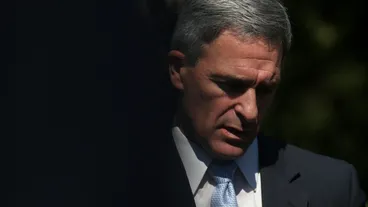
Virginia Attorney General Ken Cuccinelli (R) is creating a campaign committee to run for governor, according to a news release.

"I am running for governor to continue the work I have undertaken during my tenure as attorney general and as a state senator," said Cuccinelli in a statement. "I will continue my work to strengthen our economy, preserve our liberty, and to promote the principles of smaller, more efficient state government, accountable to the people it serves. I look forward to sharing my vision for the commonwealth following the November elections."

The attorney general said in December that he would run for governor in 2013. Lt. Gov. Bill Bolling has also announced his intention to run for the seat. Bolling decided not to run for governor in 2009, instead running for re-election as lieutenant governor, and backed Bob McDonnell, who was elected governor. In return, McDonnell vowed to back Bolling in 2013.

Virginia governors can only serve one four-year term.

Academic Freedom Wins in Cuccinelli Climate Case

Huffington Post   |   Shawn Lawrence Otto   |   March 2, 2012    1:09 PM ET

In a big win for academic freedom over the forces of creeping authoritarianism, the Virginia Supreme Court today sided with the University of Virginia in its fight against Virginia Attorney General Ken Cuccinelli's investigation of former University of Virginia climate scientist Michael Mann.

Mann, who now works at Penn State, has been a target of climate change deniers for his famed "Hockey Stick" graph that shows the world's temperatures have risen sharply over the last 50 years.

Hockey Stick graph

"I'm pleased that this particular episode is over," said Mann following the decision. "It's sad, though, that so much money and resources had to be wasted on Cuccinelli's witch hunt against me and the University of Virginia, when it could have been invested, for example, in measures to protect Virginia's coast line from the damaging effects of sea level rise it is already seeing."

The court upheld an Albemarle Circuit Court ruling that set aside Cuccinelli's demands for Mann's emails and other documents related to grants Mann received to study climate change while at UVA.

Cuccinell had sought the information under the state's "Fraud Against Taxpayers Act," alleging that Mann might have committed a fraud against the taxpayers while at UVA by using what Cuccinelli claimed might have been manipulated climate change data in order to get federal grants. Cuccinelli has said he believes that climate change is a hoax, and has said academic freedom should not shield scientists from investigations into whether they might have broken a law.

But Cuccinelli's investigation was without a reasonable probable cause, and so amounted to a political witch hunt. Albemarle County Circuit Judge Paul Peatross ruled in August 2010 that Cuccinelli had failed to adequately state what Mann might have done wrong, and further that he lacked authority to investigate federal grants. Cuccinelli appealed to the state supreme court.

Cuccinelli had sought a broad application of the law's language, seeking to extend it to state agencies like UVA. But the supreme court disagreed with Cuccinelli's claim that the university can be considered a "person" subject to subpoena under the Fraud Against Taxpayers Act. "In sum, neither by express language nor by necessary implication does FATA provide the Attorney General with authority to issue CIDs to commonwealth agencies," wrote Supreme Court justice Leroy F. Millette Jr., in the decision.

"The university should be commended for its courage in standing up to the attorney general to ensure Virginia will remain a safe place for scientific research, even when elected officials don't like the results," said Michael Halpern of the Union of Concerned Scientists Scientific Integrity Program. "Academic institutions have the responsibility to protect their faculty's ability to discover new things about our world without fearing harassment or political reprisals. Officials at research universities around the country should scrutinize this case and make sure they are prepared to respond appropriately to similar attacks."

Halpern said that various courts in Virginia have found in favor of the university on both substantive and procedural grounds. "From the beginning, the attorney general had no case, and has wasted the state's time and attention for nearly two years on this boondoggle."

Numerous other investigations, including ones by the National Science Foundation and the National Academy of Sciences, have reaffirmed Mann's work, further increasing confidence in the "Hockey Stick" graph.


Get Shawn Lawrence Otto's new book: Fool Me Twice: Fighting the Assault on Science in America, Starred Kirkus Review; Starred Publishers Weekly review. Visit him at http://www.shawnotto.com. Like him on Facebook. Join ScienceDebate.org to get the presidential candidates to debate science.

AP   |   By MICHAEL FELBERBAUM   |   February 28, 2012   10:35 AM ET

RICHMOND, Va. -- Virginia Attorney General Ken Cuccinelli's office says officials have reached a settlement with a charity run by White House party crasher Tareq Salahi for allegedly making false statements, submitting inaccurate financial statements and soliciting donations without being registered with the state.

The settlement with the Journey for the Cure Foundation and Salahi follows an investigation by the state Office of Consumer Affairs. Under the settlement, the charity must pay $32,500 in civil penalties and attorney fees. Salahi also must pay $2,500 in penalties.

Ken Cuccinelli Tears Up Talking About The Need To Defend Freedom

Huffington Post   |   Elise Foley   |   February 9, 2012    3:54 PM ET

WASHINGTON -- Virginia Attorney General Ken Cuccinelli gave a self-congratulatory speech on Thursday about his fight against the Obama health care law and the Environmental Protection Agency, nearly crying when he said freedom must be protected for future generations.

"Freedom ... must be fought for, protected and handed on for them to do the same, or else one day we will spend our sunset years telling our children and our children's children, telling them what it was once like in America where men were free," he said, taking a long pause after mentioning grandchilden and tearing up.

The rest of the speech, given after he won a "Defender of the Constitution Award," was mostly dedicated to a list of his efforts against the Obama administration, which he said has led an "across-the-board assault" on the Constitution and states' rights.

"As we, the American people, have gradually asked [the government] to do more, a little bit here, a little bit there over time and history, we have gradually created a government that is no longer very limited," he said. "We have, in fact, a central government."

Cuccinelli filed petitions in 2010 with the federal government in an attempt to block the EPA's effort to crack down on energy uses that could contribute to global warming, as well as filing another petition to make the government review a finding that climate change threatens "the public health and welfare of the American people."

He also led an effort to block the president's health care law, and boasted on Thursday that he challenged the law about 35 minutes after Obama signed it.

Similar efforts are beginning in different states based on Virginia's example, he said.

"States are now pushing back, and not just Virginia. We play a leadership role, and where better to play a leadership role, you've got Madison and Monroe here, two of the founders on opposite sides of the U.S. Constitutional debate," he said of his state's effort.

The Huffington Post   |   Arin Greenwood   |   February 1, 2012    9:11 AM ET

WASHINGTON -- Ken Cuccinelli dislikes many things. Recently, Virginia's Republican attorney general has spent a lot of time making known his intense distate for rodents that come from the other side of the Potomac River.

The Washington Examiner reports that District of Columbia officials will be meeting with their Virginia and Maryland counterparts to discuss the (most likely nonexistent) threat of rats being brought across state lines, sparked by a D.C. law -- most closely associated with Councilmember Mary Cheh (D-Ward 3) and conservative commentator Rush Limbaugh -- that deals with humane wildlife extermination.

History shows that the attorney general, who represented Fairfax County in the state Senate, is not a big fan of climate scientists, the Voting Rights Act or abortion, either.

Besides these things, what else makes Cuccinelli's blood boil?

RELATED VIDEO: Ken Cuccinelli explains his concern that D.C. rats will be relocated to Virginia, under D.C.'s Wildlife Protection Act of 2010.

The Huffington Post   |     |   January 23, 2012    6:30 AM ET

WASHINGTON -- Thousands of anti-abortion activists plan to march on the U.S. Supreme Court today in an annual demonstration to mark the anniversary of the 1974 Roe v. Wade decision.

A pre-march Rally for Life is scheduled to start at noon on the National Mall near the Smithsonian Castle.

House Speaker John Boehner (R-Ohio) is scheduled to address the crowd, saying in a statement:

"Respect for life has never been a political position for me: it's who I am, and it's who we are as a people," Congressman Boehner said. "The cause of life endures in large part due to the vigilance of the American people, especially those who, led by Nellie Gray, march and pray in our nation's capital each year at this time. It will be a great honor to address the March for Life as Speaker of the House and leader of its bipartisan pro-life majority."

Around 1:30 p.m., marchers will travel east on Constitution Avenue toward Capitol Hill and the Supreme Court.

Virginia Attorney General Ken Cuccinelli (R) is the keynote speaker at the Monday evening Rose Dinner.

The Huffington Post   |   Arin Greenwood   |   January 19, 2012    3:56 PM ET

WASHINGTON -- Maryland doesn't want the District of Columbia's rats, either.

Patch reports that Maryland Del. Pat McDonough (R-Baltimore County), , who wants to bring an Arizona-style immigration law to the Old Line State, is now planning to introduce an anti-rat trafficking bill that would prevent D.C. residents from bringing rats over state lines:

McDonough's concerns arise from a bill he said was passed in Washington DC that prevents the killing of rats. Instead, the law requires wildlife (including rats) be treated humanely and relocated "along with their families" to another area.

"I'm protecting the borders again, this time from illegal rats," McDonough said. "I'm very concerned about my friends in Prince George's and Montgomery Counties. They're on the front lines of this."

The proposal comes in response to the deluge of attention brought to D.C.'s Wildlife Protection Act of 2010 -- a law that requires wildlife control to be performed humanely. The law has gotten some hysterical attention of late.

Virginia's Attorney General Ken Cuccinelli (R) recently expressed concern that D.C. residents would be forced, under the law, to relocate their live vermin into Virginia.

On Jan. 16, Rush Limbaugh relayed these concerns on his radio show, naming D.C. Councilmember Mary Cheh (D-Ward 3) as the person responsible for this policy.

"The people in the District of Columbia, big on animal rights," Limbaugh said on air.

Rush Limbaugh listeners, apparently, not so big on animal rights.

In a media release titled "Councilmember Cheh Laments the State of Public Discourse," Cheh on Thursday sent out a collection of the nasty emails she's received since Limbaugh's show aired.

Among the more family-friendly comments:

You are the idiot who is involved with protecting rats? I hope you and your family get your ass bit and you die of the plague.

Frank Kurth

Mary,

Can I ask do you have any kind of a brain? YOU DON'T RELOCATE RATS YOU KILL THEM! I have lived in Washington, DC for a decade now and if there is one thing everyone can agree is that rats need to be killed. What do you want them living in your home? I bet you don't. Have you ever been downtown next to a construction site? People get revolted by that.

You really need a life other than imposing your silly busy body ideas like that on the good people of the Nation's Capital.

Randy Foreman
115 5th street NE
Washington, DC 20002

Sent from my iPad

Your environmental wako boss has a plan to relocate rat families from DC. Can I send you my rats?

Also, will her plan relocate the human rats known as liberal socialist/Marxists which reside in DC?

Start with Mr. Obozo.

You guys are so freakin mentally out in space.

Cheh -- a law professor at George Washington University Law School -- noted in her media release that "commensal" rodents -- those living close to humans -- as well as fish, domestic animals, invertebrates and fish, are exempted from the law. Which Cuccinelli, Limbaugh and the others who felt compelled to express their displeasure should have known, she writes:

It's a relatively short bill -- seven pages. And the very first page expressly exempts mice and rats found in the District. I would have hoped that people would have been inclined to read the bill before raging against it.

In the release Cheh acknowledged that some people might be deliberately misstating the wildlife law's stance toward rats "to score cheap political points."

RELATED VIDEO: Rush Limbaugh calls Mary Cheh a "babe," talks about D.C.'s Wildlife Protection Act.

Flickr photo by anemoneprojectors, used under a Creative Commons license.

AP   |     |   January 2, 2012    8:08 AM ET

RICHMOND, Va. -- Virginia Attorney General Ken Cuccinelli is no longer pushing for a change in rules that kept two candidates off the state's March 6 Republican presidential primary ballot.

The Republican Party of Virginia determined that Newt Gingrich and Rick Perry had failed to submit the required 10,000 signatures of registered voters. The candidates have gone to court to challenge their exclusion from Virginia's ballot, which will include only Mitt Romney and Ron Paul.

Virgina AG: 'I Don't See A Lot Of Distance' Between Romney, Obama Health Plans

Huffington Post   |   Benjamin Hart   |   December 4, 2011   12:21 AM ET

Virginia Attorney General Ken Cuccinelli, who hosted a Fox News forum with GOP presidential candidates Saturday night, said afterward that he was not convinced that Mitt Romney could differentiate his Massachusetts health care plan sufficiently from President Obama's.

Politico's David Catanese reports that in a post-event interview, Cuccinelli said, "I don't see a lot of distance there between him and the president" on the issue.

Romney, who was governor of Massachusetts from 2003 to 2007, has long drawn scrutiny from Republicans for instituting a state health care law in 2006 that imposed an individual mandate very similar to the one found in President Obama's overhaul, which passed Congress in 2010.

Saturday's forum was no different. Romney fielded a question about how he would answer a charge from Obama that that president's plan was based on Romney's.

Bloomberg reports:

“I sure look forward to that” exchange, Romney, 64, said. “Do I like the bill overall? Yes. Am I proud of what we did for our state? Yes. But what the president has done is way beyond what we envisioned.”

Romney said while his measure only aimed to cover the 8 percent Massachusetts residents who lacked insurance, “Obamacare is about taking over 100 percent of the people’s insurance in this country.”

Romney's healthcare plan extended insurance coverage to 98 percent of Bay State residents.

Washington Post Misses Link Between Sea-Level Rise and Climate Change

Huffington Post   |   Elliott Negin   |   December 2, 2011    1:50 PM ET

The Washington Post flunked Climate Science Reporting 101 this week, fumbling an opportunity to remind its readers about the threat global warming poses right here, right now.

On Monday, the day the latest round of annual U.N. climate negotiations opened in Durban, South Africa, the paper ran a scene-setter in its front section headlined "Global pact gives way to local action." It pointed out that countries, states, provinces and municipalities are initiating their own policies to cut carbon emissions in the absence of a universal binding agreement. That story was not the problem.

The second story, which was plastered on the paper's front page, is where the Post fell down on the job.

"In Chincoteague, a stampede against beach changes" reported on a dispute between the federal government and town leaders in a small Virginia coastal resort town best known for its wild ponies. The town's 4,300 year-round residents survive on tourism -- some 14,000 vacationers visit daily every summer, according to the state transportation department. But its beach -- a part of the Assateague Island National Seashore and the Chincoteague National Wildlife Refuge -- is threatened by sea-level rise.

Without getting bogged down in the details, suffice it to say that the U.S. Fish and Wildlife Service, the federal agency that manages national refuges, recently proposed a new, 15-year plan to safeguard the more than 300 species of birds and other wildlife at Chincoteague. One of the options would move the public beach about a mile north where it would be less vulnerable to sea-level rise, build remote parking lots in a more stable area, and shuttle beachgoers in buses. The town mayor and many residents oppose the plan, fearing the proposed changes would turn off tourists.

The Post story included the what, who, where and how of basic journalism. What was missing was the why. Why is sea level rising and eroding the beach in Chincoteague?

According to the Environmental Protection Agency, over the last century, sea level rose 5 to 6 inches higher along the Mid-Atlantic than the global average because coastal land there is sinking. But there is another key factor: Global warming.

"Higher temperatures are expected to further raise sea level by expanding ocean water, melting mountain glaciers and small ice caps, and causing portions of Greenland and the Antarctic ice sheets to melt," according to an EPA web feature "Coastal Zones and Sea Level Rise." "The International Panel on Climate Change (IPCC) estimates that the global average sea level will rise between 0.6 and 2 feet (0.18 to 0.59 meters) in the next century."

The story never mentioned the connection.

I called Louis Hinds, Fish and Wildlife's Chincoteague refuge manager, who was quoted in the piece. "I talked about climate change in my interview with the Post," he said. "I use 'climate change' and 'sea-level rise' interchangeably." Hinds also was quick to point out that the climate issues that plague Chincoteague aren't unique. His agency has compiled examples from all 50 states of how global warming is imperiling wildlife.

Why is it such a big deal that the Post story failed to mention climate change?

Because public officials in Chincoteague and Richmond continue to deny it is happening -- and aren't doing anything about it.

Hinds has to deal with that fact in his job. "I've been the refuge manager here for four years, and when I got here, no one was discussing the climate change problem," he said. "Some members of the community do not accept the reality of climate change, but they face its consequences every day."

Meanwhile, the McDonnell administration's attitude has ranged from skepticism to outright hostility.

Gov. Bob McDonnell's bad cop is Attorney General Ken Cuccinelli, who for the last year and a half has been harassing former University of Virginia climate scientist Michael Mann, accusing him of fraud. My group, the Union of Concerned Scientists (UCS), organized a letter signed by 800 Virginia scientists and academic leaders condemning Cuccinelli's baseless investigation and filed amicus briefs supporting UVA. (See UCS's June briefing paper, "Science Under Attack.") Cuccinelli yesterday confirmed that he will run for governor in 2013.

McDonnell's slightly nicer cop is Virginia Secretary of Natural Resources Doug Domenech, who encapsulated the administration's position at a June 28 press briefing. That's when he announced that the governor had declined to revive a climate-change commission convened by his predecessor, Gov. Tim Kaine, which had recommended dozens of ways the commonwealth could cut carbon emissions and adapt to changes that already are occurring, such as rising sea levels. The McDonnell administration has not acted on any of those recommendations, and Domenech, who worked under President George W. Bush's notoriously anti-environmental Interior Secretary Gale Norton, joked that he couldn't remember if he even saw the commission's final report. "I'm sure there's a copy around here somewhere," he said.

Why the indifference? "The climate is changing, no doubt," Domenech said, "but it's always changing... Humans might be part of the cause, but too often in the debate it's missed that the Earth has been warmer in the past and it has been a lot cooler in the past... So I would say the science is mixed on a lot of those things."

Finally, Domenech told reporters "It's a global issue, and it's hard to say what changes we could make that would make that much of a difference."

In fact, there a number of things Virginia could do to make a difference, just like the cities, states and countries mentioned in the story the Post ran last Monday on the U.N. climate talks in Durban. For one, its legislature could establish a renewable electricity standard similar to what 29 states and the District of Columbia now have in place. Those standards require local utilities to generate from 10 percent to 33 percent of their electricity from renewable sources such as wind and solar by a specific year. Virginia currently has an unenforced voluntary standard of 15 percent. Virginia also could initiate aggressive efficiency programs that would cut residential and industrial energy use, as well as preparedness programs, such as coastline management plans, to help communities adapt to climate change.

That brings us back to the Post's Chincoteague story and its glaring omission. To be fair, the paper ran a story in June about sea-level rise at Virginia Beach that stated in the second paragraph that the culprits are climate change and the fact that the area is sinking. So it's not as if the Post doesn't get it. But given the cavalier attitude the McDonnell administration has about this critical issue, it is incumbent upon the news media to continually remind Richmond that climate change is a serious threat and that it has a responsibility to address it.

As Louis Hinds, the Chincoteague refuge manager, said to me the other day, "The fact that some members of the community do not believe that sea-level rise or climate change are happening doesn't mean that I can choose to ignore the science." That goes for the news media, too.


Update:
Some commenters pointed out that there are a number of factors behind sea-level rise, including sinking coastal land, and that sea levels have gone up and down in different locations. That is true. There always will be regional variations. The U.S. Global Change Research Program, a collaboration of 13 federal department and agencies, provides a good, concise summary of the connection between global warming and sea-level rise on its website.

A few commenters also challenged the fact that climate change-induced sea-level rise threatens the beach at Chincoteague. For more information about how the U.S. Fish and Wildlife arrived at that conclusion, check out its explanation on its website, one of the 50 examples it provides on how climate change poses risks for wildlife in every state. - Elliott Negin.

Elliott Negin is the director of news and commentary at the Union of Concerned Scientists in Washington, D.C.

AP   |   By BOB LEWIS   |   November 30, 2011    9:27 PM ET

RICHMOND, Va. -- Virginia's crusading conservative attorney general, Ken Cuccinelli, has decided to run for governor in 2013, touching off a fierce, two-year clash for the Republican nomination, a senior GOP official close to Cuccinelli said on Wednesday.

Cuccinelli's decision, first reported by the Washington Post, roils the upper reaches of the party in the same month that the GOP took a working majority in the state Senate, consolidating its grip on policymaking in Virginia.

Liberty University Reverses Campus Gun Ban

Huffington Post   |   Mollie Reilly   |   November 21, 2011    2:47 PM ET

WASHINGTON -- At Liberty University in Lynchburg, Va., students cannot watch R-rated movies, participate in unauthorized protests, attend a dance or use profane language. Soon, however, they will be allowed to carry a concealed gun on campus.

Last week, Liberty's Board of Trustees announced its decision to reverse the school's longstanding weapons ban. Students, faculty and staff with a Virgina concealed carry permit will be able to keep their guns in their car and carry them on campus grounds. Some faculty and staff will also be granted permission to bring firearms into university buildings.

Liberty, which was founded in 1971 by the late, famed televangelist Jerry Falwell, has some of the strictest campus policies in the nation. Students at the evangelical Christian college must agree to a code of conduct, known as "The Liberty Way," which outlines appropriate behavior on campus.

Previously, the unauthorized possession of weapons on campus was designated as a maximum campus offense. Violators faced a $500 fine, 30 hours of community service, and possible expulsion. Offenses at the same punishment level include involvement in witchcraft, consumption of alcoholic beverages and abortion.

The university's board touted the new policy as a way to keep students safe on campus, stating that it could help prevent incidents like the 2007 shooting at Virgina Tech University that left 33 students dead.

"It adds to the security and safety of the campus and it's a good thing," university chancellor Jerry Falwell Jr. said last week. "If something -- God forbid -- ever happened like what happened at Virginia Tech, there would be more than just our police officers who would be able to deal with it."

Liberty's announcement may be the beginning of a trend towards more lenient gun policies in Virginia universities. In July, Attorney General Ken Cuccinelli issued an advisory opinion that stated that universities must pass a state regulation, as opposed to a simple school policy, in order to legally bar students from bringing guns on campus. Cuccinelli's opinion has yet to be tested by courts, but could have deep implications for campus gun policies in the future.

Many gun control advocates fear that allowing students to carry concealed weapons would make campuses markedly less safe.

"Any time you have loaded guns carried on campus, it could be a very dangerous situation," Brian Malte, director of mobilization at the Brady Campaign to Prevent Gun Violence, said.

Malte pointed out that law enforcement officials go through continuous training to learn when and when not to shoot, while in Virginia, concealed carry permit holders only complete a one-time firearms training course.

"With Virginia's lax standards for getting a concealed carry permit, expecting someone on campus in a very tense situation to make the right decision is a fallacy," he said.

Liberty University did not return a request for comment.

The Huffington Post   |     |   November 18, 2011    8:39 AM ET

WASHINGTON -- Virginia Attorney General Ken Cuccinelli assuaged a gathering of gun-rights activists at George Mason University, skewering the school's campus gun plan which his office had to defend before the Virginia Supreme Court.

Speaking at the Virginia Citizens Defense League's Thursday night meeting at a Fairfax County district government center in Annandale, Patch reports Cuccinelli said that as attorney general, he didn't want to "undercut" his client "by going out and saying something like, 'You're idiots for doing this."

The Virginia Supreme Court upheld GMU's campus policy in a January ruling.

Cuccinelli said now that the case, DiGiacinto v. Rector and Visitors of George Mason University, is over, he's free to criticize it: "The policy they've undertaken doesn't achieve their goals for campus safety."

In that case, a gun owner, Rudolph DiGiacinto, challenged GMU's ban on guns in campus buildings and sports and entertainment venues. He was not a student, but uses the campus library and other university facilities.

Members of the Virginia Citizens Defense League had said the attorney general went against his word when he spoke before the group as a candidate in 2008. As AmmoLand.com wrote in a preview of the event:

The Attorney General will be speaking about his support for the GMU gun ban, when he originally told VCDL members, as a candidate for Attorney General, that the ban wasn't valid.

The VCDL protested at George Mason University on Nov. 9 and followed up with a similar protest at Virginia Tech University on Thursday.

According to Patch:

When Cuccinelli had met with the VCDL three years ago, he'd told the group the General Assembly oversaw all gun control decisions. "I made a legal mistake when I spoke to you three years ago," Cuccinelli said. "I thought any agency in Virginia went through the General Assembly for gun laws," he said. In fact, that only applies to local governments, not to state agencies.

Cuccinelli berated Virginia's public universities for lobbying themselves through the General Assembly on an abbreviated legislative process. "Gee, it's so inconvenient to participate in a democracy, especially for those in the ivory towers," he said.

"They have their own special regulatory process, totally abbreviated," he said. "They shouldn't be treated any differently than any other state agency."


RELATED VIDEO: Ken Cuccinelli In 2008, Speaking To Virginia Civil Defense League

Climate Scientist Wins A Round for America

Huffington Post   |   Shawn Lawrence Otto   |   November 1, 2011    9:17 PM ET

A hearing today has implications for academic freedom across the country. A Virginia judge granted climate scientist Michael Mann the right to intervene on his own behalf in a lawsuit filed by a climate change denial group seeking to get his private papers and emails from the University of Virginia. While this is an important victory for American-style freedom and privacy, its background is a story of just the opposite - attempts at authoritarian repression of science for political purposes.

In 2010 newly-elected Virginia Attorney General Ken Cuccinelli, a climate change denier, sued the University of Virginia to get Mann's private papers. Cuccinelli wanted to sift through them in the wake of "climategate" to see if he could find anything he could spin into a case under the state's Fraud Against Taxpayers Act, arguing that while an employee of UVA, Mann's work on climate change may have used public money to perpetrate a fraud.

Mann has become a political target because he helped create the "hockey stick" graph, which shows global temperatures stable for a thousands of years and spiking since about 1950. It has the iconic power of e=mc2, and discrediting him has become the holy grail of climate change deniers.

hockey stick graph

This is why Mann was at the center of the climategate attacks in late in 2009. Climate deniers illegally hacked into scientists' emails and claimed they showed scientists, including Mann, manipulating data. Their charges were investigated by four separate bodies, each one reaffirming the soundness of the science, and exonerating the scientists. In other words, climategate was over -- nothing, it turned out. Instead of data, it was the press that had been manipulated.

Rightly, the University of Virginia, which was founded by scientist Thomas Jefferson, rejected Cuccinelli's McCarthyite attack. Cuccinelli sued and lost. The case in under appeal.

But it didn't end there. Next, a little-known group named Western Tradition Partnership (WTP) got into the act. WTP is a political advocacy group backed primarily by the energy industry. It was first registered as a Colorado nonprofit in 2008 by Scott Shires, a Republican operative who pleaded guilty that same year to fraudulently obtaining federal grants to develop alternative fuels.

In 2010 WTP changed its name to American Tradition Partnership (ATP), and announced that it had launched the American Tradition Institute, a think tank that would be "battling radical environmentalist junk science head on." The "junk science" ATP seems most concerned with is what the US National Academy of Sciences says should now be regarded as "settled facts" - that the Earth is warming and humans are the likely cause.

Last year WTP/ATP fought for a Colorado referendum allowing voters to opt out of the state's renewable energy standard. The standard requires 30 percent of electricity produced by investor-owned utilities to come from renewables by 2030. The referendum's backers missed the filing deadline, but ATI sued Colorado over the standard, and is now targeting similar standards in Delaware, Minnesota, Montana, New Mexico and Ohio.

WTP/ATP also fights laws that restrict corporate money in elections or require disclosure of contributions. In 2009, the group sued Longmont, CO over their Fair Campaign Practices Act. The city settled and agreed to drop disclosure requirements. In 2010, after the U.S. Supreme Court's Citizens United decision, WTP/ATP successfully challenged the constitutionality of the Montana Corrupt Practices Act of 1912, which prohibited independent political expenditures by corporations.

During the 2010 elections, the Montana Commission of Political Practices found that the organization broke state campaign laws by failing to register as a political committee or report its donors and spending. The state suggested WTP/ATP was involved in corruption and money laundering. They found that it solicited unlimited contributions to support candidates and then passed them through a "sham organization," the Bozeman-based political action committee The Coalition for Energy and the Environment that ran attack ads against Democrats. WTP told corporations that it aimed to combat "radical environmentalists" and "beat them at their own game" and that their contributions would remain secret.

These actions reflect an all-too-common authoritarian goal, a goal that vested interests have pursued since the days of Galileo: forcibly silencing freedom of speech, thought, inquiry and expression that runs counter to the vested interests. In Galileo's 1633 indictment, it was the Catholic Church, then the seat of world political power. Today the vested interests that are being threatened by the measured facts of science are the current the seat of world political power, the US energy industry. But quashing science is anti-freedom and unAmerican, so the try to do it anonymously, through groups like ATI.

ATI's executive director is Paul Chesser, who WTP/ATP describes as a "noted climate scholar." But Chesser is not a scientist. According to his bio, Chesser edited two weekly conservative North Carolina Christian newspapers, Raleigh World and Triad World. His writing has appeared in many fundamentalist and anti-science websites including The Good Steward.com, Evangelical Press, the Christian Examiner, The Home School Legal Defense Association, and antiscience evolution denier Answers in Genesis.

Sue Sturgis of the Institute of Southern Studies (ISS) reported that Chesser then moved to edit the Carolina Journal, the monthly newsletter of the John Locke Foundation (JLF), a "free market" think tank in Raleigh, NC that has been a leading voice of climate denial in that state. This is ironic, since Locke is considered the father of empiricism, and defined how scientific knowledge is different from and superior to "but faith, or opinion," something the JLF seems to have missed. The JLF ignores empiricism in favor of publishing rhetorical arguments for a predetermined conclusion - the opposite of empiricism. An example is their Citizens Guide to Global Warming (pdf), which is an antiscience publication that attacks what the group calls "global warming alarmism" and promotes the views of climate deniers.

The Locke Foundation was founded - and is still funded in part - by Art Pope. Pope is a national director of the Koch brothers-founded Tea Party astroturfer Americans for Prosperity. The Kochs fund several climate denial groups. Their foundations contributed at least $70,000 to the Locke Foundation, according to the Institute of Southern Studies (ISS).

Sturgis says that Chesser also worked with Climate Strategies Watch, a joint project of the JLF and the Heartland Institute, that sought to discredit the Center for Climate Strategies, a nonprofit group that helps states figure out ways to reduce greenhouse gas pollution.

Sturgis's research shows that Chesser also served as a special correspondent to the Heartland Institute, which has received at least $676,000 from ExxonMobil since 1998. Between 1997 and 2008, it also received $30,000 from foundations connected to the Kochs and another $50,000 from Pope's family foundation. Walter Buchholtz, an ExxonMobil executive, served as Heartland's Government Relations Advisor, according to Heartland's 2005 IRS Form 990, pg. 15.

Chesser then became an associate fellow for the National Legal and Policy Center, a conservative think tank and propaganda dispenser funded by the Scaife Foundations, which are controlled by the family that owns Gulf Oil. He blogged at the climate denialist Cooler Heads Coalition, an industry astroturfer closely tied to the think tank and astroturfer Competitive Enterprise Institute (CEI). CEI opposes greenhouse gas regulations and has taken over $2 million from ExxonMobil. It also has funding from the American Petroleum Institute, Texaco, and the Amoco, Koch, Scaife and Pope foundations. ATI's director of litigation, Christopher Horner, is a CEI fellow.

At ATI, Sturgis says that Chesser's antiscience propaganda efforts are largely bankrolled by fossil fuel interests. According to its most recent filing with the IRS, ATI last year received $40,000 from its sister group ATP, which in turn is supported by oil, gas and coal interests. It received another $5,000 from the Atlas Economic Research Foundation, a Virginia-based think tank that since 1998 has received over $1 million in funding from Exxon Mobil; between 1997 and 2008, Atlas also received $122,300 from the Koch foundations and $735,000 from the Pope foundation.

ATI's biggest funder is Montana businessman Doug Lair and the Lair Family Foundation; together they contributed over 75 percent of its total income. Lair's fortune comes from Lair Petroleum, a family business that was sold in 1989 to William Koch, brother of Charles and David Koch. Lair still works for Lair Petroleum according to 2010 state campaign finance reports.

Today's hearing considered Mann's motion to intervene in ATI's case against UVA in order to protect his own papers under the ideals of privacy and freedom that Americans have always held dear. Without this right, Mann would have had no say in what papers the UVA might ultimately release to ATI.

The American Association for the Advancement of Science (AAAS) said lawsuits like ATI's "have created a hostile environment that inhibits the free exchange of scientific findings and ideas." Francesca Grifo, director of the Scientific Integrity Program at the Union of Concerned Scientists, said "Scientists should be able to challenge other scientists' ideas and discuss their preliminary thinking before their analyses are complete and published." Grifo said that "scientists shouldn't have to worry if political opponents of science will be sifting through emails" for bits and phrases to spin. "It has a chilling effect" on research, she said, and that's not going to take America where we need to go. The American Association of University Professors sent a letter to the UVA president arguing that the Virginia public documents statute exempts scholarly data of a proprietary nature that has not yet been publicly released, published, copyrighted or patented - in other words, Mann's emails. And US copyright law suggests that the documents may be covered under common copyright.

What is at stake in Mann's case is something much larger and more precious than papers and emails, or partisan politics -- what is at stake is Americans' freedom to investigate, debate and express ideas that run counter to those of corporations. Attacks on this basic freedom are a step away from democracy and toward tyranny.

Get Shawn Lawrence Otto's important new book: Fool Me Twice: Fighting the Assault on Science in America, "a gripping analysis of America's anti-science crisis." --Starred Kirkus Review. An "incredible book" -- Starred Publishers Weekly review. Like him on Facebook. Listen to him of Science Friday. Join ScienceDebate.org to get the presidential candidates to debate science.

Pages:   1 3 4 5