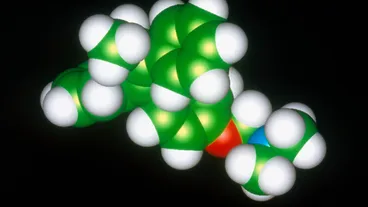
Scientists Gain Insight Into Antibiotic Resistance Of MRSA
Scientists have gained new clues into what makes certain strains of Staphylococcus aureus so resistant to antibiotics. Researchers from Massachuse...
HuffingtonPost.com | Lynne Peeples | Posted 05.15.2012
Everly Macario recalls the "primal shriek" her son released one fateful April morning in 2004. By the end of the day, Simon Sparrow, who had not yet t...
HuffingtonPost.com | Lynne Peeples | Posted 05.10.2012
Waste from people, pets, pigs and even seagulls may be playing a significant role in the rise of antibiotic-resistant infections, including methicilli...
HuffingtonPost.com | Lynne Peeples | Posted 03.23.2012
The U.S. Food and Drug Administration must act on scientific knowledge that the overuse of antibiotics in food animals has contributed to the rise of ...
HuffingtonPost.com | Lynne Peeples | Posted 02.11.2012
After nearly succumbing to an antibiotic-resistant infection contracted from one of his hogs, Russ Kremer went cold turkey. He exterminated his diseas...
HuffingtonPost.com | Lynne Peeples | Posted 01.09.2012
The Food and Drug Administration's latest move concerning the use of antibiotics in farm animals garnered a good deal of praise last week, but public ...
HuffingtonPost.com | Lynne Peeples | Posted 12.23.2011
The U.S. Food and Drug Administration announced Thursday its withdrawal of a decades-old proposal to limit the use of antibiotics in animal feed, a mo...
HuffingtonPost.com | Lynne Peeples | Posted 11.29.2011
As families across America adorn their dinner tables with plump, juicy turkeys this Thursday, they've likely given little thought to what their future...
The Huffington Post | Amanda Chan | Posted 11.26.2011
Those hospital curtains that give privacy to patients could also be harboring drug-resistant bacteria, including the infamous methicillin-resistant st...
Andrew Gunther | Posted 11.19.2011
When it comes to matters of global human health, surely honesty and transparency must always prevail? Unfortunately, history tells us otherwise.
HuffingtonPost.com | Lynne Peeples | Posted 11.15.2011
Just days after Cargill announced its second major recall in the last two months of ground turkey linked to antibiotic-resistant salmonella, a new re...
HuffingtonPost.com | Lynne Peeples | Posted 10.16.2011
"Here's the big secret that no one wants to talk about: We're not very good at keeping what's inside a cow's intestines out of the meat." The roomf...
The Huffington Post | Meghan Neal | Posted 09.14.2011
More good news for coffee drinkers? Possibly. A government study looked at 5,500 Americans and found those that drank tea or coffee had half the ch...
Andrew Gunther | Posted 08.26.2011
E. coli is resistant to several classes of important antibiotics. And the consensus is that one of the most likely reasons for the development of this multiple-resistant strain is the misuse of antibiotics in intensive livestock farming systems.
AP | By MIKE STOBBE | Posted 07.11.2011
ATLANTA -- Hate insects? Afraid of germs? Researchers are reporting an alarming combination: bedbugs carrying a staph "superbug." Canadian scientists ...
Everly Macario, ScD, MS, EdM | Posted 07.08.2011
My personal goal at the MRSA Research Center is to make the term MRSA as familiar as AIDS and, most importantly, to raise awareness about the cause of the current MRSA epidemic: antibiotic resistance.
David Kirby | Posted 06.15.2011
Maybe now the average American consumer will finally take note, and demand that Congress do something. Candidate Obama ran in support of an antibiotic ban in 2008, but has done little to advance the cause since then.
Judith Johnson | Posted 05.25.2011
I can only hope that healthcare reform will eliminate the reasons why nurses and other healthcare workers repeatedly giggle dismissively as they say that hospitals are the worst place to be if you are sick, that they are hotbeds for infection.
David Kirby | Posted 05.25.2011
Pig producers who sell meat to Russia must wean their animals off antibiotics at least two weeks prior to slaughter. Japan requires a four-week flush-out period. This begs the question, what do the Russians and Japanese know about meat that we don't?
Brad Friedman and Desi Doyen | Posted 05.25.2011
TWITTER: @GreenNewsReport. The 'GNR' is also now available on your cell phone via Stitcher Radio's mobile app!. IN TODAY'S RADIO REPORT: Steppin' ...
Jerry Cope | Posted 05.25.2011
The crucible of the Gulf provides a harrowing example of the insanity we now consider normal.
David Kirby | Posted 11.17.2011
Last week, I wrote a column about the disturbingly high rate of MRSA (a drug-resistant staff bacteria) found in meat. Today, I am pleased to write that the USDA shares my concerns.
David Katz, M.D. | Posted 11.17.2011
For the sake of our health, the ethical treatment of fellow creatures and the hope that our antibiotics will work as intended when we need it -- we should eat less meat, more plants.
David Kirby | Posted 11.17.2011
MRSA is showing up in random samples of raw pork sold in supermarkets, and to a lesser extent in beef and chicken. Yet these potentially deadly cuts have never been yanked off the shelves.
Judy Shapiro | Posted 05.25.2011
Hospital infections -- a highly preventable hygiene issue -- has gone largely under the radar because the CDC understates the scope and deadliness of this health concern.
Posted 05.22.2012