For more than 30 years I have been developing programs that help young people see new relevance in their respective religious traditions. Most of that work took place under the aegis of the PANIM Institute for Jewish Leadership and Values, an organization that I founded in 1988. In this, the second of three articles (read the first here), I share some insights that may be valuable to others who are struggling with the same challenge.
With the passage of the Serve America Act in March 2009, President Obama made good on a campaign promise to grow the number of opportunities for young people to serve America. The bill grows the number of service opportunities under the Corporation for National and Community Service from the current 75,000 to 250,000. These volunteers will be deployed on initiatives as varied as education, health care, energy and poverty relief.
To be sure, this is an initiative that had broad bipartisan support. In fact, during the heat of the presidential campaign, one of the few joint appearances of Barack Obama and John McCain was at a 9/11 rally in New York City convened under the auspices of ServiceNation. Both candidates spoke of the centrality of service to the health of our nation's democracy.
The symbolism of 9/11 for that joint appearance was poignant. The day conjures up the fear that religious commitment can too easily be turned into intolerance and acts of violence between ethnic and faith communities. But one of the most promising developments in American society is the growing realization that faith communities can inspire and support the kind of citizen behavior that is the goal of the Serve America Act.
Let me provide one small illustration:
Twenty-two years ago I founded an organization called PANIM, whose goal was to inspire young Jews to a lifetime of leadership, activism and service based on the teachings of the biblical prophets. Tens of thousands of young people have been touched by our programs and have gone on to engage in acts -- sometimes small and sometimes grandiose -- to make a difference in their communities, their country and the world.
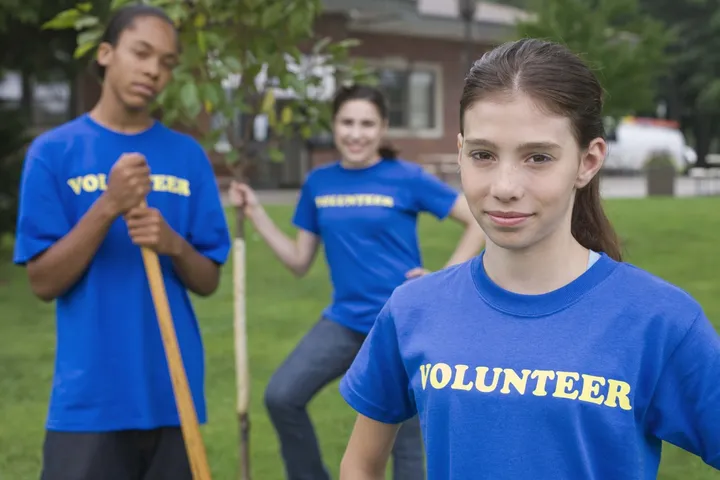
In 2005 PANIM launched J-Serve as the Jewish manifestation of Youth Service America's Global Day of Youth Service. For the past couple of years, over 10,000 Jewish teens joined millions of other youth around the world in working in food pantries, nursing homes, inner-city schools, homeless shelters, green projects and more.
Admittedly, the Jewish sampling with which I am most familiar is just the tip of the growing iceberg of community service. Yet for those who question all the fervor surrounding the growth of youth service, let me offer a small testimony. Service, properly implemented, plants the seeds for a lifetime of civic engagement.
Studies like Robert Putnam's Bowling Alone give evidence of the progressive deterioration of America's civic fabric. And for those who think it doesn't matter, I believe that the growing coarseness and partisanship of the public debate in this country is a direct result of the fact that fewer and fewer Americans have a sense that their well-being is linked to the well-being of other Americans who might not share their race, class or political ideology.
Community service is not a panacea to the breakdown of America's sense of common purpose, but it may be the best response we have to the problem. We have seen alumni of our programs go on to organize divestment campaigns in local jurisdictions in an attempt to halt the genocide in Darfur; create opportunities for middle-school girls in at-risk communities to engage in after-school arts programs; coach the children of immigrants to take college entrance exams and help them gain entry into colleges that they believed were beyond their reach; and raise money through benefit concerts to help homeless families.
And PANIM is only one small organization advancing a social responsibility agenda in the Jewish community. Hillel is sending thousands of college students to serve communities on alternative spring break. Many more service opportunities for young adults in developing countries are being created by the American Jewish World Service. AVODAH: The Jewish Service Corps places college graduates in cities where for a year they work with organizations seeking to combat poverty.
Nor is this phenomenon restricted to the Jewish community. Churches across America send delegations of young people to help with the rebuilding of post-Katrina New Orleans. Habitat for Humanity has mobilized thousands of people to build homes all over America and their work has been infused with the teachings of the Gospels. The Interfaith Youth Core is an international project based in Chicago founded by Eboo Patel, a Muslim with a vision for a world in which faith can be a force for social good. Auburn Seminary in New York has a groundbreaking program called Face to Face, which brings together young people of many faiths from conflict-ridden areas around the world (e.g., the Middle East, Ireland, the Balkans, etc.) in order to learn the art of dialogue and coexistence.
Central to the work of all these groups are three core principals that come from the Bible.
- Lovingkindness: The Hebrew word, chesed, is also tranlated as "compassion." The concept is at the core of Leviticus 19:18: "you shall love your neighbor as yourself." Now known as the Golden Rule, this principle has been rendered in a dozen different variations in varying religious traditions of the world.
- Care for the stranger: This rule is the most often repeated commandment in the Bible, appearing 36 times. It reminds us that a society can be judged by how well they care for those in their midst who are different from the majority culture.
- You shall not stand idly by: Leviticus 19:16 prohibits a person of conscience to turn away from the suffering of another human being. Essentially, we are enjoined to intervene to stop any form of persecution or violence being exercised against another person. When the act is conducted against an entire people (e.g., genocide) the requirement is all the greater.
Precisely at a time when the world seems to be spinning out of control, it is heartening to see the emergence of a new global ethic of social responsibility capturing the minds and hearts of young people all over America. While the movement toward global service may be relatively new, it is worth remembering that the teachings are among the oldest known to civilization.
Rabbi Sid Schwarz is a senior fellow at Clal: The National Jewish Center for Leadership and Learning and the author of Judaism and Justice: The Jewish Passion to Repair the World.