"How can you leave your children?" It was the question leveled at me when I was away from my children for four months to interview the atomic bomb survivors in Japan. I heard it again, when I was facing divorce and my husband and I had to decide what was best for the children. We decided that he would keep primary physical custody and, as a joint legal custodian, I would move down the block and be a very involved, noncustodial mother. It worked for us. It was the best choice for the children in a time of heartbreak and loss.
But the rest of the world, it seems, could not agree.
An article about my choices that was published on Salon.com generated so much public conversation that it continued on television. Rage on behalf of my not-actually-abandoned children can be extreme. The responses directly to my website split along clear gender lines, and expose our great anxiety, not only about the perfect motherhood ideal that we can't live up to, but also about our transforming family structures and our high divorce rate.
Men -- not all but many -- tend to accuse, call names and threaten me. I am "evil," "worse than Hitler," "trailer trash and a perfect liberal," and other things that don't bear repeating. One told me I was only "created to create." Another man in the Huffington Post comment section made up a whole story about how the Vermont family court stripped me of custody. His comment was eerily authoritative, and entirely impossible: I don't live in Vermont!
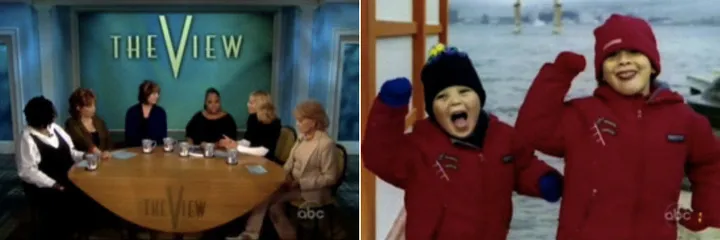
These angry men have missed the point. I have not, as one accused, "left my children in an orphanage." On The View, Joy Behar pointed out that if I was a man, we would not be having this conversation, and it's true. When I was separated from my children to do my work, people called my husband "a saint" for taking care of his children. If he had left, and I, as the mother, had stayed behind, people would have asked me how he was doing over there and said how exciting it must be for him to be pursuing the work he loved!
As a noncustodial mother, I am exactly the opposite of a deadbeat dad. I give my children love, time and money. We cook together, do homework, play games and have an old-fashioned "how was your day?" conversation at dinner. Since I work from home, our days start after school, the minute they arrive, not after the traditional workday. They feel like they spend the same amount of time with me as with their dad, probably because our time together is focused, quality time when they are the center of my attention. And still, because I am a woman, people equate this with "leaving."
Women's responses to me have been different. More women than men have written to me directly, and they tell me their stories. Most are supportive, but even those who are not have shared advice or a glimpse into their own lives. So many have offered encouragement and thanked me for telling my truth, and some report, unfortunately, that when they tried to express their support in the comments on an article, they too were attacked in turn. But ambivalence about motherhood and struggles with divorce mark many of these stories. Even women who have dedicated themselves to a more traditional motherhood are sometimes exhausted by the overwhelming demands of the myth of the perfect mother and their role as caretaker in their marriage.
Why do we continue to cling to a dream that is increasingly impossible in a society where approximately half our children live with divorced parents, single moms, grandparents, LGBT parents and single dads? Partly, I think, because of our wish for unconditional, all encompassing love, much like the fairytale of the prince on the white horse coming to rescue the beautiful maiden. Love is essential, of course, and so is caretaking. The problem is that, in our society, we put the full responsibility for providing it on the woman. Our mothers are our knights in shining armor: our prince.
It has become clear, in my conversations with women, that too many are functioning as sole caretaker: caring for children, spouses, clients or patients at work if they do work, and then elderly parents as time moves on. Their needs wait until everyone else's are satisfied. Some women embrace this role and do it with love, but that doesn't make them less exhausted and ambivalent. It is this "role" that I was rejecting when I said I didn't want to be a "mother," but many people have put different words into my mouth, claiming that I do not want my children. This is wrong. These two things are not at all the same. But the misunderstanding is very important to look at. If we let the all-encompassing role of "mother caregiver" be the equivalent to love, there is no way to make changes and improve the situation for women.
My family is trying to recreate itself in love, honesty and support of every member in it-- adults and children alike. I love my sons and they know it. Like many divorced parents, I don't sleep in the same house with them, but that does not mean I am evil or human garbage. Roles and gender expectations, aside, the opinions that matter are the ones voiced by the people who see my family in action. Like the high school counselor at my sons' middle school who told me last week that my former husband and I were the best co-parents she has ever seen.
WATCH:
Dr. Peggy Drexler: Women and Revolution -- What Now?
The Outlaw Mom
(http://www.theoutlawmom.com)
women work bring food on table these days....it sad truth.
Women are believed to be loving and responsible. Certain abusive people judged Ms Rizzuto's actions against that high standard and wrongly found fault. That's awful and I condemn any abuse she received. But it seems to me that men are expected to be lazy, selfish and irresponsible, especially towards children. And yes that means people are surprised and delighted when a man takes care of his kids. But honestly, I find being judged against such an insultingly low standard to be pretty offensive. I'd rather fail at hitting a high standard than succeed at a low one.
I guess my message is this. Yes it's upsetting to be treated differently than men in this but please be careful what you wish for. Being assumed to be selfish and useless isn't a bed of roses either. I'd trade places in a heartbeat.
But here's the thing - knights are noble and inspiring. Traditional motherhood and fatherhood is also inspiring because it's about total love between spouses and for the family. That's what inspires children and can make us better as a society. That's what people look up to.
I think we could use more inspiration in this day and age.
The View is wrong. If you were a man, they'd wonder why you had custody of the kids. You wouldn't be invited on the View in the first place.
For me this article hits the nail on the head twice.
Firstly, when you say "The problem is that, in our society, we put the full responsibility for providing it (love/caretaking) on the woman. " I believe life for all Americans - especially children - would be improved if all fathers had permission to/were held responsible for greater participation in the rearing of their children and the maintenance of their households.
And then secondly when you state: "If we let the all-encompassing role of 'mother caregiver' be the equivalent to love, there is no way to make changes and improve the situation for women." Again, I agree it is women who need help most in this situation but I also see that children and fathers can benefit tremendously by a more equitable sharing of parenting and homemaking participation (maybe more than most men dare to dream).
Maybe less work might get done... maybe. However, I think the improvement we'd see in our children and families would more than compensate.
Thank you for making your brave choices and for so eloquently sharing them with the general public. I imagine you are more of an inspiration than you know.
In my experience, kids are overrated, and a lot of parents positively wallow in kiddie angst. But children are a lot more resilient than parents and pundits seem to think. They don't need to be surrounded by a constant nurturing bubble, and in fact, I think that in most cases it inhibits their maturation and development.
You can make as many excuses as you want, but the fact remains the same. Children can have a fully functioning loving family, however their situation is, but it is a completely different sentiment when the parent didn't want to bear the children in first place.
Still, I have to hand it to you...you rephrase your excuses well. Give yourself a pat on the back for successfully BSing parenthood.
There was NOTHING unplanned about these pregnancies, and even if there was, she admits that she didn't want children because she was "afraid of being swallowed up" by them... in essence, giving herself up wholly to care for another human being. I guess that part is too hard for her.
She was in a committed relationship, since she was 17, but at the first taste of freedom, she bailed. As she puts it, "we destroyed our marriage in less time than it takes a credit card company to report you for nonpayment."
That's her fault too.
As the vows go, "[...] I promise to be true to you in good times and in bad, in sickness and in health. I will love you and honor you all the days of my life. [...] to have and to hold, from this day forward, for better, for worse, for richer, for poorer, in sickness and in health, until death do us part."
Apparently, none of this, in marriage or parenthood, applies to her. Therefore, neither does my sympathy.
Yes, men or woman would be given slack if it was believed that they had to go in order to keep their job, but if you're doing it to put yourself before your kids, people are justifiably going to judge you -- gender besides the point.
Who are you to decide whether a job is "necessary"?
Leaving children with a competent and loving parent to work is not neglect, selfish or bad.
Please, please please. It's a lifestyle choice. I don't go haranguing people about adopting dogs, or driving Volvos. Those are things I like, and I wouldn't dream of judging people for having cats or driving an Audi. I see the kid thing as the exact same.
PS - Misery loves company. Could it be that those new parents simply want their "free" friends to be as miserable as them? Do they want me to justify their loss of their former selves by sacrificing mine?
So stay strong, live your life and don't be like this author who had kids even though she knew she didn't want them. She isn't getting much empathy from me because she gave in and wasn't willing to endure the responsibility.
(Of course in there is the idea that people with disabilities better just take what they get and be happy it's not an institution, but still.)