iPhone app iPad app Android phone app Android tablet app More

Featuring fresh takes and real-time analysis from HuffPost's signature lineup of contributors
Rhiana Maidenberg

GET UPDATES FROM Rhiana Maidenberg
 

My Children Can't Read

Posted: 12/06/11 02:19 PM ET

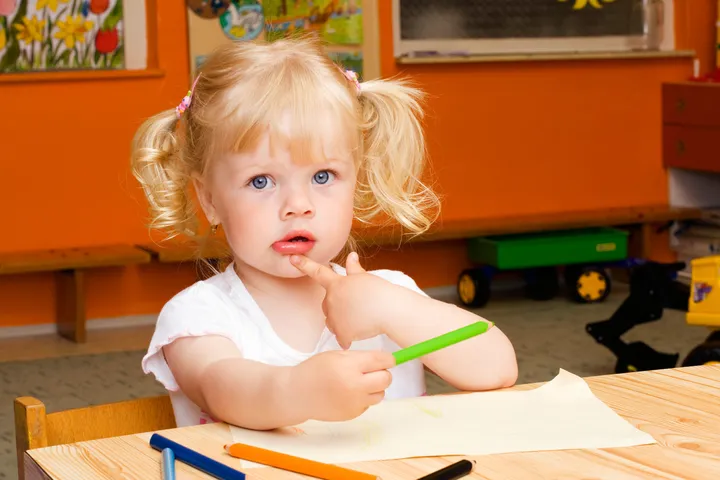
My four-year-old daughter is illiterate. She can only sight read her own name, has not memorized short board books, and can barely write five letters of the alphabet. I am more than fine with all of this. In fact, I am proud.

Don't get me wrong, my husband and I read to our children, daily. They love books, and on any given day would be more than happy to spend hours lounging on the couch with a stack of Pinkalicious and Frog and Toad stories.

However, I am not spending time teaching the girls letters, phonics, and sight words. The older daughter does not practice tracing her name, and the younger one believes that all letters spell her sister's name. We send our daughters to a play-based Jewish preschool, where the alphabet is not introduced until they enter the pre-k program. Their days are spent experimenting with paint, sand, clay, dressing up in costumes, romping outside with friends, planting seeds in the garden, and singing songs about fall leaves, the colors of the rainbow, and Moses.

Unfortunately, living in this supermommy environment, where all children are untapped tiny geniuses, I cannot visit the playground without overhearing a mother brag about how her three-year-old spends hours reading to herself and her younger brother. And, as an overly self-critical mother, whose mommy guilt only swells with each BabyCenter milestone email, I am constantly second-guessing these choices.

For only $200 the Your Baby Can Read series (as seen on TV!) promises to give your child "increased communication styles, enhanced learning ability, greater confidence, and future success!!!" The program states that parents can begin putting their baby on the path to literacy at a mere three months of age. Using their "scientifically proven" (and patented) instructional materials, parents need only to force their infants to lie in front of a TV screen for an hour or so a day, and let the magic ensue. In a matter of months, your young, bald, slobbering baby, will be able to identify simple words like: dog, drum, boy, and car (even though she may not be able to pronounce these words yet).

As enticing as it may seem to brag to all the other mothers at your playgroup that little Max has memorized over fifteen written words, most experts do not endorse this program. The Campaign for a Commercial-Free Childhood filed a complaint against the company with the Federal Trade Commission, claiming that the company uses misleading marketing techniques and that its program teaches babies to memorize, not read. The CCFC alleges that this program is not only deceptive, but harmful, since it encourages abundant television time for infants when the American Academy of Pediatrics explicitly states that children under the age of two should be allowed no screen time.

Infants and toddlers have much more valuable things to be doing with their time: finger painting, running in circles, jumping on couches, pot-and-pan beating, and annoying their siblings (to name just a few). Children, especially at this young age, learn through everything they do. Playing with dirt and water inspires scientific discovery and dipping their fingers in yogurt to smear across the freshly washed table motivates undeveloped artists. There will be plenty of time for them to learn i before e, except after c when they are sitting in school desks for the next seventeen plus years of their lives.

As for me and my girls, I know that I am instilling in them a love of literature without pressuring them to read and write before they leave toddlerhood. By making storytime an enjoyable and cherished part of our daily routine, I have every confidence that they will learn to read by the time they hit puberty.


Follow Rhiana Maidenberg on Twitter: www.twitter.com/marriedwtoddler

My four-year-old daughter is illiterate. She can only sight read her own name, has not memorized short board books, and can barely write five letters of the alphabet. I am more than fine with all of...
 
 
  • Comments
  • 685
  • Pending Comments
  • 0
  • View FAQ
Comments are closed for this entry
View All
Favorites
Bloggers
Recency  | 
Popularity
Page: 1 2 3 4 5  Next ›  Last »  (25 total)
01:33 PM on 12/23/2011
I still say this article smacks of puritanical Luddite-ism. Reading is a learned skill that when learned, provides huge amounts of joy. Learning a skill takes training and practice. I'm not teaching my child because I want her to win the Scripps Spelling Bee, I am teaching her early so that she doesn't have to wait for Mommy, or have a machine, read to her. I taught myself to read at age four. I am proud of what my daughter has been able to accomplish in school, but that should never be the motivation for learning anything.
01:03 PM on 12/20/2011
I'll provide a refreshing voice of dissent. I'm a librarian. Librarian and teacher kids are taught to read early, It opens up a world for them. We also don't buy our kids Leap Pads, because we believe in reading to and with our children. You make it sound as if reading is a torture, when it is a joy - why would I keep that joy from my child? I taught my daughter, at four, to read in three weeks, a half hour each night, with the top 100 words flashcards I bought at a store. She's the top reader in her grade, has an awesome vocabulary, and loves books. Stop acting like reading is PAINFUL. Now THAT is the real problem with this post!
HUFFPOST COMMUNITY MODERATOR
lmo913
12:16 AM on 12/22/2011
I think you are misreading. This post is about how reading is a joy. As such, you should treat is a joy, and not a chore or something that must be accomplished before the age of 3. The point is that all of these programs and pressures for babies to read (rather than be read to) actually suck the joy out of books, and out of toddlerhood. This age is for play and fun, and stories and poetry are certainly a part of that fun, but memorization (which "reading" at this age usually is) is not the same thing. Seriously, did we read the same article????
ALiberalKidd
Before U Fan Know, Liberal ON Poor, Peace, Race
12:23 PM on 12/20/2011
So her children are not reading yet but others are, good for her children and good for the other...what is the point here?
HUFFPOST COMMUNITY MODERATOR
lmo913
12:17 AM on 12/22/2011
This post is really about mommy-culture. In mommy-culture, this is this odd competition among mommies about the abilities of their children, and a mistaken belief that children who read earlier (or memorize earlier) are somehow smarter or better than other kids. She is actually addressing a point that matters in contemporary parenthood, but not many other places.
09:58 AM on 12/19/2011
There are several experts that agree with you- and take it further. They don't believe formal education should begin until ages 8 or later. Children who are allowed to learn naturally until they reach a certain brain maturity pick up reading and math concepts quicker and advance faster than children who have done the same work and reviewed it for years.
01:20 PM on 12/18/2011
I'm the same way - I read to the kids, let them play and have fun. I don't have them memorize numbers, letters or words by rote. They'll have enough of that once school starts. I want them to have fun while they are this young. Learning the alphabet when you're 4 doesn't mean you'll get into a great college!
photo
HUFFPOST SUPER USER
JuniperSunshine
Libertarian Homeschooling Mom
01:52 AM on 12/18/2011
I am a homeschooling mom who recently started doing "school" with the two year old. What does that mean? It is about 30 minutes of time spent together doing baby puzzles, playing matching games, doing yoga with siblings, and playing sorting games to learn colors. He loves it. His four year old brother enjoys a fairly academic pre-K program at home. His older sister showed no interest in learning to read early, and spent her "school" time as a preschooler drawing pictures, doing cut and paste projects, and hearing me read the Ramona series out loud.

I think early academics are just fine IF the child enjoys doing them. Some children are early readers, some are not - you can't force it. But EVERY child will benefit from having that focused time with Mom or Dad, learning about the world and exploring what he can create and do. My four year old is eager to learn letter sounds. That does not mean I'm pushing him. His older brother is autistic, so I have learned that children come with a variety of abilities and skills, whether special needs or typical. Some children actually benefit from a bit of early academics, at a gentle pace. The education has to adapt to fit the child, not the other way around.
photo
StrawHat
Eat veggies, don't vote for them
12:59 AM on 12/18/2011
I learned how to read and write in pre-school because I had older sisters to emulate -- sisters who liked to play "school". When I entered kindergarten, I was already reading my own simple books from the library and most of the Sunday cartoons. In first grade, I remember my teacher telling my mother that it was a bad thing that I could already read so well (at a 3rd grade level) because I had learned "the wrong way" (we laughed a lot about that.)

But guess what? Of the kids who started kindergarten with me who were relatively illiterate at the age of four to five, several are now doctors, lawyers, scientists, college professors, and very successful business persons.

It's OK.

K through 6 is the great equalizer. If a child has normal intelligence, no learning disabilities and education-supporting parents, they all pretty much catch up.
11:18 AM on 12/17/2011
Here's one more reading teacher to tell you you're doing it just right. My own kids read relatively late but advanced past their years almost immediately. In their early years, I read to them all the time and we still read together now that they're teens. That's the ticket, mama. Good for you.
08:54 AM on 12/17/2011
My daughter had a natural love of letters and reading but when she started K her teacher felt she was "too young" to be tested. I'm SO GLAD I insisted so that she could be developing at her own rate and not stuck sitting there while her friends learned the letters. Every child should be able to develop at their own rate and not be stuck with anyone's ideals of what is "correct" for young children.
07:33 AM on 12/17/2011
As a principal of a pre-primary school, I totally endorse your standpoint. These early years are vital to allow children to experiment and gain an understanding of their world. They should not be watching programs which promise to fast track reading. Stick to your guns! Your children will thank you one day.
09:09 PM on 12/15/2011
Yeah... you're doing the same bragging that the other moms are doing, but your children's brains won't be wired to take in the verbal information that we all have to master to do well in society. Playing and building imagination for creative thinking is great, but reading should be a part of it. You don't have to spend hours making your children trace their names, or memorize books, but every parent should at least read to their children at bedtime. JUST doing that has made my daughter love books, (she'll be 3 in Feb) and she uses her imagination with them. She sees the pictures in the books and says 'once upon a time....' and then creates a story from the pictures. Its adorable, and I know she's developing that little brain through reading. You're short changing your kids by leaving reading out of their early development.
11:25 AM on 12/16/2011
I'm sorry, did you read the same article that I did? She clearly said that she and her husband read to them daily...and they love books...smh
photo
StrawHat
Eat veggies, don't vote for them
01:01 AM on 12/18/2011
Read the article.
05:13 PM on 12/14/2011
So if you have a child in that 1 in 5 group - not relating to intelligence - wouldnt you rather teach them incase their teacher doesnt know how? And if not reading by the end of first grade we know their motivation drops considerably regardless of how much you read to them. They cant decode and arent being taught how, and so reading and especially spelling becomes ridiculously hard nomatter how much they try. They then get put in 'special' classes whereas the problem is not them- its that they arent being taught to develop phonemic and phonological awareness! You can do that with them though- in the car, in the supermarket. You can teach your child to read and spell at 3 and 4 - and they can LOVE IT. But what they will love more is not experiencing reading difficulties because you send them to a school where the Prep/ Grade 1 teachers dont understanding about reading difficulties (most unfortunately) So be balance in your approach and put the child first. If you know what I know youd be advocating early reading (which the YBCA program wont help you with) Google the Reading Whisperer for free info about preventing your child being one of the 35% + children not reading by grade 3.
05:11 PM on 12/14/2011
Interesting tha parent think this is an either /or. That we either let children be 'free' and 'creative' etc or we help them learn to read (and pressumably count etc?) We can do both. However as a reading specialist can I please ask that you separate reading from other 'academic' subjects based on the reality of what is happening in this regard. VERY few teachers actually know enough about reading and spelling to ensure that all children are reading by the end of first grade. There are 20 - 30% of ALL children (in any area, regardless of parent involvement or intelligence etc) who will have poor phonemic awareness. The very basis (along with phonological awareness) of reading difficulties. You can read to your child and be as involved as you want, you cant help them overcome this without systematic phonics teaching combined with phonemic awareness teaching, They can memorise words up to a certain number- which is the YBCR program 'seems' to have children reading (they arent reading they are just memorising words due to their shape) but this isnt reading.
03:17 PM on 12/14/2011
"For only $200 the Your Baby Can Read series (as seen on TV!) promises to give your child "increased communication styles, enhanced learning ability, greater confidence, and future success!!!" The program states that parents can begin putting their baby on the path to literacy at a mere three months of age."

How many three year olds communicate through written word? I'm going to guess 0.00%.

The most important form of communication for a child that young is more likely to be language, and non-verbal communication skills. Who cares if your young child can't read, as long as they are capable of communicating in more practical ways.
03:35 AM on 12/14/2011
Most interesting! Wouldn't it be wonderrful if all parents were so wise!