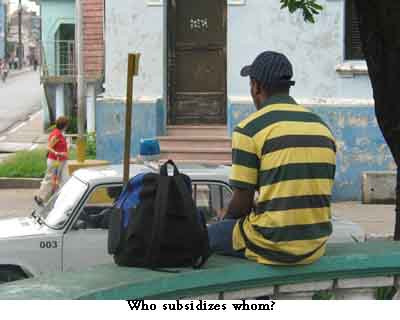
The end of subsidies
The tedium of this end of year drove me to go see the dreary spectacle of our parliamentarians in their final meeting of 2008. The formula of posing problems without mentioning their true causes returned to the hall of the Palace of Conventions this December. The whole style of speaking starts with an initial reference more or less as follows: "Our Revolution has done much to improve retail trade, although problems remain..." Without this indispensable genuflection, one could fall into an unpermitted audaciousness, or seem to be hypercritical and ungrateful.
The final speech by Raúl Castro reaffirmed the idea of ending subsidies. Hearing that phrase, we tend to think only of the end of the quota of rationed food we Cubans receive. But the call to do away with symbolic prices and unnecessary "free" services is a double-edge sword which could end up hurting whomever wields it. If we were to be consistent in eliminating paternalism, we'd need to start by reducing the burden of maintaining this obese state infrastructure that we feed from our own pockets. Workers who produce steel, nickel, rum or tobacco, or who are employed in the bar of a hotel, receive a minuscule portion of the sale of their production or of the real cost of their services. The rest goes directly to subsidize an insatiable State.
Between the symbolic price of a pound of rationed rice, and the enormous "slice" of our salaries taken by those who govern us, we are more the givers than the receivers of subsidies. Eradicating them should be our slogan, not theirs.
(This post and others can be read on the English translation of Yoani's blog, here.)