More

Featuring fresh takes and real-time analysis from HuffPost's signature lineup of contributors
Yoani Sanchez

GET UPDATES FROM Yoani Sanchez
 

When Your Neighbor's Fence Is on Fire: Gaddafi's Lessons for Castro

Posted: 10/25/11 05:26 PM ET

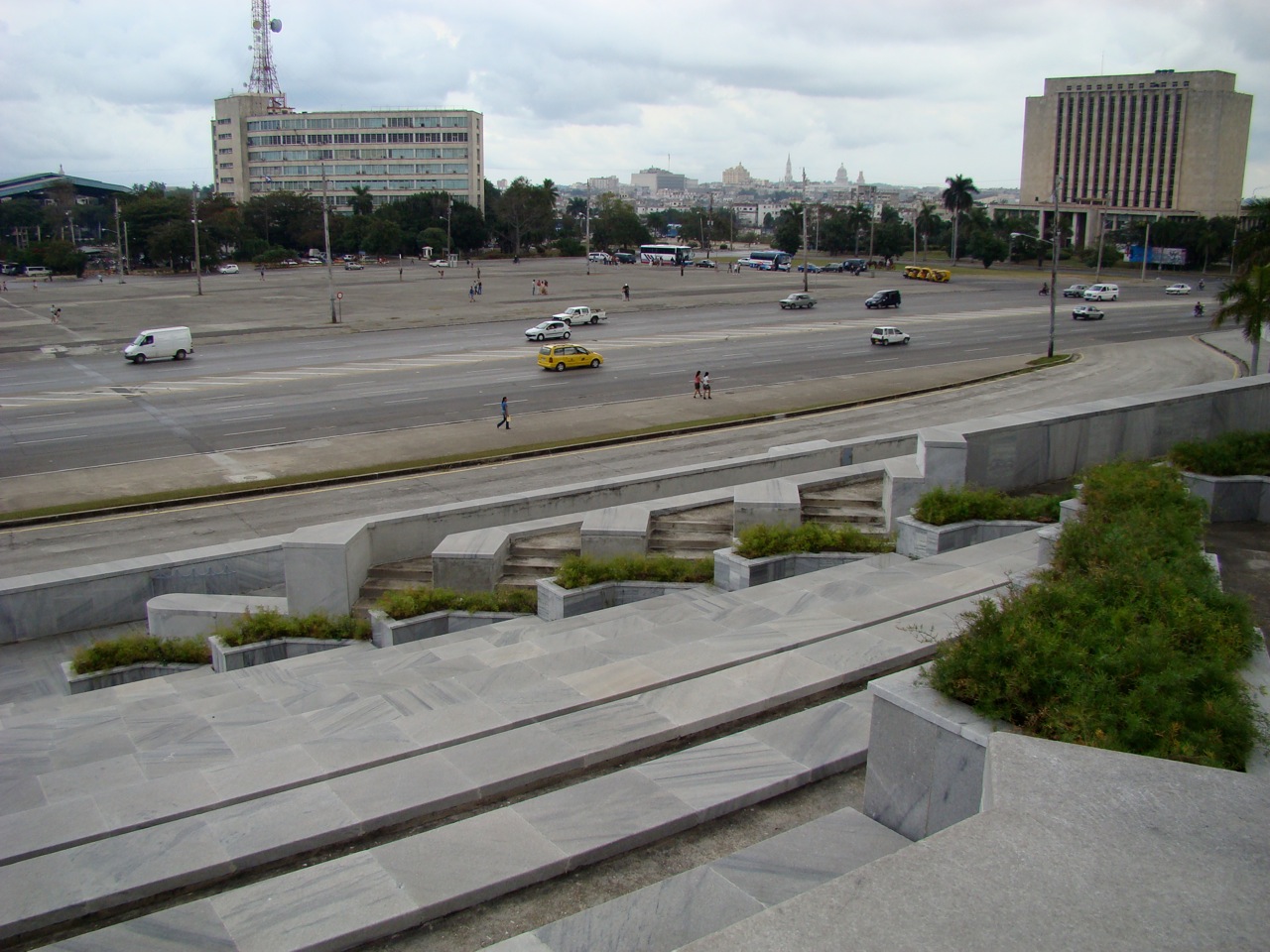
2011-10-25-DSC08540.jpeg
After the crowds go home: Plaza of the Revolution in Havana, Cuba. Photo: MJ Porter/Translator

Muammar Gaddafi suffers his death throes in front of a tiny cell phone camera. Seeing him helpless, babbling, moves us to pity. Later we are told he died from bullets shot at the convoy in which he was escaping, and from the uncontrolled rage of his captors. In Libya, the chapter of a 42-year personal mandate seems to be coming to an end, but despots have the ability to extend their presence far beyond their own lifespans. When an autocrat has been in power for such a long time, it is inevitable that in his absence we're overcome by a mix of relief and emptiness.

One of the most widespread practices of those addicted to power it so try to link their own name to the idea of homeland, their ideology to the culture of their country, their ruling party to the idea of national identity itself. As a result, those of us who live under one of these prolonged and authoritarian regimes come to believe that there will be no life for us, no future after the messianic leader closes his eyes. Dictators infect us with a pessimism towards the future, they tie us to the ancestry of an oppressive father, so much so that on his death we feel orphaned.

Not only Libyans have watched, over and over, that short video of Gaddafi's last moments. On this side of the Atlantic, millions of curious eyes have also stared at the scene. In several Latin American presidential palaces it is likely that the death throes of this autocrat have been observed with special attention. We can't forget that we live in countries repeatedly fascinated, and cheated, by caudillos.

In Havana's Plaza of the Revolution, for example, the fall of this important ally in North Africa has no doubt generated worry and uncertainty, but also great fear. Lately, all across the country, one of the most popular refrains warns, "When you see your neighbor's fence on fire, turn the hose on your own." Many, riveted by this phrase, toss it out to others like an easy-to-crack puzzle, because we all understand exactly what is implied. Watching the fall of dictators, one after another, thousands of miles away, we can only reflect on the sequel such a process could generate on our own island. People want to believe that this "domino effect" will lead to the end of all autocracies, and that our own island will not be left at the margins of this anti-totalitarian shockwave.

But it is not only ordinary citizens who are analyzing what happened in Surt, our rulers are also drawing their own lessons. From the beginning of the uprisings in Tunisia, with their subsequent spread to Egypt and Libya, police actions in Cuba have increased. Raul Castro's government knows very well that it cannot allow demonstrations by thousands of people in the streets, demonstrations that would have to be met by anti-riot police. So he has chosen to respond with "prophylactic" repression, which barely leaves visible traces, much less legal ones.

Among the most-used methods is to prevent activists from leaving their homes on significant dates, and so to avoid their taking part in opposition events. State Security operates in plain clothes from cars with civilian plates so that no camera or foreign correspondent will film uniformed police restricting the freedom of an individual.

The financial costs of increased wiretapping, monitoring dissident leaders, surrounding their houses with operatives, must be rising to numbers that haunt the budgets of certain ministries. The priority now is to avoid allowing the counter-hegemonic winds of contagion to blow from North Africa over the largest island of the Antilles. In the bloodied face of Muammar Gaddafi our authorities have seen a prophetic sign of their possible fate, and now they are trying to shield themselves to ward off a similar outcome.

In a calculated strategy they mix greater vigilance over the citizenry with promises of reforms and openings. Cubans must be made to believe that changes are just around the corner, in the hopes they will abandon any thoughts of revolt, any possible ideas of turning to street protests. It's the old and hackneyed political ploy of the carrot and the stick, only here, every time our mouths begin to close on the desired vegetable it is pulled away while the stick sinks more deeply into our ribs, hidden under the cloak of supposed popular acceptance.

Notwithstanding the enormous social and geographic differences between Libya and Cuba, Qaddafi's violent death has undoubtedly focused Raul Castro's fears. The General knows that a cheering crowd in a square can quickly become a mob, ready to lynch the leaders they obeyed only the day before. Just as he knows what desires for revenge are provoked by years and years of dissatisfaction, of the suffocation of free expression.

So now, even the slightest detail that led to the fall of the Libyan despot, to his death at the hands of his domestic opponents, must be analyzed. To avoid this end, the regime is capable of increasing repression to unimaginable levels, and spending everything it has, and more, on control. But the big question that we ask, is whether, to avoid ending up like Gaddafi, it is willing to undertake a genuine transition, a change that could save them and save us.
2011-03-30-Screenshot20110328at1.26.24PM.pngYoani's blog, Generation Y, can be read here in English translation.
Translating Cuba is a new compilation blog with Yoani and other Cuban bloggers in English.

Yoani's new book in English, Havana Real, can be ordered here.


Follow Yoani Sanchez on Twitter: www.twitter.com/yoanifromcuba


  • Comments
  • 26
  • Pending Comments
  • 0
  • View FAQ
Comments are closed for this entry
View All
Favorites
Recency  | 
Popularity
04:46 AM on 10/27/2011
Gaddafi and the Castro brothers understood each other and found comfort in knowing that they're not alone when it comes to repressing their own people. Birds of a feather flock together. Unfortunately there isn’t a solution for Cuba that doesn’t involve violence to get rid of the brutal Castros’ military tyranny. At any time the spark that ignites the prairie will arises. Quite simply, they deserve a Gaddafi’s end.
11:32 AM on 10/26/2011
I don't think Cuba has much to worry: it ain't got no oil! And what would the West do with their free medical service, free education and a social conscience when it comes to helping other countries in emergencies.
02:17 PM on 10/26/2011
So, let's keep in place all criminal regimes that does not have oil, and pretend to have free medical services!!!!!!!
photo
HUFFPOST SUPER USER
markspence
11:29 PM on 10/26/2011
It does have significant oil offshore

Spain is supposed to start drilling soon
HUFFPOST SUPER USER
Red Herring
Retired Miner, living in third world
09:58 AM on 10/26/2011
You forgot to mention one prominent police state and that is the USA. The Occupy Wall Street protestors are being gassed, beaten and arrested all over the USA. even their humble shelters have been burned and the camps leveled. These people want their corrupt government changed as well.
The only difference is that the corporate media in the USA is hiding these protests sweeping the USA. And don't even think of telling me that the USA is any less totalitarian than that of Cuba. The entire US Government is a bought and paid for vassel of corporate America.
People do not only want change in the Middle East, they want change in Western Europe and The USA as well.The light is finally coming on. Corporattions want democracy because they can buy out the successful candidates in any election just as they have done in the Western democracies. The police and military are there for only one reason and that is to do the bidding of the 1% elites.
And we now know that the president of the USA can order the summary murder of an American and has done so. So please save us from the old discredited story about how bad Cuba is, the Cuban people are just as free as Americans the only ones who are not free in Cuba are the likes of Goldman Sachs and Hedge Fund Managers, and we know what freedom for Goldman Sachs and that corrupt bunch meant for the American economy.
12:28 PM on 10/26/2011
Why has she to comment about things out her blog theme?????......
How you know all about what is happening to Wall Street protestors if they media is not informing about this?????
Why you want changes in USA but not in Cuba?????
HUFFPOST SUPER USER
balamo
07:16 AM on 10/26/2011
castro is not qadhafi...
10:02 AM on 10/26/2011
you right, he is worst, more criminal, more evil.......
HUFFPOST SUPER USER
Humberto Capiro
06:57 PM on 10/25/2011
PBS AMERICAN EXPERIENCE: FIDEL CASTRO- Pre-Castro Cuba

On the eve of Fidel Castro's 1959 revolution, Cuba was neither the paradise that would later be conjured by the nostalgic imaginations of Cuba's many exiles, nor the hellhole painted by many supporters of the revolution, who recall Cuba as "the brothel of the Western hemisphere" -- an island inhabited by a people degraded and hungry, whose main occupation was to cater to American tourists at Havana's luxurious hotels, beaches and casinos. Rather, Cuba was one of the most advanced and successful countries in Latin America.

Success by the Numbers
Cuba's capital, Havana, was a glittering and dynamic city. In the early part of the century the country's economy, fueled by the sale of sugar to the United States, had grown dynamically. Cuba ranked fifth in the hemisphere in per capita income, third in life expectancy, second in per capita ownership of automobiles and telephones, first in the number of television sets per inhabitant. The literacy rate, 76%, was the fourth highest in Latin America. Cuba ranked 11th in the world in the number of doctors per capita. Many private clinics and hospitals provided services for the poor. Cuba's income distribution compared favorably with that of other Latin American societies. A thriving middle class held the promise of prosperity and social mobility.

CLICK LINK FOR ENTIRE REPORT, VIDEOS ETC.

http://www.pbs.org/wgbh/amex/castro/peopleevents/e_precastro.html
photo
HUFFPOST SUPER USER
Comrade Komar
02:48 AM on 10/26/2011
Senator Marco Rubio already admitted, his parents left Cuba to eskape Batista poverty. Where is the thruth?
HUFFPOST SUPER USER
Humberto Capiro
10:52 AM on 10/26/2011
COMRADE KOMAR! STOP GRASPING AT THAT STRAW, YOU WILL GO BLIND! SAME OLD TACTIC OF CHANGING SUBJECT YAWN!!!

GASPING AT STAWS : 1. To depend on something that is useless; to make a futile attempt at something. 2. trying to find some way to succeed when nothing you choose is likely to work 3. Trying to find reasons to feel hopeful about a bad situation .
10:07 AM on 10/26/2011
Not, he don’t....... impossible to lie when UN records and history still is there to show Cuba's richness...... Marco Rubio parents were one of the few Cubans that left Cuba before 1959....... by the contrary, records shows that hundreds of thousands Spaniards, Italians, Dominicans, Haitians, Venezuelans queued outside Cuba's embassies to immigrate to our rich land.
photo
HUFFPOST SUPER USER
Comrade Komar
05:34 PM on 10/26/2011
If Cuba before 1959 was as wealthy and happy as You describe in previous posts of Yours, then why hundreds of thousands Spaniards, Italians, Dominicans, Haitians, Venezuelans queued outside Cuba's embassies to leave the land of plenty and emigrate to Switzerland.
05:58 PM on 10/26/2011
What I write is easily found in Records of meny organizations that since decades archives data about economy health and social issues of countries..... it is not my foult your lack of knowledge...... by the way, it is impossible to understand what you want to say in your last comment
HUFFPOST SUPER USER
TRUTHHURTS500
05:23 PM on 10/25/2011
All the above is your opinion. The whole story has not been told about Qadafi, pretty much what the West says about him. The same thing is true about what they said about Castro until to found out why Castro overthrow the previous president of Cuba, Batista. Batista let greedy American capitalist into Cuba, they brought the Mafia, Gambling and Racism with them. Sure Qaddafi has committed trouble acts, so has the United States and Britian. Qaddafi did some good things, but the West doesnt want you to hear about that because his help was not only for the people of his country, but also for people of color around the world. As long as he was helping people of color and trying to help people of color lift themselves from the sqaulor America and Britian exposed them to, he was not a friend of the West. It depends what side of the fence your're on when these so called dictators are rated.
photo
waldopepper
I'd tell you all about me if you were my friend.
06:38 PM on 10/25/2011
"Qaddafi did some good things."

The good things he did for the Libyan people would have happened no matter who was running the nation. Libya would be in an even better position than it is in currently had almost anyone been running the country. Why can you not see that?
HUFFPOST SUPER USER
Humberto Capiro
06:58 PM on 10/25/2011
‘Obama Effect’ Highlights Racism in Cuba

New America Media, News Analysis, Louis E.V. Nevaer, Posted: Dec 15, 2008

"The European Union recently dispatched anthropologists to study racism in Cuba. Their findings were shocking: Not only was racism alive and well in the workers’ paradise, but it was systemic and institutional. Blacks were systematically excluded from positions that involved coming in contact with foreign tourists (where they could earn tips in hard currencies), they were relegated to poor housing, complained of the longest waits for healthcare, were excluded from managerial positions, received the lowest remittances from relatives abroad, and were five times more likely to be imprisoned. "

http://news.newamericamedia.org/news/view_article.html?article_id=7b4ef8e52790034e043a37d170243f0f
photo
HUFFPOST SUPER USER
Comrade Komar
02:41 AM on 10/26/2011
The black Cubans receive the lowest remittances from relatives abroad only because their relatives are the poorest in the land of free.
05:21 PM on 10/25/2011
Gaddafi got rich off the oil from his country but never helped the poor people in his country. He also killed a lot of his own people too. Gaddafi did a lot of bad things to his people, that's why he was killed. If you don't know what Gaddafi did and why he was hated by his people, this article gives a great explanation on it.

http://explainlikeakid.blogspot.com/2011/10/why-gaddafi-was-killed.html
05:03 PM on 10/25/2011
Yoani Sanchez really ought to read the Freedom House report on Cuba. Even THEY say that there's change happening in Cuba, and most Cubans are feeling hopeful about it.

Google the phrase: "Freedom House Public perceptions about change in Cuba"
and it should come right up.

Yoani Sanchez's comment comes, significantly, on the day that the UN General Assembly voted 187-2 (only the US and Israel opposed) against the US blockade of Cuba, with three micro-islands abstaining.

Fidel Castro also has nothing to worry about because what happened to Kadafi won't happen in Cuba, no matter how much the Miami Cuban exile militants would wish that it would.

The last time there was anything remotely resembling civil unrest was in 1994. And Fidel Castro personally went there, unarmed, and SPOKE with the people, who then cheered him and went home.

Fidel Castro has been warning the world about what NATO was up to since February. Here's one of his comments:
http://groups.yahoo.com/group/CubaNews/message/127543
photo
HUFFPOST SUPER USER
Tasies
06:06 PM on 10/25/2011
Just got back from Cuba. One of the most educated and tolerant societies I have experienced, and will be a life long visitor to the Island. The haters have a very fixed and artificial idea on what freedom and indepence is.
HUFFPOST SUPER USER
Humberto Capiro
07:02 PM on 10/25/2011
YOUTUBE : CUBAN Documentary - "Wishes on a Falling Star"
http://www.youtube.com/watch?v=Afnx7j1m6eA&annotation_id=annotation_725071&feature=iv

Cuba, in the 50th year of the Revolution.: While the Castro brothers face their certain end, an uncertain future hangs over the island. Some people are afraid, many cannot wait, but all shudder and hope that the changes will be positive. This documentary leads the audience through the discovery of this hope, through a tourist's camera which looks to be turned off and oblivious to the conversation at hand, yet is focused on candidly capturing each person's wishes.
Clandestine underground shops, businessmen experienced in all things illegal, dodgy pimps, mothers who force their daughters into selling their bodies -- the hidden face of the State which welcomes tourists into its luxury resorts is openly displayed beyond censorship's control.
One special guide is Yoani Sanchez, the independent blogger, a leader of the new, peaceful revolution -- the revolution of ideas. The internet is its main instrument, while the government attempts to limit computer use with any means possible in a pushing and pulling of ideals. In the interview, recorded in a secret location, the young writer speaks about her country's ruin, and where Raul's reforms have no effect on everyday life.
Castro's supporters and dissidents, young and old -- none deceive themselves that the star of the revolution will shine on for much longer. And this is what this project focuses on: the wishes on a falling star.

FREEDOM is KNOWLEDGE
KNOWLEDGE is FREE