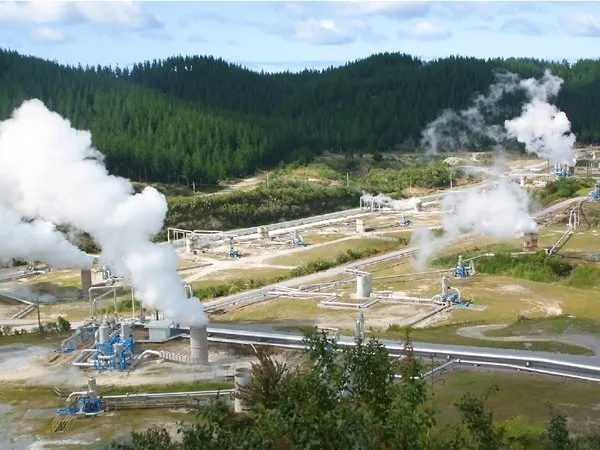
A Guide To Geothermal Energy

digg Share this on Facebook Huffpost - A Guide To Geothermal Energy stumble reddit del.ico.us RSS

Huffington Post
First Posted: 08-28-08 09:31 AM   |   Updated: 09-28-08 05:12 AM

I Like ItI Don’t Like It
Geothermal Energy

Maybe you've been hearing more about geothermal energy lately -- it gets mentioned more in the mix with solar and wind these days, especially when politicians are listing off, quickly as possible, all the forms of renewable energies they can think of. In case you don't know much about it, HuffPost Green has compiled this little FAQ.

What is geothermal energy?

Geothermal energy is a cheap and largely untapped natural energy resource. It's an intriguing sustainable energy source due to its unlimited supply, 24-hour availability and ability to decrease reliance on fossil fuels.

The EPA defines geothermal for us:

Geothermal energy is produced from the constant temperature of the earth. This can be accessed by drilling into the earth and extracting that heat and turning it into usable energy. Geothermal energy is an enormous underused resource that provides clean renewable energy in virtually unlimited supplies.

Blogger Michelle Bennett of CleanTechnica praises geothermal energy's non-stop energy supply:

The potential return could be as enormous as the forces of nature at work: clean, green, unlimited energy for the rest of this geologic era. Unlike solar and wind, geothermal generates a steady supply of energy 24 hours a day, everyday. Anything so abundant and predictable won't go untapped for long.

What geothermal energy is, can essentially be described with the sentence; heat contained and produced by the heating of the earth in two different ways. The more powerful geothermal energy comes from deep within the earth, where the temperature is hot enough to melt the surrounding rocks. The second source of geothermal energy is as a results of the suns rays beating down on the land surface. We shall now look into these two main sources.

How Does It Work?

One of the methods to generate electricity from geothermal energy is by pumping hot water into sedimentary hotspots. The steam generated by this method is used to produce electricity. The condensed steam is again circulated into the permeable sedimentary stream of a hotspot.

Another method is by using volcanic magma. The temperature of partially molten magma is approximately 650 degree Celsius. This heat is used to boil water to generate electricity.

Some geothermal plants also use the hardened magma that is extremely hot. This system uses hot dry rock. Pipes are looped through these hot dry rocks through which water is circulated. The heat of the rocks converts the water into steam prior to transferring the heat to a steam generator.

How Much Energy Could Be Generated?

Google will invest $10 million to the development of enhanced geothermal systems (EGS). According to Treehugger, it takes just 2% of the heat present beneath North American soil to fulfill the United States' energy needs. Last week, scientists asserted that just 1% of Australia's geothermal energy potential is enough to power the nation for 26,000 years. This change in Australia's energy source will help to drastically reduce worldwide carbon emissions.

Currently Australia generates about 77% of its electricity from coal and is the world's largest per-capita carbon emitter, with individual emissions being five times those of China.
Story continues below
advertisement

Where Is It Currently In Use?

Geothermal energy is currently used in homes throughout Europe and is most popular in Iceland, Sweden, Norway and increasingly in the United Kingdom. In June, Germany instituted a tariff to build up its geothermal electricity use. By 2015, the German government hopes to run hundreds of geothermal power plants.

An increasing amount of organizations are utilizing geothermal energy such as the Oregon Institute of Technology, which is the first university to be fully sustained by geothermal power.

But if you're a politician and want a chance to list off as many renewable energy types as possible, check out the new visitor center at the Queens Botanical Garden: \

It's considered the greenest public building in New York City due to its advanced green construction and energy-saving technology. The NRDC hails the building as the "model of efficiency."

It gets 17% of its energy from rooftop solar panels, it heats its water using geothermal power and has an 8,000 square foot green roof that is performing beyond expectations. According to Jennifer Souder, the Garden's Director of Capital Projects, preliminary tests from last summer measured the building's green roof temperature at 82 degrees, while nearby white and black tar roofs were cooking at 115 and 170 degrees respectively. Expect significant energy savings and a reduction in the "urban heat island" effect to result from this facility.

Related:

::Consider if geothermal heat pumps are right for your home from the Huffington Post
::Read about the US Department of Energy's Decision To Invest $90 Million In Advanced Geothermal Research on the Huffington Post
::More at the Huffington Post Green Energy big news page

Maybe you've been hearing more about geothermal energy lately -- it gets mentioned more in the mix with solar and wind these days, especially when politicians are listing off, quickly as possible, all...
Report Corrections
 
Comments
54
Pending Comments
0
iPhone App Promo

Want to reply to a comment? Hint: Click "Reply" at the bottom of the comment; after being approved your comment will appear directly underneath the comment you replied to

View Comments:
- research I'm a Fan of research 234 fans permalink

test

    Favorite    Flag as abusive Posted 03:23 PM on 08/29/2008

Check!

    Favorite    Flag as abusive Posted 04:36 PM on 08/29/2008
- TrevorAlan I'm a Fan of TrevorAlan 4 fans permalink

So, other than the high investment to return ratio, is there NO real downside to geothermal? Is it just a matter of biting the bullet to build these things and watch a very slow return on investment grow over time.

Is there any possibility of releasing signifigant quantities toxic or greenhouse gases. Is there a higher possibility of fouling aquifers.

I've got co-workers who keep hyping nulclear because it is "clean." But EVERY power source is clean if you don't look closely at all its upstream and downstream effects. Is there anything about geothermal we are overlooking?

    Favorite    Flag as abusive Posted 12:47 PM on 08/29/2008

TrevorAlan,

There is a decent amount of filthy stuff that comes up with conventional high temperature geothermal steam, especially in the high temperature (+200 C) areas. I know of at least one major field in Iceland which has remained undeveloped, since the local groundwater situation makes it too difficult to properly dispose of the sulphur-rich steam condensate.

The steam also comes up with varying amounts of carbon dioxide, hydrogen sulfide and other gases, so there are some greenhouse emissions although they are much less on a per-MW basis than in fossil fired plants.

With rare exceptions, conventional geothermal is not entirely renewable, although many fields are "mined" on a timescale of thousands of years. I have seen no credible evidence for any large scale earthquakes caused by geothermal plants.

The biggest environmental issue with geothermal plants is usually all the mess that is made on the surface, such as roads, pipelines, wellhead facilities and condensate disposal.

    Favorite    Flag as abusive Posted 09:39 PM on 08/29/2008

OK, let me teach you a few things about geothermal energy, since this article is a bit muddled up.

There are basically 3 ways that have been pursued to use this energy.

1. Use the earth as a heat sink and source for heat pumps, as the heat sink for airconditioners in summer and as a heat source to drive heat into houses in winter. This can be done pretty much anywhere, since it does not need any net heat flow from the ground on a yearly basis.

2. Drawing heat from the earth by pumping water into hot dry rock, and try to recover it after it flows through natural or man made cracks and heats up. This is tricky and still not on commercial scale yet.

3. Drill into areas with heavily fractured rock with high temperatures and good water and steam flow.. This can provide dirt cheap energy, but unfortunately, these areas are few and far between.

The US could make large scale use of option 1, option 2 has the greatest potential and is virtually endless, but needs the most R&D. Iceland and a few other places are blessed with no. 3, but most locations can only use options 1 & 2.

    Favorite    Flag as abusive Posted 08:15 AM on 08/29/2008

You need to read up on reality. Even Iceland generates most of its energy with... hydroelectric plants. And those are maxed out in the US. In Iceland they just have become a source of devastatingly large scale manipulation of a fragile ecosystem.

http://en.wikipedia.org/wiki/Renewable_energy_in_Iceland

Not to mention that 30% of their energy comes from... wait for it... oil and coal imports.

Sorry. Geothermal sucks, even in Iceland. In the US it simply doesn't matter.

    Favorite    Flag as abusive Posted 11:51 AM on 08/29/2008

KTM,

I actually worked on this particular reality.

Nearly all space heating in Iceland is done by geothermal heat, the hydropower provides the bulk of the electricity. Most new electric capacity will come from geothermal, since the cheapest hydropower spots are already developed.

Most of the green controversy over power generation in Iceland is due to hydropower, and the local environmentalists have advocated for more geothermal development and less hydropower development.

Iceland uses a huge amount of oil on the fishing and automobile fleets, but practically no coal. A good chunk of CO2 emissions come from aluminum smelters, who burn carbon electrodes.

I once ran the numbers on my heating bill in Reykjavik, oil would have to be under 50 cents per gallon to compete with the geothermal water, so I wouldn't say geothermal "sucks".

Most US households will never be able to get their heat this cheap, but ground sink heat pumps can still make a big dent in cutting down on oil and gas heating in the US.

    Favorite    Flag as abusive Posted 12:23 PM on 08/29/2008
- TrevorAlan I'm a Fan of TrevorAlan 4 fans permalink

And as to the amount of Geothermal poer used in Iceland--When you build your nation on a volcano, yes you can get a lot power from geothermal. I suuppose Hawaii should look into more Goe power, parts of No. California, Oregon and Washington, maybe the area near Yellowstone. But Nebraska's going to have a little more trouble.

    Favorite    Flag as abusive Posted 12:29 PM on 08/29/2008
- Destin I'm a Fan of Destin 55 fans permalink
photo

Sounds like a positive thing, matter of fact, article points out nothing but positives. What, if any, are any drawbacks or repercussions to be had from harnessing this type of energy?

    Favorite    Flag as abusive Posted 08:22 PM on 08/28/2008
- Semaj51 I'm a Fan of Semaj51 4 fans permalink
photo

Its like they say in real estate -- "Location, location, location!"

Geothermal usage in the U.S. is only practical around the Yellowstone area and active volcanoes in Alaska and Hawaii. For all other areas you will need deep drills (more than a couple of miles) to get to high temperature areas.

    Favorite    Flag as abusive Posted 09:32 PM on 08/28/2008
- mamacat I'm a Fan of mamacat 119 fans permalink

Not true.

There are many areas of the world where geothermal can be tapped without going down thousands of feet. In the U.S., the most easily tapped geothermal areas are in the Western states. If one is willing to drill down thousands of feet, then almost any spot on the surface of the planet could be adapted to geothermal.

More than half of all of the geothermal power tapped in the entire world is in California. "The Geysers" plant north of San Francisco harnesses more geothermal energy than every other plant combined, on Earth, not counting any plants that have come online in 2008.

In the U.S. there are over 1000 geothermal projects funded and under construction at this time, but that is still a small fraction of the potential.

While Iceland gets almost all of its energy needs from geothermal (as a result of policies implemented since the 1970s), the population of Iceland is so small that the total production is minor relative to what is produced in the U.S..

    Favorite    Flag as abusive Posted 01:20 AM on 08/29/2008
- RedneckDem I'm a Fan of RedneckDem 53 fans permalink
photo

Go to google- type open and closed loop residential geothermal. Yes, you are correct in your assumption that for high volume geothermal electrical generation you need a constant high heat source. But when it comes time for replacing heating and cooling systems in your home, a geothermal system is super efficient and the price is quickly becoming more competitive. I long for the day that I can afford to install my own solar or wind, combine it with high efficiency appliances and HVAC products and then crank up the heat or a/c and not worry about a thing...

    Favorite    Flag as abusive Posted 10:24 AM on 08/29/2008
- jsarets I'm a Fan of jsarets 134 fans permalink

Standard large-scale geothermal requires natural dry stream beds, such as The Geysers in CA, the most productive geothermal plant in the world. These hot rock formations are naturally fissured and sealed against surrounding volcanic rock, so all we need to do is pump water down there and steam shoots out the other end. It's a little more complicated than that, but it's still a remarkably simple and elegant system.

Enhanced geothermal technologies allow heat to be extracted from hot rocks that are either not fully sealed or not sufficiently fissured. A variety of techniques are being evaluated, such as using sonic waves or acid injections to turn ordinary rock formations into efficient heat exchangers. There are problems with many of these ideas. Although we don't know for sure, we can't eliminate the possibility that EGS research may have triggered an earthquake in Italy.

Decentralized geothermal heat exchange using ground loops heat pumps, however, is existing technology that's ready right now. Extracting heat from or rejecting heat to the ground is undeniably the most carbon-efficient method of space and water heating in any climate, and it's the most efficient method of space cooling in humid climates. A ground loop heat pump requires at little as 20% the energy of a 100% efficient electric boiler because it moves heat instead of creating new heat.

    Favorite    Flag as abusive Posted 02:34 AM on 08/29/2008
- TrevorAlan I'm a Fan of TrevorAlan 4 fans permalink

But isn't the heat exchange system you are talkng about simply a more efficent way to heat/cool, NOT actually a power source?

    Favorite    Flag as abusive Posted 12:38 PM on 08/29/2008
- research I'm a Fan of research 234 fans permalink

I urge caution:

Search Geothermal earthquakes

    Favorite    Flag as abusive Posted 02:24 PM on 08/28/2008
- TrevorAlan I'm a Fan of TrevorAlan 4 fans permalink

I have posted questions about unforseen problems with geothermal. But the immense forces which cause earthquakes, I HIGHLY doubt geothermal would affect those. I would question whether any earthquakes near geothermal sites are caused by the Geothermal plants or coincidences.

Again, earthquakes involve TRILLIONS of tons of rocks, I'd be very skeptical about humans, in all our ability to muck things up, being able to have the slightest effect on them with anything less than a high-yeald hydrogen bomb.

    Favorite    Flag as abusive Posted 01:05 PM on 08/29/2008
- research I'm a Fan of research 234 fans permalink

The dirty word filter keeps me from posting the links, just search:

geothermal earthquakes

    Favorite    Flag as abusive Posted 07:15 PM on 08/29/2008
- leduck I'm a Fan of leduck 22 fans permalink
photo

the beauty of the whole thing is that some regions would be good for wind
others; solar concentrators
and then there are regions that can exploit geothermal
or hydroelectric (pacific northwest)

so well some people will be SOL..., and others will be in much better shape

in other words..., different regions will be able to handle peak better then others

    Favorite    Flag as abusive Posted 12:05 PM on 08/28/2008
- leduck I'm a Fan of leduck 22 fans permalink
photo

"Iceland, Sweden, Norway and increasingly in the United Kingdom"
Iceland sits directly on top of a rift zone
the atlantic is pulling apart there and magma rises to fill the gap
the atlantic is getting bigger as the pacific shrinks

this provides them with ample opportunity to develope their geothermal potential
Iceland will not have to worry about Peak Oil

We have yellowstone and Long Valley or Big Bear in the sierra nevada

the problem is..., geothermal works best when heat is near the surface.
the best place for geothermal plants would be spreading centers (rift zones)
and hot spots (hawaii, yellowstone). I don't think it will be of much use outside those areas.
Volcanic regions would be good.

geothermal is a regional solution not a solution for every geographic local.

    Favorite    Flag as abusive Posted 12:01 PM on 08/28/2008
- DRaymond I'm a Fan of DRaymond 57 fans permalink
photo

Certainly there are places where the heat is closer to the surface, but no matter where you are if you drill deep enough you will find heat.

There may have been few places that were economical at $30 a barrel oil prices, but at $140 plus the number increases exponentially.

    Favorite    Flag as abusive Posted 01:28 PM on 08/28/2008

We should add that on average the geothermal heat flux of this planet is 60mW/m^2, some 2000 times smaller than the average solar flux.

So anybody who dislikes solar better hate geothermal... because it is more than a thousand times less powerful.

As far as renewable sources are concerned, geothermal is not truly renewable. Geothermal sites cool down while they are operating because the local heat capacity of the rock gets exhausted and the heat conductivity is too small to support the necessary power output. In the end such a site has to be upgraded with new bore holes in different locations continuously or abandoned.

    Favorite    Flag as abusive Posted 11:53 AM on 08/28/2008
- leduck I'm a Fan of leduck 22 fans permalink
photo

true
but it can still function as a regional solution
for example: iceland

i'm sure if anyone can make a go of it; iceland can

    Favorite    Flag as abusive Posted 12:47 PM on 08/28/2008

http://www.icelandexport.is/english/industry_sectors_in_iceland/energy_in_iceland/

For 2003 you have the following energy mix:

Hydropower: 30,000 GWh/year
Geothermal: 1420GWh/year

Ooops... doesn't look that great, does it. OTOH, they use it a lot for heating. So that actually offsets oil and natural gas. And probably a lot of it. But in order to use it for heating you need a different kind of urban infrastructure than we have in the US...

    Favorite    Flag as abusive Posted 02:42 PM on 08/28/2008
- DRaymond I'm a Fan of DRaymond 57 fans permalink
photo

And oil wells go dry too. So there is no point drilling for oil?

    Favorite    Flag as abusive Posted 01:31 PM on 08/28/2008

"So there is no point drilling for oil?"

Oil is a fluke of nature. It happens to be there and you can exploit it for a while. As a long term solution you could as well leave it in the ground. Makes no difference.

If I may point out... we had the technology to exploit solar energy in the early 19th century. People were perfectly able to build mirrors that follow the sun, boilers to make steam and steam engines to convert the energy in the steam into mechanical energy in 1820.

The only reason why the industrial revolution took off in England and not Spain or Morocco was the geological fluke of coal. It it had not been there, we would be a solar society today.

So if you like betting your kids future on flukes, oil is for you. If you want something more lasting, solar is the better choice.

Geothermal is great in select locations. Everywhere else you can drill your heart out and never hit a geological layer that actually has the necessary heat conductivity to give you a return on your investment. And that holds true at any price for oil.

In any case... geothermal does not replace oil. It replaces coal fired power plants. Or nuclear. Or solar. But oil... nope.

:-)

    Favorite    Flag as abusive Posted 02:39 PM on 08/28/2008
- jvarga I'm a Fan of jvarga 4 fans permalink

Yeah I think that's the point :P

    Favorite    Flag as abusive Posted 09:57 AM on 08/29/2008
- mamacat I'm a Fan of mamacat 119 fans permalink

The "rocks" are heated from sources deep within the Earth. The limiting factors for electrical production at any one spot are the temperature of the source, the depth of the source, and the amount of available water. It is commonly necessary to recycle the water, by pumping it back into the earth to get reheated. If the water is not recycled, then the amount of power produced is limited to the amount of steam or hot water that is naturally influxed by mother nature.

While any one hot-spot has a limit on how much water it can heat to useful temps, that is a factor to be considered in choosing spots for development. While theoretically possible, hot-spots do not normally go cool because of human use.

    Favorite    Flag as abusive Posted 01:43 AM on 08/29/2008

You fail to mention that there are very few hotspots and the other plant sites indeed cool down. They did that exercise in Europe a lot. Today they are rather going with Wind and Solar Energy.

Hope is not a good adviser in engineering. You better stick to science and math.

    Favorite    Flag as abusive Posted 11:56 AM on 08/29/2008

Little known fact . . . Chevron became the world's largest single producer of Geothermal energy when they combined their Indonesian operations with those of Unocal after purchasing Unocal in 2005.

http://www.chevron.com/deliveringenergy/geothermal/

Most of the steam generated is used for enhanced heavy oil recovery through reinjection into oil reservoirs in the ground. Extra steam is used for power generation.

These steamflood fields are huge.

http://www.google.com/maps?f=q&hl=en&geocode=&q=duri,+indonesia&sll=37.0625,-95.677068&sspn=49.978077,78.75&ie=UTF8&ll=1.30018,101.226826&spn=0.031063,0.038452&t=h&z=15&iwloc=addr

    Favorite    Flag as abusive Posted 10:39 AM on 08/28/2008
- Destin I'm a Fan of Destin 55 fans permalink
photo

Pardon me for giggling, but I find it amusing at the great lengths with which the oil companies will go to ensure that they get ever last drop of oil out of the ground. LOL I'm sure if they have their way, they'll suck every last drop of oil from every known concentration of oil known to mankind, before they dare allow alternative or green energies to be implemented on any kind of wider scale.

    Favorite    Flag as abusive Posted 08:24 PM on 08/28/2008

Last year on a freezing cold day, I saw a coyote emerge from a den in the woods. I started thinking... here I am freezing and this darn coyote looks warm. Then I realized his den must be warm. Every fox, bear and coyote knows that the earth is warmer below the surface in the winter (and cooler in the summer). A lot of schools in U.S. are going geothermal. Hurray!

Baby boomer views: http://www.Vaboomer.com

    Favorite    Flag as abusive Posted 10:21 AM on 08/28/2008
- axt113 I'm a Fan of axt113 2 fans permalink

So the Coyote is smarter than McCain?

    Favorite    Flag as abusive Posted 11:40 AM on 08/28/2008

We can only hope the Coyote did not get tortured. That would be animal abuse.

    Favorite    Flag as abusive Posted 02:43 PM on 08/28/2008

But since a coyote does not use 10kW of continuous energy supply for his daily needs, a Coyote is a lot easier to power than a US citizen.

:-)

    Favorite    Flag as abusive Posted 11:46 AM on 08/28/2008
- RedneckDem I'm a Fan of RedneckDem 53 fans permalink
photo

KTM, there are open and closed loop geothermal systems for residential and commercial buildings that do not need constant heat, but a steady temp. Go to google and type in closed loop geothermal systems. Pretty cool info. It still pulls power off of the grid, but in combination with better insulation and an overall energy audit, your home can save a minimum of 20%, up to 60%.

    Favorite    Flag as abusive Posted 10:42 AM on 08/29/2008
- TrevorAlan I'm a Fan of TrevorAlan 4 fans permalink

The den provided INSULATION keeping the animal's body heat in, it did not necessarily provide its own heat.

That said, we would all have much more heat/cooling efficent houses if we built them entirely underground. Some people would need much more reliable sump pumps though.

    Favorite    Flag as abusive Posted 12:42 PM on 08/29/2008
Comments are closed for this entry

 You must be logged in to comment. Log in  or connect with 

Connect