
New Treasury Plan Weakens Crucial Wall Street Accounting Rules

digg Share this on Facebook Huffpost - stumble reddit del.ico.us RSS

February 10, 2009 08:02 PM

I Like ItI Don’t Like It

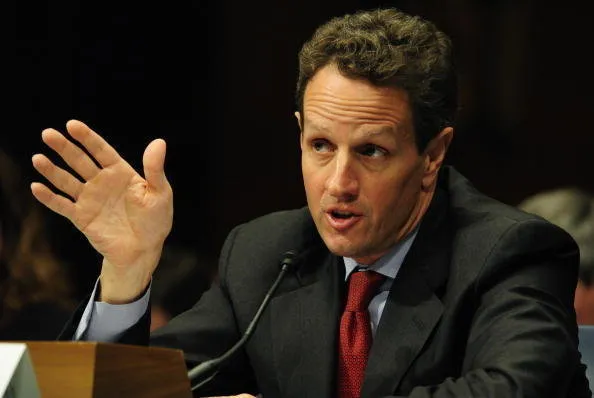
The financial plan announced today by Treasury Secretary Timothy Geithner appears to have accomplished, through a backdoor path, one of the top priorities of Wall Street bankers: ending so-called 'mark-to-market' accounting rules that many economists consider essential.

The debate over mark-to-market bubbled over into the White House over the last several weeks, said a source familiar with those discussions, with competing factions debating whether to abolish, keep or modify the requirement for the accounting practice.

(Mark-to-market accounting requires banks to value assets at current market prices, rather than by historical purchase price.)

Now, economists say, it appears that Wall Street has won out. Geithner's plan would give a federal guarantee to toxic assets. That guarantee increases their value, mitigating the relevance of mark-to-market.

"If the assets have an unlimited federal guarantee they cannot be impaired, so there is no need to recognize losses under existing accounting rules," said William Black, a senior banking regulator during the savings and loan crisis. Black is a former senior deputy chief Counsel with Office of Thrift Supervision and deputy director of the National Commission on Financial Institution Reform, Recovery and Enforcement.

Economists Dean Baker and James Galbraith said they concur with Black's analysis that the federal guarantees make mark-to-market less relevant. But even with the federal guarantee, assets could theoretically be considered to be worth less, which could bring the teeth of mark-to-market accounting back into play.

Mark-to-market accounting requires banks to value assets at current market prices. When assets are illiquid - unable to be sold - it's difficult to value them with clarity. Reducing those assets' values on banks' books has led to deep write-downs over the past year. The banks argue that the problem lies with the frozen market, not with the actual asset, and that they shouldn't be penalized with a write-down. Abolishing mark-to-market would improve the outlook of a bank's balance sheet without changing any of the underlying fundamentals. In other words, the bank would physically have no more or no fewer assets but would value itself at a higher dollar amount.

Abolishing mark-to-market was a top priority for House Republicans during the fall bailout debate and remains a key issue for the GOP.

Story continues below
advertisement

Financial Services Committee Chairman Barney Frank (D-Mass.) "is not in favor of abandoning mark-to-market, and furthermore believes it would be a mistake for Congress to dictate accounting rules," said his spokesman Steven W. Adamske. Sen. Chris Dodd (D-Conn.), chairman of banking committee, earlier floated modifying the practice.

Black thinks the federal guarantees are a mistake. "By keeping bad management in place, hiding losses, and bailing out risk capital (the shareholders and subordinated debt holders that are supposed to receive nothing if the bank becomes insolvent) we cause hundreds of billions of dollars of unnecessary expenses to the taxpayers, maintain and intensify the perverse incentives on asset management/disposal, and create perverse incentives likely to produce future crises by maximizing moral hazard," he said in an e-mail.

But propping up banks on the backs of taxpayers is both costly and unnecessary, according to Nobel Prize-winning economist Joseph Stiglitz. "There is no equity, in some sense, in these banks, and so the whole objective here is to hide what is really going on," he said in an interview with Talking Points Memo.

"Banks have failed over and over again in the history of America, in the history of capitalism, and it's unfortunately an all-too-frequent event," Stiglitz noted, arguing that bankruptcy is the economically prudent path for such firms. "It has to be managed well... we have in some examples under the previous administration, the way the Lehman Bros was handled was an example of it being done badly. But, for instance, to mention some recent examples, Washington Mutual went into bankruptcy, a number of banks went into bankruptcy... and obviously some people lost some money, but it didn't lead to a fundamental systemic problem."

The financial plan announced today by Treasury Secretary Timothy Geithner appears to have accomplished, through a backdoor path, one of the top priorities of Wall Street bankers: ending so-called 'mar...
 
Comments
512
Pending Comments
0
iPhone App Promo

Want to reply to a comment? Hint: Click "Reply" at the bottom of the comment; after being approved your comment will appear directly underneath the comment you replied to

View Comments:
Page: 1 2 3 4 5 6 7 8 Next › Last » (11 pages total)

Is this make believe? Is it a dream? If it is I don't want to wake up.

    Favorite    Flag as abusive Posted 11:34 AM on 02/12/2009
photo

As a Democrat, a former accountant, and a lawyer, I can say this article is propagandist drivel. Want proof? Nowhere do the letters FASB or GAAP ever appear. It is sheer talking-ou­t-of-the-r­ear-ness to claim any sort of coherent position on the question of mark-to-market without at least recognizing what accounting rules are and where they come from. There is a strong implication in this article that it is the government that mandates or legislates accounting rules. This is false. Further, there is no mention that FASB has fast tracked a replacement or modification to FAS Statement 157 (the source of the Mark to Market rule) in response to the crisis. Pure ignorant nonsense. It is tough to be taken seriously as a critic of anything or anyone if you know not of what you speak.

    Favorite    Flag as abusive Posted 06:51 PM on 02/11/2009

I agree that this article is rather carelessly written. Government guarantees are some attempt to put a floor on the value of the assets that is not zero, but it is not a violation of accounting rules.

I think that people are reacting more generally to the assault on mark-to-market rules by the Republicans on the Sunday morning news shows. They actually argue that the rules have caused the banking crisis. A ludicrous statement at best and more likely a deflection from the poor management cause. It's a "look at the shiny object" sort of thing in my book, but completely baseless.

    Favorite    Flag as abusive Posted 07:12 PM on 02/11/2009

Okay. Despite what many of the posts here say, mark-to-market rules have been around for a long time. The Wikapedia cite floating around relates a recent, minor, change to the rules.

Mark-to-market is an attempt to move toward to fair value accounting and works very well when securities are easily valued. In fact, the assumption in in the rules is that the securities are liquid. This is a reasonable assumption because we certainly would not expect that companies would normally hold a large portfolio of illiquid assets - unless they are not going concerns and the rules for those companies are different.

Look folks, we are talking about a number on a balance sheet with a corresponding effect on the income statement and equity accounts. Everyone that reads financial statements knows the limitations of this number- it is calculated at one point in time and under certain rules.

The real problem is that the other disclosures that are necessary for investors to understand what this number represents and what the underlying asset looks like is not available. The problem that we have now is that even the companies don't know what the assets represent.

Throwing out mark-to-market rules will not fix this. Increased disclosure will. Accounting firms are already gearing up hiring plans in anticipation of new disclosure rules that will make financial statements more transparent. I would also expect some new governance rules because someone needs to guard the hen house.

    Favorite    Flag as abusive Posted 05:50 PM on 02/11/2009

"we certainly would not expect that companies would normally hold a large portfolio of illiquid assets - unless they are not going concerns and the rules for those companies are different."

Utterly untrue. Mortgages them selves are up to 30 year instruments. What about real estate companies that hold properties long term? Companies that hold timber or other natural resources?

The problem is NOT that investors don't understand the numbers, the problem is that auditors force companies to mark these securities to levels that are utterly meaningless relative to their long term economic value. As you say, the stark reality is that mark to market only works when you have liquid market. We ain't got one.

HIring more accountants is about the worst outcome I could imagine. The Wikipedia write up on Mark to Market is juvenile at best, and does ignore the fact that the S&L crisis would have been much worse if Mark to Market had been effect at the time.

    Favorite    Flag as abusive Posted 06:14 PM on 02/11/2009

Natural resources are held at cost and are amortized based on annual depletion of the assets. To banks, mortgages are normally held at cost throughout the term of the mortgage. The asset is only written off when an event, such as a foreclosure, occurs.

If you don't like accountants you are going to really be unhappy as the International Standards roll out over the next few years.

The fact is that companies are going to have to be more transparent in their reporting and that will require more disclosure. Hence, the increase in the work for accountants.

Yes, markets are not currently liquid. In my mind that does not justify a wholesale change to the mark-to-market rules. I agree with Barney Frank on this one.

The reason that the Republicans don't like the rules is that they give an overall conservative value to securities. That is the reason that many accountants like the rule - because we are, by nature, conservative and because we get sued by investors and other parties if we overstate asset values.

    Favorite    Flag as abusive Posted 06:28 PM on 02/11/2009

I can't for the life of me figure out why Obama put these fools in charge of our economy. He should fire every damn one of them and replace them with Krugman, Stiglitz, Reich, and Galbraith. Nationalize the damn banks before they bleed us dry.

    Favorite    Flag as abusive Posted 05:07 PM on 02/11/2009

All these banks are doing is filtering our tax money to their shareholders. It is a huge transfer of wealth. Let the weak ones go bankrupt and the stronger ones will survive.

If you have any faith left in capitalism, you will have to admit that new banks will emerge to fill the void.

    Favorite    Flag as abusive Posted 07:45 PM on 02/11/2009
- TJCole I'm a Fan of TJCole 153 fans permalink
photo

All we really need to do is to Nationalize these major banks...that's what Geithner is doing but he only Nationalizing the bad assets and liabilities, and the American public still does not get the flow of capital it requires..­.lending..­.!

If we Nationalize these banks the government can give out generous loans to stimulate especially small business which creates 80% of America's jobs, and probably more now with all these lay offs..

    Favorite    Flag as abusive Posted 03:23 PM on 02/11/2009

The best thing we can do for our country at this point is naturalize our banking system and do away with the Federal Reserve. Our country needs to take back their rights to make money it should have never been given to the private sector who by definition want to make a profit, well they did for years and now we have to pay for it.
Nationalize our money system. No more bailouts nationalize our banking system the sooner the better.

    Favorite    Flag as abusive Posted 02:03 PM on 02/11/2009
- EinChicago I'm a Fan of EinChicago 33 fans permalink

"Geithner appears to have accomplished, through a backdoor path, one of the top priorities of Wall Street bankers: ending so-called 'mark-to-market' accounting rules"

Dear lord, let's hope so.

Mark-to-market is one of the most destructive, overly-simplistic moronic accounting rules on the books. The addle-brained poorly-educated sheeple love it, but don't undertsand it.


This column would be a good example.

    Favorite    Flag as abusive Posted 12:59 PM on 02/11/2009
- BobinKS I'm a Fan of BobinKS 3 fans permalink

You nailed it!!!

    Favorite    Flag as abusive Posted 03:03 PM on 02/11/2009
- dutchman I'm a Fan of dutchman 342 fans permalink
photo

You know, it took me about 5 posts (that follow) to say what you accomplished in one. I will say that it (mark to market) has its place, but there are too many that seem to think it's a cure all. The question is not which tool to use. It's about how we can best use our tools in a consistently applied transparent manner.

    Favorite    Flag as abusive Posted 06:44 PM on 02/11/2009
- outnow I'm a Fan of outnow 173 fans permalink

This gives new meaning to the term "BANKRUPTCY."

    Favorite    Flag as abusive Posted 12:46 PM on 02/11/2009
- VegasBabe I'm a Fan of VegasBabe 183 fans permalink
photo

test

    Favorite    Flag as abusive Posted 12:38 PM on 02/11/2009

isn't capitalism great
when it implodes the capitalists go raid the pockets of innocent bystanders to keep up the charade.

bulls@@t baffles brains. geithner is full of it,

    Favorite    Flag as abusive Posted 12:04 PM on 02/11/2009
- ssg13565 I'm a Fan of ssg13565 24 fans permalink

There has to be a middle ground to mark-to-market and value it any way you want.

When the markets are functioning well, mark-to-market may be the easiest and most accurate way to put a value on an asset. When market are behaving poorly, then there has to be another way.

For in income producing property, you could use the income as a way to measure value. For a non-income producing property you might be able to use replacement cost. Surely the best minds in accounting and economics can do better than stand around and watch the market put unrealistic values on assets.

The trouble with mark-to-market is that every item in an asset class is priced at the same price as the small amount of assets that get traded on a daily basis. The holders of the vast majority of the assets have no intention of selling on any given day. It would be ridiculous to think that they would all accept the current market price for their holdings. Many know that the current price is too low and that if they just hold on, the price will rise. If there is nothing forcing them to sell, they will hold for a better price. Somehow, these people have concluded that they do not agree with the price that a small percentage of like assets are being sold for on any given day.

    Favorite    Flag as abusive Posted 11:31 AM on 02/11/2009
- quiviran I'm a Fan of quiviran 23 fans permalink

So, the banks favored mark to market when asset values were increasing, and their balance sheets went along for the ride, as well as their bonus payments, but disfavor it now that asset values are declining. The value of an asset is never what you paid for it, it is always what you can sell it for. Doesn't the price-demand curve guarantee there is always a price at which someone is wiling to buy that is mutually agreeable to the seller? I thought that was called Free Market Capitalism.

So, if you don't want to sell an asset at an offered price, don't sell it. I have a whole gaggle of stuff I'd love to sell at the price I paid for it. It's called my 401K. I'm holding in hopes of a better future, or at least to get back to even. Maybe banks need to do the same.

    Favorite    Flag as abusive Posted 12:35 PM on 02/11/2009
- BobinKS I'm a Fan of BobinKS 3 fans permalink

They still have to write the value down and take a charge against their capital. This is the problem. It is like you were forced to reduce your income by the losses in your 401K every month. For you the impact isn't severe because it doesn't impact your cash flow. For a bank it is reported and impacts their ability to borrow outside of the fed. You have the right idea. Its just the consequences for you are different than the consequences for a bank.

    Favorite    Flag as abusive Posted 01:09 PM on 02/11/2009
- ssg13565 I'm a Fan of ssg13565 24 fans permalink

For further musings on mark-to-market that more fully explain what I am trying to say, go to my blog:

http://ssgreenberg.name/PoliticsBlog/?p=1402

Excuse my advertising of my blog. If you don't think it is appropriate, then do not follow the link

    Favorite    Flag as abusive Posted 05:03 PM on 02/11/2009
- dutchman I'm a Fan of dutchman 342 fans permalink
photo

It doesn't matter if you want to sell or not. Most assets see only a small percentage of their outstanding market value traded in any given day, but the prices for those trades become the new valuation for everyone else. The excessively greedy or fearful trader therefore controls the price everyone else has to live with.

    Favorite    Flag as abusive Posted 06:47 PM on 02/11/2009
- EinChicago I'm a Fan of EinChicago 33 fans permalink

"There has to be a middle ground to mark-to-market and value it any way you want.

When the markets are functioning well, mark-to-market may be the easiest and most accurate way to put a value on an asset. When market are behaving poorly, then there has to be another way."

Bingo. Mark-to-market is a ridculously over simplified rule for a complex mechanism. It has a built in self-destruction mechanism which oince triggered creates an unstoppable implosion in an asset's value which is far beyond any rational relationship to the asset's true value.

    Favorite    Flag as abusive Posted 01:02 PM on 02/11/2009
photo

More of the same as they continue digging the hole.

    Favorite    Flag as abusive Posted 11:07 AM on 02/11/2009
- dsws I'm a Fan of dsws 11 fans permalink
photo

When a firm goes bankrupt, its shareholders and junior creditors lose their stake. Those include individuals who can take a loss, but they also include firms teetering on the edge of bankruptcy. Those firms are pushed a little closer to the edge. If more than one of them goes over, on average, then the contagion becomes an epidemic that grows exponentially.

We need to start compiling and tracking an index that reflects the number of new bankruptcies that each bankruptcy causes. When the number is below one, there is still some contagion, but the string of triggered bankruptcies sputters out instead of spreading indefinitely. Hitting one means catastrophe for the entire system Even when that number is close to one, the strings of triggered bankruptcies become long and the damage becomes severe.

We should stop talking about which firms are too big to fail, and start looking at what category of firm is too contagious to fail. Then we need to impose regulations that will make them less contagious.

    Favorite    Flag as abusive Posted 11:06 AM on 02/11/2009
- cayuse I'm a Fan of cayuse 15 fans permalink
photo

If a promise for future dollars is worth the same in current dollars, then borrowing current dollar with the promise to pay it back has to be free too. If there is no future value of money then I will take enough for 10 Office High Rises in NYC, Interest Free

    Favorite    Flag as abusive Posted 10:22 AM on 02/11/2009
- Lane4411 I'm a Fan of Lane4411 4 fans permalink

Treating mortgage receivables, student loan receivables, car loan receivables as securities did not come into being until the implementation of mortgage/loan backed securities . Prior to that time lenders retained the various receivables and performed the collection function. In this period the lenders were required to reserve for the uncollectible portion of the loan(bad debt reserve). The key in this situation is what percentage of the various receivable­s/securiti­es are not collectible.

The % for non collectibles has to be realistic and available for public consumption before a true value can be placed on these various loans/securities - value of the cash collections/income stream over the life of the loans

Hopefully this did not confuse the issue!!!

    Favorite    Flag as abusive Posted 10:15 AM on 02/11/2009
Page: 1 2 3 4 5 6 7 8 Next › Last » (11 pages total)
Comments are closed for this entry

 You must be logged in to comment. Log in  or connect with 

Connect