
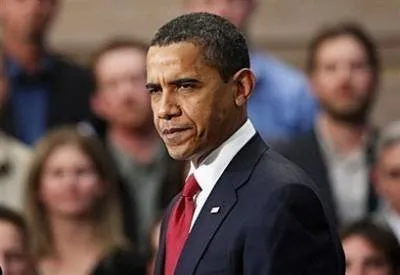
When President Obama put his signature to the stimulus package Tuesday, he also signed into law a number of health care reforms that were the result of an intense but low-profile struggle.
One camp had pushed to expand access by allowing some unemployed to qualify for Medicaid, by expanding the length of time people 55 and over could qualify for COBRA coverage, and by subsidizing COBRA for some recipients. Only the final reform made it in.
Separate sections of the bill dedicated billions of dollars to compare the cost-effectiveness of various treatments, to modernize health care records by making them electronic, and to establish a wellness and prevention fund. The investments are expensive up front, but aimed at reducing long-term costs.
Another effort underway -- fought by pharmacists and drug makers - would have banned drug companies from paying health care providers to market specific drugs. A compromise allows drug companies to pay providers a "reasonable" fee, but they can only advertise drugs that a patient is already being prescribed. Elsewhere in the bill, billions were allocated for community health centers.
Tussling over such minutiae is what keeps lobbyists in business; it's what keeps staffers at work till the early morning hours and what makes the public's eyes glaze over.
Boring as it might be, it's also the heart of the struggle that will lead to universal health care in America.
While the left and the right press for radical changes to the current health care system -- single payer; free market -- interviews with top Democrats in Congress indicate the plan is slowly, incrementally to expand coverage by tweaking the current system. The goal: to patch every hole and create a blanket of universal coverage that might not look pretty, but will at least keep everybody warm. From there, it's a matter of rounding up the stragglers and getting them in bed, whether by mandate or incentive.
The skirmish within the stimulus is just the beginning. President Obama has made clear he plans to expand the fight for health care reform deep in the pages of upcoming omnibus budget negotiations.
"The president has already put a national health care package into his budget," Rep. John Dingell (D-Mich.) said in a speech Monday night, citing a recent conversation with Obama. "That gives us a procedural and substantive leg up."
Dingell's optimism notwithstanding, advocates of single-payer health care are skeptical of the incremental approach. Chief among them, Rep. John Conyers (D-Mich.), chairman of the Judiciary Committee, recently introduced the vessel that single-payer partisans hope will carry them to the promised land of universal health care. But his bill, which has more than 90 cosponsors, faces the same pragmatic challenge confronted by advocates of a free-market system. What about the people already covered by their employers, by Medicare or by Medicaid? What happens to them during the transition?
That's where the pragmatists enter. "You just can't sink the ship. You have to steer it around the corner," says Sen. Amy Klobuchar (D-Minn.).
"You're not going to dismantle the employer-based system," says Sen. Chris Dodd (D-Conn.). "There are millions of people who rely on that and it works well for them. We have Medicare and it works well for millions. So I think a lot of the structures are out there. It's a question of manipulating them in a way that will reach and serve additional people."
Indeed, while roughly 50 million people will go uninsured during the course of 2009, many more millions are insured by the current system, broken as it is. According to the Congressional Budget Office, 160 million people are covered through employers. Another 44 million are enrolled in Medicare. Some 53 million were enrolled in Medicaid and S-CHIP -- the State Children's Health Insurance Program -- in 2007. A bill signed by Obama in January expanded S-CHIP to an additional four million people. Nine million are eligible for TRICARE, which covers current members of the armed forces, military retirees, along with their families and survivors. Eight million civilian employees are covered through the Federal Employees Health Benefits Program (FHBP) -- a system that is often proposed as the model for the public-plan option.
"I don't know that you would use the exact federal plan, but that's a model. That's one step that you can do to get there, and then you start helping people who can't afford and you expand to kids maybe using something else," says Klobuchar. "You're just not going to be able to tear it apart in one day. Some of it will take congressional action, but some of it can be done with congressional direction and then allowing the administration to set some of it."
Health care advocates, however, are clamoring for action on comprehensive care this year and politicians who have said it might take longer have taken a beating. "Everybody would like to have it tomorrow," says House Majority Whip James Clyburn (D-S.C.), who received one such beating from reformers recently for publicly embracing the incremental approach. "Universal access to health care is something that must be accomplished. And in order for us to get there, there are certain building blocks that have got to be part of it...but I believe we can't just destroy what we have."
Sen. Max Baucus (D-Mont.), as chairman of the finance committee, will play a crucial role in the drive to universal coverage. He's a strong backer of the incremental approach.
"It's probably going to include a uniquely American combination of public and private coverage," Baucus says of the universal system the nation will eventually develop. "I don't know if it'll be 50/50 or not, but it'll be a balance between public and private. That could come through an expansion of Medicare, of Medicaid, even children's health insurance. On the other hand, it'll take a big expansion of the private market, too."
In surprising ways, then, the American path to universal coverage will resemble that already taken by every other industrialized nation.
Dr. Atul Gawande, in a recent New Yorker article, "Getting There From Here," makes the case that in every nation with universal coverage, the system was built patchwork-style on top of what already happened to be there.
"Nearly all [universal health care systems] have been popular and successful. But each has taken a drastically different form, and the reason has rarely been ideology. Rather, each country has built on its own history, however imperfect, unusual, and untidy," Gawande writes.
Gawande chronicles the history of each nation's path to universal coverage.
No example is more striking than that of Great Britain, which has the most socialized health system in the industrialized world. Established on July 5, 1948, the National Health Service owns the vast majority of the country's hospitals, blood banks, and ambulance operations, employs most specialist physicians as salaried government workers, and has made medical care available to every resident for free. The system is so thoroughly government-controlled that, across the Atlantic, we imagine it had to have been imposed by fiat, by the coercion of ideological planners bending the system to their will.
But look at the news report in the Times of London on July 6, 1948, headlined "FIRST DAY OF HEALTH SERVICE." You might expect descriptions of bureaucratic shock troops walking into hospitals, insurance-company executives and doctors protesting in the streets, patients standing outside chemist shops worrying about whether they can get their prescriptions filled. Instead, there was only a four-paragraph notice between an item on the King and Queen's return from a holiday in Scotland and one on currency problems in Germany.
The beginning of the new national health service "was taking place smoothly," the report said. No major problems were noted by the 2,751 hospitals involved or by patients arriving to see their family doctors. Ninety per cent of the British Medical Association's members signed up with the program voluntarily--and found that they had a larger and steadier income by doing so. The greatest difficulty, it turned out, was the unexpected pent-up demand for everything from basic dental care to pediatric visits for hundreds of thousands of people who had been going without.
The program proved successful and lasting, historians say, precisely because it was not the result of an ideologue's master plan. Instead, the N.H.S. was a pragmatic outgrowth of circumstances peculiar to Britain immediately after the Second World War. The single most important moment that determined what Britain's health-care system would look like was not any policymaker's meeting in 1945 but the country's declaration of war on Germany, on September 3, 1939.
The war severely damaged private hospitals, Gawande writes, and the government stepped in to pay for the health care of people hurt or displaced by bombings.
By 1945, when the National Health Service was proposed, it had become evident that a national system of health coverage was not only necessary but also largely already in place--with nationally run hospitals, salaried doctors, and free care for everyone. So, while the ideal of universal coverage was spurred by...horror stories, the particular system that emerged in Britain was not the product of socialist ideology or a deliberate policy process in which all the theoretical options were weighed. It was, instead, an almost conservative creation: a program that built on a tested, practical means of providing adequate health care for everyone, while protecting the existing services that people depended upon every day. No other major country has adopted the British system--not because it didn't work but because other countries came to universalize health care under entirely different circumstances.
(Here's the rest of Gawande's historical recap, well worth a read.)
Single-payer advocates acknowledge that a new system won't come overnight. "There's no question that when America transitions to a universal single-payer system, as I think we're going to have to, the transition will take a few years. That's anticipated," says Rep. Dennis Kucinich (D-Ohio), a cosponsor of Conyers' bill.
"It's not all instant," says Conyers. "We have long periods of phase-in and are developing bills to cover the increased number of doctors, nurses, hospitals and clinics that would be required."
But the healthcare system, complex and unwieldy as it is, doesn't handle even small changes well, let alone major ones.
Gawande highlights the government's stumbling attempt to create a new prescription drug program.
On January 1, 2006, the program went into effect nationwide. The result was chaos. There had been little realistic consideration of how millions of elderly people with cognitive difficulties, chronic illness, or limited English would manage to select the right plan for themselves. Even the savviest struggled to figure out how to navigate the choices: insurance companies offered 1,429 prescription-drug plans across the country. People arrived at their pharmacy only to discover that they needed an insurance card that hadn't come, or that they hadn't received pre-authorization for their drugs, or had switched to a plan that didn't cover the drugs they took. Tens of thousands were unable to get their prescriptions filled, many for essential drugs like insulin, inhalers, and blood-pressure medications. The result was a public-health crisis in thirty-seven states, which had to provide emergency pharmacy payments for the frail. We will never know how many were harmed, but it is likely that the program killed people.
Treading lightly and slowly closing the gaps in coverage is important, say Democratic leaders, but won't in itself bring about universal coverage.
The crucial leap that must be made, say Democrats, is the creation of a public plan that can compete with private plans, driving down costs and giving the uninsured another option.
"It's the ability of people to buy into a public plan and their ability to be able to have more portability," Sen. Claire McCaskill (D-Mo.) says is the most important step. "What we'll have to do, hopefully with the leadership of Senator Kennedy, is begin to lower the boom and bust up some of the silos of profit that are a big hindrance to us getting to a single-payer system."
Dodd, as Kennedy's best friend in the Senate and a senior member of the health committee, will be a major player in the push forward. "There's probably going to be a time before you get universality," he says. "We won't get there, obviously, with just passage of a bill. It'll take time for this to kind of meld in and work."
Before withdrawing his name from consideration for Health and Human Services secretary over unpaid taxes, Tom Daschle had advocated such an incremental approach, relying on a health care board to monitor progress and oversee the melding system.
Dodd thinks the approach will work. "Once you've established the major points of this -- the public-private feature -- I think then, once you get over those hurdles, whether you go with an individual mandate or you go with an attractive financial opportunity for people" -- subsidies to encourage obtaining coverage -- "then I think the board can manage this."
Asked to clarify what the greatest hurdle would be, he says, "The public option. But if you talk about it in terms of a partnership, then I think it becomes more acceptable."
The public option is "on the table," says Baucus. "Forty-seven million Americans don't have health insurance. Twenty-five million Americans are underinsured. So there's plenty of opportunity for public and private plans."
Getting everybody covered, however, won't solve the problem, Democrats insist.
"If anybody thinks that if we gave everybody a card tomorrow, the problem will be solved, they're sorely mistaken," says Sen. Bernie Sanders, an independent from Vermont. "Having the ability to get health care doesn't mean you have the capability to get it. If you're a working-class person making thirty thousand a year, the odds are you'll have a hard time even finding a doctor to go to."
Sanders, along with Majority Whip Clyburn in the House, hopes to close the access gap by quadrupling funding for existing community health care centers.
The Federally Qualified Health Center program was launched more than forty years ago by legislation sponsored by Sen. Ted Kennedy (D-Mass.). They were expanded by President Bush; President Obama, as a Senator, cosponsored legislation to grow them further. They currently serve 18 million Americans in rural and inner-city areas, accepting private insurance or government plans and charging patients on a sliding scale based on payment.
Sanders says that in rural Vermont, the centers are not the dusty, crowded clinics people think of, but are quality establishments used by patients of all financial backgrounds simply because there are no other options.
Currently, the 1,100 centers are funded by a $2 billion federal investment: $125 per patient. Sanders and Clyburn want to see funding expanded to $8.3 billion to fund 4,800 centers.
"My guess is, they ain't gonna pass a national health care system in Washington, D.C. We'll have to lead by example," says Sanders.
For Clyburn, it's the job of Congress to create all the blocks needed to construct a universal system, but let health care policy experts piece them together.
"Getting there is more important than what kind of name you give the end product," says Clyburn. "How Medicaid and these other programs fit in [to universal coverage], it's up to the experts to figure out."
The incremental approach has the added benefit that it won't cost the entire bank account of political capital -- which is currently needed to pay for stimulus bills, foreclosure relief, financial-system bailouts and other economic issues. And the account had already been depleted by Daschle's withdrawal.
"Everybody, twelve months ago, we were all saying that health care is the issue. That's the one we want to work on," says Clyburn, still sore from the beating he took for publicly supporting the go-slow approach. "Now, six months ago, no, no, no, it's the energy crisis. We've got to solve this one; we've got to put health care on the back burner... By the time we go to the elections, Wall Street was failing, the banks were going south, the markets were going crazy. The realities dictate that we've got to do first things first. The first thing we've got to do now is get people back to work."
Health care advocates hope they can slide their issue into that economic folder. Clyburn and Sanders succeeded in getting much of what they want for health centers -- $2 billion extra -- into the stimulus bill signed Tuesday.
The biggest step, the public option, is part of Obama's overall plan, though it's unknown if he'll make it part of the budget battle. Whenever it comes up, the GOP will fiercely oppose it, Republican aides say, aware that it's a major move toward universal coverage and represents an increasing federal role in health care.
For Dodd, the fight to make a public plan available will be waged on an ideological battlefield. With the public increasingly skeptical of free market solutions, Democrats have the advantage. But the GOP, Dodd says, will do whatever it can to stop it.
"It kind of goes back to the point where you've been against it so long, even the mention of the words brings out a Pavlovian response," he says.