iPhone app iPad app Android phone app Android tablet app More

Obama's Anti-Lobbyist Policy Causing Unintended Harm

First Posted: 04/05/09 06:12 AM ET Updated: 05/25/11 02:05 PM ET

Obama

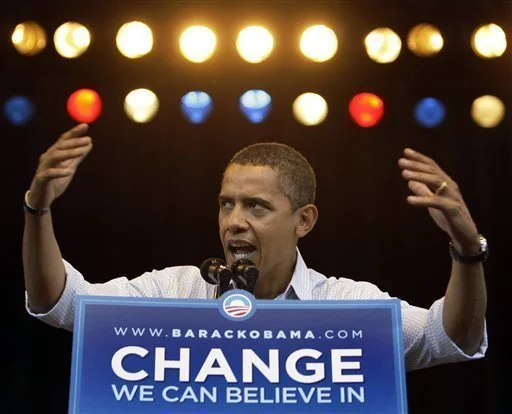
Barack Obama made no secret of his feelings for "Washington lobbyists" during the campaign and vowed that they wouldn't be staffing his White House.

The implementation of that rule, however, has led to a number of consequences that Obama could never have intended. Eliminating lobbyists from consideration drains the pool of progressive talent that the White House needs at a time when agencies and departments are severely understaffed. Treasury Secretary Timothy Geithner, for instance, barely has any deputies as the economy continues to spiral out of control.

Lobbyists who for years have fought for workers' rights, environmental protection, human rights, pay-equity for women, consumer protection and other items on the Obama agenda have found the doors to the White House HR department slammed shut. In the past, several progressive lobbyists explained, there was no reason not to register if there was a slim chance that the law might require it. Obama's new policy changes the calculus, leading folks to deregister as federal lobbyists or consider other employment while they wait out the policy's required two-year separation from lobbying.

"There is now a cottage industry of deregistration. Everyone who can deregister is deregistering," said one public-interest advocate. He said that he spends too much of his time lobbying and so can't make the deregistration argument for himself. Instead, he's considering leaving his job to wait out the two years.

Kelly Landis is a spokeswoman for the Alliance for Justice, which advises nonprofit groups on the regulations that govern lobbying. She said there has been a recent "uptick in calls from groups" asking about the rules surrounding registration.

"There are more questions from groups specifically about whether or not they need to register," said Landis. She then looked deeper into the question and reported back that she "spoke to another person who handles these issues and regrettably, she is getting questions about deregistering. Groups and individuals are confused and concerned; it would be unfortunate if the new landscape resulted in less advocacy from nonprofits on important issues."

A spokeswoman for the Secretary of the Senate, where lobbyists register, said that the office's forms and database aren't set up to tabulate deregistrations. The last official numbers, from Sept. 30, 2008, showed 13,926 registered lobbyists on the list. The lobbyist registry was created to make the practice more transparent. The rise of deregistrations undermines that purpose.

Sen. Russell Feingold (D-Wisc.) is about as committed a government reformer as you can find. While he said that "reasonable accommodations" should be made, he backed Obama's policy.

"If the rules are made clear now and kept, people can plan their conduct accordingly in the future," said Feingold.

But that's just the problem, said the liberal lobbyists: It's counterproductive to Obama's long-term agenda to discourage people from entering into the field of progressive advocacy.

"Heaven help us that there's never another anti-worker, anti-poor-people administration, but my gut tells me there will be. And the last thing you want is to not have people on the front lines to defend the things that this administration wants to put into place, if they think they're going to be discriminated against in terms of future employment," said one nonprofit lobbyist who served in the Clinton administration and has applied, unsuccessfully, to Obama's.

"Had these people who are advocates not been doing this over the last eight years, it's clear that, for those of us who agree with their positions, and I think by and large the president does, things would be worse. Not only would the economy be worse, the safety net would be worse," he said. "The Bush administration would have gotten more of their way."

One progressive lobbyist said that a coworker was given an opportunity to move from state-level to federal-level work - something she'd wanted for years - but is now reluctant for fear of getting the scarlet L around her neck.

Several lobbyists said that when the new policy was announced, affecting anyone who'd been a registered lobbyist in the last two years, a horde of their coworkers deregistered.

"Frankly, if I'd have known two years ago that there would be this policy in place, I could have easily not registered," said one labor lobbyist. She deregistered in November so that she'd eventually be clean enough to work in the administration, she said.

There's no crisp line dividing people who must register as lobbyists from people who don't. The rule is that if more than 20 percent of your time is spent lobbying, you must register. But who's counting? And what counts, exactly?

"I know people who have very similar jobs who come down on different sides. Now some of them as a result are eligible for positions in the administration while others are not," said one progressive lobbyist. Several other advocates expressed frustration at the same phenomenon - that the anti-lobbyist policy rewards folks who simply didn't register -- and one, who works on behalf of lower-income people, said she is looking into whether she can legally deregister, but that she's unsure if she will because the rules are murky.

Along with state-level public-interest work, the rule ends up encouraging folks to lobby for corporate America. A corporate lobbyist often only lobbies Congress - and so wouldn't be banned from working for federal agencies - and often lobbies on very narrow pieces of legislation. Public interest advocates, by contrast, lobby much more broadly.

"Ironically this policy creates an incentive for people to go make money rather than become public interest advocates," said one progressive lobbyist, noting that recruiting public advocates has become harder. "Anyone who wants to work for this organization will have to consider whether they're willing to preclude the possibility of government service in the future. The same is true for civil rights groups, for environmental groups, for a whole range of civic groups that do work the Obama administration admires."

Members of the advocacy community, beyond the systemic risk, simply see the rule as unfair. One noted that Obama himself writes in his first memoir about public-interest lobbying that he did as a younger activist. "Would Martin Luther King be allowed to work in this administration?" one asked, noting that King lobbied extensively in 1963 and 1964 for the Civil Rights Act.

"Finally, we can turn the country around and help and that's not an option because we're evil lobbyists," said one labor lobbyist with more than 20 years experience she described as "helping people who are working stay safe and get a good salary. I can't think of a conflict, as a lifetime Democrat, and a lifetime labor lobbyist, that would conflict in any way with the Obama administration."

The progressive lobbyists spoken to for this article would speak only on the condition that their identity not be revealed so that they wouldn't be seen criticizing the administration and, perhaps more importantly, so their bosses wouldn't know they'd been looking for work.

One of the more high-profile casualties of the policy has been Tom Malinowski, whose job peddling the influence of Human Rights Watch reportedly knocked him out of the running for several administration jobs. Foreign Policy magazine's blog highlighted other nonprofit lobbyists with a foreign affairs focus who had been caught up by the rule. Malinowski, who was closely involved with the campaign, confirmed that he was told by the administration that his lobbying made him ineligible.

Fundamentally, lobbying on behalf of the public interest is a good thing, advocates argue, but they also press the case that their specific skills should be in demand by the administration. The case they make: A) progressive lobbyists are not in the business to get rich B) their agenda is exactly the same as the administration's agenda and C) they've been on the frontlines of battles over esoteric issues and have the most recent and detailed understanding of how to move the progressive agenda forward.

"I'm about to send my first kid to college," said one lifelong public advocate getting stonewalled by the White House, "who keeps saying, 'Where's the college fund?' We don't have one, dear. I'm a lobbyist."

At root is a sense of betrayal. "I know a lot of people who are similarly situated who had worked very hard for the campaign on their own personal time -- took off, spent their own money and were very, very supportive," said one White House applicant who lobbies for improved healthcare for low-income women. "It seems very unsophisticated to me to have gone down this road where you make no distinction between the environmental lobbyist and the Exxon lobbyist."

They have an ally in Sen. Barbara Boxer (D-Calif.). "I think if you lobbied for a public interest it's a whole different thing than if you lobbied for a special interest," she said.

"I think it's a mistake," said Andrew Herman, a congressional ethics attorney in Washington, of Obama's sweeping policy. While he sympathized with the lobbyists, he was skeptical that no longer being registered would be enough. "I don't think that'll be enough in this environment."

The anti-lobbying rule itself has the advocacy community confused about whether they're completely ineligible or work for the administration or only barred from certain positions related to their particular area.

One lobbyist said she'd been specifically told by an appointed official that she would not be considered by the department she had applied to because she was a registered lobbyist.

The rule, as written, broadly captures most public interest lobbyists, ordering that no lobbyist can "seek or accept employment with any executive agency that [he or she] lobbied within the 2 years before the date of [the] appointment."

"Part of the frustration is not knowing if being a lobbyist precludes you from being considered or not. There's this thought that they don't want lobbyists, but then there's this thought that they've made some exceptions - some high profile corporate exceptions," said one labor lobbyist.

One progressive lobbyist's description of her experience was typical. "I've had a couple people floating [my resume] around and I just keep hearing, 'They're not going to hire any registered lobbyists,'" she said. "I've e-mailed a couple friends who are inside [the White House] to say, 'Is it really true? No matter what, if you're a federal lobbyist, you're out of the question." I get the first answer, which is 'Hmmm, let me check.' And then I never hear anything back."

The biggest waiver so far has gone to the top lobbyist from the weapons-maker Raytheon Co. William Lynn III was appointed the top deputy spot at the Pentagon, leading progressive lobbyists to think that if he can get one, then surely they can, too.

Most, though, are left with little hope. "They've got to really want to hire you," said one. "If it's just a garden variety person and one person is registered and another is not, I think the choice is clear."

Advocates are getting the sense that there are precious few waivers to be had. "They started making exceptions and now they don't want to make exceptions any more," said one. "Had they led with waivers for people who had clearly been doing good work not for financial gain, instead of leading with waivers for defense industry lobbyists, it would have looked better."

For now, he said, the waiver process is shut down. "The answer at the highest levels is, 'Don't f---ing talk to me about waivers,'" he said.

FOLLOW HUFFPOST POLITICS

Barack Obama made no secret of his feelings for "Washington lobbyists" during the campaign and vowed that they wouldn't be staffing his White House. The implementation of that rule, however, has led...
 
 
  • Comments
  • 170
  • Pending Comments
  • 0
  • View FAQ
Comments are closed for this entry
View All
Favorites
Bloggers
Recency  | 
Popularity
Page: 1 2 3 4  Next ›  Last »  (4 total)
This user has chosen to opt out of the Badges program
photo
12:09 PM on 03/08/2009
Sean Parnell,
quote:
Look, I know it's popular to beat up on corporations, but at the root they're simply a mechanism through which a collection of individuals chose to organize economic activity.
/quote

Corporations are such unfortunate victims -- of the public's growing awareness of their real actions against us!
http://www.corpwatch.org/article.php?id=15222
http://www.exxposeexxon.com/ExxonMobil_politics.html
This user has chosen to opt out of the Badges program
photo
01:16 PM on 03/08/2009
blockquote
Corporations don't lobby because they're somehow granted "personhood," they lobby because they're entities comprised of individuals with a certain shared interest (make money), and the government does or doesn't do a great number of things that impact their ability to pursue that interest.
/blockquote
More basically, they lobby because they can. In turn, they can only because and only as long as We, The People grant our individual right to petition the government, to them.

blockquote
This is not any different than unions, the Sierra Club, National Rifle Association, or any other organization (almost all of whom are "corporations," by the way) - they are all collections of individuals, who have joint interests, and who find it most convenient and effective to hire lobbyists to represent those interests to the government.
/blockquote

In some respects, I grant that for profit collectives and non-profit collectives are similar. For example, they are by nature comprised of multiple individuals. But the whole truth is that their purpose and nature also differ substantively.

People have the right to peacefully assemble and organize around our legitimate interests, of course, and legitimate interests do include both the pursuit of profit and organized lobbying of our government -- by some methods, but not by others.
This user has chosen to opt out of the Badges program
photo
01:27 PM on 03/08/2009
For examples of corporations being used by their Boards of Directors as fronts for increasing their personal wealth, even at the expense of the general welfare, consider

1) cuts to capital gains tax and to the top marginal tax rate do *not* benefit society as much as they cost society
http://www.economy.com/mark-zandi/default.asp?src=economy_homepage

2) the best intelligence on these matters never said they would
http://query.nytimes.com/gst/fullpage.html?res=9D0DE3DD163AF931A25751C0A9659C8B63
blockquote
Mr. Greenspan bluntly challenged the administration's contention that big budget deficits pose little danger or that the government can largely offset them through faster economic growth.

''We are all too aware that government spending programs and tax preferences can be easy to initiate or expand but extraordinarily difficult to trim or shut down,'' Mr. Greenspan told the Senate panel.

''Faster economic growth, doubtless, would make deficits easier to contain,'' he added. ''But faster economic growth alone is not likely to be the full solution to the currently projected long-term deficits.''
/blockquote

3) So-called "deregulation" which really just exempts preferred investor classes from the rule of law, to the advantage of neither corporations nor citizens generally, but to the great advantage of the few most over-privileged members of the wealthiest and most corrupt boards of directors on Earth.
This user has chosen to opt out of the Badges program
photo
01:28 PM on 03/08/2009
The right of individuals to collectively organize is not the question. The right to collectively petition the government is. What I am suggesting is requiring that the lobbying itself must be performed by individual citizens, who after all are the only entities who our Constitution says are endowed by our Creator with certain unalienable rights, among them life, liberty and pursuit of happiness. I am in no way suggesting that any collective be prohibited from organizing its members in advance of such petitioning, only that the individuals themselves must put their names on their own lobbying efforts, and Congress discard any petition not signed by a real, verified citizen.

Non-profit organizations, whose raison d'etre is such political lobbying, already entreat their members to such action on a regular basis. For-profit corporate lobbyists, on the other hand, would be hamstrung by this innovation.

Is it beneficial *to society* to extend our individual rights, particularly petitioning the government, to corporations, which we now know are used by their Boards of Directors as fronts for increasing their personal wealth, even at the expense of the general welfare?
03:34 PM on 03/06/2009
Sean Parnell

I think for most Americans, the perception is that lobbyists are the ones running the country now - not Congress. And, we are to blame. As citizens, we allowed this to happen. We don't hold our Congresspeople accountable for who they serve.

The bankruptcy law changes back in 2003 are an example. It was not done to protect people, it was done to protect creditors.

There are numerous accounts of both Republicans and Democrats who have used public service for their own personal gain.

I think it was a good 1st step by the Obama Administration.

I agree with the individual who points out that out of population of 300 million, we can't find qualified individuals who can serve their country through public service?

Part of the problem in this country today is we have too many special interests. While it may be true that everyone has their own interests, the dialogue in this country needs to be around what is best for the country.

Lobbyists don't represent what's best for the country, they represent their industry's interest which could be to artificially protect an industry that may need to just fail.

As a friend of mine says, "The US Government is now in the buggy whip protection business".
photo
HUFFPOST SUPER USER
seanparnell
03:49 PM on 03/06/2009
With all due respect, you're just repeating platitudes and slogans without dealing with anything I've actually said.

You say make it sound like there's "what's best for the country" and "industry's interest" which are easy to discern and diametrically opposed. This is plainly not the case - people have starkly different views on what is "best for the country," as you might have discerned watching the auto industry (both the companies and the unions) send their leadership to the Hill to lobby/beg for assistance.

Saying we have "too many special interests" is like saying we have too many people who don't know their supposed to fall in line and not dissent from the party line. A frightening thought, once you think about it.

Sean Parnell
President
Center for Competitive Politics
http://www.campaignfreedom.org
sparnell@campaignfreedom.org
This user has chosen to opt out of the Badges program
photo
03:55 PM on 03/06/2009
Should corporations have the same rights as individuals to lobby Congress? Why couldn't CEOs say anything they have to say in letters, faxes, phone calls or e-mails to Congress, like everybody else? They seem to be a protected class, with special privilege above all others. I estimate that today, non-corporate real citizens are represented at less than a 3/5 ratio to corporate interests. Why should a corporation be represented twice, first by each individual citizen within it then again as a corporate business "entity"?
04:34 PM on 03/06/2009
I have thought about. I think that lobbyist need to go. I know that you believe that your interest are above that of the average voter, but they are not. In fact, the only reason organizations like yours exist is to overcome the interest of the politician over their constituents.
03:29 PM on 03/06/2009
So, the issue is the President just has to choose the right lobbyists... did I get it right? Musicians change but the music is still the same. No, sorry... the President can call on a legion of young talent, and doesn't need lobbyists who suck the power out of Democracy. As far as I am concerned, Progressive Lobbyists are just as crooked as the rest... they just fight for things Progressives want, but this country is not made of Progressives only. One bully leaves and another wants to take his place.
This user has chosen to opt out of the Badges program
photo
03:05 PM on 03/06/2009
Okay, this is true -- other things being equal.

quote:
"Had these people who are advocates not been doing this over the last eight years, it's clear that, for those of us who agree with their positions, and I think by and large the president does, things would be worse. Not only would the economy be worse, the safety net would be worse," he said. "The Bush administration would have gotten more of their way."
/quote

However, had *corporate* lobbying been absolutely illegal, Cheney/Bush could never have been "elected" AND there would be far less necessity for non-profit lobbying, much of which is clean-up work for corporate abuse. The PIRGs, for example, do great work, but much it is only necessary because corporations have undue influence.
This user has chosen to opt out of the Badges program
02:03 PM on 03/06/2009
Looks like a severe bottleneck at the entry to the revolving door. Profiteers' long laid plans have not panned out so they have a lobbyist named Grim to tell us why the revolving door benefits America.
This story implies that if you do not know how to game the system you won't be able to work "within" the system. This might be true for most if not all of the K (for Krud) Street mini-me's. We the people of Main Street say fiddlesticks. There are plenty of non-tainted minds and soulful bodies to employ. The problem is these good folks are reluctant to soil their shoes for simply the salaries being offered--there HAS to be a pot of gold on the other side of the door, or they aren't going to stand in the que.
photo
HUFFPOST SUPER USER
TheIndependenceParty
Cranky yankee and a rehabilitated ex-Republican
10:56 AM on 03/06/2009
Lobbying is like the difference between Myles Standish and John Alden. If a voter, or more than one (like an "interest group", for example) wants to speak for themselves, then get off your duffs and go to Washington. Don't hire someone to go on your behalf. Wht does that leave for the not so well-heeled? I guess we have seen where that leads us!

Your article presumes that this self-serving line of work is the most attractive of all, to progressives and capitalists, and whom?

I would argue that a lobbyist must NOT be named to public service, any more than a pedophile should be allowed to run a day-care!
photo
HUFFPOST SUPER USER
seanparnell
12:00 PM on 03/06/2009
Ah, yes, "get off your duffs and go to Washington." So easy for everyone, right? We can all get the nanny to look after the kids, buy the plane ticket, arrange to take a few days off work...

Lobbyists play a vital role in advocating the interests of those Americans who cannot, for a whole lot of good reasons, 'get off their duffs.' You may not agree with many of those interests, you may think they are a cancer on the body politic, but unless you're willing to completly junk the First Amendment and just start throwing people in jail for disagreeing with your agenda, you're going to have to deal with the fact that a lot of Americans just don't buy into your vision of America, they vote, they speak out, and sometimes they elect the people who share their perspectives and priorities and not yours.

Sean Parnell
President
Center for Competitive Politics
http://www.campaignfreedom.org
sparnell@campaignfreedom.org
This user has chosen to opt out of the Badges program
photo
01:39 PM on 03/08/2009
You just defeated yourself, Sean!

quote:
Ah, yes, "get off your duffs and go to Washington." So easy for everyone, right? We can all get the nanny to look after the kids, buy the plane ticket, arrange to take a few days off work...
/quote

Anybody who has the resources to comment on Huffington Post has the ability to send a message to one U.S. House Representative and two Senators, plus various local and state representatives and advocates. Why should corporations' representatives be allowed to meet in person with members of Congress, if it is as difficult as you say for individuals to do so?
This user has chosen to opt out of the Badges program
photo
Actionmac
Mind your wants, because the GOP wants your mind
08:36 AM on 03/06/2009
"Eliminating lobbyists from consideration drains the pool of progressive talent"

Progressive lobbyist?
photo
HUFFPOST BLOGGER
James Love
06:19 AM on 03/06/2009
I live in the DC area, for a non-profit public interest NGO that focuses on the interests of the public, and particularly consumers in general with a focus on lower income people, including those not living in the United States. I'm not registered as a lobbyist, but I know a lot of good people who are. The Obama administration should be trying to recruit people from groups like the ACLU, the Sierra Club, Consumers Union, PIRG, and hundreds of small lesser known NGOs that are devoted to good causes. Ironically, Obama has done quite a bit to reach out to people in the banking, investment, and public relations industries. The policy as currently implemented was perhaps useful for PR during the campaign, but it has very predictable negative impacts on the NGO public interest sector. They need to review the policy, and fix it, so a lobbyist for Exxon and the Sierra club aren't treated the same.
photo
HUFFPOST SUPER USER
seanparnell
10:46 AM on 03/06/2009
Obama's crusade against lobbyists was little more than PR (McCain was just as bad, btw - maybe even worse).

Of course a lobbyist for Exxon and a lobbyist for the Sierra Club should be treated differently - one of them presumably agrees with the administration's approach while the other doesn't, making it pretty clear which one should get the job. Same in the reverse, of course - there's no particular reason the Bush administration should have been in the habit of hiring people who oppose their agenda.

I think Hillary said it best: "A lot of these lobbyists, whether you like it or not, represent real Americans. They actually do. They represent nurses, they represent social workers -- yes, they represent corporations that employ a lot of people." http://www.campaignfreedom.org/blog/ID.351/blog_detail.asp

The whole discussion of lobbyists and special interests is dominated by ideological narcissism - the belief that it's obvious to all that *you* are on the side of the "public interest" while of course anyone who doesn't share your perspective and priorities *must* be representing some nefarious "special interest."

News flash - almost *all* people believe their particular agenda benefits the broad public. It's why we have two major political parties and several smaller, because the 300 million Americans that make up this country have wildly divergent and conflicting ideas and interests on what represents the best public policy in any given situation.

Sean Parnell
President
Center for Competitive Politics
http://www.campaignfreedom.org
sparnell@campaignfreedom.org
04:05 PM on 03/06/2009
Go Sean its your birthday!
photo
HUFFPOST SUPER USER
TheIndependenceParty
Cranky yankee and a rehabilitated ex-Republican
11:00 AM on 03/06/2009
I am still confused why you argue that any NGO or lobbying organization is representative of the common good, rather than a nrrow slice for which they are paid. Yes, ... good people exist in Sierra, et. al. but what of those who exist in the private sector, or in other lines of work?

Just because K Street is convenient to the Capitol does not make it the best place to seek competent and diverse skills for public service.
This user has chosen to opt out of the Badges program
photo
02:01 PM on 03/08/2009
quote:
I am still confused why you argue that any NGO or lobbying organization is representative of the common good, rather than a nrrow slice for which they are paid. Yes, ... good people exist in Sierra, et. al. but what of those who exist in the private sector, or in other lines of work?
/quote

Those who organize to lobby in the private sector do so to advance the *financial* interests of a narrow slice of profit-seekers, whereas those who do so in NGOs tend to have explicit policy goals like clean water, air, and food -- or some agenda related to the rights of groups like gays, women, ethnic minorities or religious groups, some wishing to increase and other wishing to decrease the rights of one or more of those groups. We certainly have differences of opinion about the social "special interest" groups but more and more Americans are realizing that the profit motive is never a valid interest to even balance against the general welfare. Businesses must be relegated to seeking profit within the legal framework that humans give them, because if they are allowed to take part in the rule-making they *will* corrupt that process.
photo
HUFFPOST SUPER USER
plaidsportcoat
02:12 AM on 03/06/2009
Enough with the "progressive talent" already. How about some LIBERALS!
12:02 AM on 03/06/2009
Don't worry Mr.Prez. We got your back come 2012.
photo
wonketteRAWKS
Hypocrisy is prevalent in BOTH parties!
09:10 AM on 03/06/2009
Why?
09:54 PM on 03/05/2009
Like anything else that started with good intentions, lobbyists have become nothing more than cronies trying to get their pork barrel projects paid for with taxpayer money.
photo
HUFFPOST PUNDIT
Gidster
Not so much Liberal as I am anti evil.
09:48 AM on 03/06/2009
As we have seen before, they pay for, or even write their industry's own regulatory legislation, then after the bill is passed the Congressperson leaves to work in the industry he once regulated.

There is so much corruption, it runs so deep, better to cut it off and start fresh.
09:47 PM on 03/05/2009
Lobbying is not by definition a bad thing. However making a ban that only selects against the people the current administration doesn't want - or making to many exceptions to the ban would only further encourage a future administration to throw it out the window. In other words, deal.
photo
HUFFPOST SUPER USER
army193
09:27 PM on 03/05/2009
Let go back in time and you would find out that many of Republicans in the Bush Administration have had to pay back taxes but that was never a problem to look for... Obama makes his appointee look at everything and we as tax payers should be happy.
07:22 PM on 03/05/2009
O's anti-Lobbist Fairy Tale is only rivaled by the Hoards of Tax Cheats he has nominated for office.
photo
HUFFPOST PUNDIT
Gidster
Not so much Liberal as I am anti evil.
09:49 AM on 03/06/2009
Have you seen the latest round of Repubs with tax problems?
This is part of the process.

Once someone pays their back taxes, they are no longer "Cheats"
photo
HUFFPOST SUPER USER
gemzenith
07:21 PM on 03/05/2009
lobbyist? talent?You can use those words in the same sentence?Lobbyist= opportunist