iPhone app iPad app Android phone app Android tablet app More

Consumer Financial Protection Act Passed By House Committee

First Posted: 03/18/10 06:12 AM ET Updated: 05/25/11 03:25 PM ET

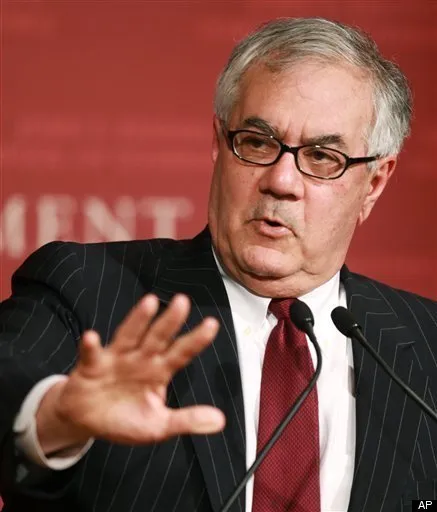
Frank

The proposed Consumer Financial Protection Agency took another step forward Thursday in the House, moving out of the Financial Services Committee -- albeit a bit weaker -- on its way toward the floor.

CFPA, which would be the first federal regulatory agency devoted solely to consumer financial protection, passed the committee 39 to 29. All but one of the assembled committee Republicans and two Democrats voted against the consumer protection bill, despite a series of compromises that included exemptions for favored industries and limits on tougher state regulation.

During the four days worth of amendments considered by the committee, Republicans consistently decried the proposed independent consumer watchdog, echoing bank lobbyists, as a threat to the overall "safety and soundness" of the financial services industry. Those complaints were undercut -- and the bill given a boost -- when top banks announced huge bonus payouts during the markup.

Republicans also argued, in debate and through a long list of proposed amendments, that existing banking regulators like the Federal Reserve were already capable of protecting consumers as well as the financial markets. Rep. Michael Castle (R-Del.) acknowledged that existing regulators failed to protect consumers, but, he added, "I think they're ready to do that now."

Democrats weren't convinced.

"What did the prudential regulators do to protect consumers? Nothing. Zero. Zilch. They didn't do a thing," Rep. Luis Gutierrez (D-Ill.) said, noting that the Fed has already had consumer protection powers since 1994 but that they went unused for 12 years. "I think enough has been said here in this committee about the markets. The markets. Always concerned about the markets. Well, you know what? Those markets caused trillions of dollars in losses to men and women who live on Main Street across this country."

Castle ultimately crossed the aisle to support the bill, while Democrats Travis Childers of Mississippi and Walt Minnick of Idaho opposed it.

A pillar of the Obama administration's proposed financial regulatory reforms, the CFPA is designed to protect Americans from abusive or deceptive loans, including credit cards and mortgages, that played a substantial role in the financial crisis.

However, committee chairman Barney Frank (D-Mass.) made it clear, via his own amendments and his support for certain exemptions proposed by other committee members, that the agency's regulatory power extends only to lending activity, not other retail purchases on credit. Frank also stressed that the bill is designed to target predatory practices, not necessarily particular professions.

"We have restricted the CFPA from what the administration proposed," Frank said Wednesday.
The requirement that banks offer easily understandable "plain vanilla" financial products was out of the bill by the time the markup process began, and the committee quickly decided that community banks -- those with less than $10 billion in assets -- should be exempt from agency oversight. So are credit, mortgage and title insurers, plus lawyers, real estate brokers, cable companies, accountants and auto dealers.

In addition -- as a measure of of ACORN's continued political toxicity -- Rep. Michelle Bachmann (R-Minn.) handily passed an amendment preventing the organization's employees from serving on the CFPA oversight board.

Democrats also compromised on a keystone reform that would have allowed tougher state laws to act in tandem with new federal regulation. Frank and the White House wanted states to have free rein to get as tough as they chose, while pro-business Democrats and Republicans sought to exempt large national banks from state standards. Democratic Reps. Mel Watt of North Carolina and Dennis Moore of Kansas authored the middle road, which would allow the Office of the Comptroller of the Currency, an existing bank regulator, to override state laws if they "significantly" interfere with federal regulation.

Republicans still complained that the Watt-Moore Amendment required national banks to comply with too many different sets of laws -- compelling Rep. Mel Watt (D-N.C.) to snap, "It used to be you all" who argued for states' rights.

That compromise did, at least, elbow out the total-exemption amendment authored by Rep. Melissa Bean (D-Ill.), who was sidelined earlier in the week when her family came down with the flu. The Bean amendment had been a singular focus for Heather Booth, the head of Americans for Financial Reform, who told the Huffington Post it was "extremely bad."

Booth also took issue with the exemption for auto dealers, whom she called "major agents where there's been a great deal of fraudulent practices, of major credit problems, especially in low-income and communities of color." But Frank said Wednesday that dealers remain "very popular" in their communities and have been "unfairly punished" in the restructuring of General Motors and Chrysler. He opposed the Campbell dealer-exemption amendment only because he said the dealers were already exempt in the legislation.

Frank pushed through an amendment that shifted the oversight of consumer-reporting agencies, which track individuals' credit histories, from the Federal Trade Commission to the CFPA.

And Frank was less sympathetic to other proposed exemptions, including amendments from Rep. Tom Price (R-Ga.) that would have blocked the CFPA from regulating any "medical professionals." Earlier, Price apologized for having missed the previous debate. "The gentleman from Georgia never has to apologize to me for not being here," Frank replied.

Tempers ran hot throughout the markup process, with the combustible Frank usually involved. Republicans drew out the early days of the debate, and by Tuesday the chairman's voice was, he acknowledged, hoarser than usual. But that didn't stop him from lengthily upbraiding Ranking Republican Spencer Bachus (R-Ala.) both Tuesday and Wednesday for, variously, ignoring parliamentary procedure, "distorting history" on the subject of regulation, and wasting the committee's time debating doomed Republican amendments designed to kill the bill. By Wednesday night, Frank had heard enough.

"I would say to my friend, it's a little late now for this. I think frankly there was a lot of unnecessary debate," Frank said at the close of business Wednesday, when Bachus pushed for another day to hear further GOP bill-killers. "Sarbanes-Oxley, we considered for six weeks..." Bachus began, but Frank put his gavel down. "The committee is in recess."

Bachus said in a statement Thursday morning that he was disappointed Frank "prematurely ended debate on something this important." But House Republicans still have several weeks to campaign against the CFPA bill before it comes to the floor, and in response to complaints from Rep. Donald Manzullo (R-Ill.) that it contains "traps," Frank agreed on Wednesday to hold a hearing on it in the meantime should Republicans desire.

The bill's passage out of committee quickly garnered plaudits from President Obama and House Speaker Nancy Pelosi. "The Consumer Financial Protection Agency will prevent predatory lending practices and other abuses and will ensure that consumers get clear information they can understand about financial products like credit cards and mortgages," Obama said in a statement. "We will continue to work closely with Congress to create, for the first time, a federal agency whose sole mission is to protect the financial interests of everyday Americans."

If the CFPA bill makes it past the House floor, where conservative Blue Dog Democrats exert more influence than they do in Frank's committee, it will go on to face tougher opposition in the Senate. Meanwhile, the House committee will continue working on reforms of the credit-rating agencies and investor protections, likely with the same Republicans arguing that they go too far and put the banks' very survival at risk.

"I think in recent times it has been exactly the opposite, that it has been the lack of consumer protection that has endangered safety and soundness," Frank said Tuesday, responding to concerns from Rep. Jeb Hensarling (R-Texas) about the possible regulation of cash-back rebates and frequent-flier miles. "That's the kind of argument you use to scare little children, and I don't see any little children here today."

The Huffington Post Investigative Fund looked at the Republicans, business interests and federal regulators who still oppose the new agency:


Get HuffPost Politics On Facebook and Twitter!

FOLLOW HUFFPOST POLITICS

The proposed Consumer Financial Protection Agency took another step forward Thursday in the House, moving out of the Financial Services Committee -- albeit a bit weaker -- on its way toward the floor.
 
 
  • Comments
  • 228
  • Pending Comments
  • 0
  • View FAQ
Comments are closed for this entry
View All
Favorites
Recency  | 
Popularity
Page: 1 2 3 4 5  Next ›  Last »  (7 total)
photo
HUFFPOST SUPER USER
TiredandPragmatic
And sometimes EnergeticandPartisan :)
11:10 AM on 10/23/2009
Why are all of you all being nicey nice about Barney Frank? It is because he's openly gay? Does that make him a prize progressive? It doesn't. He weakened this bill beyond recognition and now its going to be powerless to help with anything, its just lip service at this point.
HUFFPOST PUNDIT
realpolitic
When in Rome.......
10:21 AM on 10/23/2009
Barney Frank is too quick for the slow-witted Republicans!
photo
RRoadrunner
Living in a 'Pro-ignorant culture'
09:45 AM on 10/23/2009
We're suppose to feel all warm and fuzzy about a bill that was controlled by BF?
photo
HUFFPOST SUPER USER
Democrab
Pretty far so good
08:25 AM on 10/23/2009
I've been paying on a bill for years and my principal hasn't yet reached the original cost of the item. Even with no late charges or penalties, companies have found ways to just keep collecting money from consumers without providing goods. Consumer protection should be as high a priority as war.
07:26 AM on 10/23/2009
Thank goodness we have such wonderful politicians passing more laws and regulations to protect us!

Look at what a good job they did with all the heavily regulated firms the last time around - Fannie, Freddie, the banks...they caught the leverage last time, right?

No? Well, this time they will figure it out. As always, the problem is that we just didn't have enough money and regulators to throw at it.
10:45 AM on 10/23/2009
Wrong. The problem was we spent 20+ years weakening those regulations, cutting regulators, and cutting their funding. This crisis was started the day we elected Regan and he snake charmed everybody into thinking that tax cuts were always good and government was always bad. We're paying the price for that now, the question is, will we recognize our mistakes and correct them or not?
photo
HUFFPOST SUPER USER
JohnSawyer
arglebargy
04:58 AM on 10/23/2009
Let's try that again:

Exempting smaller banks will turn out to be a serious mistake, if there aren't other regulations to control them adequately. The Savings and Loan crisis of the 1980s happened amongst smaller institutions, when stifling regulations were replaced by too-lax regulations. It wouldn't surprise me, if this bill passes in its current form, if the bigger, non-exempted institutions will find ways of using the smaller, exempted institutions to their advantage, or if the smaller institutions manage to screw themselves up all by themselves.

Part of the conceptual error made by people who believe that regulations are bad, is that they think the financial sector is supposed to be little other than a massive, moneymaking fun party, nothing but a profit-oriented business, and damn the consequences. That's a relatively recent concept. Historically, even with some abuses in the past, the duty of the financial sector was rightly seen more as the promoter of all businesses, and of financial security for the average person. That's what regulations achieved. In order to have a "party", regulations had to be removed. Re-instituting reasonable regulations is one required element to make our economy stable and productive again--the exact opposite of the Republican "party" mentality.
photo
HUFFPOST SUPER USER
JohnSawyer
arglebargy
04:37 AM on 10/23/2009
Exempting smaller banks will turn out to be a serious mistake, if there aren't other regulations to control them adequately. The S
photo
HUFFPOST PUNDIT
FZliveson
Beating the Conundrum
02:48 AM on 10/23/2009
Quote: "Democrats also compromised on a keystone reform that would have allowed tougher state laws to act in tandem with new federal regulation" Unquote

EXSKUUSE ME---but where in the constitution of the United States of America (not the UNITED STATES OF AMERICA (There is a difference)) does it say that the federal government can restrict the states right to regulate internal commerce in their own states? There are plenty of laws extant that do exactly that. What a croc of hot steaming horse puckey brought to you by Mister Barney, the Washington stooge, only fools tolerate.
12:38 AM on 10/23/2009
Is a person who buys a house and then gets thrown out on the street regarded as a consumer?
photo
TRichards
Republicans can't distinguish fact from wish.
12:00 AM on 10/23/2009
Why can't we get honest bills out of Congress? It's time for term limits and strict campaign finance reform, but how would we ever get that passed by this dishonorable nest of vipers?

The reason for finance reform is obvious.

The reason for term limits is to get them out before they become TOO corrupted.
10:47 AM on 10/23/2009
Even if you get it through congress, you have to hope the supreme court doesn't gut it, like they did the last time reform passed.
11:24 PM on 10/22/2009
What's the use of passing these laws if no one is going to enforce them? We've all seen how much the SEC and the Justice Department stood up and protected the public from the criminals on Wall Street. Since so many of our consumer merchandise is junk from China is the State Department going to stand up for us? I think not.
This user has chosen to opt out of the Badges program
photo
dems08
Above all... avoid the moor
10:01 PM on 10/22/2009
Rep. Michael Castle (R-Del.) acknowledged that existing regulators failed to protect consumers, but, he added,

"I think they're ready to do that now!"
photo
HUFFPOST PUNDIT
FZliveson
Beating the Conundrum
02:30 AM on 10/23/2009
dems08--- You quoted; "I thik they're ready to do that now!"

Now that WHAT has happened?
Qui Bono? Who has benefitted.
What a holy living crock of night soil!
photo
HUFFPOST SUPER USER
JohnSawyer
arglebargy
05:04 AM on 10/23/2009
"Mr. DeMille, I'm ready for my close-up."

And Norma was just as delusional as Rep. Castle.
This user has chosen to opt out of the Badges program
photo
09:39 PM on 10/22/2009
"exemptions for favored industries" = particularly lavish corporate threats/bribes.

New Halloween mask; same skull beneath.
09:21 PM on 10/22/2009
The very idea of those Democrats trying to protect consumers and reverse years of financial abuse! The nerve of them!
This user has chosen to opt out of the Badges program
01:59 AM on 10/23/2009
The very idea that you need the federal government to baby sit you through out your whole life is stupid. I don't need the federal government to protect me as a consumer.
photo
HUFFPOST PUNDIT
FZliveson
Beating the Conundrum
02:50 AM on 10/23/2009
Amen to that!
photo
HUFFPOST SUPER USER
JohnSawyer
arglebargy
05:32 AM on 10/23/2009
So what would you do, as a consumer, if all the federal regulations protecting us from bad food, lying contracts, dangerous and poisonous products, etc. were removed? Where would you go to get good food, good loans, safe products, etc.? Do you suggest the US should become an agrarian nation again, with every family doing their own farming so they can keep an eye on how their food is produced? Sounds utopian to me. What would you do if your financial institution, or lender, changed the terms of a deal you'd already agreed to, and you found there was nothing you could do about it, because there were no regulations against that? Would your solution be to threaten your lender with a gun? A return to the wild west, in addition to an agrarian economy? Start your own country.
08:48 PM on 10/22/2009
okay, now all us ignorant little noisemakers who couldn't possibly really understand what goes on in the big, important business world are supposed to go make happy. . becaue Barney and our protectors have crafted a program that, just like in the Bush years, has a title that sounds like it's doing something it's not. . I don't think so, Barney. . I don't think so. . .we're just not as stupid as we used to be, Barney. . .

I had to laugh today when I paid a credit card bill that had raised it's rates from 6% to 19% in the last four weeks to avoid having to even look like they cared about Barney's bill. . .so there is the 19% interest charge, thank gawd I can pay it off, but then attached is a separate page encouraging me to invest my money in their fabulous savings account that pays. . . .1.6% interest. . .!!! . . thanks for saving us, Barney. . .
This user has chosen to opt out of the Badges program
photo
10:55 PM on 10/22/2009
lol. sad/funny too.
photo
HUFFPOST PUNDIT
FZliveson
Beating the Conundrum
02:32 AM on 10/23/2009
Thank God there are a few people who see and hear through Barneys blather!
This user has chosen to opt out of the Badges program
photo
12:45 PM on 10/23/2009
Not many cause they keep re-electing him.