New "Too Big To Fail" Bill Gives Feds Power To Freeze Derivatives Contracts

digg Share this on Facebook Huffpost - New "Too Big To Fail" Bill Gives Feds Power To Freeze Derivatives Contracts stumble reddit del.ico.us RSS


First Posted: 11- 3-09 01:46 PM   |   Updated: 11- 3-09 03:36 PM

What's Your Reaction?
Too Big To Fail Bill
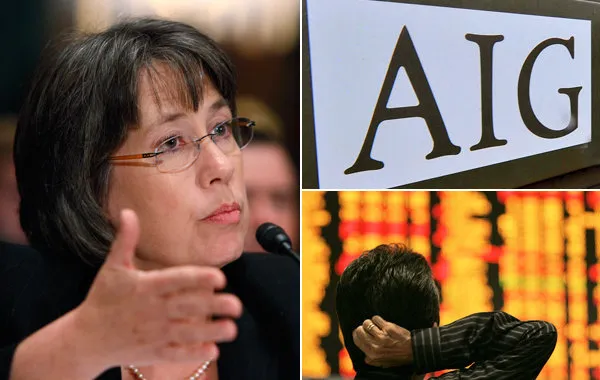
FDIC Chair Sheila Bair

The "Too Big To Fail" legislation currently being debated by a House committee has been widely criticized as toothless. But one provision gives the federal government a powerful mechanism to prevent another implosion like the one that launched the current financial crisis.

The bill, which would give the Federal Deposit Insurance Corporation the power to take over failing firms that pose a risk to the entire financial system, gives the FDIC the authority to repudiate the firm's derivatives contracts, pay the parties less than what they're owed, or transfer the contracts to another, healthy financial firm.

Perhaps most importantly, the FDIC would have the authority to delay the parties from closing out their contracts and taking their money with them. That's part of the reason why the Lehman Brothers bankruptcy announcement caused the financial markets to crash, and it's what helped bring about the demise of the 158-year-old investment firm -- everyone wanted to get their money out before it was too late.

The FDIC already has this power when it comes to failed banks. But its authority is strictly limited to insured depositories. So the FDIC can take over a Citibank, for example, but not all the operations of a Citigroup. It's an important difference, and part of the reason why the administration and House Financial Services Committee Chairman Barney Frank are proposing to give the FDIC this expanded authority.

Here's how it works:

These days, when the FDIC takes control of a bank, it can liquidate it (receivership) or take it over in preparation for a sale (conservatorship). Receivership is the most common approach. In those cases, the FDIC will sell off a bank's assets, or it can open a temporary bank in order to minimize the disruption that would come from immediately selling off all of a bank's assets.

In derivatives contracts, a firm's failure or bankruptcy often triggers a clause that calls for the contract to be immediately closed out.

From Michael Krimminger, special advisor for policy at the FDIC, before a House committee in October:

Under both the Bankruptcy Code and bank insolvency law, the counterparties to insolvent firms can terminate and net out derivatives and sell any pledged collateral to pay off the resulting net claim. During periods of market instability -- such as during the fall of 2008 -- the exercise of these netting and collateral rights can increase systemic risks. At such times, the resulting fire sale of collateral can depress prices, freeze market liquidity as investors pull back, and create risks of collapse for many other firms.
Story continues below
advertisement


In effect, financial firms are more prone to sudden market runs because of the cycle of increasing collateral demands before a firm fails and collateral dumping after it fails. Their counterparties have every interest to demand more collateral and sell it as quickly as possible before market prices decline. This can become a self-fulfilling prophecy -- and mimics the depositor runs of the past.

This is what happened to Lehman Brothers and another Wall Street firm no longer standing, Bear Stearns.

"Rumors about Lehman's liquidity problems, and the subsequent bankruptcy filing, triggered asset fire sales and destroyed the liquidity of a large numbers of claims held by Lehman's direct counterparties as well as of claims held by counterparties several steps removed from those having claims directly against Lehman itself," Krimminger said. "This led to an abrupt collapse of liquidity as the ability of parties throughout the market to complete settlements was placed into doubt."

While the FDIC can now stem the tide for banks, it can't for investment firms such as Goldman Sachs or Morgan Stanley. The draft of the Financial Stability Improvement Act of 2009 -- first proposed by the administration and introduced in the House Financial Services Committee last week -- would give the agency that ability.

It's not going to be easy, though. With derivatives, under both its current and proposed authority, the FDIC only has until 5 p.m. on the business day following its appointment as a receiver to dispose of the problems. The rationale behind the one-business day turnaround is that the value of derivatives is tied closely to a company's relationship with others in the market and its need for immediate and continuous access to liquidity.

According to a summary of the administration's regularly reform framework by the international law firm Gibson, Dunn & Crutcher, which represents banks and other financial firms, the FDIC would have the "power to repudiate 'burdensome' contracts and leases and is liable only for 'actual direct compensatory damages' and no damages for profits or lost opportunity or pain and suffering or punitive damages...[and it would be able to] enforce contracts despite default, termination, or acceleration clauses."

The proposal has its critics. The International Swaps and Derivatives Association, a global trade group representing the over-the-counter derivatives industry, is concerned that the bill wouldn't allow firms to immediately net-out and end their contracts.

"In general, our main concern about any wind-down authority would be to ensure that potential legislation recognizes the importance of the enforceability of close-out netting to the derivatives markets and the counterparty risk management benefits this brings," the group said in a statement.

To put the provision into context, let's imagine that AIG had been taken over by the FDIC. Rather than the troubled insurer paying Goldman Sachs $12.9 billion for its disastrous credit-default swaps (a type of derivative contract) -- a sum paid in full per the contracts -- the FDIC could have mandated a lesser payment. In the real world, however, the New York Fed chose to make AIG pay all of its debts in full. Per Jonathan Weil of Bloomberg:

AIG wound up paying $32.5 billion to retire the swaps, $13 billion more than if it had paid, say, 60 cents on the dollar. The New York Fed also arranged to pay the banks $29.6 billion for collateralized-debt obligations backed by subprime mortgages and other loans, a tad less than half their face value. (The swaps were side bets by the banks that rose in value as the CDOs fell.)


It probably made sense for the counterparties to reject AIG's initial settlement offers. They had their own investors to look after. And once the government took control of AIG, it couldn't credibly threaten to force the company into bankruptcy proceedings. The premise of the government's seizure, after all, was that AIG was too big to fail.

Get HuffPost Business On Facebook and Twitter!

The "Too Big To Fail" legislation currently being debated by a House committee has been widely criticized as toothless. But one provision gives the federal government a powerful mechanism to prevent a...
Report Corrections
 
Comments
77
Pending Comments
0
iPhone App Promo
Post Comment

Want to reply to a comment? Hint: Click "Reply" at the bottom of the comment; after being approved your comment will appear directly underneath the comment you replied to

View Comments:
Page: 1 2 3 Next › Last » (3 pages total)
- mrjames1 I'm a Fan of mrjames1 3 fans permalink

The $1000 an hour attorneys who wrote the current standard derivative contracts were pretty, uh, smart, especially when it comes to the force majeure provision. Just wait until (or if) Congress tries to make them illegal, and see armageddon-like clause it triggers. Best to outlaw any new derivatives from this point

    Reply    Favorite    Flag as abusive Posted 04:35 AM on 11/05/2009

A friend asked me if things were really hopeless and I said yes. There will be no meaningful change or reform and things will continued suck1ng they way they have since Reagan.

good articles; http://financeopinionss.blogspot.com

And that was that.

    Reply    Favorite    Flag as abusive Posted 12:06 PM on 11/04/2009

talk about unintended consequences! just wait to see the mess this creates

    Reply    Favorite    Flag as abusive Posted 06:22 AM on 11/04/2009
photo

I'm not too worried about this.

    Reply    Favorite    Flag as abusive Posted 09:37 PM on 11/03/2009
- jerrypl I'm a Fan of jerrypl 53 fans permalink
photo

Some common sense within the fog. Now repeal the Commodity Futures Modernization Act 1999, and reinstate Glass-Steagall.

http://eye-on-washington.blogspot.com

    Reply    Favorite    Flag as abusive Posted 08:11 PM on 11/03/2009
- dnegri I'm a Fan of dnegri 129 fans permalink

There's one clear message out there right now for Obama and the Democrats:

The harder you come down on the Wall Street fat cats the better you'll do in 2010.

You have the power (within limits since we're talking about the Democratic party) to actually do it.
All Republicans can do is talk about it (since they too are scared).

l

    Reply    Favorite    Flag as abusive Posted 07:32 PM on 11/03/2009

Prior to the Gramm-Leach-Bliley Act (1999) which gutted the safe guards in the system. Derivatives represented just a few Trillion Dollars and today it is over 800 Trillion World wide.

Derivatives were created by banks not the US Treasury.

Derivatives have no real value its the Banks funny money.

The Banks wanted the Government to validate the money to make it real dollars.

    Reply    Favorite    Flag as abusive Posted 07:21 PM on 11/03/2009
- mkw408 I'm a Fan of mkw408 2 fans permalink

This bill will pass with a little addendum that exempts Goldman Sachs.

    Reply    Favorite    Flag as abusive Posted 06:47 PM on 11/03/2009

Probably.

    Reply    Favorite    Flag as abusive Posted 07:18 PM on 11/03/2009
- dnegri I'm a Fan of dnegri 129 fans permalink

Goldman Sachs is rapidly becoming the poster boy for how to lose an election in 2010. If Obama and Rahm didn't know it already, they will after Corzine loses.

There will be no further exemptions for GS any time in the future...

    Reply    Favorite    Flag as abusive Posted 07:33 PM on 11/03/2009
photo

Why not just create laws or regulations against selling financial products that are too complicated for anyone to understand?

    Reply    Favorite    Flag as abusive Posted 05:16 PM on 11/03/2009

agreed!

    Reply    Favorite    Flag as abusive Posted 07:56 PM on 11/03/2009
- Ranta I'm a Fan of Ranta 28 fans permalink
photo

We have financial laws on the books. Enforcing them and any new laws is another story.

    Reply    Favorite    Flag as abusive Posted 05:14 PM on 11/03/2009

Some things are beginning to make sense now.

    Reply    Favorite    Flag as abusive Posted 05:12 PM on 11/03/2009
- greihing I'm a Fan of greihing 2 fans permalink
photo

Lehman's liquidity problems, along with Bear Sterns, could have been part of a market manipulation. No one has looked into the case of the man who put down 1.7 million dollars on Bear Sterns to fail a couple of days before it actually collapsed.

The Obama admin has not been very aggressive in finding out who did this. This also led to Lehman Bros going through the exact same thing a month later.

You could argue coincidence or a way of getting taxpayers to pay for the consolidation of investment banks which has gone from 5 to 2.

Where is the FBI when we need them the most???

    Reply    Favorite    Flag as abusive Posted 04:27 PM on 11/03/2009
- nopilikia I'm a Fan of nopilikia 6 fans permalink

Anyone from GS in the Administration?

    Reply    Favorite    Flag as abusive Posted 04:30 PM on 11/03/2009
photo

You got it right, Jack

    Reply    Favorite    Flag as abusive Posted 04:31 PM on 11/03/2009
- Clayton139 I'm a Fan of Clayton139 25 fans permalink
photo

Agreed !

    Reply    Favorite    Flag as abusive Posted 04:53 PM on 11/03/2009
photo

Perhaps everyone!

    Reply    Favorite    Flag as abusive Posted 05:35 PM on 11/03/2009
- politicky I'm a Fan of politicky 14 fans permalink
photo

STILL protecting a ridiculously skewed towards the wealthy system.

    Reply    Favorite    Flag as abusive Posted 04:26 PM on 11/03/2009
photo

Derivatives are necessary to the system. The problem is they are extremely lucrative and extremely risky. The problems arise when people take on more risk than they can manage if say the economy implodes.
What we need is a system that punishes banks, hedge funds, pension funds for betting on margin, or above the ability to pay off a bad bet.
This is Vegas. Show me a Casino that lets you bet a million dollars that you don't have and then says it's ok we trust you and I will show you a casino that is out of business.

    Reply    Favorite    Flag as abusive Posted 04:14 PM on 11/03/2009
- nopilikia I'm a Fan of nopilikia 6 fans permalink

Like Lehman Brothers?

    Reply    Favorite    Flag as abusive Posted 04:21 PM on 11/03/2009
photo

Why are derivatives necessary to the system? Did they always exist?

    Reply    Favorite    Flag as abusive Posted 04:25 PM on 11/03/2009
- desertman I'm a Fan of desertman 15 fans permalink

We need to go back to the Bible. In Genesis Chapter 29, believed to be about the year 1700 B.C., Jacob purchased an option costing him seven years of labor that granted him the right to marry Laban's daughter Rachel. His prospective father-in-law, however, reneged, perhaps making this not only the first derivative but the first default on a derivative.

    Reply    Favorite    Flag as abusive Posted 04:32 PM on 11/03/2009
- nopilikia I'm a Fan of nopilikia 6 fans permalink

Simple answer they are not and no.

    Reply    Favorite    Flag as abusive Posted 04:34 PM on 11/03/2009
- theaetetus I'm a Fan of theaetetus 3 fans permalink
photo

we should just turn the treasury over to big business and let them do what they want

    Reply    Favorite    Flag as abusive Posted 04:13 PM on 11/03/2009
photo

Ah, back to the Bush era.

    Reply    Favorite    Flag as abusive Posted 04:16 PM on 11/03/2009
- Chili4me I'm a Fan of Chili4me 32 fans permalink
photo

I think you just insulted the Bush era.

    Reply    Favorite    Flag as abusive Posted 05:31 PM on 11/03/2009
photo

Theaetetus: It's already theirs.

    Reply    Favorite    Flag as abusive Posted 04:36 PM on 11/03/2009
Page: 1 2 3 Next › Last » (3 pages total)

 You must be logged in to comment. Log in  or connect with 

Connect