iPhone app iPad app Android phone app Android tablet app More

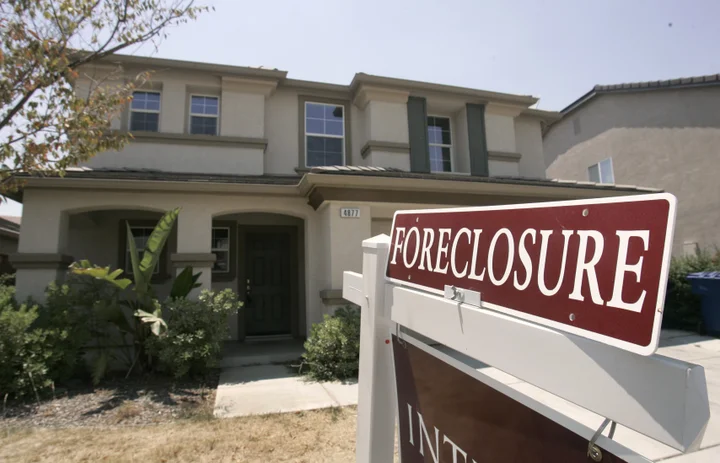
Underwater Mortgages: 1 In 4 U.S. Borrowers Have Negative Equity On Their Homes

Underwater Mortgages

Huffington Post   First Posted: 03/18/10 06:12 AM ET Updated: 05/25/11 03:45 PM ET

First the good news: The number of Americans who owe more on their mortgages than their homes are actually worth is not as high as many thought. In August, First American CoreLogic reported that about 1/3 of U.S. borrowers had mortgages that could be called "underwater."

At the time, CoreLogic put the number of U.S. homeowners dealing with negative equity at 15.2 million or 32.2% of all mortgaged properties.

The good news, as the Wall Street Journal reports, is that, according to American CoreLogic's revised calculations, that figure is actually 10.7 million Americans -- or about 23 percent of U.S. mortgage holders.

Here's the Journal's explanation of the revision:

The latest First American data aren't comparable to previous estimates because the company revised its methodology. First American now accounts for payments made by homeowners that reduce principal, and it no longer assumes that home-equity lines of credit have been completely drawn down.


The changes reduced the total number of borrowers under water -- although both old and new methodology show increases from the previous quarter. Using the old methodology, the portion of underwater borrowers would have increased to 33.8% in the third quarter.

The revised figures, says the Los Angeles Times, "may cause some head-scratching and hand-wringing in newsrooms, at fair-lending groups and in legislative hearing rooms, where the CoreLogic data has been widely cited as an indicator of the severity of the mortgage meltdown." In short: "oops."

Despite the change in methodology First American's report is still troubling, and recent housing market data has been mixed at best. Yesterday, the National Association of Realtors reported that home sales rose 10.1 percent in October, based, in large part, on a rush to take advantage of the expiring first-time home buyer tax credit. Today, the widely-watched Case-Shiller Index showed that home prices rose for the fourth month in a row.

But new housing starts fell 10.6 in October -- and have largely been flat since January, as Calculated Risk pointed out.

About 40 percent of Americans who took out a mortgage in 2006 are now underwater, according to First American's figures. In Nevada alone, 46 percent of mortgages holders have negative equity on their homes.

Worse, if Deutsche Bank's prediction from this August is correct, the mortgage market may not be approaching a full recovery anytime soon. About half of all U.S. mortgages could be underwater by 2011, the bank said. Per Bloomberg:

"Seven markets in states with the fastest appreciation during the five-year housing boom -- including Fort Lauderdale and Miami, Florida; Merced and Modesto, California; and Las Vegas -- may find 90 percent of borrowers underwater, according to the report."
FOLLOW HUFFPOST BUSINESS

First the good news: The number of Americans who owe more on their mortgages than their homes are actually worth is not as high as many thought. In August, First American CoreLogic reported that about...
 
 
  • Comments
  • 271
  • Pending Comments
  • 0
  • View FAQ
Comments are closed for this entry
View All
Favorites
Recency  | 
Popularity
Page: 1 2 3 4 5  Next ›  Last »  (6 total)
photo
HUFFPOST SUPER USER
Siebenstein
> there is no endless growth
09:10 PM on 11/27/2009
Eliot Spitzer tried to sue the OCC before his scandal. Too bad he got caught before he could blew the OCC to pieces.
photo
HUFFPOST SUPER USER
Siebenstein
> there is no endless growth
09:07 PM on 11/27/2009
The best case scenarion for homeowners held hostage by Chase would be to file a class action suit against the OCC , which oversses Chase. It needs to be filed for failing on regualtory intervention.

I believe suing the OCC is much more efficient than trying to sue the bank, since the bank will always refer back to the other criminals.

I wonder why no lawyers are good enough to take this on.

What do you guys think?
11:58 AM on 11/26/2009
Looks like the overseas markets crashing on Dubai default fears...Maybe this is retribution for all the Wall Street excess over the past few months..

hat tip to http://financeopinionss.blogspot.com

let Wall Street fail. Let the banks fail
11:54 PM on 11/24/2009
Look at all these posts below. It's either the ____'s (insert bad people's name here) fault......or it's Republican's without a heart dissing those unfortunate souls who god-forbid have fallen on bad times and lost their house.

Hose Buying 101: Buying a house is a GAMBLE. A HUGE GAMBLE. Too bad we had many, many years of escalating home values to create rule of thumb that a home is a good investment.

The problem with that is: We created a huge bubble. Homes escalated WAY outta site. If you were coerced by a slick real estate agent....in a new suit.....to buy a nice, gigantic house....in a new neighborhood.....and paid half a million for the house....Life was good. You really could not afford the half million dollar house....so you were coerced to sign a no money down, interest only 30 year note.

Ya have no money for furniture...but you have a nice house......until the market turns south.

Now the house is only worth $300,000. Uh-oh.....you paid $500,000. And you signed a contract. You are now $200,000 in the negative on this house.

There are many, MANY people in Atlanta that have done this same exact thing.

Did anyone hold a gun to their head and make them do this? NO! It is a sign of our times....and unfortunately, that sign is not good.

There is affordable housing with little RISK. It's called an apartment.
photo
HUFFPOST SUPER USER
Siara
Obama 2012
10:31 PM on 11/24/2009
Too bad it's so hard to distinguish between the prudent people who are victims of hard times and the people who bought $500,000 houses when they had an annual income of $30,000.
06:07 PM on 11/24/2009
People who are underwater on their mortgage should read an article by an Arizona law Professor titled, Underwater and Not Walking Away, in which he argues that homeowners are shamed into making the bad financial decision to keep paying their mortgage even when the are seriously underwater. The article is downloadable at for free http://ssrn.com/abstract=1494467. As the professor argues, don’t let the government or the banks shame or scare you into holding onto a bad investment. And don’t believe the wishful thinking that if you just hold on, prices will rebound soon. It's not going to happen for decades in the worst hit markets. In the meantime, you are throwing away your money, unless your mortgage payment is less than what you can rent for. Read Prof. White’s article, do some research, and make the best financial decision for you and your family.
HUFFPOST SUPER USER
Wolf1739
05:34 PM on 11/24/2009
This can't be said enough, so I'm going to say it again.

Your house is NOT an asset to you! It's an asset to the mortgage holder.

An asset is something that makes money. Unless you're renting out enough of your house so that it is bringing in more than the monthly expenses, it's a liability.

Even if your house is paid off, you still have utilities, taxes, and insurance that make it a liability.

If you invested in a stock and it tanked with little hope of recovery within 5 years, you'd be looking for a way out to cut your losses. Think of your personal finances the way businesses think of finances and look at the bottom line.

Forget about the "moral imperitive", I assure you the banks have no such concern when it comes to kicking you out.
07:08 PM on 11/24/2009
I rent out my extra 2 bedrooms to friends that needed a hand. I charge them a little less than what would be considered "market value", but it's still enough to cover my mortgage AND my electric bill with a few bucks leftover each month. So far it's a win-win situation. More people should consider it given the sheer number of people who could wind up homeless in the near future.
photo
HUFFPOST SUPER USER
azphoenixwolf
04:18 PM on 11/24/2009
More happy talk and the recession's over if you buy that. Wrong.

There are still waves of foreclosures on the horizon. All the prime mortage borrowers who have lost their jobs (think those outsourced jobs, print media jobs, snail mail jobs are coming back?), all the ARM mortgages that are resetting with time (I have a friend whose mortgage reset $400/month higher on an ARM which had graduating rates like many ARMs), and all the foreclosures coming from additional unemployment due to the huge commercial real estate bust coming that will be as big as the housing bubble that already broke. Think our economy can handle what we have now plus a repeat?
03:01 PM on 11/24/2009
return of capital. LENDERS should be frozen of all bailout funds, and made accountable for all funds received thus far.Funds should be made available to a special fund strictly to address foreclosures near foreclosures, and underwater mortgages.Lender and borrower must have a face to face meeting
to arrange a mutual agreement as to principle and interest Lower the principle(capital) lower the rate(interest) to keep theowner in their home. They both apply for funds to this special fund. after approval,
they close.At this closing, a two party check is signed by both parties. the lender gets these proceeds.
the lender gets capital in cash and loses the interest on the amount The borrower loses equity in his property.Everyone takes a hit for their mutual contribution to the market.the harder and faster a lender acts the more capital he recoups for his operations.Let the lenders earn instead of having billions thrown at them.we tried the lenders, now lets include the borrower.
photo
HUFFPOST SUPER USER
chemguy
Liberal, but not Democrat
02:53 PM on 11/24/2009
This is not the problem, this is the problem being corrected. The real problem was that housing prices were getting completely out of hand, rising far faster the inflation or wage increases. Housing prices coming back down to sane levels is a good thing.
07:18 PM on 11/24/2009
Home prices have always risen faster than inflation since the 1930's. A home in 1940 that sold for less than 5K should have only cost about 70K in 2007 due solely to inflation. Avg. price in 2007 was 4 times that in a lot of areas in the country. Ridiculous. Prices have to drop ALOT more to be in line with reality.
photo
getoffthecross
I take social satire seriously...
02:40 PM on 11/24/2009
Bought our home in 1996 in S. Florida for $100K. We were told we could afford a $200K home or more, and politely declined. Took out a home loan a few years later for $20K to refurbish kitchen and bathrooms. Told we could take a loan for $100K or more, and politely declined. Refinanced home a few years ago to add a room and replace all flooring. Was told the house was then worth over $250K and we should mortgage it to the hilt, and politely declined. Now? We'd be lucky to find someone to buy the house for the original $100K. Thankfully, we aren't in a position where we HAVE to sell, but we'd be barely breaking even if we did. And if we had taken all that "free" advice from the experts about all that money we COULD have taken (presumably to invest in the stock market or spend on an SUV we didn't need or something)?

Point: Even if you're not one of the 1 in 4 underwater, and even if you didn't make imprudent decisions, it doesn't mean you're out of danger. We're all in this together, good investors and bad...unless you had a C-suite position for a Wall Street investment company. Then you can just sit back and laugh at all us suckers...until Karma catches up with you (and it's going to happen).
photo
HUFFPOST SUPER USER
abbyrose86
Business exists to benefit MANKIND, MANKIND does N
05:13 PM on 11/24/2009
Beautifully said!!
02:03 PM on 11/24/2009
"Home prices rose in 11 major cities, with the strongest gains in San Francisco and Minneapolis, according to the Case Shiller report.
That's a shift from the summer, when price gains were more widespread. In July, for example, prices were up in 17 cities."
02:02 PM on 11/24/2009
"homeowners dealing with negative equity at 15.2 million or 32.2% of all mortgaged properties."

This is a good thing. They will refrain from indulging in a great American tradition of borrowing against equity to finance the lifestyles they can''t afford.
Viper
Former repub, still repenting
02:14 PM on 11/24/2009
Only an economic genuis such as your self would think thats a great thing... That means no equity for small business startups.. Banks having to create larger reserves.. which reduces the amount of moey they can lend. Huge drops in property taxes and the things that money is spend on in local government .. deeping the economic recession and increasing jobs losses..

I'm all for living more frugal... but having more debt than assets in a country where 80% of the citizens have no networth already is not a great situation and increasing foreclosures is not good for the community.

Regards
02:49 PM on 11/24/2009
Very same people predicting the end of the world as we know it when home prices were too high are doing the same because prices dropped and people can finally can afford to buy a house.
This has mostly to do with psychological issues having to do with early abandonment and lack of earning capacity.
01:42 PM on 11/24/2009
At least you've got people trying to measure this! In Ireland, until a month ago the only estimates of negative equity (for those who are interested about 1 in 4 borrowers) were ones I worked out myself on my blog. Which is all well and good for me, but surely the country/bond investors/taxpayers deserve better!
01:38 PM on 11/24/2009
Here in Europe we have whats called ''construction loans'' You build a house and the bank gives you the money piecemeal after each stage of the build.

Of course they build houses here with brick stone, oak, marble and it takes an average of a year to build a house. But it will last a 1000 years also. Its made to live in not as an investment (perhaps to pass on to your children yes).

My home is about 400 years old but we put in marble floors with underfloor heating and updated the whole innards to the highest quality and fully digital. Also rainwate collection system on roof that goes into tanks and filters. (very soft).

Our utility bills average 150 euros a month year round elect . heat etc.

Underfloor heating is the absolute GREATEST.
photo
HUFFPOST COMMUNITY MODERATOR
LHoney
REINSTATE GLASS STEAGALL!!!
04:14 PM on 11/24/2009
Wow... My average electric bill in Connecticut for our 1400 sqft house is over $300 per month.
photo
HUFFPOST SUPER USER
abbyrose86
Business exists to benefit MANKIND, MANKIND does N
05:16 PM on 11/24/2009
WOW...I'm so jealous! As you know, here in the state, they build overpriced cardboard boxes, with plastic siding, not meant to last, without significant upgrades every 5 years. Planned obsolescence has been a center piece of economic activity in the US since the 50's. But many would rather blame the victims, not the system. Sigh!