iPhone app iPad app Android phone app Android tablet app More

Sanctimonious Deficit Hawks Target Social Safety Net

First Posted: 06/29/10 06:12 AM ET Updated: 05/25/11 05:20 PM ET

Ellis Island Family

They come off as so reasonable, so high-minded, so balanced in their thinking.

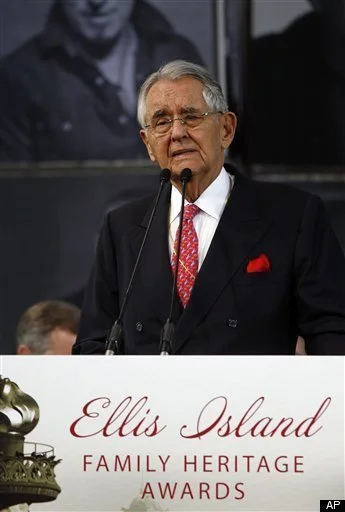
They are the pillars of the Washington establishment, and they were everywhere you looked at Wednesday's gala "Fiscal Summit" organized by corporate-takeover mogul Peter G. Peterson's eponymous foundation. (C-SPAN has it all on video.)

Listen to them and they will tell you how troubled -- how very, profoundly troubled -- they are by the nation's rising debt and dangerous fiscal path. They will tell you very self-righteously how you should be troubled, too. And they will tell you that, fortunately, they know -- in fact, "everybody knows" -- what is best for all of us.

And yet, the illusion of beneficence shatters the minute they get into the details. Because beneath their moving platitudes, the only concrete deficit-reducing proposal that they all agree on involves cutting Social Security payouts, in part by raising the retirement age.

There is no consensus on which taxes, if any, should be raised. There is no consensus on how to reduce health costs. There is certainly no consensus on the need to slash our bloated defense budget.

No, their only fully developed policy proposal -- one to which they adhere to with nearly religious devotion --is that America's most successful social program needs to be scaled back so that it provides fewer people less money over a shorter period of time. This despite admonitions from progressive economists that they are exaggerating the positive effects of Social Security cuts on deficit reduction, while being cavalier about the effect on people.

As insurgent panelist Larry Mishel, the president of the Economic Policy Institute, said about the Social Security shortfall on Wednesday: "It happens to be that we can actually pay every benefit promised for the next 30 years or so. It's the least of our problems. But people cavalierly, like frankly [CBS News correspondent and moderator of the previous panel] Lesley Stahl did earlier, say 'Let's raise the retirement age.' But ... [while] life expectancy grew a lot over the last few decades... it only really grew for the people in the upper half of the income distribution. People in the bottom half of the income distribution are not living longer. So we have a fundamental problem of inequality that we have to deal with."

Peterson, however, just can't help himself when it comes to Social Security; for instance, he asks guest after guest to explain to the audience how the Social Security Trust Fund, which holds more than $2.5 trillion in government debt, is actually a fiction.

That $2.5 trillion Trust Fund is the repository of payroll taxes paid by generations of working Americans, and the government bonds it holds are backed by the full faith and credit of the United States of America. But to Peterson, that doesn't count, because the actual money that was paid in has been spent on other things and the government, to pay it back, would have to find the money somewhere else -- maybe in taxes, maybe by borrowing more money.

So while he won't say it in so many words, Peterson is essentially advocating for the U.S. to default on its debts -- not to the Chinese, of course, (that would "reduce investor confidence"), but to the American working people.

And although he won't say it in so many words, Peterson's message to the retirees, widows and orphans who depend on Social Security is: Sorry! We already spent all your money feeding the military industrial complex and paying for tax cuts for the rich and so on. We don't owe you a thing.

Doesn't sound so high-minded now, does it?

And consider the track record of these pillars of the Washington establishment. Many of these men, far from deserving trust and respect, should actually be disqualified from setting public policy.

For some, it's a matter of how they made their money. Peterson, for instance, made billions founding the Blackstone Group, which raked in huge fees for corporate takeovers that didn't actually end up serving anyone else's interests as much as its own.

For some, like former Federal Reserve chairman (and honored Peterson guest) Alan Greenspan, it's a matter of poor decision-making in the past. Greenspan's overconfidence in the market's ability to regulate itself was a major factor in the recent financial crisis.

And for some, like Robert Rubin, it's both. As Treasury Secretary under Clinton, Rubin was a leading architect of financial deregulation -- and then went on to nearly drive an increasingly risk-taking Citigroup into bankruptcy, even while enriching himself to the tune of $126 million.

What animates their animus against Social Security? There is apparently something about this triumph of the New Deal, the ultimate reflection of our society's concern for its elderly, that seems to offend them on a political or personal level.

And why such passion about the deficit? After all, there is a reasonable argument to be made that deficit spending is not such a bad thing.

I gather it has something to do with fears of rising interest rates and inflation -- things that may legitimately terrify bankers, but don't seem enough in and of themselves to justify such fervor among the rest of us.

And the real shame of it is that all this focus on deficits -- even if it's ostensibly on long-term structural issues -- is a big distraction from the real crisis upon us, which is unemployment and slow growth. The federal government has a critical role to play in creating more jobs, but scary talk of the deficit tends to make people afraid to spend money.

There is undeniably a need to take intelligent steps to restore some balance to the federal budget down the line, but now is absolutely not the time.

Meanwhile, Peterson's "Deficit Fest" was timed to come on the heels of the first meeting of President Obama's deficit commission. And what's becoming quite clear about that commission -- many if not most of whose members were attended the Peterson event -- is that there are more than enough votes to block any genuinely daring proposal, such as slashing military spending or enacting a carbon tax.

The way the commission was set up, any recommendations have to be supported by at least 14 of the 18 members.

So the only real question is whether there are five votes to protect the social programs that the deficit hawks find so dangerous.

FOLLOW HUFFPOST POLITICS
Subscribe to the HuffPost Hill newsletter!
They come off as so reasonable, so high-minded, so balanced in their thinking. They are the pillars of the Washington establishment, and they were everywhere you looked at Wednesday's gala "Fiscal S...
 
 
  • Comments
  • 572
  • Pending Comments
  • 0
  • View FAQ
Comments are closed for this entry
View All
Favorites
Highlights
Recency  | 
Popularity
Page: 1 2 3 4 5  Next ›  Last »  (12 total)
11:57 AM on 05/06/2010
Since the Social Security trust fund will have enough money in it for almost 30 years, there is no excuse at all to mess with Social Security payouts OR life expectancy.

As the blogger said, THIS IS DEFAULTING ON AMERICAN DEBT. We should get that message out loud and clear.

Our government AND THIS ADMINISTRATION want to default on government debt, but only that owed to individual Americans.
photo
HUFFPOST SUPER USER
David Doney
03:18 PM on 05/01/2010
Social Security is just fine. It has collected about $2.4 trillion more in taxes than it has paid out (the Social Security Trust Fund). Of course, the government spent this money on other things (mainly defense, as Medicare also has a dedicated tax that covers most of it).

The big ideas for Social Security reform are:

1) Removing the Social Security payroll tax cap, which is currently $106,800. Yes, if you make $1 million you pay the same social security tax as someone making $106,800. This could be done progressively.

2) Reducing the annual cost of living adjustment (COLA), which is greater than inflation. For example, it was a very high 5.9% in 2009 and zero in 2010. We'll have to keep it to 1-2% in the future.

3) Raising the retirement age is a bad choice. What about those that work with their hands or have to stand up all day? Not a good option. We can cover the shortfall with options 1 and 2 above.

Bear in mind that Social Security's shortfall is about 1% of GDP, or about $140 billion per year. This is less than the Bush tax cuts, which CBO estimates increased the deficit by $180 billion per year.

So we could reverse the Bush tax cuts to shore up Social Security for the next 100 years also.
This user has chosen to opt out of the Badges program
09:41 AM on 05/01/2010
In the mid-1990's I frequently had coffee with a group of retirees. There was a lot of talk about balancing the budget about doing away with entitlements--specifically welfare and food stamps.
To make a long story short, at that time these two programs added up to about 50 billion dollars with a deficit of about 250 billion dollars. When I suggested that the only meaningful way to further cut entitlements was to cut social security, I was excoriated by any and all. The sense of entitlement is found in more than wall street bankers, it is found in us all. Let me be clear, I strongly support SS. I believe that the contributions cap should be abolished and eligibility requirements for benefits be stiffened. I am simply pointing out that firing squads aren't a threat until you are standing in front of one.
This user has chosen to opt out of the Badges program
07:46 AM on 05/01/2010
'What animates their animus against Social Security? There is apparently something about this triumph of the New Deal, the ultimate reflection of our society's concern for its elderly, that seems to offend them on a political or personal level."

I suspect not animus but cold greed. It is one of the last well-functioning programs and when fewer people use it and yet the same amount of money is coming in, the pool of money expands for corporatists/politicians use.

Rubin doesn't care about the deficit. He just wants access to whatever is left before he leaves.
photo
HUFFPOST PUNDIT
Markovich
03:44 AM on 05/01/2010
Government spending/contracts, protection and corporate tax breaks probably account for 25% of the growth in Pete's equity. If we had a truly free market tomorrow and enforced anti-trust laws, he wouldn't know where to invest. That being said, I read his book "Facing Up" and he lays an accurate forecast of macro trends, he just doesn't have the remedies.
03:59 AM on 04/30/2010
About the deficit are not that bad argument: The article you reference says, among other things:
"A long-term deficit – within reason – won’t overburden taxpayers with debt, won’t crash the dollar, but will help our economy, Palley tells NiemanWatchdog. “For me, I would say a permanent deficit somewhere around 2 percent of GDP (Gross Domestic Product) would be totally fine.” More in bad times, he says, and less during the booms."
-----------------------------------------------------------------------------------------
Ahem, no.
First, the prudent approach is to have no debt at all. The government simply doesn't need it because it can work with taxes and tariffs to cover the necessary expenses.
Second, if the government really needs to borrow money, it needs to do so cautiously. Two percent of GDP would amount to around $ 286 bln of TOTAL DEBT, excluding interest payments, as the GDP is around $ 14.3 trillion.
However, the current budget 2010 has already $164 billion budgeted for INTEREST PAYMENTS ONLY, and this is not even paying down the debt. This is way beyond prudent or cautious.

Given that the budget 2010 (receipts) is around 2.2 trillion and expenses are 3.8 bln new debt is added (1.6 trillion!). The 2% of GDP above becomes around 10% of the budgeted receipts.

This may be acceptable on a short term basis, but it is way beyond prudent or cautious on a long term basis.
03:39 AM on 04/30/2010
So while he won't say it in so many words, Peterson is essentially advocating for the U.S. to default on its debts -- not to the Chinese, of course, (that would "reduce investor confidence"), but to the American working people.
-------------------------------------------------------
Exactly right. Of course, the debt to the banks who caused all this (on purpose, I might add) will also be honoured.
03:01 AM on 04/30/2010
Sanctimonious is right. They shed crocodile tears over the deficit and point to cuts in social security and medicare-- the very programs that the "little people" have to rely on to get by in retirement-- as the necessary solution. Whenever I hear one of these rich deficit hawks respond to a question about raising taxes, the answer is always," That will never be enough." I'd be really interested in seeing some numbers. If we raise taxes much more than these hawks imagine, would that be enough to make a dent in the deficit?
01:47 AM on 04/30/2010
Wow! The pot calling the kettle black! The three largest Federal government expenditures are: Social Security, military spending, and Medicare. It makes sense to reduce the growth rate of Social Security and Medicare and to cut military spending outright. It also makes sense to restore income tax rates to their levels in the late 1990s. As to your comment that deficit spending is good--hey, you agree with Dick Cheney! And you're both wrong. I guess that you haven't been paying attention to the debt crisis in Europe, eh?
HUFFPOST COMMUNITY MODERATOR
BBinMT
Is this a 5 minute argument or the full half hour?
01:47 AM on 04/30/2010
At some point, and fairly soon, taxes will have to be raised. There is going to be no way around that. But, as pointed out in the article, cutting budgets will also have to be done. The first one to be on the chopping block should be the defense budget. It can be done sensibly. But again, who will be brave enough to raise taxes in these times?

http://www.newsweek.com/id/236383
photo
HUFFPOST SUPER USER
IrishLover
01:21 AM on 04/30/2010
Republican Daily Prayer ( to St. Ronny)

TaxCutTrickleDownTaxGunsAmmoCaribouBarbieSarahBooFearCountryBackCutCutCutTaxTaxesTaxCutFIngerOuchGovernmentSmallSoIsMineTaxCutBooFearBOOBlackBooManPresidentBlackRunBooFearIsmCommuSocialMarxIsmBooVoucherFearArugulaMustardTaxCutFearBooLibScaryLibScaryBooTaxCutFilibusterSayNoNoAgainNoStallFearTaxCutSuntanOrangeMisspelledSignTeaBoobagsFearTaxVoucherCutYellScreamWainnnhBooTaxCutMoreWarMissilesTaxDefenseGoodBooSarahQuitBooFearBoo!

Amen
(Which runs contrary to help thy fellow man)

Regards,
Funky
This user has chosen to opt out of the Badges program
photo
01:02 AM on 04/30/2010
These people are not really deficit hawks. Their goal is to destroy social security and medicare. They know people are concerned about deficits and they use that as their dishonest excuse.
HUFFPOST COMMUNITY MODERATOR
unclelew
12:47 AM on 04/30/2010
We know the sacrifices the rich are willing to make. While kids from farms and the inner cities were dying in dying in Iraq and Afghanistan, the rich were forced to endure a huge tax cut, driving up the deficit.
HUFFPOST SUPER USER
jeanrenoir
11:55 PM on 04/29/2010
America's obviously toast. Bush didn't make up 9/11. Obama's right that the war against the Taliban and Al Qaeda is a "war of necessity," since if we lose it, Bin Laden will end up with Pakistan's nukes, and before long vaporize NYC, imploding the American economy. So our defense budget is hardly "bloated." In fact, we're stretched thinner than our military has ever been since WWII. That's why our troops are rotating over and over through Iraq and Afghanistan. So cutting our defense budget at a time when we face a foe that is de facto much more potentially deadly for us than the USSR ever was, is simply nuts. Yet we do have a devastating deficit run up by Bush II, just like the one Reagan ran up when HE cut taxes on the rich too. Like Reagan, Bush wanted to bankrupt the government so we'd HAVE to cut social programs as much as possible, so taxes could eventually be cut for the rich even more. But if we DON'T address the disastrous Bush deficits, we truly will end up a basket case like Greece, with truly devastating economic consequences for the American masses. In short, we're up the creek. Either chop up the safety net or end up a global basket case, another Argentina.
photo
HUFFPOST SUPER USER
lmktacwa
Progressive Dissident
01:54 AM on 04/30/2010
If you think there is no waste and abuse in defense spending you are woefully ignorant and living in fantasy world.

I spent 7 years in the military, and at the end of every fiscal year, all I heard was "we still have budget, we need to purchase more, place your orders now, we still have more budget, use it or lose it, if we don't spend it all, they will reduce our budget next year"... and that was just in the small top secret cryptographic field I was in during the cold war... multiply that by these wars, and the military industrial complex we have today.

Trust me jeanrenoir... there is PLENTY of spending to be cut in the military budget that won't put any dent in the support our troops have or will ever need. Don't get me started on the military's history of not supplying our troops with body armor, but not having any problems pouring dump trucks full of money into places no one can now account for.

You need to look at deficit as a percentage of GDP. You are just regurgitating scare tactics and have are totally out of your league with regard to economics.

see this chart:

http://voices.washingtonpost.com/ezra-klein/usgs_line.php.png

compared to the 1940's we are hardly on the precipice of disaster, or "up a creek".

Use facts, not emotion or ideology to have this conversation or zip it.
This user has chosen to opt out of the Badges program
11:15 AM on 04/30/2010
Preemptive extermination of Islam Dr. Strangelove.
11:25 PM on 04/29/2010
You might want to look at: http://en.wikipedia.org/wiki/United_States_public_debt


You will note that in 2000 ( the begining of G W Bush Admin.) and see that the percentage of National Debt to GNP was -- 35.1%

In 2008 the ratio was 40.8% (the end of the Bush Admin.)

In 2009 (the Obama Admin.) the ratio is 54.7%

The Estimate ratio for 2010 is listed at 67.1%

Which is the party that borrows and spends - in 8 years Bush increased the ratio from 35.1% to 40.8% or an increase of 5.7%.

In 2009, Obama increased it from 40.8% to 54.6% or an increase of 13.8% in one year and is estimated to increase it from 54.6% to 67.1% or an increase of 12.5% for 2010.

So who is the borrow and spend president/party?
photo
SamEllison
I feel so clean!
12:03 AM on 04/30/2010
The eh, 2009 debt is from the Bush admin.
Would you like to rethink your comment,
or maybe wait for ol'GB to tell you tomorrow?
photo
HUFFPOST PUNDIT
jrutle
War is not working.
12:22 AM on 04/30/2010
You are citing horribly misleading statistics. Bush took a $200B surplus and translated into a $1.2T deficit. The increased deficits that are piling up now are the result of the Bush years, including tax giveaways to the rich, a Medicare benefit to the pharmaceuticals, two unpaid wars, high unemployment, and slow economic growth. The deficits will go away when these problems are corrected, which Obama is attempting to do.