iPhone app iPad app Android phone app Android tablet app More

Senate Financial Reform Bill DOESN'T End Too Big To Fail, Major Credit Rating Agency Says


First Posted: 06/03/10 08:23 PM ET Updated: 05/25/11 05:40 PM ET

So much for ending Too Big To Fail.

The financial reform bill championed by the Obama administration and Senate Democrats as permanently ending the idea that large, interconnected financial institutions are too big to fail does no such thing, analysts at Moody's Investors Service cautioned today in a new report.

"[A] key issue that challenges the feasibility of the proposed legislation is that it would not fully eliminate the issue of interconnectedness, nor is it likely that resolution authority could fully eliminate the systemic implications of allowing a large and/or highly interconnected firm to default, especially with respect to large international groups, and it certainly would not eliminate the risk of contagion," the team of analysts led by Robert Young wrote.

"[T]he interconnectedness and contagion risks would not be completely eliminated, nor would the incentives and tools for regulators and the government to provide support via emergency liquidity or other programs that would continue to be part of the framework," they noted.

Some leading researchers, analysts and commentators have argued that the whole point of reforming the nation's financial system and the way it's regulated -- essentially the reason to even pass a reform bill -- is to end the idea that taxpayers would ultimately bail out megabanks and their smaller brethren the next these firms couldn't shoulder the consequences of excessive risk-taking.

That's exactly what happened in the fall of 2008 as taxpayers rode to Wall Street's rescue to save the very firms from collapse that ultimately caused the worst financial crisis and subsequent economic downturn since the Great Depression.

The hundreds of billions of taxpayer dollars that were pumped into these firms -- and the trillions they received in the form of implicit and explicit government guarantees -- to stave off an apocalyptic depression largely provided the impetus for Congressional action.

"The only way to avoid a crisis of this magnitude is to ensure that large firms can't take risks that threaten our entire financial system, and to make sure that they have the resources to weather even the worst of economic storms," President Barack Obama told top financial executives during a 2009 speech on Wall Street to mark the one-year anniversary of the collapse of Lehman Brothers.

"Even as we've proposed safeguards to make the failure of large and interconnected firms less likely, we've also created -- proposed creating what's called 'resolution authority' in the event that such a failure happens and poses a threat to the stability of the financial system.

"This is intended to put an end to the idea that some firms are 'too big to fail,'" he warned. "For a market to function, those who invest and lend in that market must believe that their money is actually at risk. And the system as a whole isn't safe until it is safe from the failure of any individual institution."

Though Moody's noted that the Senate bill makes them expect that government support will be less forthcoming, "there remains considerable uncertainty as to whether resolution powers could effectively allow for the failure of a large institution without adversely affecting other institutions," Young's team wrote.

"Never again will the American taxpayer be held hostage by a bank that is 'too big to fail,'" Obama said on Jan. 21.

A few hours before the Senate passed the bill authored by Banking Committee Chairman Christopher Dodd (D-Conn.), Obama delivered an eight-minute speech in the White House Rose Garden promising the end of taxpayer bailouts.

"Because of financial reform, the American people will never again be asked to foot the bill for Wall Street's mistakes," he said. "There will be no more taxpayer-funded bailouts -- period. If a large financial institution should ever fail, we will have the tools to wind it down without endangering the broader economy."

But the Moody's report isn't the first time experts have questioned whether the administration's plan, largely adopted by the Senate, will end Too Big To Fail.

Some, like Simon Johnson, former chief economist of the International Monetary Fund who now teaches at the MIT Sloan School of Management and contributes to the Huffington Post, have said that the mere complexity, size and international reach of financial behemoths like Citigroup and JPMorgan Chase makes it impossible for the government to safely resolve these firms.

In addition to Johnson, others have gone further, arguing that the best -- if not the only -- way to end Too Big To Fail is to shrink financial monstrosities down to a more manageable size. Federal Reserve Bank of Dallas President and CEO Richard W. Fisher, quoting Andrew Haldane, executive director for financial stability at the Bank of England, has suggested $100 billion in assets as one such threshold.

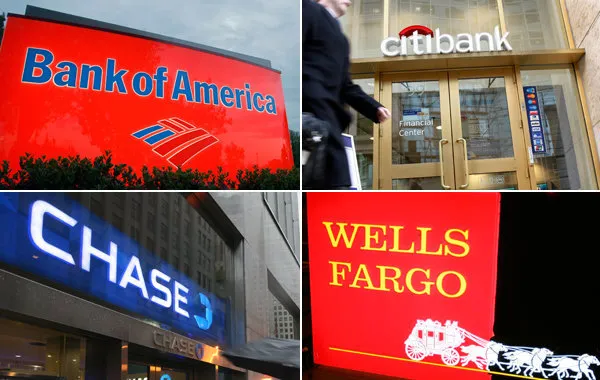
There are 23 U.S.-based bank holding companies that exceed that threshold, Federal Reserve data show. Four -- Bank of America, JPMorgan Chase, Citigroup and Wells Fargo -- hold more than $1 trillion assets. Three of those four hold more than $2 trillion.

James Bullard and Thomas Hoenig, heads of the St. Louis Fed and Kansas City Fed, respectively, also have advocated breaking up the nation's megabanks.

Democratic Senators Sherrod Brown of Ohio and Ted Kaufman of Delaware pushed an amendment to the Senate bill that would have forced roughly ten of the nation's largest banks to break up. Though three Republicans voted for it, the provision ultimately failed by a vote of 61 to 33. Dodd voted against it. The Obama administration opposed it, led by Obama's top economic adviser, Larry Summers, as well as Treasury Secretary Timothy Geithner.

"I believe this idea was sound policy -- and I further believe that a mainstream consensus will continue to grow that these megabanks are too large, too complex and too internally conflicted to regulate successfully," Kaufman said after his provision was defeated, echoing a position voiced by regional Fed presidents, former top Fed officials, and former top bankers on Wall Street.

In January, Summers outlined just how important ending Too Big To Fail is:

"Too big to fail is in many ways the central challenge here," he said. "Because when institutions are too big to fail, they gain a competitive advantage from the sense of government support. And so -- and that gives them an unfair competitive advantage.

"They are then able to take risks without market discipline, and when they take those risks, then they fail," he continued. "And if they're too big to fail, taxpayers are on the hook and the rest of the economy suffers, as we've seen."

The nation's four biggest megabanks collectively hold about $7.7 trillion in assets, according to their most recent regulatory filings with the Federal Reserve. That's about a $300 billion increase from the end of 2009, Fed stats show. It's also more than half of the nation's estimated total output last year.

Requests for comment e-mailed after business hours to Treasury and White House spokesmen were not immediately returned.

FOLLOW HUFFPOST BUSINESS
Subscribe to the HuffPost Money newsletter!
So much for ending Too Big To Fail. The financial reform bill championed by the Obama administration and Senate Democrats as permanently ending the idea that large, interconnected financial instituti...
 
 
  • Comments
  • 521
  • Pending Comments
  • 0
  • View FAQ
Comments are closed for this entry
View All
Favorites
Highlights
Recency  | 
Popularity
Page: 1 2 3 4 5  Next ›  Last »  (14 total)
03:46 PM on 06/07/2010
We cannot continue to watch this mess these too-big-to-fail banks have made. I believe we need a stronger bill to ensure justice. Fight Wall Street and BREAK UP THE BIG BANKS by checking out this page Public Citizen set up to tell your members of congress to continue the fight and strengthen the Wall Street Reform http://bit.ly/bfZMQJ
01:11 AM on 06/05/2010
Lives are bigger than money. I am a very small consumer, my economy is coming down...and down... and down... struggling a lot to pay my bills, the banks are receiving free money from taxpayers and they are charging me 20-29% APR. And an idea plenty of light come suddenly to my head... I already paid over the years 2-3-4 times my balances in interest. The liberating light is: THEY ARE TOO BIG TO BE CHARGING THAT INTEREST TO CONSUMERS. NO MORE PAYMENTS UNTIL THEY SHARE THE CHEAP MONEY. LIVES ARE BIGGER THAN MONEY!!!!
photo
Icecube
NFC East. Pick your poison.
03:12 PM on 06/04/2010
I thought this issue was settled a couple of weeks ago. We can all agree that yes this bill will not stop too big to fail however this is what Obama could get passed with corporate money sifting through congress's veins and it's better than doing absolutly nothing.


You really want to screw up the country. Allow the same donations to POTUS that is allowed to congress.
photo
HUFFPOST SUPER USER
igottagetouttathisplace
11:40 AM on 06/04/2010
Who in their right mind would ever take Moody seriously again??
Unreal that they could stand up on their hind legs and point at finger at ANYBODY after what the did to jiggle bond ratings
11:59 AM on 06/04/2010
You've got that right!
HUFFPOST SUPER USER
duckfan00
Après nous le deluge
04:57 PM on 06/05/2010
I understand your point...but I believe they are right about this bill now....
photo
speakingtruth2power
Not motivated by fear & loathing
11:18 AM on 06/04/2010
Sure, the Democrats are a bunch of corporate houres BUT

Who stole our money and ruined the economy?

Dick Armey, deregulation and the Faux-con movement.

Who let BP ruin the Gulf of Mexico for generations?

Dick Cheney and his secret energy meetings.

What is the connection between these two Dicks?

The Bush Crime Family and their three generations long

pursuit of fascism using oil and drugs to fund their cabal.

ST2P
This user has chosen to opt out of the Badges program
10:57 AM on 06/04/2010
I think we should march on Congress and demand representation for WE THE PEOPLE
10:53 AM on 06/04/2010
Clearly we can't rely on Congress to do what it takes to break up the big banks and prevent another big bailout at our expense as taxpayers. We can take matters into our own hands, though, and take the steps to dismantle the big banks that this financial reform legislation doesn't:

http://www.democracyforamerica.com/activities/350t=homepage

Democracy for America, in conjunction with Huffington Post and with the support of filmmaker Michael Moore, has a campaign to "Move Your Money" into smaller, more local community banks or credit unions. Community banks and credit unions have a closer relationship with its customers and are more responsible with their loans, investments, and overall money management practices. Accordingly, they won't require huge, costly bailouts like Too Big To Fail Banks.

If we work together and get enough people to pledge to move our money, we can take away the financial foundation of the big banks and break them up without relying on Washington.
10:51 AM on 06/04/2010
Big banks want this bill - Larry Summers explained it clearly. And gov't wants this bill cuz they want more power. The Senate bill is a disaster. It does NOTHING to prevent what happened with banks in 2008. To say this bill ends "too big to fail" is a blatant lie. Let's also not forget that the bill does NOTHING to Fannie and Freddie - as they are on their way to $389 billion in bailouts (CBO's #, not mine).
photo
HUFFPOST SUPER USER
GlassMask
Comedian/Curmudgeon
10:49 AM on 06/04/2010
Since we all know the politicians will not change things fast enough, it's up to us to do it. Move your money to a local small bank or credit union. Support local businesses. And vote out the folks who didn't do their jobs. That's what we can do.
photo
HUFFPOST SUPER USER
Hank10303
Reality Check
10:41 AM on 06/04/2010
To be honest, Moody's was one of the rating agencies that give "AAA" ratings to not only volatile but dysfunctional securities - they have absolutely no creditability in my book. Granted the reform may not be as strong as it could have been - but who said this was the end of reform? A few more progressive NOT CONSERVATIVE Democrats and round two will be under way after the November elections.
12:15 PM on 06/04/2010
Agreed. Sorry I can't provide the link (think it was on Reuters), but after reading the testimony this week of their critical former VP and unapologetic present CEO, no one should believe anything reported by Moody's until there's an executive overhaul. Someone suggested that they might be trying to salvage their reputation by being more honest in their reporting now, and perhaps could now be trusted. Call me cynical, and no optimist about Wall Street, but I suspect Moody's is more concerned about retrieving their lost revenues than their reputation. The banks don't want even this reform, so a report such as this might be written to destroy public support for the bill passing through Congress.
photo
HUFFPOST SUPER USER
Hank10303
Reality Check
03:09 PM on 06/04/2010
Oh so right you are. Moody's will not be creditable until upper management are served pink slips and the company is overhauled.

Grannie use to always say - a leopards spots don't change as they get only they only grow larger.

The lies and misrepresentations will only become that much more crafty and insidious.
This user has chosen to opt out of the Badges program
photo
Nutcase
From Nashville, Tennistan.
10:25 AM on 06/04/2010
"Senate Financial Reform Bill Doesn't End Too Big To Fail"

And someone thought . . . ?
HUFFPOST SUPER USER
Genep34
stop the nightmare, end the GOP
10:15 AM on 06/04/2010
Moody's downgrades everything - countries, companies, leaders, policies etc.
This user has chosen to opt out of the Badges program
10:12 AM on 06/04/2010
President Obama-

Shame !, Shame !, Shame !, Shame !, Shame !, Shame !, Shame !, Shame !, Shame !, Shame !, Shame !, Shame !, Shame !, Shame !, Shame !, Shame !, Shame !, Shame !, Shame !, Shame !, Shame !, Shame !, Shame !, Shame !, Shame !, Shame !, Shame !, Shame !, Shame !, Shame !, Shame !, Shame !, Shame !, Shame !, Shame !, Shame !, Shame !, Shame !, Shame !, Shame !, Shame !, Shame !, Shame !, Shame !, Shame !, Shame !, Shame !, Shame !, Shame !, Shame !, Shame !, Shame !, Shame !, Shame !, Shame !, Shame !, Shame !, Shame !, Shame !, Shame !, Shame !, Shame !, Shame !, Shame !, Shame !, Shame !, Shame !, Shame !, Shame !, Shame !, Shame !, Shame !, Shame !, Shame !, Shame !, Shame !, Shame !, Shame !, Shame !, Shame !, Shame !, Shame !, Shame !, Shame !, Shame !, Shame !, Shame !, Shame !, Shame !, Shame !, Shame !, Shame !, Shame !, Shame !, Shame !, Shame !, Shame !, Shame !, Shame !, Shame !, Shame !, Shame !, Shame !, Shame !, Shame !, Shame !, Shame !, Shame !, Shame !, Shame !, Shame !, Shame !, Shame !, Shame !, Shame !, Shame !, Shame !, Shame !, Shame !, Shame !, Shame !, Shame !, Shame !, Shame !!!!!!!
HUFFPOST SUPER USER
Genep34
stop the nightmare, end the GOP
10:15 AM on 06/04/2010
another brilliant post
photo
HUFFPOST SUPER USER
Hank10303
Reality Check
10:42 AM on 06/04/2010
This reform is only round one - you guys must be republicans because you never think long term.
12:22 PM on 06/04/2010
Sounds right to me ;-)
photo
FoonTheElder
Always choosing between the lesser of two evils
09:54 AM on 06/04/2010
Too big to fail won't end because too big doesn't want it to end. After all, they bought our government and they're going to use it as they see fit.
09:25 AM on 06/04/2010
Is 'too big to fail' just becoming a buzz word we all can rage at? In terms of the financial sector what does it really mean?
photo
HUFFPOST COMMUNITY MODERATOR
PATina
Plus ça change, plus c'est la même chose
09:27 AM on 06/04/2010
It means if that business is about to go under... the politicians and big money guys... can use it to scare us into giving our taxpayers dollars to keep these businesses afloat... by having us believe if that business goes down... we all go down.
09:36 AM on 06/04/2010
So the expresation is a just a scare tactic?
09:41 AM on 06/04/2010
We all would have gone down, for a very, very long time, if the federal financial rescue measures hadn't been taken. As bad as things are, they would have been infinitely worse without those remedial measures. Is it comforting to know that? Were those measures perfect? The answer would have to be an emphatic no to both of those questions. But - who could have imagined that Wall Street would have the gall to carry on doing business as usual, or that the Republicans in Congress would obstruct any and every effort to truly reform the system? Outrage is justified, but what is the answer? It isn't to turn the Congress back over to the Republicans. It isn't to just give up and walk away, hoping everything will just correct itself in time. And huffing and puffing isn't an answer.