More

U.S. Universities Losing Clout In Global Education Market

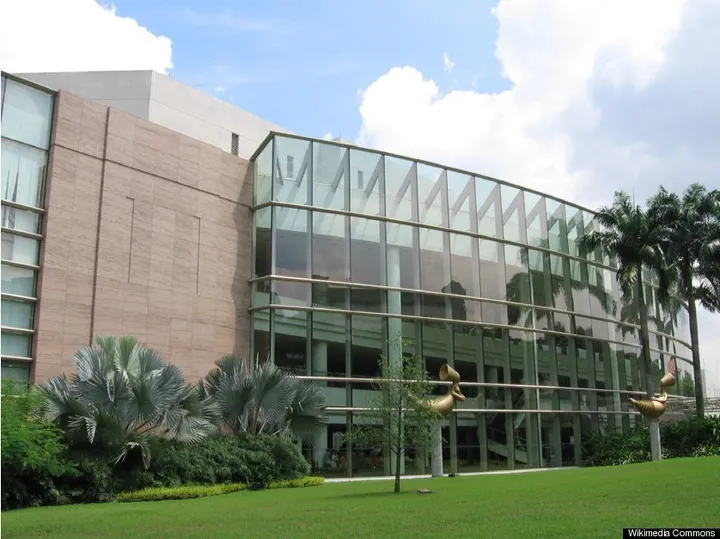
University Of Singapore

First Posted: 06/03/10 01:01 PM ET Updated: 05/25/11 05:40 PM ET

A recent article in the Christian Science Monitor questions how well U.S. colleges are maintaining their position as the global "gold standard" in education.

With an abundance of crises facing America's higher education system, from unrealistic tuition prices to curricular cutbacks, it seems the U.S.'s college stronghold is weakening.

The Monitor reports that many high-quality American professors are leaving U.S. universities for ones overseas, boosting their rankings and possibly "fueling a crisis of confidence in American higher education." Universities in Hong Kong and Singapore are eager for U.S. academic talent -- and willing to support it.

What's more, international students in the U.S. are laying claim to a "disproportionately large" contribution to the American system:

In 2009-10 they contributed $18 billion to the economy, according to estimates by the National Association of International Educators. That's the equivalent of 60 percent of US Department of Education spending on higher education in 2008, and a little more than it spent on student financial aid.

Foreign-born students are also gaining ground in terms of innovation: according to the National Science Foundation, nearly 70 percent of engineering PhDs in 2006 went to international students, and the number of foreign-born entrepreneurs starting and running successful companies is on the rise.

Experts are split on what this all means for American schools -- will the recovering economy allow colleges time to rebound, or will it only get worse from here?

The Monitor boils down both sides of the argument:

The optimists hope that such changes are part of a revolution: that colleges and universities will become more transparent, politicians will recognize higher education as a pressing social and economic issue, and taxpayers will understand that supporting quality higher education benefits all.


Otherwise, pessimists worry, bright minds with shallow pockets will not get access to the education they need to develop into tomorrow's engineers, inventors, and entrepreneurs; the US will be wasting its most precious resource; and, as Carey puts it, "we will have nowhere to go but down."

What do you think? With American colleges the way they are, would you consider going overseas to teach or study? Weigh in below.

FOLLOW HUFFPOST COLLEGE

Filed by Leah Finnegan  | 
 
 
  • Comments
  • 53
  • Pending Comments
  • 0
  • View FAQ
Comments are closed for this entry
View All
Favorites
Bloggers
Recency  | 
Popularity
Page: 1 2  Next ›  Last »  (2 total)
09:30 PM on 06/06/2010
This article does not surprise me. Less international students studying in the United States can impact industries that promote innovation, since "70 percent of engineering PhDs in 2006 went to international students." Not only are we losing international students, but American high schools are also not teaching math and science with the same rigor as other nations. Losing future scientists and engineers can eventually have a tremendous impact on America's future.

Most international students who came to the United States to earn graduate degrees used to settle here. Now, many of them are returning back to their countries and working in R&D and related careers there. Strong measures have to be taken for American colleges to encourage and retain more students, especially in science and engineering.
HUFFPOST SUPER USER
littleblackcat
06:00 PM on 06/05/2010
In Canada, a student can attend the most prestigious college for less than $2,000 a year. In this country that sum won't even buy your books.
The United States continues to trumpet that it is the finest nation on earth. Those who say ithave no contact with reality. If we took care of our own first and saw to it that the intelligent had the best education available whether their parents had money or not, we would be the best. Instead, we saddle our best and brightest with crippling debt in order to gain the education that has become both a must and absolutely NO guarantee in order to find a job.
Education should be free in the obtaining, and then paying should come in form of a percentage of future earnings, with regard for the choice of career. There are many young people way overburdened and doing yeoman service in a career that focused on helping others, such as speech pathology, that should not have the same debt level as the lawyer.
If we were well educated, that fact would reap benefits for everyone. Instead we are losing more ground in every way, including our ability to think for ourselves. We have been taught to "listen to our "leaders" and trust them. They are not worthy of trust.
10:54 AM on 06/06/2010
It is even a relatively good deal for Americans. I encouraged our kids to apply there but they wanted to limit their applications to schools.
05:20 PM on 06/06/2010
As a Canadian university student, I would LOVE to know these "prestigious college(s) [that cost] less than $2000 a year". I don't think tuition in Quebec (for Quebec residents) is even that low! Indeed, post secondary education tuition is cheaper in Canada because our government subsidizes it. I think I understand the point on your post, but please, don't exaggerate the facts.
photo
HUFFPOST SUPER USER
henrypapillon
Mitt--free up the last 9 years' taxes
07:45 PM on 06/04/2010
And HP just got the news.
11:36 AM on 06/04/2010
America is home to anti-intellectualism. If country club conservative elites like Rand Paul and Christian elites like Sarah Palin get to set the American leadership tone then other countries will take the lead while America continues to fall behind.

The best example of anti-intellectuals among country club conservative elites setting America's leadership tone is the seating of George W. Bush as the President of the United States.
HUFFPOST SUPER USER
littleblackcat
05:32 PM on 06/05/2010
How true! The bush taking of the presidency was this nation's most demeaning moment. This individual then proceeded to gut the education system to the best of his ability.
Independent thinking and common sense are actively DIScouraged in the USA. Creativity is stifled and go-along-get-along mentality is the order of the day.
I'm holding out a thin line of hope that the charter schools will help turn this around because run-of-the-mill isn't going to cut it in the 21st century.
The placing of the children of alumni in a college or university whether or not they have the smarts to occupy that place has to stop, as does the habit of conferring degrees on those offspring that they in no wise are intelligent enough to have earned.
This user has chosen to opt out of the Badges program
03:04 AM on 06/04/2010
Education has become devalued in the broader culture of the USA - so what else would one expect? To be sure, the elite will still be sending their progeny to universities, as befits a ruling class, but as the prestige once enjoyed by the truly educated erodes - as know-nothing-ism continues to be heartily embraced, this symptom of our nation's decline will only become more pronounced.

The USA has fallen behind in educational achievement of its young as compared to our competitor nations, and so a vicious death spiral has begun - as we fall further behind, we will be less able to maintain historic levels of investment in higher education, our graduates will be inferior to our competitors' - and we will suffer accordingly in the marketplace.

Only a massive re-ordering of our national priorities will be able to reverse this - billions will be required to improve teacher training and raise educational standards - many COLLEGE students arrive as freshmen truly functionally illiterate, falsely believing they have been prepared for higher education.

The prospects are not promising - in an age of Jerry Springer, a constellation of brain-dead "celebrities" and Sarah Palin, where "progressive" - a concept embraced by the USA for two hundred years - has become a pejorative, and the once esteemed "liberal arts degree" extolling literature, history, philosophy, art, and music is routinely derided, how likely is it that deep knowledge will soon be promoted over cheap thrills?
HUFFPOST SUPER USER
littleblackcat
06:02 PM on 06/05/2010
How very truly you have summed up the situation!
Well said!
09:32 PM on 06/06/2010
Very true
This user has chosen to opt out of the Badges program
photo
ShanniC
For truth, justice, and the 'merican way!
01:21 AM on 06/04/2010
It is hard to maintain a "gold standard" of education when funding that could go to education is eaten up by funding two wars. Those trillions of dollars have bled our surplus and now what do we have to show for it? Can most Americans even locate Europe or Iraq on a map?
01:20 AM on 06/04/2010
Wildavsky (http://chronicle.com/article/The-Global-Benefits-of/64932/) argues that what you may have is foreign institutions growing more competitive, not necessarily US institutions growing weaker.

It would be surprising if the second and third world economies COULD grow and modernize, as they have, without upgrading their higher education systems, so a more competitive world-higher-education-system is to be expected. What has to happen here in the US to maintain our place in this competitive world.

Maintaining a wide access to higher education while maintaining quality has got to be the goal, but how to obtain it? US higher education has grown more complex and nuanced in recent decades. There are various categories of colleges, national, regional, research, community, career, and online universities, then there are professional post-graduate schools in business, law, medicine, liberal arts, all with their own rating hierarchy, adding to the complexity.

It seems to me that the relative autonomy of the higher education system, with the 50 states operating their public university systems, while competing with independent non-profit and for-profit colleges has been a secret of our success in the past. There has been completion among these various entities that has tended to push them toward greater achievement. So perhaps the globalizing higher education will in the long run prove to be an environment in which US higher education (with its existing history of competition and diversity) will ultimately continue to thrive.

Bernard Schuster
Arrive2.net
This user has chosen to opt out of the Badges program
12:07 AM on 06/04/2010
There are only so many scholars that universities in Hong Kong and Singapore could possibly poach away. Aside from research funding, which other schools may be able to match, the US has other advantages: 1) English-speaking country: most people want to be able to speak comfortably with their fellow countrymen everywhere (not just within the university), most scholars are able to do so in English. 2) Culture of innovation: most countries are trying to build what already has existed here for centuries. 3) Culture of rationalism- for the most part, Americans look for rational explanations for things, subscribe very little to ideas of fate, superstition, historic perceptions. 4) Willingness to take risks- failures are accepted here in the US as part of the learning process.

The stuff I mentioned is beginning to catch on elsewhere, but the US is still the standard-bearer and it will still be imitated for many years to come.
photo
HUFFPOST COMMUNITY MODERATOR
benji85
11:18 PM on 06/03/2010
The United States of America was born on innovation, the moment we give up on that is the moment we stop being Americans.
10:21 PM on 06/03/2010
We still have the finest higher education system in the world. What we need to do is stop messing with it; messing with it is why our best and brightest are leaving. If you do something stupid with the system our research profs will jump ship in a heartbeat... most are not readily attached to a region, and already collaborate across seas.
I don't know a single PI who wouldn't move to any nation on the planet if it provided them with a better means of research and support.
photo
HUFFPOST SUPER USER
MJVs Common Sense
Law Student
09:31 PM on 06/03/2010
Obviously! And who do we have to thank for this?

Ronald Reagan for gutting education spending across the board.

Every politician since then, who allowed loans to overtake grants as the primary source of aid for students.

"Practical Education" advocates who are trying to crush Liberal Arts, critical-thinking, and innovation in education, making our graduates into one dimensional cubicle drones.

George Bush II for crushing curricular innovation through testing.

Fact: Secondary school graduates today get an average of 1.5 YEARS LESS education than they would have 40 years ago! That means our secondary graduates are leaving high school at the level of first semester juniors.

Basically, the past 40 years have devastated public education and we are just starting to see the disastrous effects of the short-sighted neo-con policies that we have to thank for that.

If we don't act, and reverse these policies, this is only the beginning of our national disappointment.
photo
HUFFPOST SUPER USER
DramaKitteh
ZOMG! teh drama!
08:29 PM on 06/03/2010
"What do you think? With American colleges the way they are, would you consider going overseas to teach or study? Weigh in below."

Yes! I'm way ahead of this. I'll be pursuing my Masters Degree at a UK institution a year from August, 2010, and two of my friends will be trasferring to Universities in the UK and Germany this autumn.
photo
HUFFPOST SUPER USER
Democommon Sense
07:02 PM on 06/03/2010
Two words for this article

"Well Duh"
photo
HUFFPOST SUPER USER
Bonaboman
06:58 PM on 06/03/2010
Learning requires considerable effort. An old fart like me spent around 4 hours a night on homework in high school; more as a senior with AP English, AP European History, AP German, Calculus, and Speech. In college, it was around 2 hours per night per class. For upper level programming classes more and for upper level accounting classes even more (I bet I spent around 16 hours a week just on Cost Accounting). MBA was a bit easier. The "studies" majors and "soft classes" students got by with a lot less effort. I remember taking an upper level class in Impressionist Painters - spent around an hour a week and got an A. Sounding like an old fart; the number of students in college today that do not spend the amount of time needed is appalling. smokin endo and suckin on gin and juice be the way today.
10:23 PM on 06/03/2010
Students do need to work hard to learn. Many assume that the presence of a good teacher is substitute for hard work.
REDSTATEREFUGEE
Texan by birth ; Californian by choice
06:09 PM on 06/03/2010
Several years ago, I was teaching a sophomore level world literature course that included junior/senior level students wanting to earn hours of humanities credits. I had casually related one of our topics to the American Civil War and one university student from the back of the classroom asked, " The United States had a civil war?" I was completely dumbfounded, not knowing how to respond to the comment.

I calmly replied, "Yes, we did. It was a watershed period in American civilization." I then asked if anyone in the room could name the dates of the conflict. Another university student offered 1914-1918. I responded that we were involved in that war, but that it occurred around fifty years after the dates in question. Finally, an international student from a west African country provided the correct time period.

Any question why the U.S. may not be viewed as the gold standard of global higher education?
photo
HUFFPOST SUPER USER
Nuyorican21
MALDEF Law Clerk
09:43 PM on 06/03/2010
That makes me absolutely sick.
11:03 AM on 06/04/2010
Maybe you were teaching in the South where the CIvil War is known as "The Period of Northern Agression".
REDSTATEREFUGEE
Texan by birth ; Californian by choice
12:59 PM on 06/04/2010
LOL.....Yes, the event occurred in the South, but I doubt seriously that many of the students had even heard of that alternate term....