More

BP Claims Relief Well Will Be Finished On Time, But Stock Keeps Tumbling

First Posted: 06/26/10 12:26 AM ET Updated: 05/25/11 05:55 PM ET

Bp Relief Well

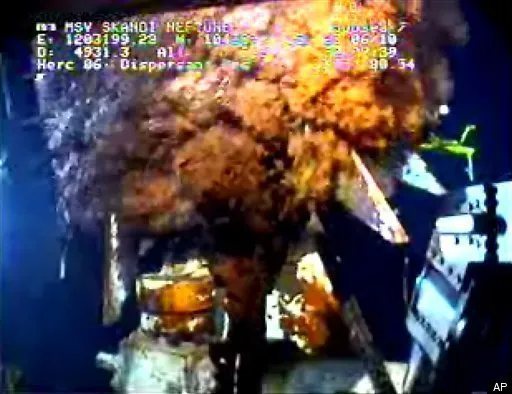
NEW ORLEANS (AP) -- BP's effort to drill a relief well through 2 1/2 miles of rock to stop the Gulf spill is on target for completion by mid-August, the oil giant said Friday. But BP's stock tumbled anyway over the mounting costs of the disaster and the company's inability to plug the leak sooner.

The relief well is considered the best hope of halting the crude that has been gushing since April 20 in the biggest offshore oil spill in U.S. history.

The crew that has been drilling the relief well since early May ran a test to confirm it is on the right path, using a tool that detects the magnetic field around the casing of the original, blown-out well.

"The layman's translation is, `We are where we thought we were,'" said BP spokesman Bill Salvin.

Several such tests are necessary, since drilling sideways into the original well casing requires boring through more than 13,000 feet of rock to hit a target 9 inches in diameter, or about the size of a dinner plate.

Once the new well intersects the ruptured one, BP plans to pump heavy drilling mud in to stop the oil flow and plug it with cement.

Despite the encouraging news, BP stock tumbled 6 percent in New York on Friday to a 14-year low on news that BP has now spent $2.35 billion dealing with the disaster.


Your request is being processed...

BP says relief well is on target as stock tumbles
stumbleupon: BP says relief well is on target as stock tumbles digg: US Works With Sudan Government Suspected Of Aiding Genocide reddit: BP says relief well is on target as stock tumbles del.icio.us: BP says relief well is on target as stock tumbles

MICHAEL KUNZELMAN | June 25, 2010 05:23 PM EST | AP
Compare other versions »

Compare and versions

NEW ORLEANS -- BP's effort to drill a relief well through 2 1/2 miles of rock to stop the Gulf spill is on target for completion by mid-August, the oil giant said Friday. But BP's stock tumbled anyway over the mounting costs of the disaster and the company's inability to plug the leak sooner.

The relief well is considered the best hope of halting the crude that has been gushing since April 20 in the biggest offshore oil spill in U.S. history.

The crew that has been drilling the relief well since early May ran a test to confirm it is on the right path, using a tool that detects the magnetic field around the casing of the original, blown-out well.

"The layman's translation is, `We are where we thought we were,'" said BP spokesman Bill Salvin.

Several such tests are necessary, since drilling sideways into the original well casing requires boring through more than 13,000 feet of rock to hit a target 9 inches in diameter, or about the size of a dinner plate.

Once the new well intersects the ruptured one, BP plans to pump heavy drilling mud in to stop the oil flow and plug it with cement.

Despite the encouraging news, BP stock tumbled 6 percent in New York on Friday to a 14-year low on news that BP has now spent $2.35 billion dealing with the disaster.
Story continues below

BP has lost more than $100 billion in market value since its deep-water drilling platform blew up, and its stock is worth less than half the $60 or so it was selling for on the day of the explosion.

Meanwhile, the forecasters and the oil company kept an eye on an area of low-pressure in the Caribbean that threatened to turn into the first tropical depression of the Atlantic season.

The effort to capture the oil gushing from the sea bottom could be interrupted for up to two weeks if a storm forces BP to move its equipment out of harm's way, said Coast Guard Adm. Thad Allen, the government's point man on the crisis.

In other news:

_ A financial disclosure report released Friday shows that the Louisiana judge who struck down the Obama administration's six-month ban on deep-water drilling in the Gulf has sold many of his energy investments. U.S. District Judge Martin Feldman still owns eight energy-related investments, including stock in Exxon Mobil Corp. Among the assets he sold was stock in Transocean, which owned the rig that exploded.

_ Labor Secretary Hilda Solis slammed BP -- along with Massey Energy, owner of the West Virginia coal mine where 29 workers died in an explosion in April -- saying they need better safety measures. "We are not saying go out of business," she said. "Do your job better. Make an investment in your employees. We want you to make a profit, but not at the expense of killing your employees."

_ Vice President Joe Biden will head to the Gulf on Tuesday to visit a command center in New Orleans and the oil-fouled Florida Panhandle.

_ The IRS said payments for lost wages from BP's $20 billion victims compensation fund are taxable just like regular income. Payments for physical injuries or property loss are generally tax-free.

BP is drilling two relief wells, in case the first one misses its mark. The first one, started May 2, reached a depth of 16,275 feet Wednesday -- including about 5,000 feet of water -- before workers paused for the test. Although the relief well is only 200 feet laterally from the original well, the crew still has to drill about 2,000 feet deeper before it can intercept the original well, according to Salvin. The second relief well, started on May 16, has reached a depth of 10,500 feet.

The biggest oil spill ever in the Gulf of Mexico -- an undersea gusher in Mexico that started in the summer of 1979 and leaked 140 million gallons -- was eventually stopped with two relief wells. By some estimates, the BP spill could eclipse that disaster in a week or two; the spill has been put at somewhere between 69 million and 132 million gallons.

BP would need about five days to secure or move all its equipment to safety from an approaching storm but is working to shorten that to two days, Salvin said. The equipment includes ships that are processing the oil sucked up by the containment cap on the well and the rigs drilling the two relief wells.

An Air Force reconnaissance plane was on its way to investigate the low-pressure area Friday and learn whether it might develop further. Forecasters said there was an 80 percent chance it would develop into a tropical depression.

BP is capturing anywhere from 840,000 to 1.2 million gallons of oil a day. Worst-case government estimates say 2.5 million gallons a day are leaking from the well, though no one really knows for sure.

BP is working to develop a different containment system that would be easier to disconnect and hook back up if a storm interrupted the work.

FOLLOW HUFFPOST GREEN

NEW ORLEANS (AP) -- BP's effort to drill a relief well through 2 1/2 miles of rock to stop the Gulf spill is on target for completion by mid-August, the oil giant said Friday. But BP's stock tumbled a...
Filed by Jeff Muskus  | 
 
 
  • Comments
  • 122
  • Pending Comments
  • 0
  • View FAQ
Comments are closed for this entry
View All
Favorites
Recency  | 
Popularity
Page: 1 2 3 4  Next ›  Last »  (4 total)
This user has chosen to opt out of the Badges program
photo
08:31 PM on 06/29/2010
This caption should read: "BP claims relief well will be finished on time so that stocks won't keep tumbling."
photo
rbenjamin
Rule 5 rules
03:16 PM on 06/29/2010
The market is giving a pretty clear signal about how much money BP is going to have to pony up. Viable business? I'm going to say no.
06:05 AM on 06/29/2010
Seeing as this is a business article and I have learned to live in reality. There are two questions that one should ask themselves.
1- How low can the stock price go?
2- Can they stop the oil leak?

Once it is stopped BP will put on a great PR campaign give a lot of money out while also fighting paying as much as they should be responsible for. They will realize as Exxon did that spending a billion on attorneys and political contributions over two decades is cheaper than paying out their total fines and clean up costs. Ultimately the money they payout will be a modest hit to a company that runs inefficiently and yet still makes profits in the 10's of billions each quarter pumping and refining black gold.

So getting in on the stock when the price gets low enough can allow someone to make a hefty profit because it will rebound. It has too many assets, too many leases, and too much political clout to fail.
Look at Citi if you had bought in March 09 when it was a $1.35 a share and basically protected by the government you could have put a sell order in immediately for $4.00 and tripled your investment in a matter of months.
This is the reality of our deformed version of democratic capitalism which is closer to a mix of corporatism, plutocracy, and an oligopoly.
This user has chosen to opt out of the Badges program
photo
08:33 PM on 06/29/2010
Yep. There are plenty of bottom feeders.
maxfax
Taa - dah!
11:10 PM on 06/28/2010
We should trust anything and everything British Petroleum says.
photo
HUFFPOST COMMUNITY MODERATOR
mrJJ
11:35 AM on 06/28/2010
BP Joined In Investigation Of Itself, Contractor
BLOWOUT PREVENTERS: Rig workers had reported cheating.

Anchorage Daily News
By RICHARD MAUER
Published: June 27th, 2010 10:27 PM

When two state agencies received complaints in 2005 that a BP drilling contractor routinely cheated on tests of blowout preventers and BP knew it, the agencies let the very companies accused of wrongdoing join the investigation. Records show that attorneys and officials of BP and its contractor, Nabors Alaska, sat in with, or even in place of, state investigators when they interviewed witnesses, including Nabors rig workers and the BP company men who oversaw their work.

At times, company representatives led the questioning. In at least three instances, after witnesses confirmed allegations, company lawyers took them aside for private conversations away from state investigators. One Nabors employee, immediately after emerging from his private meeting with the Nabors attorney, recanted his statement, state records show.

more:

http://www.adn.com/2010/06/26/1342800/bp-helped-state-investigate-itself.html
photo
HUFFPOST SUPER USER
topkatnc
Give a stray cat or dog a chance .
07:50 AM on 06/28/2010
Mid - August ! ... If I can remember right .... that means that gushing well has .. all of July to reap havic ... A live video should be on the front page and not taken down until they stop it from gushing .. They are talking 6 weeks of this ... How can our oceans take this ...
photo
HUFFPOST SUPER USER
Joe Bigg
AH! He's a Socialist!
05:07 AM on 06/28/2010
Yeah, knowing BP's record we will most likely have two spills after they blow this attempt!

The Oil Pollution Act of 1990 needs to be repealed and we need to really go after BP for this disaster!
10:13 PM on 06/27/2010
This very same company, had the exact same thing happen in 1979, in the gulf, in 200' of water. Took them 9 months and two relief wells. They even tried ALL the same solutions, nothing worked until the relief wells took enough pressure off the initial well. They can stop it tomorrow if they don't try to salvage the well...but profits won't let them do what needs to be done...
02:20 AM on 06/28/2010
The company was Pemex, the Mexican national oil company.
This user has chosen to opt out of the Badges program
photo
08:29 PM on 06/27/2010
One Million Gallons A Day!!!!
This user has chosen to opt out of the Badges program
photo
07:24 PM on 06/27/2010
Hey, on the bright side this well will run dry in 37 years.
02:29 AM on 06/28/2010
Probably a lot less than that.
photo
HUFFPOST SUPER USER
missouriwatcher
military veteran, veteran teacher, father, grandpa
05:43 PM on 06/27/2010
I'd feel somewhat vindicated if Herr Svanberg would wind up being one of the "little people".
photo
HUFFPOST SUPER USER
keyman12
02:08 PM on 06/27/2010
Here are some interesting poinst related to deep water drilling.

The Earth's outermost surface is called the crust. The crust is typically about 25 miles thick beneath continents, and about 6.5 miles thick beneath oceans. The crust is relatively light and brittle. Most earthquakes occur within the crust.

So this leaky well was drilled into a reservoir of oil that is maybe only 3 miles from the mantle. Now here is a description of the mantle...

"The region just below the crust and extending all the way down to the Earth's core is called the mantle. The mantle is relatively flexible so it flows instead of fracturing."

So more deeper drilling into the crust which is "relatively light and brittle" could cause fractures that could extend down into the mantle which is "relatively flexible so it flows instead of fracturing", which could open up a path for molten lava flow up to the bottom of the ocean and and if you think the oceans are warming up a little now just think what this scenario could do.

Science fiction, 2012, hmmmm makes you kind of wonder.
05:52 PM on 06/27/2010
Hogwash. The sedimentary cover in the Gulf is more than 30,000 thick, and the crust-mantle boundary is at least another 20,000 to 30,000 feet deeper. The Gulf of Mexico is a passive continental margin, not oceanic crust. There is absolutely no chance this 18,000 foot well is anywhere near the mantle. The deepest well in the Gulf is more than 30,000 feet deep and never got deeper than the Tertiary sedimentary cover.
I'm a geologist; take my word for it.
photo
HUFFPOST SUPER USER
keyman12
06:46 PM on 06/27/2010
Thanks for your reply I am no geologist so I will take your word for it. However as a geologist I would be interested in your assessment of..

1. BP,s chances of stopping, containing or plugging the well especially with the relief wells they are drilling.

2. Is the need for getting oil at any cost worth it?

3. Should we wean ourselves off oil or should we say damn the risks drill baby drill?

4. Is "peak oil" a myth?
olddognewtrick
Half full or half empty...It's the same
01:46 PM on 06/27/2010
My guess is...If there is any money left at the end of the year...It will be spent on some of those unlimited campaign contributions.
This user has chosen to opt out of the Badges program
photo
12:54 PM on 06/27/2010
This is a must-read and sobering opinion/article by someone who obviously has expertise in the field of well technology.
I hope this guy is wrong.

http://www.theoildrum.com/node/6593#comment-648967
06:36 PM on 06/27/2010
http://www.theoildrum.com/node/6659
This is a read that gives facts from someone with actual experience - Shelburn. Read his threads they really informative.(and not quite as foreboding).
This user has chosen to opt out of the Badges program
photo
pirx
Novilli dosar trux vatis inem cowsand dux!
02:33 AM on 06/28/2010
I think you are referring to the self proclaimed "rockstar" dougr.

Some follow on discussion from the same website. (www.theoildrum.com/node/6650)

Is dougR an oil industry expert?

If he is, he's an oil industry expert who first made that post (in two parts, using a different handle, "SHR," identified as "Forum Administrator") on a site called Godlike Productions, which says up top it's for "UFOs, Conspiracy Theorists, Lunatic Fringe," and which has a lengthy disclaimer at the bottom of each page that says, in part:

This website exists for entertainment purposes only. The reader is responsible for discerning the validity, factuality or implications of information posted here, be it fictional or based on real events....Not all posts on this website are intended as truthful or factual assertion by their authors. Some users of this website are participating in internet role playing, with or without the use of an avatar. NO post on this website should be considered factual information on face value alone....

[boldface in original]

http://www.godlikeproductions.com/forum1/message1066057/pg1
http://www.godlikeproductions.com/forum1/message1097505/pg1

Your call.
12:36 PM on 06/27/2010
Stock are not selling because stock is bought and sold on rumor. If it's rumor to us it's knowledge to oil insiders. There are now rumors that BP went short on the number of casing centralizers required for the length of the well bore. A casing centralizer centers the casing within the raw drilled hole to allow for the cement being pumped to bond the casing to formation in equal in thickness and strength all around the pipe. About 25 centralizers were celled for in this well but only six were available on the rig. It has been said that BP refused to wait for delivery of the remaining centralizers before cementing. This jibes with them by-passing the Schlumberger bond log. If so, the gas and oil will travel up the un-cemented side of the casing, erode the formations and could push all the casing out of the hole. Result, rapid erosion and enlargement of the well bore and absolutely no way of controlling the well. In essence it becomes a volcanic structure. Even a relief well will see any kill materials pumped down flow unrestricted up this unrestricted wellbore and into the ocean. The only remaining solution : http://www.youtube.com/watch?v=UP8iN4ZX1JU&feature=channel is very expensive and will take time to build and put in place. Time is of the essence.
This user has chosen to opt out of the Badges program
photo
01:40 PM on 06/27/2010
That was excellent. Thanks for the link.
Here's one for you:

http://www.theoildrum.com/node/6593#comment-648967
03:14 PM on 06/27/2010
Excellent link. Bookmarked. . . . and fanned
photo
GeorgeMilquetoast
Striving for a mediocre amount of mediocrity
11:59 PM on 06/27/2010
If the powerpoint presentation provided by BP to the Coast Guard is to be believed, the claim in The Oil Drum link you provided above (that is, "There are no 'Disks' or 'Subsea safety structure' 1,000 feet below the sea floor, all that is there is well bore. There is nothing that can allow the mud or oil to 'escape' into the rock formation outside the well bore except the well, because it is the only thing there.") appears to be inaccurate. Please go to slide 4 of the powerpoint presentation found at http://energycommerce.house.gov/documents/20100527/BP.Presentation.pdf . You will find the lowest elevation of the deepest casing is estimated at 18, 360 feet below sea-level, and the mud-line is listed at 5,067 feet below sea-level -- a casing length of more than 13,000 feet, well in excess of the "1,000 feet below the sea floor" statement made in your cited article.

Note the cement and float collar at the bottom of the casing. This should use a concentric spacer. I am also assuming that a well-bore runs to a greater depth than the well casing. If you know of a more accurate presentation to the Coast Guard, please post the citation. I've seen a more recent version of this powerpoint but can't find the citation. Thanks.