
More

U.S. Drones Suffer From Human Error, Computer Glitches In Afghanistan

First Posted: 07/07/10 06:26 PM ET Updated: 05/25/11 06:00 PM ET

Drones

By David Zucchino, Los Angeles Times

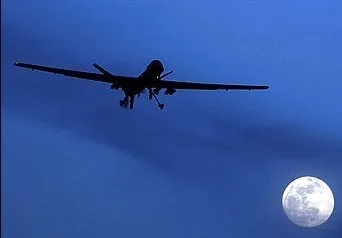
Reporting from Kandahar, Afghanistan -- The U.S. military often portrays its drone aircraft as high-tech marvels that can be operated seamlessly from thousands of miles away. But Pentagon accident reports reveal that the pilotless aircraft suffer from frequent system failures, computer glitches and human error.

Design and system problems were never fully addressed in the haste to push the fragile plane into combat over Afghanistan shortly after the Sept. 11 attacks more than eight years ago. Air Force investigators continue to cite pilot mistakes, coordination snafus, software failures, outdated technology and inadequate flight manuals.

Thirty-eight Predator and Reaper drones have crashed during combat missions in Afghanistan and Iraq, and nine more during training on bases in the U.S. -- with each crash costing between $3.7 million and $5 million. Altogether, the Air Force says there have been 79 drone accidents costing at least $1 million each.

Accident rates are dropping, but the raw numbers of mishaps are increasing as use of the aircraft skyrockets, according to Air Force safety experts.

But no lives are lost, and for some experts that's the most important point: For them, drones are the vanguard of a new type of remote warfare that minimizes the risk to U.S. personnel. The number of crashes, however, illustrates how quickly the unmanned aircraft have become an essential part of U.S. combat operations. At least 38 drones are in flight over Afghanistan and Iraq at any given time.

Flight hours over Afghanistan and Iraq more than tripled between 2006 and 2009. However, ground commanders in Afghanistan say only about a third of their requests for drone missions are met because of shortages of aircraft and pilots. The loss of aircraft to crashes and other accidents can hamper combat operations -- and risk the lives of troops who depend on them for reconnaissance and air cover.

The Air Force acknowledges that armed drones were not ready when first deployed as the U.S. military geared up for the campaign to oust the Taliban and Al Qaeda from Afghanistan. Most weapons systems are tested and refined for years. Unarmed drones had been in use since the mid-1990s, but the first armed version went to war just nine months after it was retrofitted.

It was pushed into use after a Predator successfully launched Hellfire antitank missiles at the Naval Air Weapons testing range at China Lake in January 2001.

"It was never designed to go to war when it did," said Lt. Col. Travis Burdine, a manager for the Air Force Unmanned Aircraft Systems Task Force. "We didn't have the luxury of ironing out some of the problems."

Technicians bought off-the-shelf equipment at Radio Shack and Best Buy to build a system to allow ground forces to see the drones' video feeds. At least one drone crashed because it had no fuel gauge, and the aircraft ran out of fuel. In another crash, investigators cited a design flaw: The "kill engine" switch was located next to the switch to lower the landing gear, and a ground-based pilot confused the two.

Even now, the planes are not designed for the amount of use they're getting, their defenders say. The 27-foot Predators and 36-foot Reapers operate under conditions that put enormous stress on the light drones -- and the humans who operate them.

"These airplanes are flying 20,000 hours a month, OK?" said retired Rear Adm. Thomas J. Cassidy Jr., president of the aircraft systems group at General Atomics Aeronautical Systems in San Diego, which makes Predators and Reapers.

"That's a lot of flying," Cassidy said. "Some get shot down. Some run into bad weather. Some, people do stupid things with them. Sometimes they just run them out of gas."

The drones flew 185,000 hours over Afghanistan and Iraq in 2009, more than triple the number of hours flown in 2006. The Air Force expects that number to grow to 300,000 hours this year.

"The Air Force needs as many as they can get," said Col. Jeff Kappenman, director of the Center of Excellence for UAS Research, Education and Training at the University of North Dakota. "There has been exponential growth in need and demand."

Air Force officials say design and training improvements have lowered the Predator's accident rate. They say lessons learned from that plane's problems have solved some issues for the larger and more potent Reaper, in use in combat since 2007. Accident rates per 100,000 hours dropped to 7.5 for the Predator and 16.4 for the Reaper last year, according to the Air Force. The Predator rate is comparable to that of the F-16 fighter at the same stage, Air Force officers say, and just under the 8.2 rate for small, single-engine private airplanes flown in the U.S.

The crash figures do not include drones flown over Pakistan by the CIA, which does not acknowledge the covert program. But independent experts said Predators flown over Pakistan probably experience problems similar to those flown by the Air Force in Afghanistan and Iraq.

Four Air Force Predators have crashed this year, three of them in Afghanistan -- on Jan. 15 in southern Afghanistan, one on takeoff Feb. 9 in eastern Afghanistan, and a third March 14 in the southern part of the country. All were total losses, the Air Force said. Another Predator crashed in California during a training exercise April 20.

In the 12 months ended Sept. 30, the Air Force reported 16 Predator and Reaper accidents. Four involved crashes during a 15-day period in September. On Sept. 13, a pilot inside a ground station in Nevada lost video and data links to a Reaper over Afghanistan. As it was about to exit Afghan airspace and crash, an F-15 pilot was ordered to shoot it down and ground troops recovered the wreckage to keep top-secret technology out of insurgents' hands.

In another case, a drone crashed into a Sunni political headquarters in Mosul, Iraq. No injuries were reported.

In some cases, a cause is never determined and no wreckage is recovered. On May 13, 2009, a crew in Nevada lost contact with a Predator, and it was listed as "presumed crashed" somewhere in Afghanistan, according to an Air Force report.

Retired Gen. Wesley K. Clark, asked whether high drone mishap rates concerned him, replied: "Not really. They're expendable." Others disagree, saying every drone that goes down is one less available for troops in need.

"We can't treat these things like disposable diapers and just throw them out," retired Air Force Gen. Hal Hornburg, former chief of the Air Force Air Combat Command, warned officers at a conference on drones.

Kyle Snyder, who tracks military drones for the Assn. for Unmanned Vehicle Systems International, a nonprofit research group, said he had never heard anyone in the Air Force call drones expendable.

A 2007 study by the Air Force Research Laboratory found that up to 80% of Predator crashes involved some degree of human error. Updated studies attribute more recent accidents to inadequate manuals, crew coordination mistakes and crews being asked to perform tasks for which they are not fully trained, according to an analysis by the Air Force and a private contractor.

After a Predator crashed during a landing at Kandahar air base in March 2007, investigators faulted the Predator system for a "lack of visual cues" to help pilots understand the position of a plane flying half a world away. The pilot in Nevada misjudged the drone's altitude, the investigative report said.

The Predator that ran out of fuel over Iraq had a leak, but there was no gauge to warn the pilot, an Air Force crash researcher said. And a pilot trainee at Creech Air Force Base in Nevada crashed a Predator by hitting the "kill engine" switch instead of the adjacent landing gear switch, according to an investigative report.

Some ground control stations, where pilots and camera operators sit, still have 1990s-era text-based computer systems. Pilots have to type function and control commands rather than clicking on icons.

"There's a control delay between typing something and having it actually happen on the airplane," said Gregg Montijo, a contractor who trains drone crews. "When the heat is on, sometimes guys will type something in, then type it again real quickly. They'll confuse the computer and get the wrong display and get into a vicious cycle."

Despite the mishaps, Burdine said, Predators and Reapers are doing great work. "It's a big payoff for the Air Force to make sure the next generation of systems learns from the first generation," he said. "And that's what we're doing."

FOLLOW HUFFPOST WORLD

By David Zucchino, Los Angeles Times Reporting from Kandahar, Afghanistan -- The U.S. military often portrays its drone aircraft as high-tech marvels that can be operated seamlessly from thousands ...
Filed by Curtis M. Wong  | 
 
 
  • Comments
  • 114
  • Pending Comments
  • 0
  • View FAQ
Comments are closed for this entry
View All
Favorites
Recency  | 
Popularity
Page: 1 2 3  Next ›  Last »  (3 total)
photo
ontariogirl
Power to the People
10:04 AM on 07/09/2010
"Despite the mishaps, Burdine said, Predators and Reapers are doing great work. "It's a big payoff for the Air Force to make sure the next generation of systems learns from the first generation," he said. "And that's what we're doing.""
Obviously they did not learn. Bring all the troops home now.
02:27 AM on 07/09/2010
When General Atomics designed the Predator, they included a full flight regime autopilot that would basically accept heading and altitude commands from an enlisted ground control technician.

But the Air Force insisted that the Predator would be flown manually by commissioned officers trained to pilot manned aircraft.

It's harder to fly when you can't feel the inertial accelerations of the plane and have a visual reference designed more for targeting than for piloting. It's more like instrument flying, and computers are usually better at instrument flying than humans.

The loss rates would be lower if the Air Force uses autopilot, leaving the ground controllers to provide guidance commands, operate the reconnaissance package, and (crucially) sanity check the performance of the altitude and airspeed sensors on which the autopilot relies.

These are operational problems. It's kind of ironic that by removing the human from the vehicle, we actually increased the likelihood of human error. Obviously we haven't removed the part of the human element that invites errors.
photo
HUFFPOST SUPER USER
Steelsil
Alan Grayson for President!
01:03 AM on 07/09/2010
All human enterprises suffer from human error. Surely none more so than Papal infallibility. Just follow the performances of Pope Joey the Rat and his series of pronouncements on pedophile priests. His last statement was a condemnation of Belgium for daring to launch a criminal investigation into pedophile priests. Wasn't he all for that the week before?
12:29 AM on 07/09/2010
Wouldn't it have been cheaper, quicker, and more efficient to just carpet bomb all of Afghanistan? That would have destroyed all of the opium crops that end up in our streets as heroin. How much have we spent on the war on drugs?
photo
LogicalMathMan
Math, Finance, English, Business Instructor
04:01 PM on 07/08/2010
It took the Defense Dept. 9 years to realize this?
03:41 PM on 07/08/2010
If few lives are risked won't that make war more likely?It's the risk that keeps war at bay.. There are few "good" wars..
photo
HUFFPOST COMMUNITY MODERATOR
KIVPossum
Moldova Marsupial
01:42 PM on 07/08/2010
The use of drones is a war crime.

That is all I have to say on the subject
02:56 PM on 07/08/2010
Is dropping bombs from planes or firing short range missles any better.

If you call every act of war a war crime, the term quickly loses its meaning.
08:56 PM on 07/08/2010
Care to opine on the tactics of the Taliban? The religiously mindless slaughter of their own doesn't even warrant a word out of you. Perhaps you support them. Who knows. I'm sure though you see yourself as an humanitarian? Yes?
photo
HUFFPOST COMMUNITY MODERATOR
KIVPossum
Moldova Marsupial
02:15 AM on 07/09/2010
This thread isn't about suicide bombers, it is about drones. Thus my comment was about drones. Next time we have a thread about tea, I will talk about coffee to make you happy
photo
HUFFPOST SUPER USER
Blackorpheus
the decisive blows are always struck left-handed
12:37 PM on 07/08/2010
And we are supposed to be surprised?
This user has chosen to opt out of the Badges program
photo
12:48 PM on 07/08/2010
mow if it ran off an apple it won't happen, I bet these things have windows 7
photo
LogicalMathMan
Math, Finance, English, Business Instructor
04:02 PM on 07/08/2010
LOL.....Linux rules...or, so I've heard.
11:02 AM on 07/08/2010
The US seems to be learning well from the IDF how to externalize casualties.
02:57 PM on 07/08/2010
As if any army that ever fought a war didn't do the same thing, because that's the nature of war. But don't let that stop you from singling out Israel.
HUFFPOST SUPER USER
LouGots
10:43 AM on 07/08/2010
At issue relative to law-of-war consideration of the use of drone technology is whether this technology is more or less discriminating than the alternatives. In military necessity requires the destuction of a target, the more discriminating system shoiuld be chosen to minimize collateral damage.

Of course no system is perfectly accurate and reliable. The questionj here is whether protected persons and objects are safter in a drone attack that they would be if older technologies, such as iron bombs or artillery were used.
photo
HUFFPOST SUPER USER
hagagaga
My comments are funnier than yours.
10:01 AM on 07/08/2010
Any new technology has problems. The good thing is that it has saved lives.
06:45 AM on 07/08/2010
Drones ki// innocents.
photo
HUFFPOST SUPER USER
hagagaga
My comments are funnier than yours.
09:55 AM on 07/08/2010
Everything does. The UAV's do just as much as any other airborne weapons platform.
This user has chosen to opt out of the Badges program
photo
05:52 AM on 07/08/2010
"... pilotless aircraft suffer from frequent system failures, computer glitches and human error."

Is that so? How interesting. Perhaps the president could include this information in the letters he writes to the families of the innocent victims of this blunt tool.

Oh, hang on. He doesn't write any, does he?
This user has chosen to opt out of the Badges program
photo
08:10 AM on 07/08/2010
And some charming soul flagged my comment as 'abusive'. "Speak no ill of Obama. He can do no wrong. And if he does, don't talk about it. Please... I don't want my dream to end."

Then again, you've got to be asleep in order to dream, don't you?
02:58 PM on 07/08/2010
2 flags. I'll give you a fav.
photo
HUFFPOST SUPER USER
Steelsil
Alan Grayson for President!
01:06 AM on 07/09/2010
Clearly, you have no conscience to make a coward of you. Do you get the reference?
photo
HUFFPOST SUPER USER
hagagaga
My comments are funnier than yours.
09:56 AM on 07/08/2010
Would you say the same about the F-15E and F-16 aircraft that have the same (rather low) civilian casualty rate?
This user has chosen to opt out of the Badges program
photo
06:27 PM on 07/08/2010
Yes.
photo
HUFFPOST SUPER USER
fishnetdiver
God hates facts!
05:02 AM on 07/08/2010
"The 9000 series is the most reliable computer ever made. No 9000 computer has ever made a mistake or distorted information. We are all, by any practical definition of the words, foolproof and incapable of error. When this sort of thing happens it can always be attributed to human error. I believe you should lie down...take a stress pill and think things over." - Hal
photo
HUFFPOST COMMUNITY MODERATOR
L3p3rm3ss14h
Morality is Temporary. Wisdom is Permanent.
05:21 AM on 07/08/2010
Daisy, Daiiiisy, giive mee your aaanswerr dooo I'm haalf crraaazzzy aaaalll foooorrr the love of yoooooouuuuuu...
photo
HUFFPOST SUPER USER
hagagaga
My comments are funnier than yours.
09:56 AM on 07/08/2010
The computers that we have now are much more powerful than they could have imagined back then, Dave.
04:58 AM on 07/08/2010
just like Bush to hurry and rush a new technology, implement it in the field, never update it, and leave it for everyone to have to fix after he leaves. bravo.
This user has chosen to opt out of the Badges program
photo
05:54 AM on 07/08/2010
I would imagine that Obama would have been informed of the status of this equipment even before he was sworn in, certainly after.

Bush began it. Obama continues it. See a pattern?
06:40 PM on 07/08/2010
Yeah - they all suck.
photo
HUFFPOST SUPER USER
tony wise
06:00 AM on 07/08/2010
ya..and its just like obama to use blackwater to "fix" them:

http://www.thenation.com/article/secret-us-war-pakistan

man i wish he would quit "fixing" things

unemployment was 5.5% average under 8 years of bush policies

hcr = 35 million mandatory customers for the industry, which loves obamacare so much they are working hard at expanding it for all americans. high risk pool with the cia collecting for you, thats a huge moneypool. dems killed everything that would have cut costs. public option. repeal of antitrust exemption.

wall streets doin great. main street? not so much. record number of people on foodstamps with across the board cuts to essential human services. in oregon, where i live, services are being cut to seniors and disabled, but we are throwing 35 million at trimet, which collects money first on every passenger, and second on a self employment tax. and still they get the money that should be used to help the disabled and seniors. shameful

quit fixing things before you break them beyond repair.

oh and dont get me started on ken sakazar and his promise to fix mms when obama appointed him to the cabinet position sect of interior.
This user has chosen to opt out of the Badges program
07:46 AM on 07/08/2010
Sounds like you don't need us to "...get started on ken sakazar..." or what you see the problems to be.
This user has chosen to opt out of the Badges program
photo
06:28 PM on 07/08/2010
You forget that the low jobless rate was built on money you didn't have.