More

Net Neutrality Proposal Falls Apart

JOELLE TESSLER   09/29/10 10:58 PM ET   AP

Net Neutrality

WASHINGTON — House Democrats have shelved a last-ditch effort to broker a compromise between phone, cable and Internet companies on rules that would prohibit broadband providers from blocking or degrading online traffic flowing over their networks.

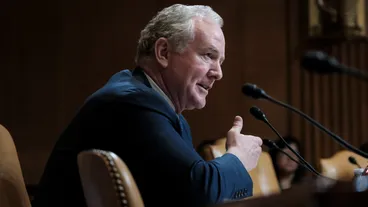
House Commerce Committee Chairman Henry Waxman, D-Calif., abandoned the effort late Wednesday in the face of Republican opposition to his proposed "network neutrality" rules. Those rules were intended to prevent broadband providers from becoming online gatekeepers by playing favorites with traffic.

The battle over net neutrality has pitted public interest groups and Internet companies such as Google Inc. and Skype against the nation's big phone and cable companies, including AT&T Inc., Verizon Communications Inc. and Comcast Corp.

Public interest groups and Internet companies say regulations are needed to prevent phone and cable operators from slowing or blocking Internet phone calls, online video and other Web services that compete with their core businesses. They also want rules to ensure that broadband companies cannot favor their own online traffic or the traffic of business partners that can pay for priority access.

But the phone and cable companies insist they need flexibility to manage network traffic so that high-bandwidth applications don't hog capacity and slow down their systems. They say this is particularly true for wireless networks, which have more bandwidth constraints than wired systems. The communications companies also argue that after spending billions to upgrade their networks for broadband, they need to be able earn a healthy return by offering premium services. Burdensome net neutrality rules, they say, would discourage future investments.

Waxman's proposal, the product of weeks of negotiations, attempted to carve out a middle ground by prohibiting Internet traffic discrimination over wireline networks while giving broadband providers more leeway when it comes to managing traffic on wireless networks. The plan would have given the Federal Communications Commission authority to impose fines of up to $2 million for net-neutrality violations.

For the broadband companies, Waxman's retreat is a setback. They fear the issue could now go back to the FCC, which deadlocked over the matter in August. The commission could impose more restrictive rules on the industry than a House compromise would have.

"If Congress can't act, the FCC must," Waxman said in a statement. He added that "this development is a loss for consumers."

Net neutrality was the Obama administration's top campaign pledge to the technology industry and a major priority of the current FCC chairman, Julius Genachowski, a key architect of Obama's technology platform. But frustration is growing – particularly among public interest groups – as the debate has dragged on over the past year without resolution either at the FCC or in Congress.

Waxman's proposal, in part, fell victim to today's political climate, with Republicans hoping to rack up gains in the upcoming midterm elections apparently unwilling to help Democrats make progress on such a contentious issue. With an anti-government, anti-regulation sentiment sweeping the nation – and boosting Tea Party candidates – Republicans also were reluctant to support a proposal that opponents equate to regulating the Internet.

Yet in what would have been a big victory for the phone and cable companies, Waxman's proposal would have headed off an effort by Genachowski to redefine broadband as a telecommunications service subject to "common carrier" obligations to treat all traffic equally.

The FCC has been trying to craft a new framework for regulating broadband since a federal appeals court in April threw out its current approach, which treats broadband as a lightly regulated "information service." The agency had argued that this approach gave it ample jurisdiction to mandate net neutrality.

But the U.S. Court of Appeals for the District of Columbia rejected that argument. It ruled that the agency had overstepped its authority when it ordered Comcast to stop blocking subscribers from using an online file-sharing service called BitTorrent to swap movies and other big files.

With Congress making no progress to resolve this issue, several public interest groups on Wednesday called on Genachowski to move ahead with his proposal to reclassify broadband as a telecom service.

"The FCC must act now to protect consumers by reinstating its authority over broadband," Gigi Sohn, president of the public interest group Public Knowledge, said in a statement. "We expect the FCC to do so to carry out one of the fundamental promises of the Obama administration."

But Joe Barton of Texas, the top Republican on the House Commerce Committee, said Genachowski's proposal would "stifle investment and create regulatory overhang in one of the most dynamic sectors of our economy."

FOLLOW HUFFPOST TECH

WASHINGTON — House Democrats have shelved a last-ditch effort to broker a compromise between phone, cable and Internet companies on rules that would prohibit broadband providers from blocking or...
Filed by Bianca Bosker  | 
 
 
  • Comments
  • 530
  • Pending Comments
  • 0
  • View FAQ
Comments are closed for this entry
View All
Favorites
Recency  | 
Popularity
Page: 1 2 3 4 5  Next ›  Last »  (13 total)
photo
HUFFPOST SUPER USER
Dennis Yuen
01:37 PM on 10/04/2010
Has there ever been net neutrality? I am not entire sure if the internet has always been as 'fair' as people claim it is. The free-ness of the internet is essentially an anarchic arena for anyone to do anything. What Rep. Waxman is proposing is basically to apply minimal containment to an uncontainable force. I'm doubtful if it's even possible to regulate these companies a few years down the road.
06:35 AM on 10/01/2010
CHECK IT OUT!

http://Ez.com/LTerkeltaub

On November 5, L2 and NYU Stern will host its second-annual Innovation
Forum at The Morgan Library in New York City. The full-day event will
addresss innovation in digital marketing and implications for prestige
brands.

Elements

Check out an amazing Innovation Conference:

http://Ez.com/LTerkeltaub

Combining education and entertainment to inspire and enlighten, the
Forum will feature:

• Never-seen-before research benchmarking brands’ digital marketing efforts
• Provocative presentations from thought leaders in industry and academia
• On-stage conversations with prestige brand leaders
• Networking with senior executives and top MBA students
• Cutting-edge product demos
On November 5, L2 and NYU Stern will host its second-annual Innovation
Forum at The Morgan Library in New York City. The full-day event will
addresss innovation in digital marketing and implications for prestige
brands.

Elements

http://Ez.com/LTerkeltaub

Combining education and entertainment to inspire and enlighten, the
Forum will feature:

• Never-seen-before research benchmarking brands’ digital marketing efforts
• Provocative presentations from thought leaders in industry and academia
• On-stage conversations with prestige brand leaders
• Networking with senior executives and top MBA students
• Cutting-edge product demos

MORE DETAILS:
http://Ez.com/LTerkeltaub
photo
cheo
better a bleeding heart than none at all
12:59 AM on 10/01/2010
I understand the frustration with the slowness of FCC to come up with the regulations to support Net Neutrality, but this bill seems unlike Waxman......
HUFFPOST SUPER USER
William Blomberg
Grammar errors notwithstanding!
12:06 AM on 10/01/2010
Good. Would rather have no bill at this time then rushing to crappy compromise bill now.

Don't rush it, take the time to do it right and get it right!

(can hear the laughter now)
This user has chosen to opt out of the Badges program
photo
03:43 PM on 09/30/2010
Ending net neutrality would be similar to allowing competing television and radio stations back in the 1960s to broadcast at higher power to drown out their competition. Stations that could not afford to broadcast at higher power would lose their audience not because they were unable to entertain, but because of technology. FCC rules leveled the playing field by limiting signal strength and the creation of the public broadcast spectrum, yes, owned by the American public.

Net neutrality is good for the republic and competition there are no valid reasons to end net neutrality. Net neutrality is the reason why we are able witness the creation of many new emerging technologies and ideas. Demanding the playing field of the internet remains level will allow emerging technologies to compete and flourish without having to fight network traffic restrictions from Google, MSM, AT&T, Comcast or any other organization.

One last note: We have seen what the free flow of information can do. Information is power and anyone or organization that can control information can control power. Ending net neutrality allows large companies to ultimately censor the internet and funnel traffic to information they deem appropriate. Lets not go back to the days when those that controlled the printing press and newspaper distribution controlled information. Citizens need a wide variety of competing sources of information in order to make positive and progressive decisions.

This is such a fundamental concept that we should not even be having a debate about net neutrality...
photo
rikster
buy the ticket-take the ride
03:38 PM on 09/30/2010
Lobbyists: excuse me Senator..you want this check made out to cash...?
01:25 PM on 09/30/2010
Better get all you can grab now, Hank. They chairman's gavel will be ripped from your hands in January.
This user has chosen to opt out of the Badges program
photo
01:19 PM on 09/30/2010
Like so many other laws involving basic freedom, the application of common sense and accountability, this bill was written on the back of a check in the hallways of the nation's capitol long before we the people even knew about it and the politicians (along with the press) performed the charade that it might be possible to have this "neutrality" actually survive the check books involved.
Instead of net neutrality we end up with a neutered net.
12:57 PM on 09/30/2010
nice nose waxman.....bwahahaha
photo
bespoken
My micro bio is filled with emptyness
01:29 PM on 09/30/2010
That's the best you can do?
12:54 PM on 09/30/2010
"With an anti-government, anti-regulation sentiment sweeping the nation – and boosting Tea Party candidates – Republicans also were reluctant to support a proposal that opponents equate to regulating the Internet." ...

What? Look, I'm just interested in electing and supporting smart, tough, creative, honest politicians who are pro environment, pro great jobs/business, pro women, pro men, pro children, pro Middle Class and have intelligent, innovative/creative ideas/strategies that will benefit all the groups I named. Buzz words like "anti-government", anti-regulation" are just media buzz words.
photo
bespoken
My micro bio is filled with emptyness
01:07 PM on 09/30/2010
I think you'll have a tough time finding honest politicians. ;)
photo
mmsuki
Fine; I evolved, you didn't.
12:54 PM on 09/30/2010
"abandoned the effort late Wednesday in the face of Republican opposition to his proposed "network neutrality" rules.

Once again, the repubs show they are against the consumer and for big business.
How many more examples do we need to realize the repubs are not on the side of the middle class?
photo
bespoken
My micro bio is filled with emptyness
01:03 PM on 09/30/2010
It's pretty obvious that there's a stupendous number of very stupid people out there. I mean, look at the number of supporters there are for people like Palin, Angle, Bachman, O'Donnel (who apparently has a particularly uncomfortable relationship with the truth) and the millions who think Glen Beck is sane and says worthy things. Ditto for Rush Limbaugh.

Any private citizen who earns an average income and votes Republican is so evidently acting in opposition to their own interests. The only reason I can think of that they would do so is that they're basically not terribly bright.
photo
HUFFPOST COMMUNITY MODERATOR
utd
It would be funny if weren't so serious.
12:49 PM on 09/30/2010
This is total BS.
12:46 PM on 09/30/2010
A 2million fine for telecommunication company's is spare change to them. Say a company like att owns part of a company like Amazon and for one day they prioritized traffic for Amazon and throttle all customers going to overstock.com over their network. Their only penalty is 2mil dollars! While for a whole day overstock loses sale after sale and a percentage of their customer base.Overstocks only choice then would be to pay the isps, what amounts to pretty much protection money. It's win win for the isps while the consumer and smaller business owners are left to fend for whatever bandwidth they can get a hold of.

It makes me sick to think that these politicians can call this regulations with a straight face while basically writing a blank check out to the isps. Free and equal internet for all. Do the right thing and do not let the corporations take control of the internet.
photo
bespoken
My micro bio is filled with emptyness
01:05 PM on 09/30/2010
Well said.
This user has chosen to opt out of the Badges program
12:33 PM on 09/30/2010
I need a job in Congress. Badly. Get paid to do nothing but solicit $'s all day?!! Heck yeah!
12:21 PM on 09/30/2010
The net-neutrality discussion seems to occupy the wrong priorities spot for people in general.

Providers have to prioritize traffic because some applications (telephony, streaming media,) do not work when the pipes are full. They only have to prioritize once the pipes carrying the data start to get full.

If the pipes carried water, rather than data we would be rationing water rather than replacing the pipes with bigger ones and getting more. Net-Neutrality is a discussion about how to ration water. Except, as a resource, broadband isn't as limited as water, at least not yet.

Had we better infrastructure, or even if certain providers had better infrastructure, we could mindlessly consume bandwidth however we wanted to. Apparently legislating the right to prioritize traffic is more cost effective than laying more fiber-optics, or realizing the inherent limitations of land-based half-duplex networks (*cough* cable,) and putting a stop to any subsidies the progressively obsolete networks are receiving.

It stinks that we have to have a main-stage discussion about a second-rate solution to a third-party's private problem.