By Fred Schulte and Ben Protess
Huffington Post Investigative Fund
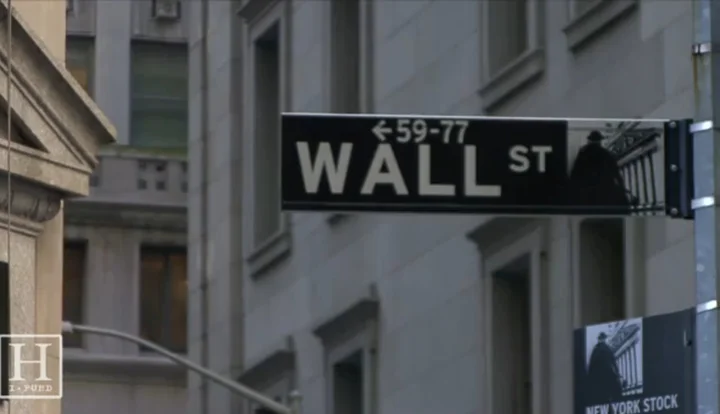
Nearly a dozen major banks and hedge funds, anticipating quick profits from homeowners who fall behind on property taxes, are quietly plowing hundreds of millions of dollars into businesses that collect the debts, tack on escalating fees and threaten to foreclose on the homes of those who fail to pay.
The Wall Street investors, which include Bank of America and JPMorgan Chase & Co., have purchased from local governments the right to collect delinquent taxes on several hundred thousand properties, many in distressed housing markets, the Huffington Post Investigative Fund has found.
In many cases, the banks and hedge funds created new companies to do their bidding. They gave the companies obscure, even whimsical names and used post office boxes as their addresses, masking Wall Street's dominant new role as a surrogate tax collector.
In exchange for paying overdue real estate taxes, the investors gain legal powers from local governments to collect the debt and levy fees. At first, property owners may owe little more than a few hundred dollars, only to find their bills soaring into the thousands. In some jurisdictions, the new Wall Street tax collectors also chase debtors over other small bills, such as for water, sewer and sidewalk repair.
Some states allow the investors to tack on as much as 18 percent interest and a passel of legal fees and other charges. When property owners fail to make full payment, the investors can sue to foreclose - in some states within as little as six months.
In June, Bank of America snatched up liens on properties in Florida owned by low-income residents and nonprofit public interest groups, including a Salvation Army shelter, a preschool and a wildlife rescue group involved in the Gulf of Mexico oil spill cleanup, the Investigative Fund found in its examination. Bank of America also bought liens on properties of the wealthy, including a professional basketball star with the Los Angeles Lakers, Lamar Odom.
Some observers of the financial services industry said they were surprised to learn that banks, some of which received billions of dollars in taxpayer-funded bailouts in recent years, were rushing to profit from homeowners having trouble paying their tax bills.
"This is not how I'd like to be making my money," said James Cox, a Duke University School of Law professor who specializes in corporate and securities law. "I would find it personally distasteful to foreclose or press a claim against individuals, many of whom have lost their jobs and are in tight economic straits."
Five big banks involved in the industry, known as tax lien investing, collected a total of more than $106 billion in bailout money through the government's Troubled Asset Relief Program, known as TARP.
Over the last year, Bank of America, which received $45 billion in these taxpayer funds in 2008 and 2009, has bought liens on properties in scores of municipalities in at least a dozen states. Bank of America repaid the government in 2009.
Still, noted Cox: "There's no bailout for people struggling to pay their taxes."
Years ago, the big banks left the buying of tax liens largely to local real estate specialists and small-time investors. These days, banks and hedge funds, stung by the failure of many speculative investments, see tax liens as a relatively safe option that can yield returns of around 7 percent.
Some banks also are packaging tax liens as securities - in a similar way to how unpaid home loans are securitized - and selling them to investors.
If mortgage holders fail to pay overdue taxes, an investor could waltz off with a home worth hundreds of thousands of dollars for the price of paying the owner's tax bill. Most homeowners eventually pay their debt.
Put it all together and it is makes for a solid investment, said Lloyd McClendon, an owner of realauction.com in Plantation, Fla., one of several companies that conducts online auctions in Florida and other states.
"There's an awful lot of new, big money in the sales this year," said James Powell, a longtime Florida investor who remembers a time when local investors flocked to live auctions at courthouses. Typically, they would bid for liens by holding up paddles. Powell is still one of the few in the liens business who makes purchases using his own name.
But the smaller investors, noted Powell, have been overtaken by well-heeled banks and funds that now bid online, and in volume.
Banks and hedge funds usually buy the liens through online auctions that permit them to bid in bulk, and they can use any name they want.
The giant Bank of America, for instance, has bid in Florida tax lien sales using colorful names such as Bennu, LLC, named after a mythical bird said to be the soul of the ancient Egyptian sun god. It also has bid as Osprey, LLC, and Ecru, LLC, named after the French word for a pale brown color.
Fortress Investment Group, a hedge fund run by former Fannie Mae chief Daniel Mudd, has bought tax liens under 17 different corporate names. Some evoke tranquil, bucolic settings, such as Pleasant Valley Capital, LLC and Travis Farm Investments, LLC.
Representatives of several prominent banks and hedge funds contacted by the Investigative Fund, from JPMorgan to Bank of America and Fortress Investment Group, declined to comment for this article.
Some banks purchased liens directly; others financed investment groups that did so. For example, Wells Fargo lends to a liens buyer. Deutsche Bank invests through a subsidiary. And BankAtlantic, based in Fort Lauderdale, is a longtime tax certificate investor in several states, buying liens under the names of several subsidiaries.
Though several mortgage lenders, including JPMorgan, recently suspended foreclosures amid concerns that some may have been done improperly, the slowdown is not expected to apply to foreclosures stemming from unpaid taxes.
The Investigative Fund identified major tax lien purchasers, many for the first time, through a computer-assisted analysis of more than 300,000 liens, municipal, corporate and court filings and other documents obtained from local government officials in four states and the District of Columbia. The Investigative Fund then traced these purchasers to the major financial institutions that oversaw them, invested in them, or lent money to their operations.
Business 'Needs Scrubbing'
Local governments, faced with tight budgets and the challenges of collecting debt from property owners, strongly endorse online auctions because tax collectors can easily and rapidly recoup millions of dollars. Miami-Dade County, for instance, took in more than $374 million in June 2009 from the sale of about 60,000 local property tax liens.
Tax collectors defend the practice by pointing out that property owners can avoid added fees or the risk of losing homes by paying their bills on time. The threat of losing property often compels tardy homeowners to pay off just before the deadline; without severe penalties many people would simply ignore their obligations to pay property taxes, collectors say.
Some two dozen states and the District of Columbia allow tax sales, which spare the governments from added expenses of hiring their own debt collector, or foreclosing and becoming a landlord. Local governments generally require minimal identification - for instance, a Social Security number. They allow bidders to choose whatever names they wish, and don't check to see if bidders are using multiple identities.
The few investors willing to talk about the tax lien business with the Investigative Fund argue that they are playing a vital role in helping cash-strapped local governments plug holes in budgets and, in some cities, helping rehabilitate older buildings. That returns the properties to the tax rolls, and can help revive beleaguered neighborhoods, they say.
"Budget-challenged cities are using the proceeds from their [tax lien] sale as an important source of funding," said Gabriel Boehmer, a spokesman for Wells Fargo Bank, which lends to companies that buy tax liens.
Critics aren't so sure. "If your only goal is to maximize your rate of return, this is a nice industry," said Frank Alexander, a law professor at Emory University with expertise on tax sales. "The question becomes: Do you mind being a vulture and preying on people?"
Alexander argues that when local governments privatize tax collection duties they "wash their hands of all responsibility" for ensuring property owners are treated fairly.
In Cleveland, officials are beginning to express concern about the consequences of trusting the new tax collectors. Cuyahoga County canceled this year's tax sale amid alarm that previous ones had contributed to an upsurge in home foreclosures and further decay in already marginal neighborhoods. "With the economy the way it is now, we won't have a tax sale for at least one year," said Robin Thomas, Cuyahoga County's chief deputy treasurer. Her aim: To buy homeowners in Cleveland "a little more time" to get caught up with their property taxes.
Despite national reform efforts that have focused on debt collection, from credit cards and payday lenders to checking account fees, the fairness of tax sales to homeowners remains largely a local, unregulated matter. A new consumer protection bureau created by Congress has no explicit authority to watch over local tax sales.
"There is no oversight at all," said District of Columbia Attorney General Peter Nickles, who is suing a tax lien investment firm for charging homeowners what he alleges are exorbitant fees to get their homes out of hock.
In a separate matter, the U.S. Department of Justice's antitrust division is investigating allegations of possible tax-sale bid rigging in two states. The ongoing probe began in Maryland, where three men pleaded guilty to criminal charges earlier this year. A federal grand jury in New Jersey has subpoenaed records from several major tax lien investors, including a JPMorgan subsidiary, and a Virginia company that serviced the Bank of America tax lien portfolio in Florida this year. No charges have been brought in the New Jersey investigation.
Said Nickles of the tax lien business: "This is one of the areas that really needs a good scrubbing."
Small Debts Grow Fast
Tax sales routinely place home ownership in jeopardy over relatively small sums, sometimes just a few hundred dollars, the Investigative Fund data analysis of hundreds of thousands of liens records shows. For instance, more than two of every five liens sold earlier this year in 31 Florida counties and in Maricopa County, Arizona (Phoenix), were for unpaid taxes of less than $1,000; more than 90 percent were less than $5,000. Results were similar in Toledo, Ohio.
Some jurisdictions such as Baltimore toss in unpaid water bills and other municipal fees of $250 or more. In May, the Investigative Fund reported how an unemployed former mental health counselor with four children named Vicki Valentine lost her home even though the mortgage had been paid in full. She had owed $362 on an overdue water bill when investors took over and added thousands of dollars in legal fees she couldn't afford. (In response, city officials are seeking statewide legislation that would prohibit the sale of tax liens of less than $750.)
To be sure, many debtors eventually pay the mounting bill rather than lose property of greater value. And some states such as Florida give homeowners up to two years to pay off the debt before investors can force the sale of their property. But in other states, those who fail to pay can quickly find themselves in a thicket of escalating debt and in a costly - and often losing - legal battle to keep a roof over their heads.
Barbara Carpenter, a 58-year-old disabled Ohio retiree, found herself in such a situation. The former worker for the American Red Cross struggled to save her Toledo home from a JPMorgan entity called Plymouth Park Tax Services, which in recent years has been among the nation's top buyers of tax liens.
"It's a great neighborhood and the house is in good condition," said Carpenter, who paid $67,000 for the one-story home in 2004. But she fell behind in paying her taxes and a certificate for $1,500 in unpaid taxes was sold off to Plymouth Park, which is based in New Jersey.
Carpenter's lawyer, Joseph Westmeyer, said Plymouth Park routinely charges an upfront fee of around $1,500 as soon as it buys the lien and 18 percent interest on the debt. If they don't get paid, they foreclose.
"It's not a good deal for poor customers," said Westmeyer. Carpenter wound up selling the house in August for less than half what she had paid. Plymouth Park received about $12,000 in legal fees and other charges, including some additional taxes, Westmeyer said, quoting from court records.
Andrew Neuhauser, an attorney with Advocates for Basic Legal Equality in Toledo, said his group believes the Lucas County tax sale, which reached a peak of about $5.4 million in liens during 2006, has led to hundreds of foreclosures. That, in turn, has partly eroded the tax base and had a "devastating effect" on some neighborhoods, he said. "It's a short-term gain for the county that in the long term does harm," Neuhauser said.
Gail Michaud, a 71-year-old retired real estate broker who lives in a $60,000 home in Dania Beach, Fla., recently fell behind on the property taxes. In June, Broward County sold collection rights to her unpaid bill - only $782 - to Bennu, LLC, the Bank of America arm named after the mythical bird.
Michaud, who said she receives food stamps, resents having to pay interest charges to the nation's mightiest bank - especially because when the bank was in trouble the government came to the rescue. "The taxpayers gave them their bailout money, and they are still doing the same thing they used to. They look their nose down at people and think they can do whatever they want," she said.
Florida Boom
Florida, the nation's largest tax sale market and one of the few states where large transfers of liens can be tracked, shows how the collapse of a once-buoyant real estate market can be a boon for tax lien investors, especially banks and hedge funds.
This year alone, counties have offered more than $1.9 billion in tax liens and found eager buyers for nearly all of them. Buyers from across the U.S., the Cayman Islands, Bermuda and Panama bid alongside the banks and hedge funds that cater to wealthy investors.
In this year's sale in Orange County, which includes Orlando, bank-affiliated companies or hedge funds gobbled up nearly 90 percent of the 24,000 tax liens sold. In the Fort Lauderdale area, officials sold more than a quarter of the liens to entities financed by Bank of America.
Bank of America made most of its purchases in Florida through four limited liability companies. LLCs can limit exposure to lawsuits and can shield the owner's identity. In Florida, Bank of America's LLCs had the names Investments 2234, Bennu, and Ecru, and all used the same post office box in Atlanta as their business address, according to records on file in Florida counties.
In several Florida auctions, Bank of America's interests were managed by MTAG Services, one of the largest tax lien servicers in the U.S. The Vienna, Va., company has been subpoenaed by a federal grand jury in New Jersey that is investigating alleged collusion in bidding at tax sales.
MTAG's president, James Meeks, said his company is "cooperating fully" with the federal investigation. He added that "everybody who bought any substantial amount of liens in Jersey was subpoenaed." Meeks said that his company, like others in the industry, favors creative names like Bennu for companies that bid on tax liens.
"There's no rhyme or reason to the names," Meeks said.
Tax officials in several counties said they had no idea the companies were affiliated with the Bank of America.
"I know nothing about these companies. I don't have any background on them," said Juanita B. Sikes, tax collector in Hernando County, Fla., north of Tampa, where the numbers of liens sold earlier this year was nearly double those from 2005. "It's not on us to determine if they are a real person."
Several hedge funds saw opportunity in the Sunshine state as well.
One was the Fortress Investment Group headed by Mudd, the former chief executive of Fannie Mae. While Mudd was at the helm, Fannie's decision to take on more than $200 billion in risky loans crippled the mortgage giant and helped unravel the economy.
In only a few months, Fortress has purchased more than 30,000 tax liens in Florida counties using 17 different LLCs. Most registered for the tax sales using the 46 floor of an Avenue of the Americas skyscraper in midtown Manhattan - Fortress' headquarters - as their address.
Fortress began competing for tax liens this year after joining forces with three former executives of JPMorgan's tax liens subsidiary. The subsidiary, which bids under the names Xspand and Plymouth Park Tax Services, was among several companies subpoenaed in the grand jury investigation in New Jersey. Former New Jersey Gov. James Florio founded the company and has since sold his interest in it.
Neither JPMorgan nor Fortress would comment for this story. Repeated efforts to reach Mudd were not successful.
Anonymity Questioned
Although many local governments are pleased with the financial results of tax lien sales, D.C. officials question its fairness.
D.C. Attorney General Nickles criticizes Aeon Financial, LLC, a bank-financed investment group from Chicago that buys tax liens in some 10 states. Nickles asserts that Aeon has slammed homeowners, who sometimes owed just a few hundred dollars in back taxes, with $7,000 or more in legal fees.
In papers filed in a local D.C. court in late 2009, the attorney general's office accused the company of "engaging in a pattern of charging and collecting impermissible or excessive legal fees." In an interview, Nickles called that a "rip off."
Aeon responded that the fees are reasonable, comply with the law and escalate because of improper management by the District's tax collectors. Homeowners who consider the fees too high can challenge the charges in court.
Court papers show that after Aeon bought liens in the nation's capital, property owners received notices from a Chicago law firm. The notices warn homeowners to "act now or you could lose your property/investment." An accompanying letter on the law firm's letterhead states that "THIS PROPERTY IS IN FORECLOSURE" and demands payment of legal fees.
In April 2009, Nickles formally notified Aeon's lawyer, Malik J. Tuma, that he had launched a preliminary investigation of Aeon. The company's notices to homeowners appear "at least, to be deceptive and, at worst, potentially fraudulent," wrote Assistant Deputy Attorney General David Fisher.
In 2008, when Aeon Financial paid the District $4.6 million for the right to collect on 400 liens, it was the single biggest purchaser of tax liens. Even so, Nickles said he still has no idea who the company's owners are. He is hoping the court case will flush out their names.
An Investigative Fund reporter visiting the address printed on the letters from the Chicago law firm found it to be a mail drop at a UPS Store.
Reached by phone, Tuma declined to comment on Aeon's business practices, citing the ongoing litigation with the District. He would not identify Aeon's principals and said the mailbox at the UPS Store was used "for the safety of our employees."
Tuma added: "There's nothing deceptive about it...I'm in D.C. Superior Court every Wednesday. It's not hard to find me."
Aeon, which has received funding from TCF Bank for tax liens purchases, has an office in Chicago's Willis Tower, formerly known as the Sears Tower, once the world's tallest building. Michael Wehenkel, who has identified himself as Aeon's chief operating officer in presentations to D.C. officials, did not respond to numerous requests for comment by phone and e-mail.
A spokesman for TCF, a Midwestern bank, said: "We were doing business with [Aeon] and no longer are."
Tax collectors in Florida don't always know who they're doing business with, either. Officials in Pinellas County want to know who exactly is behind a company called GL Funding Limited. Sales records show that GL Funding spent more than $10 million and dominated the tax sale in at least 10 Florida counties, most of them rural or smaller cities where interest rates tended to be much higher than in urban and resort areas.
GL Funding registered with several Florida tax collectors as a company with offices in the Cayman Islands. But other counties list a post office box in Philadelphia as its address. The person who registered GL Funding in Pinellas County's tax sale provided Pinellas with a telephone number in Dallas, Tex. At that number, a man named Jess Weir declined to tell the Investigative Fund who is investing through the name GL Funding.
Said Sam McClelland, deputy tax collector in Pinellas County, Fla., where GL Funding acquired hundreds of liens earlier this year: "We're still trying to sort this out."
Lagan Sebert contributed to this article.
- Follow the Huffington Post Investigative Fund on Twitter or fan us on Facebook.
- Do you have information about this story? Send us a tip or submit a correction.
- REPUBLISH THIS STORY FOR FREE: The Huffington Post Investigative Fund licenses its content through Creative Commons. We encourage you to republish our stories in full with proper attribution.