NYR More

Sam Harris: How Science Can Determine Human Values (Review)

First Posted: 11/04/10 06:55 PM ET Updated: 05/25/11 07:10 PM ET

Science
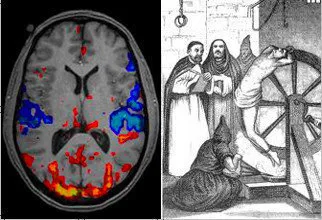
As advances in cognitive sciences further our understanding about the brain, belief, and how those beliefs translate into action, author and neuroscientist Sam Harris proposes a purely scientific route to understanding human morality.

"A business man who is generous to all his employees but falls in love with his stenographer is wicked; another who bullies his employees but is faithful to his wife is virtuous. This attitude is rank superstition, and it is high time that it was got rid of." ~ Bertrand Russell


Reading Sam Harris, one might be reminded of Thomas Hobbes, whose indispensability in the annals of public intellectualism, it is generally agreed, stems from his ideation -- the groundbreaking approach whereby he derived his philosophical elixir for mankind. Hobbes was the first to apply a burgeoning scientific method of sorts, specifically mechanics, to the full study of politics and the ordering of society, and he did so in such a manner as to leave pregnant the coming Enlightenment notion that systems of just governance are best arrived at through reason, rather than dogma or unexamined traditions.

In The Moral Landscape: How Science Can Determine Human Values, Harris, a neuroscientist studying the nature of human belief, has not produced a Leviathan. But he has, in modest yet impressive fashion, set the stage for burgeoning fields of cognitive science (neuroscience, psychology, etc.) to be applied to human values. Harris argues, in short, that if cognitive science can someday amply tell us how thoughts and intentions are formed in the brain, how they translate into action, and how those actions affect conscious beings, then, perforce, cognitive science can advise us on questions of morality. Breaking from a widely held consensus, the author rejects outright any theoretical distinction between facts (Earth is round) and values (Thou shalt not kill); to him the study of values is reducible to the study of the well being of conscious creatures. Like physics in Newton's day, morality now is but "an undeveloped branch of science".
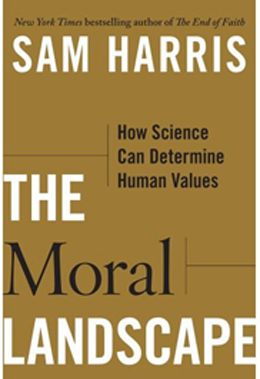
2010-11-03-41hbLnPyGL._SS500_.jpg
Due to his previous bestselling works (The End of Faith, Letter to a Christian Nation), which aimed right at the heart of modern faith and spirituality, Harris has positioned himself as somewhat of a lightning rod in the public sphere. His proposal for examining morality through a scientific lens is bold, even in the modern era, and it provides ample opportunity for potshots from his many haughty detractors (who range from reputable fellow scientists to philosophers to all manner of spiritual and religious chiselers and wangateurs). Indeed, some of their rebukes seem valid. How does one define well being? Should universal values aim to achieve the most evenly distributed well being for the most people, or should they be utilitarian in nature, directed towards maximizing the greatest sum well being overall?

For Harris, these questions are duly noted, but often specious. Rather than offer specific moral prescriptions, he is more interested in altering the method for how we might eventually find them. He stresses that it is a mistake, rampant among "moral relativists" and "multiculturalists", to allow ambiguity in moral questions to elide the fact that there must be concrete answers to how values can and do contribute to or detract from human flourishing -- from the happiness, prosperity and success of a given society and the individuals who comprise it. Harris writes that, "the moment we admit that we know anything about human well-being scientifically, we must admit that certain individuals or cultures can be absolutely wrong about it". That is to say, no sincere person today will admit total obliviousness to the difference between a good and happy life versus one of abject hardship and misery.

Even the most strident Western "moral relativists" (though as Harris notes, nobody actually refers to themselves this way) do not hesitate to see the virtue in combating famine or poverty in places like Haiti today. And in doing so, they reveal an understanding of human well being. But why isn't this presumptuous of them? Some past societies, such as the Spartans, made it a centerpiece of their culture to subject their youths to the brutal realities of the natural world. Why not allow for such a society today without condemnation? For some reason over the millennia, most of us seem to have gleaned that such a society is not the best way to achieve human flourishing. Mankind also may have some who are ahead of the curve in this regard. In a fascinating aside on the neurology of psychopathy, Harris conjectures that, just as there are specimens representing the utmost of human moral depravity, there must be those who exemplify moral excellence -- a genetic and cognitive basis for that campy high school superlative: moral fiber.


FOLLOW HUFFPOST BOOKS

"A business man who is generous to all his employees but falls in love with his stenographer is wicked; another who bullies his employees but is faithful to his wife is virtuous. This attitude is ran...
 
 
  • Comments
  • 201
  • Pending Comments
  • 0
  • View FAQ
Comments are closed for this entry
View All
Favorites
Recency  | 
Popularity
Page: 1 2 3 4 5  Next ›  Last »  (5 total)
HUFFPOST SUPER USER
Schweik
11:32 AM on 11/08/2010
I will answer with words of Bertold Brercht., I firmly beleive that artistic truth is almost always more coherent in its acceptance of life's absurdities than any other.

"You gentlemen who think you have a mission
To purge us of the seven deadly sins
Should first sort out the basic food position
Then start your preaching, that’s where it begins

You lot who preach restraint and watch your waist as well
Should learn, for once, the way the world is run
However much you twist or whatever lies that you tell
Food is the first thing, morals follow on

So first make sure that those who are now starving
Get proper helpings when we all start carving..."

Brecht/Weill. Three Penny Opera.
03:21 PM on 11/07/2010
Knowledge makes us immoral.

We are surrounded by the knowledge of the suffering of others. We choose every moment of our lives to do less than we could.

We are all immoral.

So, let's admit that we are all moral relativists.
08:28 PM on 11/06/2010
What does neuroscience have to do with what makes a flourishing, healthy society? This piece assumes we already know that and merely need to wisely choose it. I'd say neuroscience is more a part of the problem than of the solution.
photo
HUFFPOST SUPER USER
OldHick
12:29 PM on 11/06/2010
Everyone know a gay person is genetically predisposed.
09:23 PM on 11/07/2010
my neighbor does not agree, nor the congregation
11:42 AM on 11/06/2010
----
...to him the study of values is reducible to the study of the well-being of conscious creatures.
----

So, what is the acceptable baseline behavior that could help define our values? As human beings, we have a choice in how we relate to one another on the continuum of human behavior:

Submissive ---- Assertive ---- Aggressive

"Fighting openly and fairly for our legitimate needs is often necessary and constructive. When we fight for what we truly need, while respecting the rights and needs of others and taking care not to needlessly injure them, our behavior is best labeled assertive. Assertive behavior is one of the most healthy human behaviors.

But when we fight unnecessarily or with little concern about how others are being affected, our behavior is most appropriately labeled aggressive."
- Dr. George K. Simon, clinical psychologist

Dr. Simon identifies two forms of aggression:

Overt-Aggression
When you’re determined to have something and you’re open, direct and obvious in your manner of fighting.

Covert-Aggression
When you’re out to “win”, dominate or control, but are subtle, underhanded or deceptive enough to hide your true intentions. Avoiding any overt display of aggression while simultaneously intimidating others into giving you what you want is a powerfully manipulative maneuver.

Perhaps a universal value that could be established is “assertive behavior is the most conducive to achieving well-being for all.”

- Tom
11:10 AM on 11/06/2010
I noticed the other day that the seal of the Institute for Advanced Studies at Princeton portrays two classical goddesses, one named "Truth", one named "Beauty". Missing from the classical triad, of course, was Agatha, the Good: queen of justice, virtue and duty. 'Bout time science caught up with the problem. Now we can hope for a significantly educated discussion of the solution. We'll find that Dewey, Rorty and Levinas are 'way ahead of the neurologists, but it's okay if they get on the stick.
12:17 PM on 11/06/2010
So far Plato and Aristotle are ahead of them too.
Great to see someone mention Levinas, who had something to say about morality having to transcend "natural" ethics.
Olethea
Life may be sweeter for this- I don't know.
10:09 AM on 11/06/2010
This is a heavy topic for huff po! But before you can understand the strictly neurological basis of behavior, a more anthropological analysis is useful. I think evolutionary biology and reciprocal altruism is a good place to start- it's the original 'do unto others,' and explains a great deal about how families and societies have evolved over a period of time. For a purely behavioral point of view, I recommend "Driven" by Lawrence and Nohria- a thoroughly accessible read outlining the four drives behind human choices: aquisition, bonding, learning and defending.

How that translates into neurorscience is an interesting question. Looking forward to reading this book!

Great article!
This user has chosen to opt out of the Badges program
photo
10:22 AM on 11/06/2010
Thanks for the reading recommendation & here's one in return,

http://www.reasoned.org/rs_text.htm#part 1 - BW Holmes
09:26 AM on 11/06/2010
"No sincere person today will admit total obliviousness to the difference between a good and happy life versus one of abject hardship and misery."

This seems to be the main point right here. Someone could play devil's advocate and say "I wish to live a miserable life," but who would listen to such an individual? It's like saying, "I want to build a skyscraper that will fall down." It's nonsense.
12:14 PM on 11/06/2010
But it isn't nonsense to say, "I wish to live a happy life while you suffer and live as a slave." Or at least it isn't obvious nonsense, because many people have had this attitude.

And if they say that they wish happiness for their relatives, death and misery for everyone else, they may have evolution on their side. If Harris wants to convince them otherwise, he'll need philosophy, not science.
photo
HUFFPOST SUPER USER
PeteLeS
08:59 AM on 11/06/2010
Morality was polluted by religion. As was questioned by Bertrand Russell, what is true morality. Religion corrupts the concept. There never was any rational cognitive thought placed in religious morality. I think it's time to explore a scientific avenue to the concept of morality.
This user has chosen to opt out of the Badges program
DiogenesOfAlaska
Mitt Romney for president - of the Cayman islands!
03:31 AM on 11/06/2010
It's certainly an admirable goal to take it one step further in finishing off the 'is-ought' distinction. And if neuro-science can contribute to that, so be it.

But to me the more central goal is to re-imbue discourse about fact and 'factual constraint' with a thorough understanding of the reasonableness of values.

This is an extremely vast and delicate subject. It's a huge mistake to think of this as a sunday school problem. It has a mind-blowing complexity, and I daresay that it is a complexity that easily matches rocket science.

As I said, whatever it is that neuro-science can contribute, is welcome. But I really don't see why it would HAVE to be neuro-science. In this, I fully agree with those of his critics who turn away because they smell materialism, determinism and reductionism.

Even apart from those metaphysical ways of getting side-tracked (with respect to the real issue, which is to understand the working of values and its relation to reason in this world), there's also a remainder of the 'is-ought' distinction, which raises doubts why neuro-science should be the be-all and end-all: suppose it turns out we find that we ARE wired to do this or that. So what? Shouldn't we STILL sometimes try to change it? In other words, one would have to go all the way and study the interaction between neuroplasticity and traumatology. And that's probably just too tall an order.
12:29 PM on 11/06/2010
You repeat my point from yesterday: we may be "wired" for all kinds of immoral behaviors that we need to change. Morality isn't just instinct and inclination, it has a rational component that's been developing for at least a few thousand years. The rational component allows for universalist ethics, whereas evolution would seem to favor small-group loyalty.

So we agree on the reasonableness of values. But I have to admit I don't see the big deal about overcoming the distinction between facts and values. Seems like a pretty useful, if rough-and-ready distinction, for a lot of situations. The purview of science seems to be facts only, even when it talks about things like survival and happiness. ("Flourishing" is another matter -- the weasel word that lets Harris blur the distinction.)
photo
HUFFPOST SUPER USER
Titanshanks
Back for more
05:29 PM on 11/06/2010
It's probably a point you already know, and I didn't see your post yesterday, but some people get... damn, trying to avoid a pun here... confused by the idea of being "wired" for a behavior. I like the metaphor of my computer, which is "wired" to perform all sorts of functions, games etc, but which doesn't run them unless it's told to. If I were thrown into a war, I'd probably access violent programs I haven't made use of before, and might not ever access otherwise. Or for all I know, I'm excellent at making stone tools. I think that many people who don't understand science cringe at scientific ideas of morality, largely because they see it as so absolutely deterministic.

I like "weasel word," by the way.
This user has chosen to opt out of the Badges program
DiogenesOfAlaska
Mitt Romney for president - of the Cayman islands!
05:45 PM on 11/06/2010
Yes, we totally agree on the limitations of 'wiredness' as a marker for morality.

I happen to believe that morality and values evolve as well, and hence selection is at work for them, too. I just don't think that it's big deal whether or not we find the neurons firing to give the concerto grosso that is the categorical imperative.

About the fact-value distinction I would have had to be more precise. The point is precisely that the reasonableness of values shows in facts about survival, happiness or benefit.

So, I don't have a problem with trivializing the distinction by saying it's all about facts of reasonableness or facts of feasibility.

But the complexity sure doesn't go away. It resides in the fact that the odds for survival, benefits (or even profits), etc aren't at all easy to handle and compare across different moments in time and different levels of information.

This is so already in economics, when everything in principle boils down to numerical values (prices) in different future scenarios. Predictions about the collective effects of different levels of information or risk perceptions are difficult to justify.

It certainly doesn't get any easier when you start to include more and more qualitative traits, or effects of changing social norms.

The famous example would be the iterated prisoner's dilemma and its generalizations.
02:22 AM on 11/06/2010
Morality is nothing but a thought.
This user has chosen to opt out of the Badges program
DiogenesOfAlaska
Mitt Romney for president - of the Cayman islands!
03:46 AM on 11/06/2010
If that's true, then it's clearly not a thought that ever occurred to you.
12:30 PM on 11/06/2010
I'd hate to meet you in a dark alley.
10:19 PM on 11/05/2010
Science is descriptive. It tells us what is. It identifies reliable patterns in nature. An experiment is a hypothesis about what will happen that is then confirmed or denied by experience and observation. Science seeks to test falsifiable premises -- those that can be tested through experience. Morality, on the other hand, is all about choices. If the object of moral study did not involve a choice, it would involve something outside morality, since it is incoherent to have a moral position about something that you cannot control. Morality assumes the possibility of influence, at the very least. If there is influence, or control, then there is the possibility to change the outcome through an act of will. As soon as we are in the territory of will, we are outside of science. Stated otherwise, if the good is simply true as a scientific fact, it is no longer the good. It is just "what is," because nothing else could be. If science can tell us what is good, it would have changed the meaning of goodness. To have such scientific knowledge would itself destroy the referent of the knowledge.
07:36 AM on 11/06/2010
Really? You are ignoring an entire field of decision making, sometimes called decision sciences. Daniel Kahneman won the Nobel Prize in Economics for his studies of human decision making, some of which is quote by Harris in the book. I could go on and on, but social scientists study choices and behaviors all the time. There is much one could criticize about the book, but that thought that free will is outside the realm of scientific discourse is not one of them.
photo
HUFFPOST SUPER USER
Doctor Nick
Hi, everybody!
10:16 PM on 11/05/2010
Jackstpaul raises an interesting point. Given the many similarities between the human and primate brain, might neuroscience also reveal an alternate, appropriate morality for Chimpanzees that maximizes the "flourishing" of Chimpanzees?

A different kind of issue would arise if humanity were thrown into a different set of circumstances - let's say on the run from a bunch of Cylons determined to extinguish humanity, low on supplies and resources, etc. Would a morality based on neuroscience yield different answers in this case, even if human brains and genetics function in similar ways?
Or alternately, suppose we went back in time 200,000 years to our earliest ancestors. Would we expect their brain scans to yield an identical, universal morality?


I'm curious if Harris even attempts to answer these questions. I doubt that brain scans would be a very productive means of discovering a universal morality in these different contexts. Conversely, the social context and pragmatism (in the sense of promoting a contextual human flourishing) seems more appropriate, i.e. moral relativism. Harris conveniently mushes together little bits of real cognitive science with a lot of rather uninteresting philosophy - a vague rehashing of utilitarianism that does not address the centuries old criticisms - but since the SCIENCE part is what is so interesting, I wish he would devote more space to considering these issues, particularly the limits to what DNA evidence and brain scans could tell us about morality.
HUFFPOST SUPER USER
CollectiveNotIndividual
09:35 PM on 11/05/2010
What would science say about someone who puts food in his ear? I mean...it's obvious that food goes in one's mouth because of the long process of energy extraction that follows. This is what allows life to continue. But if someone puts food in their ear there is no biological process that follows...so from scientific examination we know that food should go in one's mouth, not in one's ear. Now lets discuss sexual preferences from a scientific perspective
photo
LynneE
A not-so-elite liberal.
11:41 PM on 11/05/2010
Ok, go right ahead and discuss sexual preferences from a scientific perspective. This should be interesting.
photo
HUFFPOST SUPER USER
Titanshanks
Back for more
05:35 PM on 11/06/2010
Riveting, I'm sure. I'm all ears.
photo
HUFFPOST SUPER USER
Titanshanks
Back for more
05:59 PM on 11/06/2010
While we're waiting for your dissertation, could I also request your opinion on contraception, oral sex, sex after menopause, sex while pregnant or when one partner has fertility problems? From a scientific perspective; and I don't need to know your preferences.

I don't know if you're just being goofy, but you're flippantly repeating anti-gay propaganda which may mean very little to you, but which makes life more difficult for a lot of people.

If you think you're being cute I'd like to suggest what you can go do to yourself, but I'm afraid it, too, would be terribly unscientific from your point of view.
12:19 PM on 11/05/2010
Science may in the future tell us a lot about what values we hold now, and how we came to hold them. It may also tell us about the factors that produce brain states of relative pleasure and satisfaction.

But no one has yet explained how this gets us to the goal of moral philosophy, namely, what values we SHOULD hold, and what kinds of lives and societies are most worthwhile.

It's quite possible that evolution has produced behaviors and feelings that are, from a purely rational point of view, immoral. Some people (and cats) seem to get a lot of pleasure from torturing other animals. Natural selection clearly seems to have given us feelings of loyalty and affection toward close relatives, but not toward distant strangers. In such cases, what can science tell us?

Perhaps in the really distant future our knowledge will be so complete that we can map out all possible brain configurations and then simply choose to produce those most compatible with the most just society. But that day is not on the horizon, and may never come.

In the meantime, the moral calculations Harris envisions are exactly the calculations that utilitarians have been making all along. Nor does he have any new arguments for choosing utilitarianism over other theoretical frameworks.

But I commend him for the service he is providing: helping out his philosophically challenged fans, who, as the HP comments often demonstrate, are very often prone to moral relativism.
This user has chosen to opt out of the Badges program
DiogenesOfAlaska
Mitt Romney for president - of the Cayman islands!
03:41 AM on 11/06/2010
very much so
photo
whirlpool
founder walnut tree congregation
12:31 PM on 11/06/2010
Based on my experience in the scientific establishment, whenever I hear that science is capable of determining human values, my BS detector goes off. There is as much danger in this as turning the job over to a tent preacher. Just because the neuroscientists can with new imaging technology see parts of the brain light up in response to certain stimuli doesn't mean that they are capable of determining human values. There is a new book out called Harmony by the Prince of Wales that does a good job of critiquing "mechanistic thinking" and the problems it has led to over the last 300 years.
02:08 PM on 11/06/2010
"determining values" could mean ascertaining what values people currently hold, or it could mean prescribing what values they should hold.

In the first case, you could simply do surveys. You could also follow up to see whether people's actions correspond to their survey responses. That would be scientific. And that's really all Harris has to offer (with a little utilitarianism mixed in).

In the second case... Well, they can tell you not to smoke, because they have scientific results about lung cancer. Basically, they can help with small trivial questions, but not with big or difficult ones.