
iPhone app iPad app Android phone app Android tablet app More

End Of Cheap Food Era As Grain Prices Stay High

First Posted: 01/28/11 10:12 AM ET Updated: 05/25/11 07:30 PM ET

Food And Farm

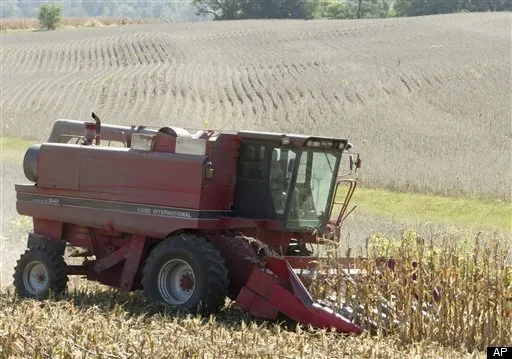
CHICAGO (By KT Arasu) - U.S. grain prices should stay unrelentingly high this year, according to a Reuters poll, the latest sign that the era of cheap food has come to an end.

U.S. corn, soybeans and wheat prices -- which surged by as much has 50 percent last year and hit their highest levels since mid-2008 -- will dip by at most 5 percent by the end of 2011, according to the poll of 16 analysts.

The forecasts suggest no quick relief for nations bedeviled by record high food costs that have stoked civil unrest. It means any extreme weather event in a grains-producing part of the world could send prices soaring further.

The expectations may also strengthen importers' resolve to build bigger inventories after a year in which stocks of corn and soybeans in the United States -- the world's top exporter -- dwindled to their lowest level in decades.

While grain prices remain below the historic highs of 2008, they could remain stronger for longer this year as intense competition among crops for land use and depleted grain bins make it an even greater challenge to restore equilibrium.

"Even if we have a good year, we are not going to have the inventories we've seen before. I really do think the time of cheap food prices is over, and that's just it," said analyst Chris Mann of Traders Group Inc in Chicago.

"Everything is set to the point where supply equals demand right now. But if you pull one thing out of it, or if you disrupt the equation in some little way or tweak it, I think, with inventories as tight as they are, it will really have an impact on prices. A drought, a flood, anything," said Mann.

A series of shocks brought the grains market to the brink last year.

A summer drought in Russia led to a suspension of grain exports, rains in Australia downgraded the quality of its wheat crop, and a lack of rain cut Argentine corn output. China bought near-record volumes of U.S. corn, and demand for corn-based ethanol surged.

Now prices must remain high to encourage U.S. farmers to plant more corn and soybeans in the spring, and traders will be on tenterhooks to see whether crops in the U.S. are enough to correct the deficit in inventories.

POLL POINTS TO HIGH PRICES

The average forecast of 16 grain analysts showed that Chicago Board of Trade corn futures will end this year at $5.96 per bushel, down eight percent from Thursday's close of $6.50-3/4 and down five percent from the end of 2010.

Corn futures posted the best gains among grains and oilseeds last year, surging 52 percent as U.S. stockpiles fell to the lowest in 15 years in the wake of strong demand from the ethanol industry and steady exports after the Russian drought.

Wheat futures were forecast at an average $7.93 per bushel, down 6 percent from Thursday's close of $8.46-1/4 and virtually unchanged from the end of 2010. Wheat futures surged 47 percent last year amid the crop damage.

Soybean futures were forecast at an average of $13.20 per bushel, down 6 percent from Thursday's close and down 5 percent from the 2010 close. Soybean futures rose 34 percent last year for the second straight year of increases.

Prices for corn and soybeans topped out at 2-1/2 year highs last week, while wheat hit a 29-month high on Thursday.

WORLD WANTS MORE GRAINS

Another year of high grain prices could exacerbate the problem of food price inflation.

Surging food prices have taken center stage with policy makers, especially in commodities-dependent nations like China and India -- home to one-third of the world's population. Both countries have raised interest rates in a bid to rein in inflation.

Some analysts believe monetary tightening could reduce demand for commodities as the cost of capital rises, but others say importing countries, especially China and India, need to keep buying for consumption and reserves.

"As food inflation becomes a bigger issue in the lesser-developed countries, the global pipeline for food commodities is expanding. The world wants to own a little more inventory," said grains analyst Terry Roggensack of The Hightower Report in Chicago.

For North African countries like Algeria, the rush to import grains, particularly in the past two weeks, has been fueled by concerns about how to reduce populist anger over rising food costs that has led to riots.

With the stepped-up demand from North Africa and the Middle East whittling away at global wheat stocks, there is no room for error with the winter wheat crop in the United States that was planted last fall and will be harvested in the summer. the same goes for the wheat crops in China -- the world's largest grower.

"We are not in a good situation going into February and March in China and in the U.S., so wheat is on the verge of a real scare," Roggensack said.

(Additional reporting by Julie Ingwersen, Michael Hirtzer and Mark Weinraub; Editing by David Gregorio)

Copyright 2010 Thomson Reuters. Click for Restrictions.

FOLLOW HUFFPOST BUSINESS
Subscribe to the HuffPost Money newsletter!
Filed by Nicole Hardesty  | 
 
 
  • Comments
  • 283
  • Pending Comments
  • 0
  • View FAQ
Comments are closed for this entry
View All
Favorites
Recency  | 
Popularity
Page: 1 2 3 4 5  Next ›  Last »  (6 total)
This user has chosen to opt out of the Badges program
photo
09:13 AM on 02/12/2011
Using grain for fuel instead of food is a factor to our current food problem.

http://www.thetrumpet.com/?q=7960.6578.0.0
02:37 PM on 03/29/2011
Jon, I think your right. But, it is one of several problems (weather patterns, for example) coming together that make food issues unnerving.
We are trapped in the ethanol business. What makes it worse is that we subsidize the growing of corn and subsidize the manufacture of ethanol. Our great benefit from it all is higher food prices. One in four or five bushels of corn is used now for ethanol production, a process that uses more energy than the ethanol produces. But, there isn’t a politician in the history of the nation would dare go to Iowa, in primary time, and suggest that ethanol is a bad idea or even raise serious questions about it. Even if a person is a strong advocate of ethanol, they should be concerned about raising food to feed cars with prices rising. We’re stuck with it until a disaster, like another bad weather year in Russia, and there is no other choice. Then ethanol will get attention.
HUFFPOST SUPER USER
DinNM
I'm 57 and I do as I damn well please!
05:19 PM on 01/31/2011
Oh goody!!!! Now I can start my New Year's diet with the help of FORCED STARVATION. Thank you, you greedy sons of bitches and corporate farming PIGS!!!! Just ONE MORE area of my life that you have f***ed up for me with your uncontrolled GREED!!!!!!!

And, yes, we DO need to control population growth. Tell that to Octomom and the Duggars!!!!!
photo
Inkosi
The gods themselves rage against stupidity
10:20 AM on 02/01/2011
F&F - LOL! Well said.
03:52 PM on 01/31/2011
You mean food is cheap now?? Milk at almost $4 per gallon? Bread at $3 per loaf?

We have to curtail our natural population, as well as keep pop numbers at a sustainable rate for our natural resources. You hear very little talk about this these days but it will be front page news a few years down the road. And having enough food will take a backseat - to having enough water.
12:38 PM on 01/31/2011
Time to cut back on population.
photo
HUFFPOST SUPER USER
MG Metiva
For Great Justice, I shall post.
01:43 PM on 01/31/2011
In the rioting third world especially.
photo
Inkosi
The gods themselves rage against stupidity
10:21 AM on 02/01/2011
Note to self - get those guns now while you can - you will need them when the rioting begins!
photo
Dahveed1
I have Flying Monkeys...
10:23 PM on 01/30/2011
I hope this is good news for US farmers. We need to keep those people in business. I don't like the idea of relying on other countries for our food. Its bad enough we have to do it for energy.
photo
HUFFPOST SUPER USER
muck-raker
give me liberty or give me death
07:07 PM on 01/30/2011
Much of the high prices for FOOD are the result of hedge funds manipulating prices plus bad weather....Cotton has doubled, Coffee up 49%, Chocolate up 30%, Soybeans outta siight. many countries like Saudi,China, India are buying(WHEAT) a year supplly fearing FAMINE

http://www.theglobeandmail.com/report-on-business/soaring-global-food-prices-spark-fears-of-social-unrest/article1859417/
09:41 PM on 01/30/2011
Your link doesn't back up your statement of hedge fund manipulation. I don't beleive that any single player, ie hedge fund could force a commodity up 30 to 50% for an extended period of time. There are a lot of people who would just take the opposite side of their trade and hold on until the fund runs out of margin money and they would be forced to sell. You have to understand there are commercial traders who actually do buy and process the raw commodity who have a lot of first hand knowledge about what is really happening in any individual market. They have deep pockets too. Blaming speculators for the rise in price is just a cop out for those who don't understand what really is happening in the ag markets. Sure, there are times when markets go too far based on hysteria, but it works both when the market goes up too much and when it goes down to much too.

Your link did a pretty good job of describing the production problems in the world. Now it is the markets job to allocate who is going to get the limited supply of grains around the world and at the same time give the producers a signal of how much to grow for the next year. High prices will cure high prices as long as mother nature doesn't screw things up to much.
This user has chosen to opt out of the Badges program
photo
02:31 PM on 01/31/2011
To be a super user you sure missed the boat on your link as far as hedge fund being responsible for food price increases. Hedge funds manipulating is not even close to being the cause of increases in the article. I wonder why your 2269 fans follow you if you are this sloppy.

Did you even read it?
photo
HUFFPOST SUPER USER
muck-raker
give me liberty or give me death
04:17 PM on 01/31/2011
too many links, got mixed up this one above goes to another story in Canada..so sorry
HUFFPOST SUPER USER
kenhamlett
06:39 PM on 01/30/2011
The era of cheap food actually ended some time ago. It has just taken the government and the media a bit more time than the rest of us who have to live on a budget to discover this. Food prices were at all time highs in December. Since then, the price of oil/gas have continued to rise, which will take them even higher. Now comes this news about grain prices -- same result. I watched a documentary short this morning on TCM which detailed the story of a physician (Goldberger) who in the early part of the last century discovered, diagnosed and developed a way to treat pellagra, a disease associated with diet deficiencies associated most commonly with the lack of necessary nutrition in the diets of those who lived in the south. As I watched it, I remember thinking to myself that this same type of condition could rear its head again as our economic crisis continues, food prices increase dramatically, and families lose their ability to afford to buy the products they need for a healthy diet. For the past hundred years or so, we have consigned these types of problems to countries in the third world. We need to pay attention to what can happen and is happening right here.
photo
HUFFPOST SUPER USER
MikeLawson
Still to the Left, still Right for it
03:14 PM on 01/30/2011
Cheap food? What cheap food?
photo
HUFFPOST SUPER USER
muck-raker
give me liberty or give me death
07:01 PM on 01/30/2011
Brazil makes their ethanol from SUGAR CANE which works well and is beneficial. Corn grown in the USA for ethanol only makes the farmers rich.

Noam Chomsky "Starving the Poor" http://www.chomsky.info/articles/20070515.htm
02:49 PM on 01/30/2011
If you can't afford a box of Cheerios ($4 for less than 16 oz.), buy organic millet and cook it yourself. It is only about $1.20 a pound and is probably healthier for you. Other cereals to check out: quinoa, amaranth and buckwheat groats, all organic and less than $4 a pound at many health food stores, even Whole Foods. Eat healthier and save money at the same time.
photo
HUFFPOST SUPER USER
MikeLawson
Still to the Left, still Right for it
03:15 PM on 01/30/2011
We buy the Malto-Meal bags of cereal. Much cheaper, same exact taste, and with five kids in the house to feed, much easier on my budget.
10:07 PM on 01/30/2011
Nothing against organic but I wonder how much of the organic food is imported from China. Does it say country of origin on it? I am not a big fan of the Chinese food production system.
This user has chosen to opt out of the Badges program
ErnestineBass
No longer a cog in The Machine.
11:12 AM on 01/31/2011
Take some personal responsibility and read the label.

That's right..."NANNY GUBBMINT" passed a law that requires the country of origin be printed on food labels.
02:44 PM on 01/30/2011
What effect is the diversion of corn to make ethanol having on US food prices?
photo
HUFFPOST SUPER USER
MikeLawson
Still to the Left, still Right for it
03:17 PM on 01/30/2011
None to speak of, because there is so little ethanol used compared to food-quality grain grown. They don't grow the same breed grain for feed or ethanol that they use for human consumption, as it was explained to me.
04:28 PM on 01/30/2011
"biofuels only represent 1.5 percent of worldwide grain and oilseed use"

Here is some research that occured after the last round of increased corn prices occured in 2008. There is a lot of misinformation out there on this subject.

http://domesticfuel.com/category/food-prices/
photo
HUFFPOST SUPER USER
muck-raker
give me liberty or give me death
06:49 PM on 01/30/2011
thanx for posting your link, I have started researching corn and the effect ethanol has on our prices...here is an interesting link but one must keep in mind that the hedge funds are manipulating our commodities now...look for my story on the MikeLawson thread

http://www.barchart.com/chart.php?sym=ZCN11&t=BAR&size=M&v=2&g=1&p=D&d=X&qb=1&style=technical
photo
George Hanshaw
There are none so blind as those who will not see.
12:26 PM on 01/30/2011
Rising fuel and commodity prices are only the harbingers of what is going to be a massive wave of inflation withing a couple of years. The bankers know it's coming. You are already seeing the effects of that knowledge in credit card interest rates.

http://money.cnn.com/2011/01/28/pf/credit_cards_interest_rates/index.htm?iid=HLMNot%20perfect%20credit%20=%2059%%20APR

Once the Japan sovereign debt crisis hits, the US will follow - and 20 year treasury notes will need to be refinanced at contemproary rates that will be above 10%. That will mean that the first $1.5 Trillion in taxes that US government makes will go to debt service alone, and attempts to cover this by pumping additional money into the system will be met with widespread inflation.

It's going to get ugly.
02:53 PM on 01/30/2011
People are going to have to become smarter shoppers or suffer the financial consequences. Many will tap into their savings to fund a lifestyle they really cannot afford any more and will suffer the consequences when they are older. Yes, it is going to get ugly.
photo
HUFFPOST SUPER USER
MikeLawson
Still to the Left, still Right for it
03:18 PM on 01/30/2011
This is why I got rid of all credit cards. Its cash or debit only now. Ever since I learned I could rent a car using a debit card from Budget when I go to LAX, etc. I decided credit cards were officially out along with the associated debt.
photo
HUFFPOST SUPER USER
muck-raker
give me liberty or give me death
10:38 AM on 01/30/2011
The Monsanto soldiers will be coming to your FARM next: Vilsack traveled in a Monsanto corporate jet on the campaign trail. The Organic Inc. CEOs are tired of activist pressure, boycotts, and petitions. Several of them have told me this to my face. They apparently believe that the battle against GMOs has been lost, and that it's time to reach for the consolation prize. The consolation prize they seek is a so-called "coexistence" between the biotech Behemoth and the organic community that will lull the public to sleep and greenwash the unpleasant fact that Monsanto's unlabeled and unregulated genetically engineered crops are now spreading their toxic genes on 1/3 of U.S. (and 1/10 of global) crop land.

WFM and most of the largest organic companies have deliberately separated themselves from anti-GMO efforts and cut off all funding to campaigns working to label or ban GMOs. The so-called Non-GMO Project, funded by Whole Foods and giant wholesaler United Natural Foods (UNFI) is basically a greenwashing effort (although the 100% organic companies involved in this project seem to be operating in good faith) to show that certified organic foods are basically free from GMOs (we already know this since GMOs are banned in organic production), while failing to focus on so-called "natural" foods, which constitute most of WFM and UNFI's sales and are routinely contaminated with GMOs.

http://www.organicconsumers.org/articles/article_22449.cfm
08:48 AM on 01/30/2011
I'd like to hear from anyone out there raising chickens for eggs in an urban setting, pros, cons, advice?
09:55 AM on 01/30/2011
Had a neighbor do it once. No complaints other than it was loud all the time.
photo
HUFFPOST SUPER USER
Queen Regnant
Marching to the beat of my own drummer
10:10 AM on 01/30/2011
If not for a city ordinance banning chickens in the yard, I'd be trying it.
photo
TRichards
Republicans can't distinguish fact from wish.
02:46 AM on 01/30/2011
Food is cheap?! Who knew?
11:53 PM on 01/29/2011
If the government would get speculators out of our food supply this wouldn't be an issue.
This user has chosen to opt out of the Badges program
photo
05:41 AM on 01/30/2011
That's what commodities are and always have been.
08:07 AM on 01/30/2011
But commodities markets have never had banksters with access to so much zero interest money. When you give the banksters free money, it becomes incredibly easy to speculate on the paper behind the commodity - and that drives the prices up.

Feeding frenzy specualtion creates a bubble which irrationally drives the price through the roof. Then ordinary users can no longer buy the commodity.

It has started to happen to the world wheat market already - driving the price of wheat above what must Egyptians can pay. Now that Egyptians can no longer afford to buy bread, they are rioting. Food prices is a central issue in what is happening there right now.

The banksters should not be able to drive the price of wheat through the roof like they did with real estate and internet stocks. Didnt we learn anything from the last Wall St crisis? Now they are inflating prices on a commodity that will cause rioting and revolution, not just home fore-closures in wealthy countries.
photo
HUFFPOST SUPER USER
muck-raker
give me liberty or give me death
09:59 AM on 01/30/2011
Shawn F&F: Food hoarding by governments keen to keep prices low is pushing prices higher
Food hoarding by governments keen to keep grocery bills low – and stave off political discontent – could end up pushing food prices much higher, economists warn.

Attempts by countries to restrict exports of food staples at times of high prices also drive prices higher
Recent weeks have seen a series of governments buy staple crops such as wheat and rice in bulk on the market to build up a buffer of supplies against future price rises.

Attempts by countries to restrict exports of food staples at times of high prices also drive prices higher and can deepen a food crisis the United Nations said this week.

The body's Food and Agriculture Organisation (FAO) warned that governments' clumsy efforts to manipulate market in 2008 only made that year's food price crisis worse.

Richard China, director of FAO's policy and programme development support division, said, "The experience of 2007-2008 food crisis shows that in some cases, hastily taken decisions by governments to mitigate impact of the crisis, have actually contributed to or exacerbated crisis and aggravated its impact on food insecurity."

The UN particularly warned countries from restricting food exports as prices rose this year.

He said: "FAO strongly advises against such measures, as they often provoke more uncertainty and disruption on world markets and drive prices up further globally, while depressing prices domestically and hence curtailing incentives to produce more food."