

iPhone app iPad app Android phone app Android tablet app More

Hormones In Food: Should You Worry?

Hormones In Food

First Posted: 01/31/11 08:11 AM ET Updated: 05/25/11 07:30 PM ET

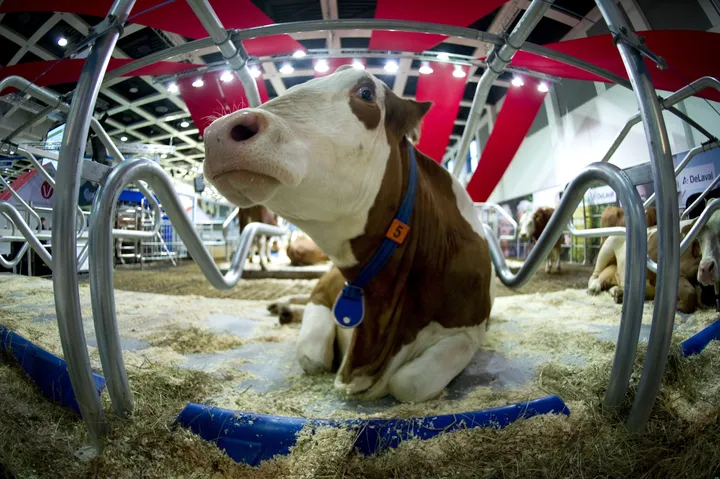
A salmon that grows to market size twice as fast as normal. Dairy cows that produce 15 percent more milk. Beef cows that grow 20 percent faster.

What do these hyper-productive animals have in common? Thanks to injections and implants (in the case of cows) or genetic engineering (in the case of salmon), they contain artificially high levels of sex or growth hormones.

Are these hormones dangerous to the humans who eat the food or drink the milk? The food industry says no -- and the Food and Drug Administration (FDA) agrees, at least when it comes to cows.

The FDA, which regulates the use of hormones in livestock, hasn't yet decided whether it will approve the sale of a genetically engineered salmon patented by the biotech company AquaBounty. If the salmon -- which is wired to produce growth hormone year-round, instead of just in the spring and summer -- gets an OK from the agency, it will be the first genetically engineered animal to wind up on your dinner plate. (Genetically engineered fruits and vegetables have been around for years.)

The FDA's stamp of approval isn't likely to reassure those who worry that excess hormones in the food supply are contributing to cancer, early puberty in girls, and other health problems in humans. For years, consumer advocates and public health experts have fought to limit the use of hormones in cows, and some support a ban on the practice similar to the one in place in Europe, where food regulations are generally more stringent than in the U.S.

But it's not clear if such hormones truly are bad for our health. Surprisingly little research has been done on the health effects of these hormones in humans, in part because it's difficult to separate the effects of added hormones from the mixture of natural hormones, proteins, and other components found in milk and meat. Buying organic may reassure shoppers, but there's little proof these products are indeed safer.

More From Health.com:
9 Food Additives That May Affect ADHD
4 Things That Mess With Your Hormones
Scary Reasons to Buy Organic Milk

Growth Hormones
In 1993, the FDA approved recombinant bovine growth hormone (rBGH), a synthetic cow hormone that spurs milk production when injected into dairy cows, and consumer groups have been concerned about it ever since. The manipulation of growth hormone in the AquaBounty salmon has sparked similar concerns.

By itself, rBGH has no discernible effect in humans and is of little concern to your health, and the growth hormone in AquaBounty's salmon is expected to be inconsequential to your health as well. The actual fear is that manipulating growth hormones in cows -- or salmon -- may increase another hormone, insulin-like growth factor (IGF), which could mimic the effects of human growth hormone in harmful ways. In fact, research has found that milk from rBGH-treated cows contains up to 10 times more IGF than other milk.

Higher blood levels of IGF (regardless of what causes them) have been associated with an increased risk of breast, prostate, and other cancers in humans. In a 2004 study, patients with above-average IGF levels had nearly a 50 percent higher risk of prostate cancer and a 65 percent higher risk of hormone-dependent premenopausal breast cancer than people with below-average levels.

Many factors -- including genes, smoking, and fat intake -- contribute to these cancers, but "it's very likely that at least part of that [risk] is related to IGF levels," especially where prostate cancer is concerned, says Walter Willett, M.D., chairman of the department of nutrition at the Harvard School of Public Health, in Boston.

While consuming lots of milk and other dairy has been shown to raise blood levels of human IGF, the increase is probably not a direct effect of the animal's IGF level or the IGF found in these foods. That's because the amount of IGF in dairy products -- whether or not it's from rBGH-treated cows -- pales in comparison to what is naturally in your body.

"Just [to get] the amount of IGF secreted in your saliva and digestive tract in a day, you'd have to drink about 95 quarts of milk," says Terry Etherton, Ph.D., a professor of dairy and animal science at Pennsylvania State University and the author of a blog about food biotechnology.

And you'd have to eat at least 170 three-ounce servings of genetically modified salmon. (The IGF levels in the AquaBounty salmon and regular salmon are comparable, although consumer advocates say the studies that determined this are too small to be reliable.)

So if the amount of IGF in milk is negligible, how does milk consumption increase our IGF levels? Milk in general -- and the proteins, sugar, minerals, and non-IGF hormones it contains -- may somehow cause the human body to make more of its own IGF, Dr. Willett says.

Sex Hormones and Early Puberty
IGF isn't the only hormone found in the food supply. Ranchers have been fattening up cattle with sex hormones -- most notably estrogen -- since the 1950s. Today most beef cows in the U.S. -- except those labeled "organic" -- receive an implant in their ear that delivers a hormone, usually a form of estrogen (estradiol) in some combination with five other hormones. (These hormones are not given to chicken and pigs because they don't have the same growth-promoting effect in these animals, although antibiotics are given to all three species for similar growth-promoting reasons.)

One concern is that such hormones may spur earlier puberty in children, who are, on average, entering puberty at a younger age than they did a generation or two ago, for reasons that are unclear.

But Ann Macrina, Ph.D., a researcher in the Department of Dairy and Animal Science at Pennsylvania State University, says that the amount of estrogen found in meat is vanishingly small compared to the level in our bodies. A three-ounce serving of beef from an estrogen-treated cow contains less than a billionth of a gram of estrogen, a level around 400,000 times lower than estrogen in women and nearly 100,000 times lower than that in men.

However, even miniscule amounts of estrogen could affect prepubescent girls and boys, says Dr. Willett. "[For] a girl who's not producing hormones herself, they could be quite substantial."

A 2009 study found that children who consumed the most protein from animal sources entered puberty about seven months earlier than those who consumed the least. "It doesn't matter so much if it's milk, cheese, or meat -- all these animal proteins have a clear impact on [our] IGF system," says Thomas Remer, Ph.D., one of the authors of the study and a professor at the Research Institute of Child Nutrition, in Germany.

Still, hormones added to the food supply are probably not the biggest culprit behind early puberty. It's more likely that meat, milk, and similar foods help trigger earlier puberty because they are rich in protein, calories, and nutrients, says Marcia Herman-Giddens, an adjunct professor at the University of North Carolina School of Public Health, in Chapel Hill, and the lead author of an influential 1997 study on early puberty in girls.

However, Herman-Giddens cautions that more research is needed to untangle the many factors involved. For instance, she says, rising rates of overweight and obesity -- and the processed foods, high-calorie drinks, and lack of exercise driving them -- are "probably the biggest reason" for the trend toward earlier puberty. (Fat cells stimulate the body to produce estrogen.) Pesticides, flame-retardants, plastics, and other chemicals in the environment that can disrupt hormones may also be partly to blame.

Organic Or Not?
Organic beef and dairy products certified by the U.S. Department of Agriculture (USDA) come with the guarantee that the cows were not treated with rBGH or sex hormones. They also come with a much heftier price. Is the peace of mind worth the extra cash?

Probably not, says Dr. Willett, who advocates cutting back on meat in general. Most people should eat no more than two servings of red meat per week, Dr. Willett says, and "if you're [only] having a couple of servings a week, it doesn't make much difference whether it's organic or not."

Dr. Willett offers similar advice regarding organic dairy. On the other hand, experts like Herman-Giddens urge consumers to stay away from rBGH-treated milk because of its potentially higher IGF levels, and the fact that it does not have any added health benefits over regular milk. Instead of switching to organic milk, Dr. Willett recommends cutting back on dairy altogether, despite USDA recommendations that call for three servings a day of dairy.

Bruce Chassy, Ph.D., a professor of food microbiology at the University of Illinois at Urbana-Champaign, says "propaganda" from organic farming groups has created misconceptions about -- and resistance to -- rBGH among consumers. In fact, Chassy argues that manipulating growth hormones has benefits: rBGH-treated cows are better for the environment, not just the bottom line, since farmers can get the same amount of milk with fewer cows. Similarly, the AquaBounty salmon consumes 10 percent less feed during its lifecycle than a regular farmed salmon.

The most lasting effect of the fears surrounding hormones in the food supply may be the value of "organic" or "hormone free" as selling points, Chassy says.

"I think there are a lot of farms that are not using [rBGH] because they perceive that consumers do not want [rBGH]-treated milk," he says. He predicts that the AquaBounty salmon will likely inspire "marketing campaigns for 'hormone-free' fish." It's a ridiculous claim, he argues, since all fish -- and all meat and milk -- has hormones.

FOLLOW HUFFPOST HEALTH

A salmon that grows to market size twice as fast as normal. Dairy cows that produce 15 percent more milk. Beef cows that grow 20 percent faster. What do these hyper-productive animals have in commo...
Filed by XXXXSandra BrovallXXXX  | 
 
 
  • Comments
  • 121
  • Pending Comments
  • 0
  • View FAQ
Comments are closed for this entry
View All
Favorites
Recency  | 
Popularity
Page: 1 2 3 4  Next ›  Last »  (4 total)
11:13 AM on 03/27/2011
Facts on food are created by the so called "experts" who are misinformed, brainwashed, or bought off by corporate America, namely the food and drug companies. As a six foot 175lb. sixty-five year old Iowa farm boy who has never been on medication I give you "common sense. Compared to today's mega farm animals some of which never see sunshine, our 50s and 60s farm animals all had names. Ole Blue our milk cow walked for miles everyday on 20 acres in search of that "perfect blade" of grass...We drank clean raw milk. That would be what you call "natural"..Rufus our hog would roam anywhere the fences could contain him rooting for roots and earthworms, just to name a few. That would be "organic".. Our cattle would roam the pastures eight months out of the year knee deep in grasses and legumes. Also natural.
Modern day pasteurized cows milk has little or no nutritional value. The calcium it contains is more than offset by it's very acidic nature...America has the highest per capita consumption of milk and also the highest rate of osteoporosis ? What does common sense tell you ??
Today the barn, the fences, and the windmill are all gone and in their place is a sterile GM cornfield, subsidised with your taxes, producing subsidised ethanol and HFCS Eat all the fast food you can from your local grocery store or farmers market in the form of raw fruits and vegetables.
photo
HUFFPOST SUPER USER
SuperMom101
What's on your plate?
07:55 AM on 04/01/2011
So true! For me, I had no idea what a hormone receptive tumor was until I had breast cancer at age 38. Now...no dairy for me ever! (Besides organic eggs and very, very limited amounts of "hormone free meat" that includes pigs and chickens!

This piece from a Harvard Public Health rsearcher speaks volumes about today's "modern" milk and she didn't base her studies on
photo
HUFFPOST SUPER USER
SuperMom101
What's on your plate?
08:06 AM on 04/01/2011
Oops! Can't seem to get it right this AM...

Thanks for your post!

So true about these factory farms and our health. I had no idea what a hormone receptive tumor was until I experienced breast cancer at the age of 38. Check out this article from a Harvard Public Health researcher on "modern" milk. And...she's not even talkin' about the cow's with recombinant bovine growth hormone (rBGH), a synthetic cow hormone. (For over ten years now...no more dairy for me!)

http://harvardmagazine.com/2007/05/modern-milk.html

Common sense is not so common. - Voltaire
InYourWorld
Progressive, educated, redneck but fan of no party
03:24 PM on 02/02/2011
More importantly:

How do you make a Hormone?

Don't Pay her!
HUFFPOST SUPER USER
anti politricks
better to light 1 candle than curse darkness
04:46 PM on 02/10/2011
ROTFL
12:02 PM on 02/02/2011
Most obvious to me is that the use of rBGH in cows to increase lactation has coincided with the rise of breast cancer rates (in humans in the US) toward epidemic levels. But, have you tried to find products that are guaranteed free of it? I avoid dairy to avoid the hormones. And I worry about the kids in the family, who need the calcium intake, who have no choice.
10:51 PM on 02/02/2011
Read the last sentence in the article. You can't avoid hormones if you eat meat or use dairy products. All milk and meat and salmon has hormones.

If you buy milk from an organic dairy that has their cows calve in the spring, that milk will have far more BGH than regular store milk because cows normally have much higher levels of BGH in their milk right after thy have their babies.
photo
HUFFPOST SUPER USER
cwebster
predominantly exasperated
02:05 AM on 02/03/2011
We are talking about rBGh, not BGH.
photo
HUFFPOST SUPER USER
cwebster
predominantly exasperated
01:49 AM on 02/03/2011
If you live in Oregon, I think Tillamook uses hormone free milk.
photo
HUFFPOST SUPER USER
stape45
It IS what it IS!
11:16 AM on 02/02/2011
We, the consumers, are the ones who (over-) pay for the products being sold us. So, we should have a major voice as to the content of that product. Bottom line: There is no way to maximize profits without biting the hand that feeds you.
HUFFPOST SUPER USER
alteredstory
Hold on to the center
11:00 AM on 02/02/2011
Ok, you want credibility? STOP MIXING TOPICS.

Hormone injections are in no way anything CLOSE to the same thing as genetic engineering, and the fact that you would mix them so casually in the same article reveals either an ignorance that makes me wonder about your degree, or an agenda that transcends your interest in accuracy, which immediately calls into question everything you're saying.

Seriously - it's like you're TRYING to mislead people, and that's dangerous. It's the same tactic used by cigarette companies and climate change deniers, and it's a pretty good indicator of how low you're willing to stoop.
photo
HUFFPOST SUPER USER
cwebster
predominantly exasperated
10:49 AM on 02/02/2011
I wouldn't trust this guy as far as I could throw him: he's unethical.
"Bruce Chassy, Ph.D., a professor of food microbiology at the University of Illinois at Urbana-Champaign, says "propaganda" from organic farming groups has created misconceptions about -- and resistance to -- rBGH among consumers. In fact, Chassy argues that manipulating growth hormones has benefits: rBGH-treated cows are better for the environment, not just the bottom line, since farmers can get the same amount of milk with fewer cows."

rBGH causes mastitis in cows. It is not necessary to make them suffer. That fact alone should be reason enough to deny it's use.
10:57 PM on 02/02/2011
rBGH does not cause mastitis. Humans get mastitis. Organic cows get mastitis.

Poor management of the cows causes mastitis.

I know because I was a dairyman and my milk had the lowest amount of white blood cells of all milk received by the milk plant for years. I gave the cows rBGH.
photo
HUFFPOST SUPER USER
cwebster
predominantly exasperated
11:52 PM on 02/02/2011
How nice of you. Regardless of your experience, it DOES cause mastitis in cows. That is why it was turned down for approval in Canada.
01:11 PM on 02/01/2011
Why does a little girl of 6 yrs. get breast or ovarian cancer? I suspect it is hormones and the addition of anti-biotics in animals raised for human consumption. But I also believe many other things are poisoning us and/or making us ill, chemical additives, toxic chemicals in our drinking water, the list goes on and on and if one of these things doesn't get you, eventually another will. What is certain is that our lives are temporary. No one gets out of here alive.
09:07 AM on 02/01/2011
There are hormones in your water.
HUFFPOST SUPER USER
anti politricks
better to light 1 candle than curse darkness
04:48 PM on 02/10/2011
billy j,....is there in a safe source of wateR?
bottled is poisoned.
so it tap.
i'm genuinely searching for cleannnnn water
HUFFPOST SUPER USER
Red Herring
Retired Miner, living in third world
08:48 AM on 02/01/2011
You are what you eat. If you eat a cow that has been given growth hormones to make it fat and produce more milk then don't be surprised if the meat you eat makes you fat.
If the sole reason for injecting these animals with chemicals to make them grow both faster and bigger, then if you consume these animals you will get bigger, and fatter faster.

America did not have an obesity problem before GM foods found their way onto the supermarket shelves. But it certainly does now. Of course this writer has no interest in exploring a connection between GM foods and the epidemic of obesity in the USA.
01:19 PM on 02/01/2011
I agree with you on that point, but also must add that if you look at the gazillion calorie burgers and fast foods plus the rich buttery meals, greasy fried, calorie laden snack food and the populations penchant for consuming far more food than one needs to live. People snack on what should be a meal, even at bed time. There is more than one reason for the obesity problem in this country. This country now has the embarressing title of being the fattest country in the industrialized world.
11:00 PM on 02/02/2011
You are coming to a lot of conclusions without any facts to back them up.

GM foods cause obesity??? Yea right.
08:16 AM on 02/01/2011
If you want to visit a website that will actually give you a point of view on hormone or GMO infused foods that is not a shill for giant agribusiness, visit:

http://www.naturalnews.com
photo
HUFFPOST SUPER USER
thinkingwomanmillstone
great, green, globs of greasy grimey GOPerspeak.
08:44 AM on 02/01/2011
but are they a shill for the organic food promoters. Since organic has no standard of use and natural doesn't mean safe, everyone needs to stop promoting one side or the other and stop touting what's the real "truth". There is little ability to get the facts because both sides are prosyltizing nonstop. Cage free means nothing, free range means nothing, hormone free means nothing, natural means nothing. Most people have no access to small family farms....and even the small family farms aren't necessarily safe. No one knows what chemicals were used on the pastures years ago. No one knows what chemicals are leaching into the water supply upstream. Agribusiness is trying to sell something but so are the natural food and organic people....as a matter of fact, the big manufacturers all produce products that say organic or natural. BTW,cyanide is a natural organic compound. Use your brains as much as possible people, both sides have money to make.
photo
HUFFPOST SUPER USER
cwebster
predominantly exasperated
10:51 AM on 02/02/2011
Well, cage free and free range are not meaningless if you object to animal cruelty...
08:10 AM on 02/01/2011
The article is propaganda for agri- business. There's plenty of research on the negative health effects of eating this kind of manufactured food. It criminal what these companies have been allowed to do to the food supply. It's like a Frankenstein experiment.
HUFFPOST SUPER USER
Konnie
GOP = GOLDEN CALF OLD PARTY
08:09 AM on 02/01/2011
buy amish if you can.................find a local source for everything............still no guarantees...........
LARGE MONEY owns everything.
08:13 AM on 02/01/2011
And everyone that works within the confines of the District of Columbia, who swore an oath to uphold the Constitution, and are ostensibly Public Servants, namely the House of Representatives, the Senate, the Executive, and the Judiciary.
08:30 AM on 02/01/2011
Agreed, Konnie, and if anybody has the chance, see the movie: Food Inc.
It is an eye opener and should be seen by everybody who buys food.
08:06 AM on 02/01/2011
Grass fed organic milk!! Tastes so much better too.
This user has chosen to opt out of the Badges program
photo
07:08 AM on 02/01/2011
By Carina Storrs
Last Updated: January 19, 2011

Remarkably this was written by a woman. Guess her bank account just increased
08:10 AM on 02/01/2011
What an absolute farce. Coming soon from Carina, an article extolling the health benefits of G.M.O F.rankenfood, brought to you buy the folks who used to employ our "Food" Czar as a VP and Chief Lobbyist, that'd be M.onsanto.
07:05 AM on 02/01/2011
Fresh is best.