More

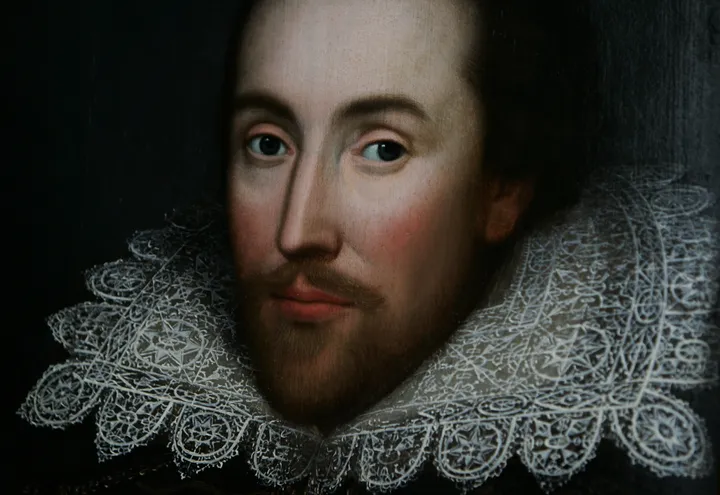
Argument For Copyright Protection Undermined By Half-Baked Metaphor About Shakespeare

Shakespeare

First Posted: 02/15/11 10:50 PM ET Updated: 05/25/11 07:30 PM ET

I missed this on Valentine's Day, but in that day's edition of the New York Times, Scott Turow, Paul Aiken, and James Shapiro published an op-ed weighing in on the debate over copyright law. Their argument is simple enough to explain: copyright is a "public policy success" that helped artists leverage market forces to create, but today, that's all "unraveling" because of the way the internet facilitates piracy through file-sharing and the like.

I've read arguments in favor of strong copyright protections and arguments that maintain that these laws are a dated and outmoded form of rent-seeking. I've formulated positions, thrown them out, reformulated positions, and backtracked. I'm a free agent in this debate. You can win me over. But these authors really fail to do so, because they wrap the nut of the argument within a confusing metaphor about playwriting and theatre, that is often a complete hash.

The piece is titled, "Would the Bard Have Survived the Web?" and because the authors wait seven paragraphs before cluing me in to the fact that they are making a defense of copyright law, I was prompted to believe that this piece might argue that Shakespeare today might have a hard time competing for cultural space against the myriad distractions that broadband has to offer. I'd agree with that.

But it's very awkward to use playwriting as your hook into an argument against the evils of piracy, because plays are hard to pirate, and you certainly can't use the internet to do so. There's no sub-rosa structure that allows for the copyrights of playwrights to be easily abused. To perform a play, one must find a space to produce it and in order to ensure commercial success, one must publicize it sufficiently, so that people show up. By this point, if you've attracted enough attention to stage your play, you've certainly attracted the attention of the people who protect the copyrights of playwrights. And trust me, they guard the rights of playwrights zealously. They will shut you down.

I'm not trying to be pedantic here. The authors are not just glancing over the life of Shakespeare to make us feel bad about piracy. They attempt to build this comparison entirely upon the practical realities of theatrical productions, and the article is replete with talk of moneyboxes and theatre buildings being built and moved and rebuilt. These, the authors claim, form something they call a "cultural paywall" that amount to some primitive pre-cursor to copyright that singlehandedly created Shakespeare's cultural impact. So, it's a problem that these authors don't seem to know much about the history or the business of theatre.

This whole "cultural paywalls" concept they introduce...it's just a mess:

By the time Shakespeare turned to writing, these "cultural paywalls" were abundant in London: workers holding moneyboxes (bearing the distinctive knobs found by the archaeologists) stood at the entrances of a growing number of outdoor playhouses, collecting a penny for admission.

At day's end, actors and theater owners smashed open the earthenware moneyboxes and divided the daily take. From those proceeds dramatists were paid to write new plays. For the first time ever, it was possible to earn a living writing for the public.

So the first "cultural paywall" is...paying for admission to a theatre? "Those who paid could enter and see the play; those who didn't, couldn't," say the authors, a little too breathlessly for a concept that hasn't exactly been lost after all these centuries. Their take on the matter also glosses over the fact that the money that Shakespeare and his crew, the Lord Chamberlain's Men, took in didn't go to pay "dramatists to write new plays," it went to the Lord Chamberlain's Men to produce their own plays. And the Lord Chamberlain's Men, as it happens, had the exclusive rights to produce Shakespeare's work. That was, in essence, a legally-enforced monopoly, subject to some degree of censorship from the Revels office.

So there was a "cultural paywall" in place. It's just that the authors don't really have a clue what it was.

They go on to assert that as a result of, uhm...people paying admission to see theatre, "Almost overnight, a wave of brilliant dramatists emerged, including Christopher Marlowe, Thomas Kyd, Ben Jonson and Shakespeare." That's not a very well informed picture of reality. Thomas Kyd lapsed into obscurity for centuries after his plays were originally produced. Marlowe's success as a playwright was limited as well. Had he been an "overnight success," he might not have had to earn a living as a spy for the crown, nor would he have been killed in the fashion that Charles Nicholl describes in his convincingly laid out case for the Marlowe-as-spy history, The Reckoning.

Regardless, Shakespeare was more popular, prolific, and beloved, and overshadowed these men during their time as contemporaries.

Eventually, the authors just sort of give up on the whole "payboxes are a cultural paywall," and instead start claiming the theatrical building that Shakespeare performed in was the "cultural paywall." It's a pretty strange concept, that isn't assisted when the authors declaim:

Its final end came in the mid-17th century, at the outset of a bloody civil war, when authorities ordered the walls pulled down. The regime wasn't motivated by ideals of open access or illusions of speeding progress. They simply wanted to silence the dramatists, who expressed a wide range of unsettling thoughts to paying audiences within.

Wasn't this a piece about internet piracy a few minutes ago? Now it's about the stifling of expression through heavy-handed state control. What are these guys even trying to argue anymore?

The piece does afford itself one last opportunity to say something exceedingly stupid. After the words of the playwrights have been silenced, by the authorities, here's what happened to playwriting, forever.

The experiment was over. Dramatists' ties to commerce were severed, and the greatest explosion of playwriting talent the modern world has ever seen ended. Just like that.

Wow. First, back when I was studying dramatic theory and criticism, there wasn't a single credible source I could name that would have called the mid-17th century the "modern world." Between 1935 and 1955 in America, there was an astounding explosion of playwriting talent that was the equal of any that came before. That period saw the first productions of Waiting for Lefty, Awake and Sing, The Time Of Your Life, Long Day's Journey Into Night, The Glass Menagerie, The Iceman Cometh, All My Sons, A Streetcar Named Desire, Death of a Salesman, The Crucible, and A View from the Bridge, to name a few. That's not too shabby! And contra the authors' assertion, playwrights continue to make money from their work to this day.

That whole last sentence, in other words, is complete balderdash. But it's beside the point. These authors want to counter the argument that "if we severely weaken copyright protections, innovation will truly flourish." If you want to counter that argument, you really don't want to be invoking Shakespeare at all. Shakespeare's works are in the public domain and are produced in hundreds of theatres around the world, where they are constantly being reinvented and given new cultural currency. The suggestion that the lack of adequate copyright protection is blunting the cultural impact of Shakespeare is just supremely daffy.

Next time these guys want to argue this point, I'd suggest they stick to what they know, and maybe not try to be so fancy.

[Would you like to follow me on Twitter? Because why not? Also, please send tips to tv@huffingtonpost.com -- learn more about our media monitoring project here.]

FOLLOW HUFFPOST MEDIA

I missed this on Valentine's Day, but in that day's edition of the New York Times, Scott Turow, Paul Aiken, and James Shapiro published an op-ed weighing in on the debate over copyright law. Their ar...
 
 
  • Comments
  • 62
  • Pending Comments
  • 0
  • View FAQ
Comments are closed for this entry
View All
Favorites
Recency  | 
Popularity
Page: 1 2 3  Next ›  Last »  (3 total)
07:11 PM on 02/16/2011
Jason: I enjoyed your thoughts on copyright laws. I recently watched an excellent DO Lectures talk given by Paula Le Dieu. I would recommend it to anyone, regardless of which side of the fence they sit. It certainly made me stop and think about several things for the first time. She did a good job laying out her case that we need to revisit the laws. Jim Melfi, founder, VideoTalks.org.
12:32 PM on 02/16/2011
If you file-share a movie of a public domain play, unless you made it yourself with all your friends, in somebody's barn (a reference that may be lost on some), then it's piracy.
11:55 AM on 02/16/2011
Regardless of the consistency of the logic throughout, the point of the op ed was well made. Commercial viability engenders artistic creation. If not for payment (and ignoring ego) why make the effort?
If Turow's books are free for download, who will buy them on Kindle? And if not for copyright, those play owners you mention would have to stand by and watch their plays stolen without having the ability to stop the productions.
09:07 AM on 02/16/2011
Thanks for this. Looking back, I wish I could have taken a picture of my face while reading the original op-ed; I could have used it for a "WTF?!" icon for the rest of my life. The authors not only managed to be utterly icoherent while lurching toward their point, they also did a great job completely misrepresenting the ways the Elizabethan players *did* protect their plays. What a mess of an editorial.
HUFFPOST SUPER USER
BennBell
08:25 AM on 02/16/2011
Good article, better than the one it criticizes.
photo
HUFFPOST SUPER USER
Spartan112
SPARTANS!? What is your profession?
08:25 AM on 02/16/2011
Oh, and in terms of how prolific playwriting was in England in the early 1600's, I would have to look back at my notes, but there was something like 2000 plays written in a 30 year span in that one city.
photo
HUFFPOST SUPER USER
Spartan112
SPARTANS!? What is your profession?
08:18 AM on 02/16/2011
I generally agree, but two notes:

-Stealing plays/ideas was commonplace in Shakespeare's time (not to mention that he himself stole numerous ideas from the Romans, who stole their ideas from the Greeks).

-Ben Jonson was considered superior to Shakespeare during his lifetime. Jonson was considered England's first Poet Laureate.
photo
HUFFPOST BLOGGER
Lev Raphael
Author of "Book Lust!"
08:36 AM on 02/16/2011
People today have no awareness that Johnson was long thought of as the superior playwright and poet, and that it took a long time for Shakespeare to become perceived as a genius. Go Green--Go White!
photo
raphaelbonee
The snake was right "the gods lie"
07:55 AM on 02/16/2011
"if we severely weaken copyright protections, innovation will truly flourish."

The argument is "freetrade" applied to artististic endeavors ... artist apparently aren't starving enough.
This user has chosen to opt out of the Badges program
photo
Earl
Praying for the evolution of the human species.
07:53 AM on 02/16/2011
Shakespeare did OK financially but today's Shakespeares are writing for Hollywood where they make a lot more money.
07:07 AM on 02/16/2011
real and not really (see first sentence)
07:07 AM on 02/16/2011
the argument isn't really about copyright as I see it. I imagine the really issue at the core of the on this ongoing debate is whether corporations own culture or do the people as a whole. If you argue corporations own our ideas then you are also arguing for limited acess (In terms of SES: Social Economic Status), limiting creativity (because as we know regardless of how great something is that we've imagined and created it is never perfect or complete). Look at your the evolution of the computer and how it has transform acess to most if not everyone.
06:53 AM on 02/16/2011
I imagine that all the greats such as Bard and Shakespeare would survive regardless of new copyright issues sans internet. These two writer and their great lit. transcends space and time. They are cultural icons and as such they are to be read, embellished, reimagined, recreated in every new era as another tool for people to try and make sense of the world around them.

Not meaning to be political but everything personal is truly political: I wish taking a course in Classical Literature is a prerequist for entering politics. I imagine we would have more qualify and imaginative electorals in office as we face the issue of the 21st century.

Peace
HUFFPOST SUPER USER
Guscat
07:19 AM on 02/16/2011
FYI, "Bard and Shakespeare" are one and the same.
photo
HUFFPOST SUPER USER
hagagaga
My comments are funnier than yours.
07:30 AM on 02/16/2011
"Bard and Shakespeare" makes me want to point and laugh at you.
photo
HUFFPOST SUPER USER
Spartan112
SPARTANS!? What is your profession?
08:19 AM on 02/16/2011
Maybe he's an Oxfordian?
06:33 AM on 02/16/2011
Jumping right over the question of whether Willie S. is relevant to discussion of copyright (because wtf?), let's consider the philosophical/judicial basis for the whole freaking idea of copyright.

Many people agree that innovative intellectual property (words, music, staging, flash mobs) has value, and that the creator of that intellectual property should receive some compensation when it is read, heard, smelled, or otherwise experienced. The idea is that while the "content", if successful, will be reproduced/re-enacted/replayed far beyond the personal scope of the creator, the creator should still get a cut.

It is worth remembering that the motivation for this theory of profit-sharing is to encourage creativity. It's not really about "fairness to artists"; it's about encouraging artists to create more stuff.

Ultimately, the main question about copyright is: "How long should it persist?" In recent years,we've gotten distracted by technical questions about enforcement and fair-use reproduction, but the fundamental question is still "How long?"

To me, the current concept of lifetime of the artist plus 70 years or however much more Disney can extort from the legislature is way beyond stupid. While it is true that a few major works have not been recognized until decades after their creation, the vast majority are fully accepted within ten years. I think copyright should extend for twenty or maybe thirty years. The idea is that creators should get reasonable compensation, not that they should block up the creative channel forever.
06:21 AM on 02/16/2011
Of course Shakespeare was pirated. During his lifetime, many of his plays were published as unauthorized quartos.
photo
HUFFPOST BLOGGER
Lev Raphael
Author of "Book Lust!"
08:27 AM on 02/16/2011
And his poetry was published without his permission.
04:37 AM on 02/16/2011
A Thief steals your car and it's gone in the morning.
A Pirate steals your mp3 and it's not gone in the morning.

I'm not a thief.
photo
HUFFPOST SUPER USER
Spartan112
SPARTANS!? What is your profession?
08:46 AM on 02/16/2011
And yet the creator of the mp3 has received no payment for services performed. Something has been stolen.