By Amy Biegelsen
The Center for Public Integrity
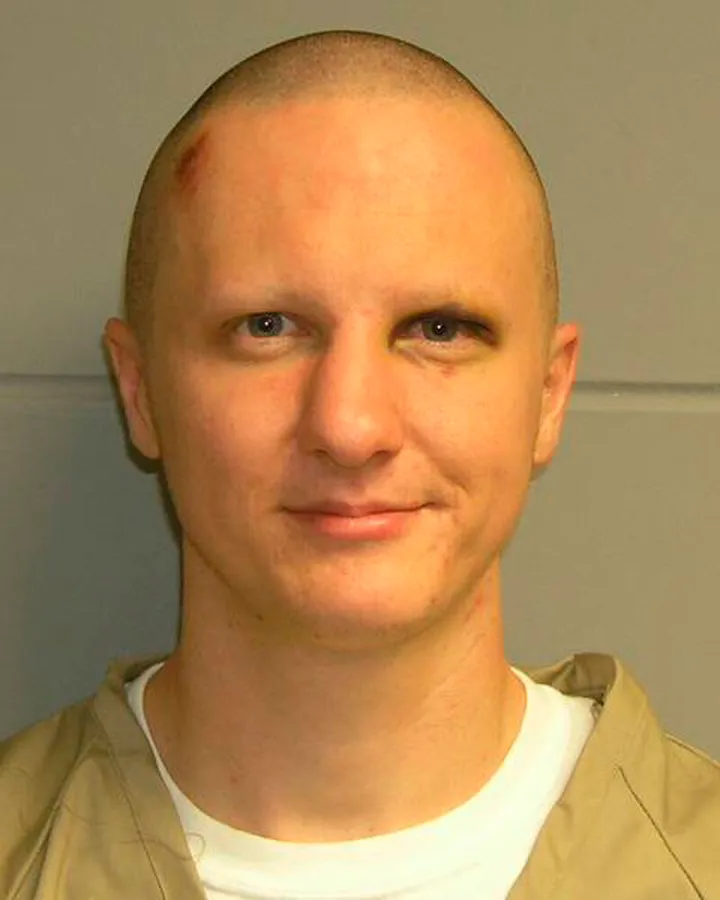
It's been two months now since Jared Lee Loughner opened fire outside a Tucson, Ariz. shopping center killing six people and wounding 14 more, and what's come to light since leaves more than a few troubling questions.
In the days following the shooting, it was revealed that authorities had barred Loughner from Pima Community College, where he attended classes, until he was certified as fit by a mental health professional. Loughner apparently never sought professional help, and the questions the community college had about Loughner's state of mind still resonate -- what was going on with this young man, and is there anything the local mental health infrastructure could have done to change the horrible outcome?
The nation's mental health infrastructure is not offering easy answers these days. Advocates say that in extreme cases like Loughner's, it's possible the public system may not have been able to do much to stop him. But mental health leaders are worried that soon, they may not be able to do much of anything at all.
Desperate to close historically cavernous budget gaps, states have cut $2.1 billion from their mental health budgets over the last three fiscal years according to a study from the National Association of State Mental Health Program Directors' Research Institute. More slashing is expected in the coming weeks as states finalize their 2012 spending plans,
Meanwhile a new study from the National Alliance on Mental Illness finds that between fiscal years 2009 and 2011, 16 states and the District of Columbia cut their mental health budgets by more than 10 percent.
But the fiscal reality may even be worse than those numbers make it appear. That's because up to now, federal stimulus money has cushioned the blow by pumping $103 billion into the states through Medicaid since early 2009. The money has been keeping state-run health insurance programs afloat for the last two years, but it will end this summer.
Meanwhile, growing demands for help show few signs of abating, say mental health authorities.
The same economic crunch that has put states in the red has forced struggling Americans out of jobs, homes and insurance plans, creating more demand for the shrinking pool of public services.
"The safety net," says Marylou Sudders, former Massachusetts commissioner for mental health, "is shredded."
BIG CUTS
According to the federal National Institute of Mental Health, while ailments like depression occur in about one in four adults, roughly 6 percent of the U.S. population has a serious mental illness like schizophrenia or bipolar disorder. That's nearly as many people as live in the New York metropolitan area, and it makes mental illness the leading cause of disability in the United States and Canada.
People with severe mental illnesses are more likely to have low incomes because their education was interrupted by the disease, says Elaine Alfano, deputy policy director for the Judge David L. Bazelon Center for Mental Health Law in Washington, D.C. Employers are often hesitant to hire them, and their unexplained behaviors can alienate friends and family. Their conditions can be expensive to treat, which puts a hefty burden on the government if they qualify for public support.
According to the state directors' survey, in fiscal 2010 and 2011 roughly half the states reported reducing the number of hospital beds in state run psychiatric hospitals. They've limited the amount of money they pass on to out-patient providers and cut staff everywhere. A third of states say they've had to reduce the number of people their programs serve.
Between 2009 and 2011, Kentucky made the largest cuts to its mental health spending with a 47.5 percent reduction, according to the National Alliance on Mental Illness. Alaska dropped spending by 35 percent. South Carolina, Arizona and Wisconsin all dropped by between 22 and 23 percent.
In the last two fiscal years Washington state cut 11 percent out of its mental health budget, dropping it to $278.5 million. The state's proposed 2011-2013 budget proposes cutting another $42 million. Of that, $17.4 million comes out of community-based mental health services. Last year, the state served 144,000 clients through its community mental health system. The cuts would reduce that number by 26,000 -- 18 percent fewer.
Scott Birdsong is the executive director of GUIDE Program, Inc., a nonprofit that offers mental health and other social services in Maryland, which cut its budget by $26.2 million between fiscal 2009 and 2011. In an effort to preserve programs, he says his staff has taken the financial hit.
"We're all in the boat of subsidizing programs as the budgets continue to melt down," he says. "In the last couple years our agency had to lay off about 20 percent of our workforce, 35 people, due to program closures or having to reduce personnel to make ends meet. Salaries have been frozen, fringe benefits reduced; executive staff have taken voluntary pay reductions up to 16 percent."
In Missouri, over the past five years the number of full-time Department of Mental Health employees has dropped from 9,231 to 7,874. Four hundred more positions are likely to be cut in 2012. Accompanying the decreased mental health staff is a drop in in-patient beds, from 1,558 to 1,315 in the past five years.
Between 2007 and 2009, California reported to the federal government that it served 130,000 fewer people through its state mental health agency -- a 20 percent drop.
Budget proposals in Texas would cut overall mental health money by $240 million, down to $2.07 billion, for the 2012-2013 budget cycle. That would mean a 20 percent hit for adult and children's services; projections indicate that, as a result, more than 3,500 of the 53,400 adults now receiving treatment at one of 39 state-funded community mental health centers would be turned away. The number of children served would drop from 13,400 children to 12,200 this fiscal year and 11,455 in each of the next two years.
In Massachusetts, next year's proposed budget pulls $2 million from child and adolescent mental health services, a reduction that is expected to affect 165 families; $3 million is slated to be cut from adult mental health services, impacting 2,000 adults, and $16.4 million worth of cuts would come from state psychiatric hospitals, closing 160 beds for those in need of hospitalization.
"Because we don't have the facilities, more and more people are ending up in homeless shelters or on the streets," says state Rep. Elizabeth A. Malia, who heads the Massachusetts legislature's Committee on Mental Health and Substance Abuse.
"Housing isn't available," she says, "Crisis counseling and decent medical care isn't there. Because of that, the number of people showing up in emergency rooms is at a crisis [level]. People can end up for days in an emergency ward because there is no room for them. We're seeing the [prison] budget grow exponentially because the number of mentally ill people who are incarcerated is high and growing."
MEDICAID
The situation will be exacerbated further as federal stimulus dollars dry up this this summer. Some analysts are using the term "cliff effect" to describe the budget situation states face as they pull together spending plans for the next fiscal year, beginning in most states July 1.
When the stimulus bill passed in February 2009, it included an $87 billion boost to the amount of money the federal government gave the states for Medicaid. In August 2010, Congress approved $16 billion in additional funds. As a condition of accepting the stimulus money, the federal government required states to keep everyone in Medicaid that was eligible before the crisis. Those eligible for Medicaid are mostly lower-income children and their parents; not all low-income adults are covered.
A majority of mental health services are financed by Medicaid. In fiscal 2010, Medicaid enrollment growth averaged 8.5 percent in the states, significantly higher than the 6.6 percent growth projected at the start of the year, according to a report from the Henry J. Kaiser Family Foundation . Meanwhile, 20 states cut program benefits in 2010, and 14 plan to in 2011.
Medicaid is funded jointly by the state and federal governments. It doesn't cover hospitalization, but states can choose to use it to fund other kinds of mental health services from therapy and prescription coverage to case management and skills training, even "peer programs" in which people who are recovered from a mental illness help those who are still in treatment cope.
But on June 30, that federal stimulus money that was pumped into Medicaid will run out. Most state legislatures are still in session, hashing out their budgets, so just how states will adjust Medicaid in terms of who's eligible and what services they can get is not yet clear. But it's unlikely that mental health will escape more of the the budget ax.
Some states are already floating proposals. Now that the stimulus money is running out, and the mandate to maintain previous coverage levels is ending, some states are trying to return to minimum allowable coverage levels. Arizona, for instance, has signalled its desire to cut 280,000 "childless adults" it opted to cover under Medicaid in the past out of the program.
If the new health care law passed by Congress last year is implemented as planned, the federal government will eventually come to Medicaid's rescue; everyone making less than a certain amount annually -- childless or not -- will be covered by Medicaid, as the result of a big planned boost in federal dollars. But that won't happen until 2014.
A MISMATCH IN SUPPLY AND DEMAND
In the meantime, though, state mental health budgets are shrinking while demand for their services climbs. The state directors' survey says that half of the states report an increase in demand for community-based services, a third report a spike in the need for crisis psychiatric services and 18 percent have seen more people showing up in their emergency rooms with mental health related issues over the past coule years.
The demand for mental health programs combined with the cuts has created a backlog for providers. As staffing levels get cut, social workers have seen their caseloads increase, often leaving patients on waiting lists sometimes for time-sensitive scenarios like medication adjustments.
Rick Cagan, executive director of the Kansas office of the National Alliance on Mental Illness, says waiting list for services at community mental health services there are running anywhere from four to eight weeks. "A lot can happen to people in four to eight weeks," he says. "Ultimately, some people may lose their lives over this," he says.
"The system, which was traditionally underfunded, is now clogged," adds Timothy O'Leary, deputy director of the Massachusetts Association for Mental Health, an agency that works with individuals and families to help them access services.
"There are people stuck in emergency rooms trying to get into private psychiatric facilities," he says, "and people from there who can't get into state facilities because people there are waiting for community placement."
In Virginia, 10 percent of the state's 1,300 state hospital beds are occupied by someone who was ready to be discharged, but there was no appropriate, less restrictive location -- like a family, nursing home or group home -- for them to move to.
In Detroit, Shereece Fleming-Freeman, a police commander who oversees the downtown entertainment district, sees a direct impact on public safety from mental health program reductions. Her officers have been trained to recognize someone having a public psychiatric episode and help get the person medical attention rather than lock them up.
"I'm forced to divert frontline officers to hospital waiting rooms," she says, where they can be tied up for a minimum of three hours waiting for emergency room intake, then assisting nurses stabilize the patient, rather than doing the public safety work they are trained for. Meanwihle, psychiatric patients increasingly vie for medical attention with incoming victims from car accidents, heart attacks and gunshot wounds. With the recent uptick in police-escorted psych cases, she says, average wait times for other patients has increased.
HISTORY'S BURDENS
For the last 50 years, public mental health care in the United States has been moving out of isolated, locked hospitals and into community programs. Psychiatric hospitals housed more than 550,000 people in 1955. Shifting federal budget priorities, a mental health rights movement and a new generation of drugs, like Prozac, dropped that number 87 percent by 1994, to just 71,619, according to research by Dr. E. Fuller Torrey, a psychiatric researcher.
But as hospitals emptied out, the funding didn't necessarily flow to those community programs; much of it simply disappeared. A recent study from the federal Substance Abuse and Mental Health Services Adminstration shows that when adjusted for changes in both population and medical inflation, the country spent $261.7 billion in 1955 and only $30.9 billion in 2006 for all mental health spending.
The outpatient programs that partly replaced hospitalization -- including drugs, counseling, case management and day programs -- are cheaper and more effective for maintaining mental health for all but the most serious cases, but their availability is patchy, says Steve Ronik, CEO of Henderson Mental Health Center in Fort Lauderdale, Fla.
"It costs something like $125,000 to keep somebody in a hospital for a year," he says. "For far less, we could treat that person. And treatment works. Eighty percent of people treated for depression get better. Compare that with treatment for heart disease, which has a 40 percent rate of success. But you've got to have the funding to do it."
All over the country, that sort of out-patient care, despite its relative cost-efficiency, is being cut. In Kansas, for instance, where the budget shortfall for 2012 hovers at nearly $500 million, it may cost $22 a day to serve a patient in a community setting versus $428 a day in a state mental hospital or $80 a day in a correctional facility.
The system is "fractured" and riddled with gaps, says Roger Munns, Iowa's Department of Human Services spokesman. "What services you get is basically dependent on where you live."
PUBLIC OPTIONS
The services may also depend on income levels; there are plenty of gaps there too, especially for people of modest incomes who don't have health insurance but aren't poor enough to qualify for Medicaid. Jared Loughner may well have fallen into that category.
The Pima County assessor's office values the Loughner family's Arizona home $105,107. Census data reportedly indicates that the median family income in the neighborhood is $65,000, well-above the federal poverty line for a family of three and far above the income levels that Medicaid covers. Furthermore, Loughner is 22-years-old, too old for Medicaid.
States have offered some stop-gap coverage for folks that fall into such gaps, but such programs have shrunk dramatically from state budgets. According to the Center on Budget Policy and Priorities, a left-leaning think-tank, in its fiscal 2011 budget, Arizona eliminated non-Medicaid mental health services for 4,000 children, and has also cut services for 14,500 seriously mentally ill individuals.
The Center reports that in Illinois and Ohio non-Medicaid services outside of hospitals will hardly be available at all.
Amnon Shoenfeld, director of King County's Mental Health, Chemical Abuse and Dependency Services Division in Washington state, says that hypothetically, if a student similar to Loughner lived in King County and had been diagnosed with a psychiatric condition for which he'd been referred to outpatient treatment, he or she would not be able to get those services. "Someone with serious symptoms, but not on Medicaid, is not able to get mental health treatment in our system," he says.
That leaves two ways those with mental illness who don't qualify for Medicaid can get coverage, says Mark Utterback, president and CEO of Mental Health America of Eastern Missouri.
"Jail time or hospitalization."
HOSPITALS
Medicaid doesn't typically pay for state hospitals, so that's one item that state-only funds must cover almost entirely.
According to the state directors' survey, so far 3,930 beds, or close to 10 percent of the nation's state psychiatric hospital capacity, could be cut between 2010 and 2012.
In Missouri, the number of psychiatric hospital beds has shrunk from 1,558 to 1,315 in the past five years. More than once during 2010, Kansas's Department of Social and Rehabilitation Services had to freeze voluntary admissions to state psychiatric hospitals.
Wisconsin is eyeing Winnebago Mental Health Institute, one of two state-owned psychiatric hospitals and the only remaining public child and adolescent unit in the state. That means that a child who has a psychotic episode in Bayfield, a community in the state's northern reaches, and requires hospitalization will need to ride more than five hours to the Mendota Mental Health Institute in Madison, WI. Those long rides are often in a police car.
In October 2010, Washington Gov. Chris Gregoire ordered an across-the-board cut of 6.3 percent for all departments to close a state budget gap related to the severe recession. The state cut about $7 million from Western State Hospital's budget, which resulted in the immediate closure of a 30-bed ward.
Ironically, the state budget cutbacks come on the heels of passage of a 2010 state law that will make it easier for other people to commit mentally ill individuals to state hospitals, which means demand for the dwindling supply of beds will likely become even more acute.
PRIVATE PLANS AND PUBLIC SAFETY
Even for those with private insurance, mental health coverage may not go very far. Traditionally, insurers have offered fewer benefits for mental health than medical services. According to a Feb. 3 article in Health Affairs, in both 2002 and 2005, just 4.4 percent of all health spending by private insurance went toward treatment of mental health conditions.
That's changing. The Mental Health Parity and Addiction Equity Act, which passed in 2008 and went into effect in February 2010, requires equal coverage. But while it will likely expand access for psychiatric medication and hospitalization, it's not clear how insurance companies and courts will interpret their obligations regarding certain mental health services for which there is no medical counterpart. The new requirements for the private exchange markets instituted by the new health care law will also impact what is mandated to be covered in ways that are not yet settled.
Meanwhile, the unsettling specter of what happened in Tucson leaves many worrying about when some similar crime might be committed by somone who could have been helped. Studies show that the mentally ill are more often victims than perpetrators. But the psychiatric researcher Dr. Torrey estimates that approximately 10 percent of the homicides in this country are committed by people with untreated, severe mental illnesses. According to a 2005 New England Journal of Medicine article, only about half of the people with serious mental illnesses receive treatment. Other studies suggest that mental illness and violence is most strongly linked to people who have addictions too.
January's Tucson rampage often comes up in conversations with mental health services providers. Loughner does not appear to have sought mental health care even after it became a requirement for his readmission to Pima Community College. These are the situations that worry folks like Jackie Lukitsch, executive director of the National Alliance for Mental Illness in St. Louis.
"The largest lack of access to care is among those who are not only uninsured, but who are also very, very ill, and wouldn't want mental health care if it was offered for free," Lukitsch said.
Getting that population into services is time intensive, and expensive. Outreach and engagement programs are among the most difficult to persuade lawmakers to fund.
"Let's assume the guy in Arizona was mentally ill, and that he killed those people. Let's say the family knew there was something wrong but he wasn't coming in for services," says Francie Broderick, outgoing executive director of Missouri's Places for People. "You send a team or one person out to engage him and become friends with him. He begins to trust them, and, if at some point they can see he needs medication, fine; they'll assess that, and whether or not he needs an involuntary hospitalization."
In an ideal system, that's what she thinks would have had to best shot at stopping Loughner.
"Once somebody has become problematic in school or the criminal justice system, the public system is going to have to serve them," the Bazelon Center's Alfano says, "but the early intervention and preventive approaches are much more difficult to fund." And becoming more difficult all the time.
Reporting for this story was contributed by the Midwest Center for Investigative Reporting, InvestigateWest, the Iowa Center for Public Affairs Journalism, the Florida Center for Investigative Reporting, St. Louis Beacon, California Watch, the New England Center for Investigative Reporting, Texas Watchdog, WyoFile and the Wisconsin Center for Investigative Journalism