iPhone app iPad app Android phone app Android tablet app More

Fukushima Explosion: Japan Nuclear Plant Rocked By Hydrogen Explosion (VIDEO)

Fukushima Explosion

AP/The Huffington Post   First Posted: 03/14/11 02:33 AM ET Updated: 05/25/11 07:40 PM ET

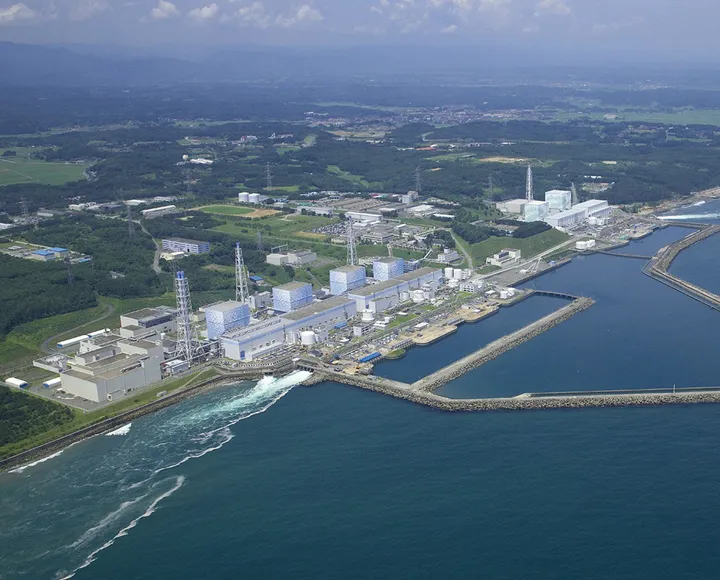
SOMA, Japan - The second hydrogen explosion in three days rocked Japan's stricken Fukushima Dai-ichi nuclear plant Monday, sending a massive column of smoke into the air and wounding 6 workers. The plant's operator said radiation levels at the reactor were still within legal limits.

(SCROLL DOWN FOR LIVE UPDATES)

The explosion at the plant's Unit 3, which authorities have been frantically trying to cool following a system failure in the wake of a massive earthquake and tsunami, triggered an order for hundreds of people to stay indoors, said Chief Cabinet Secretary Yukio Edano.

Tokyo Electric Power Co. said radiation levels at Unit 3 were 10.65 microsieverts, significantly under the 500 microsieverts at which a nuclear operator must file a report to the government.

The blast follows a similar explosion Saturday that took place at the plant's Unit 1, which injured four workers and caused mass-evacuations.

Japan's nuclear safety agency said 6 workers were injured in Monday's explosion but it was not immediately clear how, or whether they were exposed to radiation. They were all conscious, said the agency's Ryohei Shomi.

The reactor's inner containment vessel holding nuclear rods was intact, Edano said, allaying some fears of the risk to the environment and public. TV footage of the building housing the reactor appeared to show similar damage to Monday's blast, with outer walls shorn off, leaving only a skeletal frame.

More than 180,000 people have evacuated the area in recent days, and up to 160 may have been exposed to radiation.

Earlier Monday, pressure had jumped inside Unit 3, forcing the evacuation of 21 workers. But they returned to work after levels appeared to ease.

Associated Press journalists felt the explosion in the tsunami-devastated port town of Soma, some 25 miles (40 kilometers) north of the reactor. They reported feeling the faint rumble of a blast and the ground shaking.

Four nuclear plants in northeastern Japan have reported damage, but the danger was greatest at Fukushima's Dai-ichi plant. Operators have lost the ability to cool three reactors at Dai-ichi and three more at another nearby complex using usual procedures, after the quake knocked out power and the tsunami swamped backup generators.

Operators have been dumping seawater into units 1 and 3 in a last-ditch measure to cool the reactors. They were getting water into the other four reactors with cooling problems without resorting to corrosive sea water, which likely makes the reactors unusable.

Reuters reports:

The risk of radiation contamination from Japan's damaged nuclear power stations has sparked food bans across the globe and more surprisingly, a buying frenzy from South Korean mothers who fear their favorite Japanese-made diapers may suddenly become unavailable.

Cho Myung-jin, who organizes online group-buying for Japanese diapers, saw her website collapse on Tuesday under the weight of traffic as panicked South Koreans chased brands they believe are better quality than locally-made products.

Read more here.

Share this:

Reuters reports:

Supply chain disruptions in Japan have forced at least one global automaker to delay the launch of two new models and are forcing other industries to shutter plants and rethink their logistical infrastructure.

Toyota Motor Corp (7203.T) said on Wednesday it would delay the launch in Japan of two new additions to the Prius line-up, a wagon and a minivan, from the originally planned end-April due to production disruptions from this month's devastating earthquake.

The world's biggest automaker has suspended production at all of its 12 domestic assembly plants at least through March 26 and has estimated a production loss of 140,000 vehicles until then.

Share this:

Reuters reports:

The towering waves that splintered thousands of Japanese homes and lives has forced the country to rethink one of its most sacred Buddhist practices: how it treats the dead.

Desperate municipalities are digging mass graves, unthinkable in a nation where the deceased are usually cremated and their ashes placed in stone family tombs near Buddhist temples. Local regulations often prohibit burial of bodies.

Share this:

Reuters Reports:

An earthquake with a preliminary magnitude of 6.0 jolted parts of northern Japan near a quake-stricken nuclear power plant Wednesday, national broadcaster NHK said.

Share this:

AOL spoke with Natalia Manzurova, a "cleaner" after the disaster in Chernobyl who suffered many side effects from radiation. Her advice to the people of japan was to leave quickly. She said:

Every nuclear accident is different and the impact cannot be truly measured for years. The government does not always tell the truth. Many will never return to their homes. Their lives will be divided into two parts: before and after Fukushima. They'll worry about their health and their children's health. The government will probably say there was not that much radiation and that it didn't harm them. And the government will probably not compensate them for all that they've lost. What they lost can't be calculated.

Read the rest here.

Share this:

The Japanese tsunami cracked a vault wide open, leaving a perfect chance for an opportunistic thief. The AP reports:

The earthquake and tsunami that pulverized coastal Japan crippled a bank's security mechanisms and left a vault wide open. That allowed someone to walk off with 40 million yen ($500,000).

The March 11 tsunami washed over the Shinkin Bank, like much else in Kesennuma, and police said between the wave's power and the ensuing power outages, the vault came open.

Share this:

HuffPost blogger Simon Saradzhyan writes that despite the nuclear crisis in Japan, Russia presses on with it's nuclear program:

While Russian authorities saw the recent calamities in Japan as a chance to initiate a rapprochement with the country, Moscow's overtures to Tokyo have received a cool reception. However, Japan's nuclear crisis nonetheless represents an opportunity for Russian policy-makers to take a fresh look at the country's nuclear energy policies in order to ensure that both existing and future plants are protected against natural or man-made calamities, even those that may still seem unthinkable.

Read the rest here.

Share this:

While radiation continues to leak from the reactor, the source is known, says the International Atomic Energy Agency. Reports Reuters:

"We continue to see radiation coming from the site ... and the question is where exactly is that coming from?" James Lyons, a senior official of the International Atomic Energy Agency (IAEA), told a news conference.

Share this:

Washington, D.C.'s Cheery Blossom Festival will seek to encourage aid to Japan this year. Reports the AP:

Organizers of the National Cherry Blossom Festival in Washington are urging people to donate to the American Red Cross for earthquake relief efforts in Japan ahead of the festival that honors U.S.-Japanese relations.

Festival spokeswoman Danielle Piacente says they are working on plans to recognize the tsunami tragedy during the festival, which runs March 26 to April 10.

Share this:

Reuters reports:

Japan's crisis will have macroeconomic repercussions beyond the country, the World Trade Organization (WTO) warned Tuesday.

Share this:

Very small amounts of radiation have reached Iceland. Reuters reports:

Miniscule amounts of radioactive particles believed to have come from Japan's crippled Fukushima nuclear power plant have been detected as far away as Iceland, diplomatic sources said on Tuesday.

They stressed the tiny traces of iodine -- measured by a network of international monitoring stations as they spread eastwards from Japan across the Pacific, North America and to the Atlantic -- were far too low to cause any harm to humans.

Share this:

Japan's human crisis is being compounded by an economic one. Reports Reuters:

The tsunami that hit Japan this month took such a huge toll on people, equipment and fish that supplies of some seafood could be cut off for a year or more, industry workers said on Tuesday.

The magnitude 9.0 quake on March 11 and the 10-meter (30-foot) tsunami it triggered are known to have killed more than 9,000 people and more than 12,000 are still missing.

But the damage to the coastline north of Tokyo has compounded the human tragedy with devastating commercial woes.

Read more here.

Share this:

Power lines have been reconnected to all six nuclear reactor units. The AP reports:

The operator of Japan's leaking nuclear plant says power lines have been hooked up to all six reactor units, though more work is needed before electricity can run through them.

The plant's operator, Tokyo Electric Power Company, announced the hookup Tuesday but cautioned that workers must check pumps, motors and other equipment before the electricity is turned on.

Reconnecting the Fukushima Dai-ichi nuclear complex to the electrical grid is a significant step in getting control of the overheated reactors and storage pools for spent fuels. But it is likely to be days if not longer before the cooling systems can be powered up, since damaged equipment needs to be replaced and any volatile gas must be vented to avoid an explosion.

Share this:
@ Reuters : FLASH: Japan econmin Yosano: Power shortages likely to have serious impact on Japan economy

Share this:
@ Reuters : FLASH: Japan nuclear safety agency: White smoke rising from reactor no.2 of stricken plant likely to be steam from spent-fuel pool

Share this:

Details from the U.S. Geological Survey.

Share this:
@ Reuters : FLASH: Official death toll from Japan quake & tsunami now exceeds 9,000 - Kyodo

Share this:

From ABC News:

A top U.S. Nuclear Regulatory Commission official today said the nuclear crisis in Japan is "on the verge of stabilizing," even as Japanese workers were forced to suspend relief efforts temporarily after gray smoke billowed from two reactors.

Full story here.

Share this:
@ BreakingNews : Radiation 1,600 times normal level is detected 12 miles from Fukushima plant, IAEA reports - Kyodo News

Share this:

Reuters reports:

Japanese authorities have taken a major step in managing a nuclear crisis by connecting all six earthquake-damaged reactors to power supply, but it's too soon to say the crisis has reached a turning point, experts said on Monday.

Power has been connected but not switched on to crank up most coolers and pumps, which may have been badly damaged in the quake and tsunami that on March 11 triggered the world's worst nuclear accident since Chernobyl. Only one pump has been activated.

Share this:

Reuters is reporting that the Fukushima plant had a history of safety concerns that are now under review:

When the massive tsunami smacked into Fukushima Daiichi, the nuclear power plant was stacked high with more uranium than it was originally designed to hold and had repeatedly missed mandatory safety checks over the past decade.

The Fukushima plant that has spun into partial meltdown and spewed out plumes of radiation had become a growing depot for spent fuel in a way the American engineers who designed the reactors 50 years earlier had never envisioned, according to company documents and outside experts.

At the time of the March 11 earthquake, the reactor buildings at Fukushima held the equivalent of almost six years of the highly radioactive uranium fuel rods produced by the plant, according to a presentation by Tokyo Electric Power Co to a conference organized by the International Atomic Energy Agency.

Along with questions about whether Tokyo Electric officials waited too long to pump sea water into the plants and abandon hope of saving them, the utility and regulators are certain to face scrutiny on the fateful decision to store most of the plant's spent fuel rods inside the reactor buildings rather than invest in other potentially safer storage options.

Share this:

The first confirmed death of an American in Japan has been announced. Teacher Taylor Anderson was killed in the earthquake, officials say. MSNBC reports:

An American family was in mourning Monday after learning that their daughter and sibling, a teacher and lifelong student of Japanese culture, had been found dead in Japan –- the first known American victim of the March 11 earthquake and tsunami.

Taylor Anderson, a 24-year-old from Richmond, Va., had lived in Japan since August 2008. She was last seen after the powerful earthquake struck Japan on March 11, riding her bike away from the school where she taught after helping to get her students home.

Read the entire report here.

Share this:

Grain cargoes are once again reaching Japan. Reports Reuters:

Grain cargoes are reaching Japanese ports after disruptions at terminals last week due to an earthquake and tsunami that held up shipments, shipping and trade sources said on Monday. Sources said vessels were using other ports that had not been affected to discharge cargoes.

Share this:

The death toll from the earthquake and tsunami has been raised to 21,000. Kyodo reports:

The total number of people killed or reported missing as a result of the March 11 earthquake and tsunami that hit northeastern Japan stood at 21,459 as of 9 p.m. Monday, the National Police Agency said, while growing signs of reconstruction emerged, with access restored to all communities in the disaster-struck coastal prefecture of Iwate.

Read more here.

Share this:

Food radiation contamination is more serious than was originally thought. Reuters reports:

The World Health Organization said on Monday that radiation in food after an earthquake damaged a Japanese nuclear plant was more serious than previously thought, eclipsing signs of progress in a battle to avert a catastrophic meltdown in its reactors.

Engineers managed to rig power cables to all six reactors at the Fukushima complex, 240 km (150 miles) north of Tokyo, and started a water pump at one of them to reverse the overheating that has triggered the world's worst nuclear crisis in 25 years.

Share this:

Some radiation has been found in seawater in Japan. Reports Reuters:

@ BreakingNews : Japan's nuclear plant operator says traces of radiation found in sea water nearby - Reuters

Share this:

Miraculous survivor Jin Abe, who was found with his grandmother nine days after the quake, speaks here:

Share this:

New estimates of the damage put the price tag at $300 billion. Reuters reports:

The Japanese earthquake and tsunami caused a total economic loss of up to $300 billion, about 5 percent of Japan's output, according to an initial estimate from risk modeling agency RMS.

Share this:

The AP is reporting that smoke rising from two reactors caused workers to flee:

Gray smoke rose from two reactor units Monday, temporarily stalling critical work to reconnect power lines and restore cooling systems to stabilize Japan's radiation-leaking nuclear complex.

Workers are racing to bring the nuclear plant under control, but the process is proceeding in fits and starts, stalled by incidents like the smoke and by the need to work methodically to make sure wiring, pumps and other machinery can be safely switched on.

Share this:

The AP reports that Yukiya Amano, the United Nations' nuclear chief, says government reponses to nuclear crisis are flawed:

The United Nations' nuclear chief says Japan's nuclear crisis has exposed serious problems in how governments respond to disasters, and how they must improve their responses.

Yukiya Amano says information must be transmitted more quickly by governments and that international experts must exchange information more rapidly.

He also said Monday in remarks to a 35-nation emergency meeting of the International Atomic Energy Agency that the role of the agency itself may need to be reviewed.

Share this:

FOLLOW HUFFPOST WORLD

SOMA, Japan - The second hydrogen explosion in three days rocked Japan's stricken Fukushima Dai-ichi nuclear plant Monday, sending a massive column of smoke into the air and wounding 6 workers. The pl...
 
 
  • Comments
  • 2,912
  • Pending Comments
  • 0
  • View FAQ
Comments are closed for this entry
View All
Favorites
Bloggers
Recency  | 
Popularity
Page: 1 2 3 4 5  Next ›  Last »  (48 total)
11:59 PM on 03/19/2011
NISA : Nuclear and Industrial Safety Agency, now have press conference at JST Mar.20 12:30 = EDT Mar. 19 23:30.

The pressure of No.3 reactor's vessel is very high, and they will start venting. It means radioactive materials with plutonium will release. They will try vent get through water, but if it couldn't, they will vent directly to the air.

It is serious situation, but mass media in Japan does not say it is serious. I don't know why.
This user has chosen to opt out of the Badges program
photo
Kimiko Austin-Rijs
American/European
12:26 PM on 03/18/2011
Tinki-bot and any others that sent me well wishes for my friends in Japan. No I haven't heard anything from anyone yet. I am still praying that all is well. I think that it is hard for some of them to get in contact right now if they are well. I am praying that this is the case.
This user has chosen to opt out of the Badges program
photo
04:49 PM on 03/16/2011
Waldomountainman 11:38 PM on 3/14/2011
27 Fans
Become a fan
Unfan
Sounds like you should have stayed in sunny California land of the liberal.
___________________________________________________________
Another "message monkey" they only know what they have been told.
04:26 PM on 03/16/2011
If there are aliens aware of us, I'm guessing earth is now definitely on their "do not visit" list.
HUFFPOST SUPER USER
nokaoi
seek the truth, and it will set you free
12:18 PM on 03/16/2011
this is all just heart-breaking.

i've always been against nuclear power....it all seemed just too short-sighted in terms of mother earth.
12:10 PM on 03/16/2011
The headline says there was video of the explosion. Is it just me, or can others not find it?
12:41 PM on 03/16/2011
"The second hydrogen explosion in three days rocked Japan's stricken Fukushima Dai-ichi nuclear plant Monday, sending a massive column of smoke into the air and wounding 6 workers"

It was in the first sentence. Get your eyes checked.
01:40 PM on 03/16/2011
The first sentence is not a video, it's a sentence.
YOU need to get your eyes checked.
photo
HUFFPOST SUPER USER
robnelsong
Dire Wolfman
03:27 PM on 03/16/2011
I hope you have advanced degrees in nuclear engineering, environmental science, medicine and public health. Otherwise, you should refrain from insulting other people who may have worthwhile statements to make.
12:03 PM on 03/16/2011
This is definitely an example of how "narrative" affects news coverage. Newswipe had a segment about an Angry White Man suicide bombing a stadium crowd: it would have been international news in the 90's, but muslim terrorists were the story after 9/11, so it didn't seem important.

There's no way this nuclear plant is causing as much damage as the earthquake and tsunami, but "nuclear is scary" is an established story, so it took over the coverage completely.
This user has chosen to opt out of the Badges program
photo
horhay
Res ipsa loquitur
04:19 PM on 03/18/2011
Radioactivity is forever as far as human life spans go. The nuclear plant isn't even contained and still has the potential to cause more devastation than the earthquake & tsunami has already caused. They are considering burying the damaged nuclear reactors, which is what was done to the Chernobyl Nuclear Plant too, so it may become comparable to that catastrophe.
04:55 AM on 03/16/2011
According to Paul Watson, all of this is the result of the actions of Japanese whalers:
http://www.japanprobe.com/2011/03/14/paul-watson-tsunami-that-killed-hundreds-of-japanese-was-divine-punishment/
photo
HUFFPOST SUPER USER
robnelsong
Dire Wolfman
01:32 PM on 03/15/2011
The most frightening scenario that is not getting much attention would be if terrorists were to plow a fully fueled 767 or equivalent into a nuclear power plant. This truly awful event would never occur if the world only generated electric power with fossil fuels, as bad they may be.
ThinkCreeps
Seriously, it's time.
02:33 PM on 03/15/2011
The days of terrorists taking over airliners are probably gone.
photo
HUFFPOST SUPER USER
robnelsong
Dire Wolfman
03:07 PM on 03/15/2011
Probably but not definitely.
03:25 PM on 03/16/2011
This is an incredibly misinformed/reckless statement. Fossil fuels are much worse! Just look at the Tar Sands in Canada or the coal slurry spills here in the USA. Why not use the same logic to promote renewable energy sources? Fossil fuels are responsible for more harm to the planet than nuclear could ever achieve. And with the reality of global warming, fossil fuels are the downfall of humanity.
photo
HUFFPOST SUPER USER
robnelsong
Dire Wolfman
03:55 PM on 03/16/2011
Relax Alec. As I have stated endless on HP and elsewhere, climate change is clearly related to fossil fuel usage; specifically coal-fired power plants are one of the main culprits. I have never defended the use of fossil fuels, either in vehicles or as a source of electricity. My point in the above posting was to state that the damage from a plane hitting a nuclear power plant would be infinitely worse than plane hitting another type of power plant. Nuclear power is inherently very dangerous, and the faulty risk assessments that have been used by it's proponents are iffy at best. I'm all for a Manhattan Project level of world-wide research and development to find a safe and environmentally sustainable method of boiling water to spin turbines.
HUFFPOST SUPER USER
Tom Sito
01:15 PM on 03/15/2011
What we said in the 70s after Three Mile Island is still true today- No Power Source is Worth Risking Something That Can Kill Millions by Accident.
photo
HUFFPOST SUPER USER
Jackie Jones
hospice nurse
12:25 AM on 03/16/2011
I am an Alien and I ask you what is this thing that gives off heat and I explain extreme energy supply and and its very cheap.The only issue I must keep the rods very cool if not they cause a dangerous situation.LETHAL doses of RADIATION that will kill and injure many people the Alien would say I was crazy.This is what we have allowed to happen to our beautiful earth.Money politics power influence.The common man gets hurt.
12:34 PM on 03/15/2011
It's biggest earthquake in Japan, and Tsunami came up in just 10 minuts and took away half of town. Even big ship went away just in 1min..
And maybe its afterall, but really there was no way of saving this nuclear store.

But what I really want all people to know its disaster is very deep issue.
And nearly 50 million people lost their home just in 10 min of Tsunami.
We really need your little understanding to help one of our beatiful country in JAPAN!!

Love U all.
This user has chosen to opt out of the Badges program
10:04 PM on 03/16/2011
We know that Japan has been hit by a tremendous misfortune that was not it's fault and which could not be prevented.
The worry about the nuclear power plants is ongoing because the danger from them is not yet resolved.
If it were not for that, I think Japan would be deep in the process of planning how to rebuild. Now we all wait, almost helplessly, to see what happens with the nuclear plants.
In the U.S. there are powerful corporations who want this country to have more nuclear plants. And yet we have not developed all the alternative power sources we are so lucky to have.
Nuclear is the power source of last resort. It should be. We are using, in the most crude ways, materials which mankind may need to use for hundreds of years. And we do not design the plants well so that they can be maintained (instead of decomissioned) and so that they can be safe during and after disasters. So, in the U.S. this is a great concern. These power plants are most dangerous for Japan and Korea. But disinformation aside, there was contamination of U.S. lands from nuclear testing of the US and China. And there was contamination across the Eastern seaboard, from the burning of Windscale, early on. We had a dip in cancer deaths in the last ten years as the people affected by nuclear testing died off. My opinion, I'm sure there will be opposition.
photo
HUFFPOST SUPER USER
AlexandriaHeather
In the belly of the beast.
10:59 PM on 03/16/2011
Japan is so very beautiful, not just your exquisite island, but your ancient and modern cultures are unique and rich and influence the entire world.
Most of us are in shock and mourning, helpless to do anything for you but stand by and watch. Please ignore the hurtful things some people write. They are the minority. The world stands beside you.
10:40 AM on 03/15/2011
With all the talk of "super-safe-it'll-never-happen-again" reactors, we're missing the real point here. TEPCO has been cited before for falsifying safety reports. Apparently such practices are common in the nuclear power industry, and safety backup systems here are not maintained any more than they were in Japan. Human greed (cutting safety corners) and human error are facts of life and eventually result in disasters. In the case of nuclear plants, the cost of these inevitable failures is just too high. Who wants their neighborhoods for hundreds--if not thousands--of square miles turned into a nuclear hot zone forever, much less themselves and their loved ones? How many more chernobyls or fukushimas spewing dangerous radioactivity worldwide can our already endangered global ecosystem take?
photo
MCope
Just another everyman
05:41 AM on 03/15/2011
Uranium is a finite resource. Peak Uranium is close, though the date is disputed. Peak oil ditto. Both come from dodgy countries with unstable governments and ecologically fragile environments. Both have planet-damaging side-effects.

Solar is due to run out in about 4 billion years, along with wind. Geothermal should be good for about 2 billion, tidal for about the same (when the earth-moon system becomes tidally locked). They are available wherever the sun shines, the wind blows or the ocean surges. None of these technologies pollute other than in their manufacture.

It seems that we prefer short-term gain.
04:49 AM on 03/15/2011
This certainly is all George Bush's fault.
photo
michelesda
My micro-bio is empty.
11:56 AM on 03/15/2011
Well of course. Most things are, after all.
12:39 PM on 03/16/2011
Funny, I heard it was Obama's.
And Limbaugh said it was mother earth punishing Japan for recycling.
And it's also funny that conservatives are really blaming Obama, and conservatives are pretending to be liberals blaming Bush, but actual liberals are just looking for enough information to understand what happened.
02:01 AM on 03/15/2011
Nuclear power is safe and clean,
safe and clean, safe and clean,
Nuclear power is safe and clean,
Nuclear power is the future.