More

Senators Back Delay In Crackdown On Fees That Yield Billions For Banks

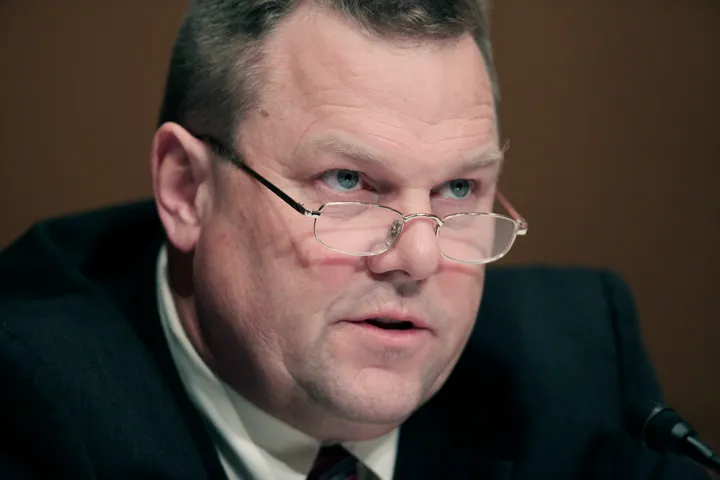
Jon Tester

First Posted: 03/16/11 10:50 AM ET Updated: 05/25/11 07:40 PM ET

WASHINGTON -- On Tuesday, a group of nine senators led by Montana Democrat Jon Tester put their names behind legislation to delay the Federal Reserve's upcoming crackdown on the "swipe fees" that banks charge merchants for processing debit card transactions -- a huge moneymaker for the banking industry whose continuation is at the top of the industry's lobbying wishlist.

Retailers complain that the costs of high swipe fees, also known as "interchange" fees, hurt their business and are ultimately passed along to consumers in the form of higher prices. A provision in last year's financial-regulatory overhaul requires the Fed to limit such fees, and in December, the central bank proposed a rule that would cap the levies at 12 cents per transaction, a nearly 73 percent drop from the current average of 44 cents per transaction.

Merchants and financial reform advocates celebrated the move, but the banks are obviously loath to give up such a big piece of any revenue stream, let alone the swipe fees that industry analysts at The Nilson Report estimate yield $1.35 billion every month, or $16.2 billion per year. (Half of that total, according to Nilson, goes to just 10 banks.)

Tester's bill, the Debit Interchange Fee Study Act, would postpone the regulation for two years' worth of further evaluation -- and chances for the bank lobby to erase it entirely. Sen. Bob Corker (R-Tenn.), a GOP leader on financial issues, was Tester's principal partner in crafting the legislation. Other cosponsors include Senate Minority Whip Jon Kyl (R-Ariz.) and Sens. Tom Carper (D., Del.), Chris Coons (D-Del.), Mike Lee (R-Utah), Ben Nelson (D-Neb.), Pat Roberts (R-Kan.) and Pat Toomey (R-Pa.).

Across the Capitol, Rep. Shelley Moore Capito (R-W.Va.), the chair of the House Financial Services Subcommittee on Financial Institutions and Consumer Credit, is readying a companion bill with the backing of Rep. Debbie Wasserman Schultz (D-Fla.), a vice chair of the Democratic National Committee and a chief deputy whip of the House Democratic Caucus. The House bill, however, is expected to call for delay of only one year.

That bill may well pass the lower chamber, but Tester's legislation faces long odds in the Senate. As House Financial Services Chairman Spencer Bachus (R-Ala.) warned at a meeting of the Institute for International Bankers last week, any changes to the swipe fee regulation will have to get past the second-ranking Senate Democrat, Majority Whip Dick Durbin (Ill.), who first introduced the cap on swipe fees that ended up in last year's regulatory law.

"The $13 trillion banking industry doesn't need another handout -- especially one paid for by small business and American consumers," Durbin said in a statement Tuesday. "I will strongly oppose any attempts to line the pockets of the credit card giants and Wall Street banks by delaying this common sense, pro-consumer legislation."

But advocates of delay have been somewhat strengthened in recent weeks, as Fed Chairman Ben Bernanke and Federal Deposit Insurance Corporation Chair Sheila Bair both criticized the exemption for banks with less than $10 billion in assets -- one of the concerns Tester cited in a Tuesday statement upon his bill's introduction.

Republicans and bank lobbyists have taken a harder line, decrying the regulation as "price fixing." Corker used the phrase in his own Tuesday statement accompanying the Tester bill's introduction.

And while Tester and Corker were issuing their statements, the American Bankers Association was holding a meeting on lobbying at the D.C. Marriott Renaissance Hotel in Chinatown. At the meeting, which HuffPost attended, the banking group's COO, Michael Hunter, coached a packed ballroom of community bankers on ways to convince key lawmakers and staffers to support the bill. The Senate bill and its House companion, Hunter said, were the ABA's top legislative priorities for the coming year.

Hunter, who served as chief of staff for former Rep. J.C. Watts (R-Okla.) before joining ABA, advised the assembled bankers to work through and follow up directly with congressional staffers, rather than trying to press members of Congress who were unlikely to remember their names.

The Independent Community Bankers of America, the Consumer Bankers Association and the National Association of Federal Credit Unions all offered statements praising Tester's bill Tuesday, but of the various bank lobby groups, the ABA represents the broadest coalition. That hasn't been the case for all regulatory action, however. Community banks and some larger conventional lenders have declined to join the calls for limits on the reach of the nascent Consumer Financial Protection Bureau urged by large financial institutions and small payday lending firms, their direct competition and the principal targets of much of the new regulatory framework.

Small banks are mobilizing to fight the swipe fee crackdown, however, even though they are exempt from the new rules. To some extent, this is a reprise of last year's debate over the measure, when big banks convinced their smaller brethren that credit card networks like Visa and MasterCard would not be able to support charging different rates.

On the contrary, Visa announced in January that it would support such a two-tiered system, but community bankers remain concerned that retailers will have less incentive to accept their cards and higher, unregulated fees when the biggest names in banking are forced to offer much cheaper swipes.

Some opponents of the new rule are taking a more ideological opposing line. At the ABA meeting, House Majority Leader Eric Cantor (R-Va.) delivered a speech in which he castigated the swipe fee rule, becoming one of the many Republicans to refer to it as "price fixing."

"I am not for price fixing," Cantor declared. He went on to argue that the United States is currently "not overregulated," but rather, "super-overregulated."

For its part, the Merchant Payments Coalition, a lobby group representing both large and small retailers and which pushed hard in favor of the swipe fee crackdown, issued a statement dubbing the Tester bill a "bailout" for Wall Street and praising last year's bill as a move that would "limit the price fixing engaged in by the nation's largest banks."

The Consumer Federation of America, meanwhile, urged lawmakers to oppose the bill in a letter.

"CFA does not support delaying implementation of the law," the letter reads. "From a consumer point of view, the current interchange system is not defensible. Feeble competition ... has led to unjustifiably high debit interchange fees that the poorest Americans are required to subsidize."

A spokesman for the Federal Reserve declined to comment for this report.

FOLLOW HUFFPOST POLITICS
Subscribe to the HuffPost Hill newsletter!
WASHINGTON -- On Tuesday, a group of nine senators led by Montana Democrat Jon Tester put their names behind legislation to delay the Federal Reserve's upcoming crackdown on the "swipe fees" that bank...
 
 
  • Comments
  • 291
  • Pending Comments
  • 0
  • View FAQ
Comments are closed for this entry
View All
Favorites
Highlights
Recency  | 
Popularity
Page: 1 2 3 4 5  Next ›  Last »  (12 total)
  1 of 1  
COMMUNITY PUNDITS
photo
Marcospinelli 01:46 PM on 03/16/2011
Democratic and Republican poIiticians are not each others' enemles, not as they have voters believing them to be.  Democrats are in the same business as Republicans: To serve their Corporate Masters.  

Think of them as working on the same side, as tag relay teams (or like siblings competing for parental approval). 'Good cop/bad cop'. The annual company picnic, the manufacturing  Read More...
HUFFPOST SUPER USER
Joe Padilla
If you disagree with me, you're wrong
12:12 AM on 04/28/2011
These politicians are the problem. Take profits and savings for their local constituents and send it to New York banks. That's what they are voting for.

Don't vote for this corruption next time. This is all you need to know about them right here!

Randy Neugebauer R
Jon Tester D
Sen. Bob Corker R-
Jon Kyl R-Ariz
Sens. Tom Carper D., Del
Chris Coons (D-Del.)
Mike Lee (R-Utah)
Ben Nelson D
Pat Roberts R
Pat Toomey R-Pa
Shelley Moore Capito R
Debbie Wasserman Schultz D
Spencer Bachus R
Eric Cantor R
03:55 PM on 03/31/2011
Let's not pretend that the Durbin Amendment and the Tester/Corker bill are anything other than the financial industry and big box stores like Wal-Mart and Target duking it out over these interchange fees using the U.S. Congress like a game of Rock 'Em Sock 'Em Robots. It used to be that these stores and banks negotiated the terms of the interchange fees. Larger businesses could get greater concessions from banks due to the volume of business they could generate. Apparently big box stores see the financial crisis as an opportunity to pass cash grab legislation against the financial industry because they are unpopular at the moment. If the Durbin Amendment goes into effect, the likelihood of businesses passing on the savings is, in my opinion, nonexistent. But we as people will definitely be paying for the revenue shortfall the banks experience. Large corporations are the only winners in either scenario, but consumers will lose out if the Durbin Amendment goes into effect.
HUFFPOST SUPER USER
Joe Padilla
If you disagree with me, you're wrong
12:18 AM on 04/28/2011
I can see what the retailers are charging and make my decision based on that before I buy something. With the banks the fees come a month later, it's a total surprise attack and fixing it requires hours on some 1-800-eat-Zhit line.

Besides, it wasn't retailers who wrecked the economy, it was banks. The money saved by this will stay in your community not go to New York. Stop feeding the banks.
photo
RichardinDelmar
Seek first to understand
04:40 PM on 03/23/2011
There are three banking actions I would heartily approve: stop bonuses, stop spending lobbying funds, and pay taxes on what you earn with no deductions.
HUFFPOST SUPER USER
nypapajoe
05:58 PM on 03/17/2011
These politicians have no soul! They worship money to a point that they are willing to sacrifice the common person for the sake of power and money! We must expose these pseudo politicians for what they are "Lobbyist of the Rich"! We have no one and I mean no one in congress or the senate that is looking out for the general public! We have been betrayed by both parties! We must seek non career candidate and set term limits! We can turn things around or we will all be living like those in third world countries where corruption is the norm!
photo
HUFFPOST SUPER USER
happylonersarah
Of all the Planets, WHY was I born on this one?
04:25 PM on 03/17/2011
Hey banks I have an idea on how you can save money. Stop paying millions in bonuses, stop donating huge amounts to your puppets in the political circus and stop mailing me junk mail for credit cards I don't want. Think how much u can save on printing and stampage.
03:10 PM on 03/17/2011
Do hogs ever leave the trough? Our GOP, the gift that keeps on giving to Wall Street.
photo
HUFFPOST SUPER USER
BillKen
05:08 PM on 03/17/2011
No, they will actually eat themselves to death if given the opportunity, so there is hope.
Semper Fi
photo
RichardinDelmar
Seek first to understand
04:41 PM on 03/23/2011
I am afraid you actually eat themselves to death drew a mental picture that I loved.
photo
HUFFPOST PUNDIT
Artos
Down with Tyrants
01:07 PM on 03/17/2011
Just keep giving us their names, that's all you have to do. Sooner or later they too will find themselves on the unemployment rolls.
photo
Ed Baker
Militant Moderate
12:30 PM on 03/17/2011
These fees fund your free checking account and other services. One bank has already proposed limiting the size of your transaction to under $50 because of the cap on this fee. Then if you buy something for $500 - the merchant will have to run the transaction 10 times, and they will collect $1.20 instead of .44 like they used to.

If consumers or merchants don't like the fees, they could simply transact in cash instead.
photo
Lancer 101
Ripe and ready to rebel.
03:22 PM on 03/17/2011
Yep, just carry a bit more cash around. For now, when I use my debit card at the grocery store, I can get up to $80 without any additional fees, or I can go to my bank and get a withdrawal without added fees. In the future, won't pay any higher ATM fees unless it's an emergency.
photo
Ed Baker
Militant Moderate
03:40 PM on 03/17/2011
Chase raised their ATM fees in some markets today to $5 in response to this law.

They've regulated this fee - others will be raised to compensate for the lost revenue.
This user has chosen to opt out of the Badges program
03:48 PM on 03/17/2011
"These fees fund your free checking account and other services."

The nice ladies and gentlemen at the bank only charge mefees in order to give me stuff for free? That is *so* nice!

So these funds are carefully held apart from the money which goes out in 6 and 7 figure bonuses? Separated from the huge sums paid to lobbyists to rig the rules to favor banks over depositors and small businesses rather than some sort of balance? No part of these fees is ever distributed to stockholders? Imagine that. Who knew (except Ed Baker)?

And those guys who claim that money is fungible are wrong?

Thanks for the economics lesson, Ed.
photo
Ed Baker
Militant Moderate
03:56 PM on 03/17/2011
Checking accounts are a money loser for banks. If you think they are going to kiss off tens of billions in revenue - think again.

You'll either pay to swipe (which you don't now) or you'll pay to bank.

Enjoy.
This user has chosen to opt out of the Badges program
photo
innerpuppie
The truth is an absolute defense...
12:25 PM on 03/17/2011
Banks are not banks anymore - they have become some sort of a hungry monster that is eating the core and fabric and soul of America.

When I was a kid, a passbook savings account paid 5% interest. A home loan was at about 7% interest. No bank credit cards and few people used checks, generally cash. A bank president was considered middle class and his income reflected that view. Now, think about it, a passbook savings account was paying 5%.

I called my banker the other day and asked him how so many years ago banks did so much more for their customers in services and interest on savings and that all you hear lately is a sucking sound coming from the finances of the average American. Guess what? He had NO answer for me - none. Interesting...
photo
HUFFPOST PUNDIT
Artos
Down with Tyrants
01:13 PM on 03/17/2011
This is why you hear so much talk of Competitiveness in the American Business vernacular. It's all about killing your competition so that you end up the biggest and strongest. Then when you've achieved monster proportions you can tell the government where to get off or buy them off, and after that with no regulations to keep your rapaciousness in check, you can then have your way with the little people. This is known as the Free Market or as it was known in the old days Laissez Faire economics. We know it better as Buyer Beware.
This user has chosen to opt out of the Badges program
photo
innerpuppie
The truth is an absolute defense...
02:13 PM on 03/17/2011
What I see is a large animal gnawing on its tail. The giant is devouring itself and isn't even aware of the pain or the ultimate consequence of its actions. It is blind to what it is doing and only has focus on one thing - to get rid of a bothersome tail.

America, as I knew it, doesn't exist any longer and will never exist again. Politicians are playing chess with the lives of the middle class and poor sitting around a table drinking their beer, burping, farting, scratching, laughing with no concern about winning or losing because if they lose they will just pull away from the table and move on to play another game at a future date in time and place.
HUFFPOST SUPER USER
dax49
11:50 AM on 03/17/2011
They don't even PRETEND to look out for the people of America anymore, do they?
photo
Darron Bethea
Live one life, not a thousand deaths.
09:08 AM on 03/17/2011
I am so tire of this! When are they gonna look out for the consumer, and not the bank!
This user has chosen to opt out of the Badges program
08:06 AM on 03/17/2011
Kochsucking DINO !!!!!!!!!!!!!!!!!!!!!!!!!!!!!!!!!!
07:46 AM on 03/17/2011
I've alway's had real respect for Sen Tester, now I REALLY have respect for him. this is great.
HUFFPOST SUPER USER
Joe Padilla
If you disagree with me, you're wrong
12:26 AM on 04/28/2011
Maybe you are a fellow fat body? Is that why?
HUFFPOST SUPER USER
nypapajoe
07:23 AM on 03/17/2011
Any politician that supports any financial institution from any form of regulations that would benefit the public should be recalled! They should be brought before a congressional hearing to explain to the general public why any financial institution should be exempt especially when these same institutions are posting outrageous quarterly billion dollar earnings! Not to negate the facts that these bonuses and perks can financially support a community for years, especially with the new tax breaks that they received! This is outrageous and absolutely hints of political corruption!!!!! These politicians must be exposed to the public! Who do they think they work for, cause it ain't us!
06:46 AM on 03/17/2011
Republicans protecting swipe fees for big banks on debit transactions is just another classic example where the party is hurting the small businesses that they always speak about coveting in public. As we have evolved to a cashless society, and as people have come to appreciate the unfair nature of credit card transactions, they have evolved to using debit transactions to avoid interest on small purchases, primarily executed with small businesses. Large banks hammer small businesses on these transactions and make billions, and small businesses have to accept cards in a cashless society. Republicans calling this price fixing is just another empty talking point buzz phrase. At the end of the day, this is just banks charging us to use our own money in society, and making Billions in fees while they do it. ATM fees are the exact same thing. Banks charges fees that are a thousands of times greater than the actual cost of the transactions and get away with it by enabling politicians that talk about the service they provide to the middle class, all while they charge us all fees just to use our own money.
This user has chosen to opt out of the Badges program
03:54 PM on 03/17/2011
Please notice the Democrats working with the Republicans at the heart of this effort.