
iPhone app iPad app Android phone app Android tablet app More

Petraeus, Polls Disagree On Afghan War Progress

Petraeus

First Posted: 03/16/11 11:33 AM ET Updated: 05/25/11 07:40 PM ET

WASHINGTON -- Frustrated American military officers and civilian officials working in Afghanistan are increasingly questioning the U.S. war strategy, with some arguing that U.S. lives and money are only propping up an Afghan government that will collapse once that support ends.

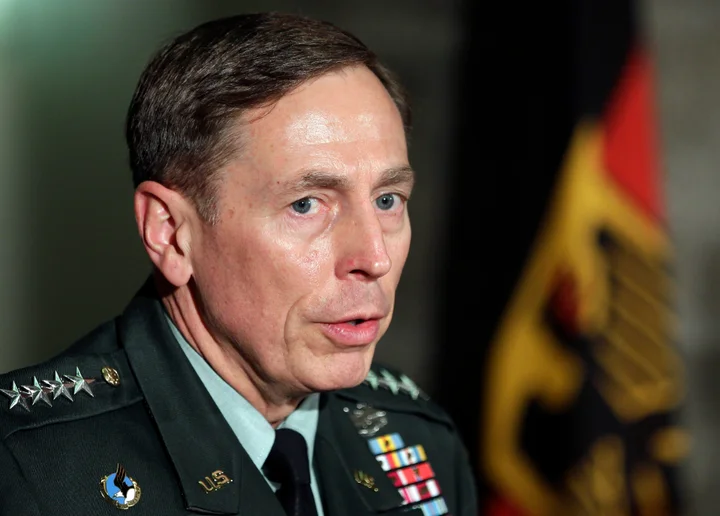
Those officers and officials have company in the American people. A new poll out this week shows record opposition to the war. Yet they have a prominent and powerful opponent: Gen. David Petraeus, who testified in two days of congressional hearings this week that significant progress is being made in Afghanistan.

After nine years of combat, at a cost of 1,422 Americans killed and 9,971 wounded and no clear end in sight, almost two-thirds of the American public -- 64 percent -- now believe the Afghan war is not worth fighting, according to a new Washington Post/ABC News poll. The poll, which documented the highest-ever opposition to the war, found that most support for President Barack Obama's war policies now come from Republicans.

Privately, even many of those working under Petraeus have expressed concern that without constant pressure by U.S. troops and a steady flow of taxpayer dollars, the gains they have made against the Taliban would quickly be lost.

Petraeus, the architect of the counterinsurgency strategy, said Tuesday that the "comprehensive'' military and civilian campaign now underway for more than a year has achieved "important, but hard-fought, progress,'' with "tough losses along the way.'' But he said the general trajectory has been "upward.''

The highly decorated four-star general credited with a successful counterinsurgency campaign in Iraq, Petraeus was given command of 150,000 U.S. and allied troops in Afghanistan last summer after the resignation of Gen. Stanley McChrystal. Petraeus told the Senate Armed Services Committee Tuesday that the war is going well enough so that he can begin to "thin out'' U.S. forces by July, as Obama has promised.

U.S. troops have seized key territory from the Taliban, killed or captured "numerous'' insurgent leaders and trained a growing Afghan security force, Petraeus said. Working with about 1,100 American civilian advisers and development officials, they have provided jobs and helped develop local government.

But he said the progress is "fragile and reversible,'' making it impossible for him to say how many troops could be brought home this summer.

"This is not a campaign where we take the hill, plant the flag and come home to a victory parade,'' Petraeus said. Preventing al Qaeda's return to sanctuary inside Afghanistan, he said, requires not just the purely military mission of protecting Afghans from the Taliban, but also helping Afghanistan "develop sufficient capabilities to secure and govern itself.''

For that kind of development work, separate from the cost of military operations, the State Department has requested an additional $2.2 billion for civilian work in Afghanistan for next year. Petraeus acknowledged that the future U.S. financial commitment for development of that kind will be "considerable.''

How well the money is spent, and what permanent effect it has, varies widely among Afghanistan's districts and villages. In places like Dand District, just south of the provincial capital city of Kandahar in southern Afghanistan, five years of military operations and development investment are paying off as local government begins to be able to act on its own in conjunction with a U.S. Army battalion.

But elsewhere, that kind of investment seems to have more tenuous effects. In the Nawa District in nearby Helmand Province, progress in both security and local government "is entirely dependent'' on a sustained flow of American money, according to Scott Dempsey, a former Marine who served there as a development officer in 2009 and 2010..

Nawa is often cited by Petraeus as a "proof of concept'' of his counterinsurgency strategy. For visiting journalists and politicians, he has showcased the combination of security, development and governance that he has insisted can transform a district from a Taliban safe haven into a secure, thriving and self-governing community.

More than 1,000 U.S. Marines thronged into Nawa in 2009 and quickly sent the Taliban fleeing. USAID poured in $25 million in development aid -- over $300 per resident. About half of the district's 20,000 working-age Afghans got U.S.-funded jobs, spurring at least a short-term economic boom, and the district market, once nearly abandoned, became a bustling center of commerce.

Among those who visited Nawa at the suggestion of the U.S. command was first-year Sen. Kelly Ayotte (R-N.H.). "I was impressed with the progress being made,'' Ayotte told Petraeus Tuesday. Speaking to the doubts about the effectiveness of the strategy, she added: "Sometimes the press focuses on the bad things, and the progress that is being made there is not reported on enough.''

But that's not what Dempsey observed during the nine months he served in Nawa. The bustling marketplace and charismatic district governor "masked the overriding long-term problem that the Afghan government's success was based almost entirely on American inputs,'' he wrote in an essay in Small Wars Journal, an online magazine devoted to counterinsurgency, or "COIN."

"Even the most basic degree of Afghan government-led stability will require a seemingly endless commitment to continue to fight and finance this effort,'' wrote Dempsey, who until last month worked on Afghanistan affairs at the U.S. Agency for International Development in Washington.

"Our current practice of COIN fails to understand that the only meaningful metric for success is a transfer of sustainable sovereignty to the institutions we can easily create -- but which the Afghans must learn to run,'' Dempsey went on. When the money inevitably runs out, he wrote, power will quickly shift to the Taliban and the drug lords.

Dempsey's misgivings about the strategy are echoed by other officers who declined to speak on the record. But they also spoke of their worry that the security gains their soldiers and Marines had made would eventually be lost to the Taliban because the local government was corrupt or inept or both.

As Petraeus himself warned Congress, "If the Afghan government can't or doesn't provide those basic services, then there will be a reversion to the Taliban, however little the people have regard for them -- and they remember what it was like under the brutal rule of the Taliban.''

Petraeus argued that a substantial number of American troops will be needed well after this July, while the Afghan government, at the national and local levels, is prodded and encouraged and trained. While the Post-ABC poll found that nearly 80 percent of respondents wanted a "substantial'' withdrawal of troops this summer, Petraeus said many of those who are withdrawn from secure areas may be reassigned within Afghanistan rather than brought back home.

"We should not rush to failure,'' Sen. John McCain (Ariz.), the ranking Republican on the armed services committee, said by way of agreement with Petraeus. "The next several months will be decisive'' as the Taliban attempt to surge back, he said. "We need to be exceedingly cautious about the withdrawal of U.S. forces this July.''

One alternative to the current strategy would be to refocus the military mission on partnership with Afghan security forces against the Taliban, allowing the force to be reduced to 25,000 to 35,000 troops. Under such a plan, U.S. and allied civilian assistance should be shifted away from the central government in Kabul to concentrate on local government, where most people receive direct services.

That kind of approach is detailed, among other places, in a recent report by the Center for a New American Security, a nonpartisan think tank in Washington.

FOLLOW HUFFPOST WORLD

WASHINGTON -- Frustrated American military officers and civilian officials working in Afghanistan are increasingly questioning the U.S. war strategy, with some arguing that U.S. lives and money are on...
 
 
  • Comments
  • 651
  • Pending Comments
  • 0
  • View FAQ
Comments are closed for this entry
View All
Favorites
Highlights
Bloggers
Recency  | 
Popularity
Page: 1 2 3 4 5  Next ›  Last »  (21 total)
This comment has been removed due to violations of our [Guidelines]
03:10 PM on 03/27/2011
I spent nearly 8 months building fortifications and improvements in Zhari -- outside Kandahar and I'm of the opinion we should not be nation-building over there. The country needs to be under martial law for the forseeable future -- due to the violence and corruption. Creative long-term solutions may be found --- maybe an Arab-Pashtun international administration to run the country? I don't include the Iranians and Pakistani's because they are contributing to Afghanistan's destablization. As neighbors, Saudi Arabia and Kuwait could contribute billions of petro dollars to stablize the country. This Spring and Summer should be very interesting to see if the Taliban can get through the fortifications we built. I'd be surprised to see the Taliban make any real military headway in the South, given the work we did. The questions really are: how will Afghanistan's police and military cope with handing their own security? How will the corruption in Karzai's government affect real development? We need to get Arab and Middle-Eastern countries to contribute more to the work there.
photo
HUFFPOST SUPER USER
Blackorpheus
the decisive blows are always struck left-handed
01:15 PM on 03/26/2011
Start withdrawing troops now: from Afghanistan, Iraq, Western Pakistan, Yemen, Egypt, the Maghreb countries, the Horn of Africa . . . Save innocent lives. Us the money to aid America in its toughest period since the Depression.
07:22 PM on 03/22/2011
It's a sad thing to say, but people are people. We've tried to establish and help to stabilize a government for nearly a decade if the people of Afghanistan truly wanted this to happen, they would've of made it possible for them to do so. However this is not the case and we must cut our loses. With no clear and direct mission, motivation for our troops must be at an all time low. Nearly 70 percent of the country wants us out, then that's what we must do, democracy was never set up to be easy but it was set up for the people.
photo
cvbnm67
Pursuing truth, and all those who threaten it.
10:01 PM on 03/17/2011
The War in Afghanistan began on October 7, 2001. It will be ten years at war with a bunch of tribesmen running from town to town. It took less time to topple the Nazi's, defeat the Imperial Japanese Military, fight the 1776 revolutionary war and drive General Lee from the battlefield. What are we exactly doing over there? Are we trying to prove the Afghans will not cause us to self-destruct like they did to the Soviets? This is not a war anymore. It is disgraceful to call it that. It has become a vehicle to funnel money through the military supply lines, directly into private hands. Petraeus is just another soldier taking orders and and trying to put food on his table. Don't get me wrong, he is not a bad man, just not in a position to do anything about it.
This user has chosen to opt out of the Badges program
photo
12:52 PM on 03/26/2011
As you say, we went there on a giant lie made up by the Cheney gang, and we've had no clear goal ever since. But the fighting there is extremely profitable for war profiteers worldwide, so Washington, including the Pentagon, has just made up new objectives every year to keep things roaring over there. If in fact 64 percent are now against the war, that means 36 are for it, which seems rather high since I have not met one person in the past ten years who knows what this fighting is really about, or could find Afghanistan on a map.
Americans don't have a clue why we're killing people over there. How could they have an opinion on whether it's a good idea to be doing it at all?
All our wars since Bush have been straightforward, for-profit conquests started and maintained by the defense industry and the oil industry, plus all the Wall Street investors who knew a good thing when they saw it. Now profits must be down because opposition is beginning to appear even in the corporate press.
But let's not let the generals take the 'I was just doing what the politicians told me to do' defense. Patraeus, McChrystal, Abrams, Westmoreland...they did it because it made them feel important and powerful. When a president asks for their advice, they always say they can easily win it -- until it's obvious they can't. Then they say it wasn't their idea. Enough of that.
Wupta
Parent
02:32 AM on 03/17/2011
We are wasting our precious resources and more importantly lives of our troops. I know Afghanistan we aren't even going to make a dent once we are gone. They are a Muslim society with a Muslim culture that will not change. In fact they don't want to change they just want the money and power
photo
HUFFPOST SUPER USER
Oceras
Tax High Incomes!
11:45 PM on 03/16/2011
We have chosen to protect Americans from terrorists who killed over 3,000 of us on 9/11. To do this we have started two wars that have cost over 5,000 American lives, and countless other lives, not to mention the wounded, the suffering from PTSD, and the disruption of families. To keep how many people safe?

Those servicemen are Americans. And they are continuing to die while the military is unable or unwilling to tell us what the end will look like. Our President won't tell us. We're supposed to continue sending more money down an apparent rat hole with the lives of more and more young Americans.
Have we lost our senses? We seem to have lost our sense of proportion. American Soldiers Lives + Iraqi Army and Civilian Lives + Afghan Army and Civilian Lives = Some Unknown Quantity of American Lives (that we don't even know are in jeopardy). Meanwhile we are expected to fear the unknown, one of the largest motivators to accepting lies that there is, and one of the ways to make us easy to manipulate.

I, for one, am sick and tired of Big Brother trying to keep me scared (I'm not.) while own citizens die for an end we don't understand. I'm no braver than anyone else, but I'll gladly accept the odds that I'll be killed rather than having one more young life taken to keep me safe.

I know I'm just one voice. Hopefully, I'm one more voice.
HUFFPOST SUPER USER
sophiemaki
08:19 PM on 03/16/2011
i find it amazing that no one is writing on this thread.
war sucks . your pols, pres..contractors. ..all sucking on war.
Petraeus.....needs a new line:
"fragile yet reversible progress " ........is not supposed to be the reason......
we are in a war ......................and soldiers are being killed.
This user has chosen to opt out of the Badges program
06:25 PM on 03/16/2011
"For a carpenter, the solution to every problem is a nail." Same holds for soldiers. If you ask the soldier in command, the soldier who designed the strategy, about the effectiveness and worth of what he's doing, how can you expect a totally objective answer? Of course the general he believes in what he's doing. But his perspective, i.e. the military perspective, is not the only one.

We need to weigh the astronomical cost to our soldiers and their families and to consider our empty treasury, the high interest to be paid on what we borrow because of this war, and all the opportunities lost to help our people and strengthen our country.

And what has Afghanistan accomplished in helping itself in nearly 10 years?

It isn't just charity that begins at home. It's also wise risk management. And wise money management.

If my neighbor's house is burning, I'll help put it out. But if my neighbor is swimming in his pool while his house burns, I will only put out the fire that threatens me. I will not run into his house to save his things, nor rebuild it, while he enjoys the benefits of my efforts but contributes little to his own betterment.

It is inconceivable that results in Afghanistan can ever be worth what we already put into it. We cannot turn a stone age pseudo-country, comprised of warring tribes, into a modern nation, let alone a working democracy.

How naive to even try.
photo
Cory111
Life is truly good...
06:04 PM on 03/16/2011
If he were in the hamburger business would he be telling people meat is bad for your health? With these Military leaders war is all about job security.
05:19 PM on 03/16/2011
War with Afghanistan helped to bring down the Soviel Union, and now our Afghan War is threatening to do the same to us. How can we talk about cutting basic services in the USA while we pour billions of dollars into Afghanistan and Iraq? Forget about negotiating with the Taliban-- Just tell Karzai that we have more urgent things to do and from now on he's on his own. Then pull all the troops out of Afghanistan immediately and accelerate the US withdrawal from Iraq. Want to cut $100 billion from the budget? No problem!
photo
HUFFPOST SUPER USER
Ukridge
“If there’s a bustle in your hedgerow, don’t
05:21 PM on 03/16/2011
Won't that embolden the Taliban and Al Qaeda? The world does not need them. We could though stop the development aid, even though a lot has been done with it, because it perpetuates the war.
bmumfie1
Proud NM Liberal
05:42 PM on 03/16/2011
Celia:

Nice post. I didn't think there was anybody else out there who watched 'The Equalizer' besides me.
HUFFPOST SUPER USER
Josegoodtime
05:18 PM on 03/16/2011
let's just leave and bring our troops home. Maybe that money can help fuel the regrowth in America.
photo
HUFFPOST SUPER USER
booker52
avid reader
04:44 PM on 03/16/2011
This war is going no where, bring the troops home now.
photo
HUFFPOST SUPER USER
JDETOR
"To be praised by fools is the greatest shame."
04:28 PM on 03/16/2011
If Obama had any decency, courage, or conscience at all - he would have pulled us out of there last year. Instead, to insure his rich corporate friends all got their share of the defense contractin­g spoils, he extended us and poured more troops in. Then he turns the controls over to the one man who has the most to gain financiall­y once he retires - Patreaus! The one man who will do and say anything to keep us there, thus guaranteeing his future in the private lobbying sector.

Obama has not delivered hope. He is more to blame. He is no better than Bush; in fact, he's worse because he could have ended it...but as he well knows, as he's been well-schooled by his corporate friends and donors-there's no money to be made in peacetime.
photo
HUFFPOST SUPER USER
Ukridge
“If there’s a bustle in your hedgerow, don’t
05:17 PM on 03/16/2011
He did not put more troops in for corporations. The situation was at a critical crossroads, and something drastic had to be done, so we got the surge. It seemed the best solution, and might work, maybe. WE will know in only a few months when they pull troops out, and see how well the Afghans stand up. Obama, according to expert Ahmed Rashid, has failed in one major way, his dealings with Karzai. He is muffing it bad, but so is Karzai.
04:26 PM on 03/16/2011
What is this guy smoking?