More

Nuclear Plant Was Behind On Safety Inspections

Fukushima

First Posted: 03/21/11 02:41 PM ET Updated: 05/25/11 07:40 PM ET

Welcome to "The Watchdog," which will keep a close eye on regulatory agencies and how their actions impact the lives of everyday Americans. Though the rules and regulations they write -- from determining how much arsenic is allowable in your drinking water to whether your favorite TV show can drop the F-bomb in primetime -- affect all of us, their deliberations and the way that lobbyists influence their decisions receives very little coverage. To make sense of these debates, follow the implementation of health care reform and financial reform and decipher the minutia of the Federal Register, "The Watchdog" is on the case. If you have any tips or suggestions, send them to marcus@huffingtonpost.com.

live blog

Oldest Newest

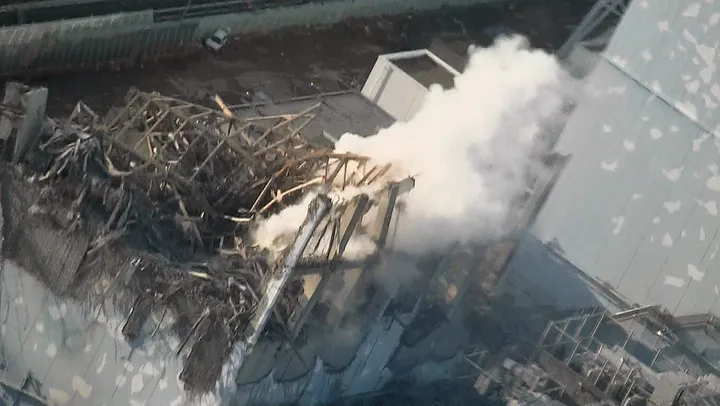
At the time of the earthquake, the Fukushima reactor was storing almost six years of highly radioactive uranium fuel rods -- far more than the plant was intended to keep -- and it was behind on its safety inspection schedule, with 33 pieces on the six reactors at the complex having missed scheduled checkups.

Reuters reports:

When the massive tsunami smacked into Fukushima Daiichi, the nuclear power plant was stacked high with more uranium than it was originally designed to hold and had repeatedly missed mandatory safety checks over the past decade.

The Fukushima plant that has spun into partial meltdown and spewed out plumes of radiation had become a growing depot for spent fuel in a way the American engineers who designed the reactors 50 years earlier had never envisioned, according to company documents and outside experts...

The cascade of safety-related failures at the Fukushima plant is already strengthening the hand of reformers who argue that Japan's nuclear power industry will have to see sweeping changes from the top.

"I've long thought that the whole system is crap," said Taro Kono, a Liberal Democratic Party lawmaker and a longtime critic of nuclear power who sees the need for a government-directed reorganization of Tokyo Electric.

Share this:

Former health insurance executive Wendell Potter responds to concerns expressed by congressional Republicans about how a controversial provision (the so-called "death panels") that was cut from last year’s health reform bill briefly wound up in a government “rule” on physician reimbursement.

Over at the Center for Public Integrity's excellent site, Potter notes:

"Yes, death panels do exist. They exist inside the big health insurance corporations that every day make decisions on whether or not people enrolled in their health benefit plans will get the care their doctors believe might save their lives. I know this firsthand from nearly two decades inside the insurance industry.

You don’t have to take my word for it. Just ask Hilda and Grigor Sarkisyan, who very possibly would be helping their daughter, Nataline, plan her 21st birthday about now had a corporate medical director not refused to pay for a liver transplant Nataline’s doctors believed would save her life.

Nataline was diagnosed with leukemia at 14. Initial treatments were successful and the disease went into remission. It came back a couple of years later, though, and the sort of treatments she’d had previously were not working. She had to have a bone marrow transplant, which weakened her liver. In mid-December 2007, her doctors at UCLA Medical Center said she needed a liver transplant. They asked for prior approval from her insurer, CIGNA, to pay for it. Nataline’s doctors said they believed she had at least a 65 percent chance of living five years or longer if she had the procedure.

A CIGNA medical director 2,500 miles away in Pittsburgh disagreed. To the astonishment of Nataline’s doctors, he ruled the transplant “experimental.” Insurers almost never pay for procedures they consider experimental, so this corporate medical director’s decision meant that the Sarkisyans would have to pay for the transplant and all related care out of their own pockets. Not being wealthy enough to do that, Nataline’s parents launched a campaign to rally public support and media interest in the case. It worked. CIGNA eventually agreed to cover the transplant. Unfortunately, so much time had passed since the original request had been made that Nataline’s other organs began to shut down. She died a few hours after the family got the news that CIGNA had changed its mind.

As chief spokesman for CIGNA at the time, I was on the receiving end of hundreds of calls and emails from reporters and also from regular folks who were outraged that CIGNA had initially refused to pay for Nataline’s transplant. The Sarkisyan family sued CIGNA, but the case was thrown out because of a Supreme Court precedent that shielded employer-paid plans from damages resulting from their decisions."

Share this:

- A nuclear industry whistleblower who helped design protective containment vessels for reactors has attacked the Japanese government, its nuclear industry and regulators over their safety record.

- The new Coalition for Sensible Safeguards launches its website today. From its call to action: "We call on President Obama and Congress to advance regulatory protections, preserve existing safeguards, and provide adequate funding for their effective implementation and enforcement."

- Volokh on the saga of mercury regulation since the Clinton administration: "Last week, the Environmental Protection Agency proposed new regulations governing emissions of mercury and other toxic air pollutants from power plants. This rule has been a long time coming."

- Treasury Secretary Tim Geithner will soon decide whether the vast market in foreign-exchange swaps -- a type of financial instrument that businesses often use to guard against fluctuations in foreign-exchange rates -- should be subject to tighter regulation.

Share this:

FOLLOW HUFFPOST WORLD

Welcome to "The Watchdog," which will keep a close eye on regulatory agencies and how their actions impact the lives of everyday Americans. Though the rules and regulations they write -- from determin...
 
 
  • Comments
  • 62
  • Pending Comments
  • 0
  • View FAQ
Comments are closed for this entry
View All
Favorites
Recency  | 
Popularity
Page: 1 2 3  Next ›  Last »  (3 total)
photo
HUFFPOST SUPER USER
Spartan Ideal
07:37 PM on 03/21/2011
I'm curious why all the attention is on what minor safety protocols could have mitigated the effects of an EARTHQUAKE and TSUNAMI. Seriously, unless all the industrialized nations are willing to switch their infrastructure over to natural, clean power (eg. wind farms, tidal energy), it's obnoxious to pretend that Nuclear energy is unsafe. I'm sorry, but the couple disasters in history pale in comparison to the damage fossil fuels do every day.
photo
HUFFPOST SUPER USER
media4me
06:18 PM on 03/21/2011
Oh WOW!!!!!!!!!!!!!!!!!!!!!!!!!!!!!!
Did the safety inspection include a tsunami watch?
photo
Harvee Wallbanger
Republicans... I got no use for you.
06:10 PM on 03/21/2011
This whole situation stinks of TEPCO incompetance. Not just the overdue inspections outlined here. This is just a symptom. But the obvious lack of training and knowledge of the day to day operators. The first few and most important days of this fiasco were spent sitting on their hands hoping the reactors would take care of themselves. They were nearly comatose in their thinking. And not just in how the reactors themselves were going to behave, but more importantly in anticipating what would happen in the spent fuel pools. Within hours, there should have been fire hoses in each pool to maintain water circulation. There should have been repair crews all over the backup generators. Portable generators should have been choppered in as needed. Basements and flooded areas should have begun to be pumped out. There should have been a massive mobilization to cool these things down. It didn't happen.
photo
Vitorio
Peace not War, Democracy not Fascism.
05:44 PM on 03/21/2011
Run by private consortium....same thing they want to do here in USA....will we learn anything?
What good is government if it does not regulate and protect its people?
Will we learn anything from this?

Keep the nasty comments to yourself....good regulation is GOOD!
photo
HUFFPOST BLOGGER
Angie Cordeiro
We do all things with Grace which empowers us.
05:59 PM on 03/21/2011
White House Comments Line: 202-456-11­11 (Run by volunteers M-F 9-5 EST)

http://www.whitehouse.gov/ (Comments prompt on the upper left hand corner)

" The squeaky wheel..."
photo
HUFFPOST SUPER USER
mxytsplyk
De gustibus non est disputandum
05:37 PM on 03/21/2011
Glow-In-The-Dark-Republicans..
HUFFPOST SUPER USER
gitrdone
05:30 PM on 03/21/2011
Just like there was little regulatory oversight over the causes of the financial collapse, the BP disaster in the Gulf, and the Virginia mine disaster. And Republicans think we need more deregulation? I say shove it.
HUFFPOST SUPER USER
Jim Pasterczyk
Banned!
05:19 PM on 03/21/2011
In other words they had no effective government regulation of the nuclear power industry. How'd that work out? Are you watching US Chamber of Commerce, Koch brothers, Murdoch and Norquist?
This user has chosen to opt out of the Badges program
photo
04:51 PM on 03/21/2011
(11)
Thou shalt not build nuclear power plants on or near the Ring of Fire.
http://en.wikipedia.org/wiki/Pacific_Ring_of_Fire
(12)
Thou shalt not leave public safety in the hands of corporations.
(13)
Thou shalt minimize nuclear power plants, maximize solar and wind power plants, and conserve energy.

Signed:
God
photo
HUFFPOST SUPER USER
luckyvanna
Dog lover
05:12 PM on 03/21/2011
Well, these are common sense commandments and should be added to the other seven or is it ten.
Genders
Love, Tolerance, Enlightenment
04:41 PM on 03/21/2011
Say it ain't so! Big companies cutting corners till things break? Who could have predicted such a thing?
shonuff1914
Don't judge me I'm just doin my thang
04:41 PM on 03/21/2011
I'm going to speculate a little bit and say that the inspections are/were not as big of a problem as the 9.0 earthquake and ensuing tsunami was.
This user has chosen to opt out of the Badges program
photo
04:53 PM on 03/21/2011
True, but a flaw in their system has been revealed and needs fixing. No excuse for violating safety rules.
shonuff1914
Don't judge me I'm just doin my thang
04:57 PM on 03/21/2011
True, there is a definite need for accountability.
This user has chosen to opt out of the Badges program
photo
BoudiccaBlanc
~Yes, my micro-bio is emply! ~
04:36 PM on 03/21/2011
(*Groan*)

I can't imagine how "behind" some American nuclear power plants are regarding inspections!
:O :((
04:30 PM on 03/21/2011
Ya think? You mean like our nuclear power plants in the United States? When there is a profit motive, safety will always fall by the wayside. You have to stuff those pockets of the CEOs you see. In California, we just had a horrible issue with old, un-inspected, defective gas pipelines, one of which exploded and blew up a huge area of one of our cities. PG&E couldn't even find the original specs for these pipelines. Contractors who worked on the line the day before the explosion also had problems. It is all about regulation and rigid follow up on those regulations. Without that, we are all in danger. Lots of folks don't like the cost of doing this, but when it is your home that blows up, you might change your mind.
HUFFPOST SUPER USER
Gus DiZerega
writer
04:18 PM on 03/21/2011
Even if nuclear energy is theoretically safe, as some techies assert, it seems to me we have lots and lots of evidence that our organizations are incapable of operating them safely. We need institutions able to handle the responsibilities, and we do not have them. Corporations and public bureaucracies alike cheat, lie, cover up, and always seek government help to make themselves safe.

Some form of life might be able to handle nuclear energy wisely, humans seem incapable of it.
HUFFPOST SUPER USER
J Michael Norris
Don't mistake narrow-mindedness for perspicacity.
04:16 PM on 03/21/2011
Inspections were not the problem.

One of the biggest earthquakes in recorded history was the problem. This piece of fluff aimed at getting people worked up makes about as much sense as Ann Coulter's take on the radiation.

Good grief.
04:35 PM on 03/21/2011
No. You are totally wrong. The plant held up under the earthquake. That much we know for sure. The tsunami wiped out the backup system of generators. That was the problem. From there we find out that one of the containment vessels had a crack in it from a previous inspection, years ago. We also have the fact that this facility was holding far more spent fuel rods than they were licensed to hold - some of which were plutonium. Convince you yet? How about this? The spent fuel was stored ABOVE the level of the reactor, making it more difficult to cool in an emergency.

One other thing to consider is that one of the engineers that worked on the specific design of these reactors, quit his job at GE because he felt that the design was inherently flawed. But it was used anyway. Profit trumps everything.
This user has chosen to opt out of the Badges program
photo
04:40 PM on 03/21/2011
Thank you! They live in denial about ANY regulation. Just foolishness!
HUFFPOST SUPER USER
J Michael Norris
Don't mistake narrow-mindedness for perspicacity.
05:02 PM on 03/21/2011
You're right.

While the tsunami wasn't caused by the earthquake, I was thinking that eventually we'd find some sort of connection there, that we just haven't yet. I'm not so good at science, but I had a feeling they were related. I guess I was wrong.

(In case you didn't know, that was sarcasm.)

It's very easy to find fault after the fact and try to mitigate responsibility. The only real cause in this equation was one of the biggest earthquakes in recorded history that unleashed a terrible tsunami upon Japan. The reality of the situation is that this facility could not withstand this natural disaster.

Would the damage have been worse if inspections had been carried out AND acted upon accordingly? Perhaps. Perhaps inspections would have been of little use, since a crack from a previous inspection had never been addressed.

Would there have been no issue at all? Most certainly not. The reactor with the crack wasn't the only one that had problems. Every reactor there did. Why? As you stated it was because of the lack of backup generators that were wiped out from the tsunami, cracks or no cracks.

Have we found conclusively that the lack of inspections has exacerbated the problem? No. Will we? Possibly. Would inspections have prevented this? Absolutely not.

And just for the record, it is laughable that you have tried to separate the tsunami from the earthquake as the cause. Laughable.
04:13 PM on 03/21/2011
Were they going to inspect for a 30 foot tsunami?
04:37 PM on 03/21/2011
Nuclear power plants should not be built on earthquake faults. That is a man made disaster waiting to happen. Mother Nature will always win. So why tempt her?
photo
HUFFPOST BLOGGER
Angie Cordeiro
We do all things with Grace which empowers us.
06:04 PM on 03/21/2011
So, did you hear the one about Chili signing on for Nuclear just days after this disaster? Not funny, just another way our governments are lacking...

Organize locally.
Meditate globally.
OM ~ "...and look out for Mr. In-Between..."
This user has chosen to opt out of the Badges program
photo
04:41 PM on 03/21/2011
How about facts? Do those get in the way?