More

FDIC Chair Sheila Bair: Divide Banks Into High-Risk, Low-Risk Sections

Fdic Banks

The Huffington Post   First Posted: 04/18/11 02:37 PM ET Updated: 06/18/11 06:12 AM ET

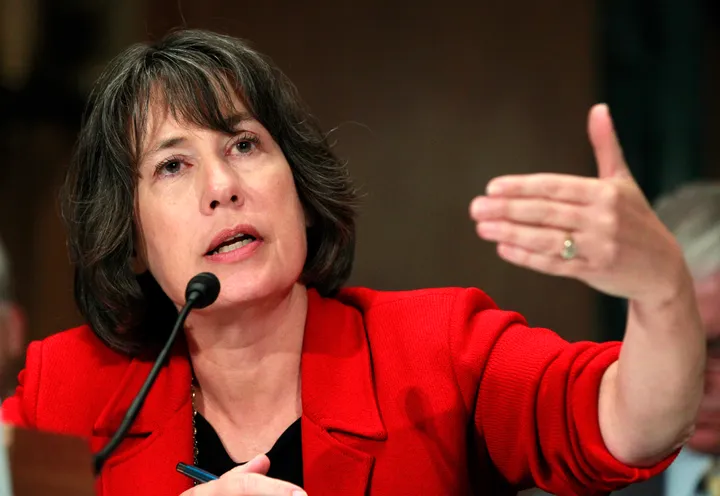
With her time winding down as head of the Federal Deposit Insurance Corporation, Sheila Bair has suggested the U.S. follow a British proposal that could help solve the problem of "too big to fail" banks.

Last week, Britain's Independent Commission on Banking, chaired by John Vickers, a former chief economist at the Bank of England, proposed changing the structure of British banks so that the consumer side of banks can be saved if the rest fails, The Economist reported.

Bair wants the United States do much the same thing, making it easier to unwind systemically important banks during a crisis, the Financial Times reports. Under new rules passed by the Dodd-Frank financial reform act, government regulators, led by the FDIC, have the power to do just that: protect customers by dividing banks into autonomous divisions with their own capital.

Specifically, Bair, who is quickly approaching the end of her tenure as FDIC chairman, wants to section off the high-risk investment banking sector of major banks from banks other role as a retail lender. In an interview with the Financial Times, Bair said the new-found power of the FDIC could be used to implement these changes.

"I'd like to get some public comment on the idea that if [banks] have an investment banking affiliate," then that investment banking section should "standalone [in both] liquidity and capital," Bair told the FT.

The proposition would significantly affect banks that have closely tied their investment structures into overall operations, creating a complicated web that is difficult to unwind in the event of a crisis. Banks like Citigroup and Bank of America, both of which recently reported declining profits, as well as the currently-surging JPMorgan Chase, would be forced to overhaul their corporate structure.

In the coming months, banks will be asked to present "living wills" to government regulators, describing how the firms could be safely collapsed without putting the economy at risk. In a report to be released Monday, the FDIC will use Lehman Brothers as an example of how these new rules would have helped make bank failings more safe during the financial crisis.

Bair's recommendation to divide, not detach investment and retail banks stops short of the rules put in place by the 1933 Glass-Steagall Act, which completely barred depository banks, where customers kept savings, from operating within the investment banking sector.

Following the repeal of the Glass-Steagall Act in 1999, depository banks quickly increased their investment banking operations, a decision that critics allege directly contributed to the financial crisis by creating corporations that required large-scale bailouts.

FOLLOW HUFFPOST BUSINESS
Subscribe to the HuffPost Money newsletter!
With her time winding down as head of the Federal Deposit Insurance Corporation, Sheila Bair has suggested the U.S. follow a British proposal that could help solve the problem of "too big to fail" ban...
 
 
  • Comments
  • 47
  • Pending Comments
  • 0
  • View FAQ
Comments are closed for this entry
View All
Favorites
Recency  | 
Popularity
Page: 1 2  Next ›  Last »  (2 total)
photo
HUFFPOST SUPER USER
Tom Langley
Successful Beer Guy
06:17 PM on 04/19/2011
This is Glass-Steagall all over. I applaud it, but the Bankers will NEVER allow it. Your own military or at least blackwater, will be turned against you before this is ever allowed to take place. KENT STATE!
photo
guveqzero
Inventor and Innovator
09:46 AM on 04/19/2011
Are they admiting to a stupid mistake? Not likely. Bair made some whopper mistakes but has made no apology.
This user has chosen to opt out of the Badges program
photo
ConsensusReality
RootenTootenZooten
05:26 AM on 04/19/2011
Bring back Glass-Steagall...period.
photo
lackofoversight
A nickel isn't worth a dime today... Y. Berra
07:59 AM on 04/19/2011
Absolutely! F&F!
photo
HUFFPOST SUPER USER
james rimes
Armonicamedia
08:57 PM on 04/18/2011
Divide Banks into Lending or Investing. For Both... MBS--CDO/CLO----CDS Is Multiplied Insurance Fraud............. Insurance Fraud is a Prosecutable act. Against Articles of Incorporation...Just Sayin'
HUFFPOST SUPER USER
Lolie Culley
12:00 AM on 04/19/2011
Banks were in a hurry to Foreclose on people to cover their Insurance Fraud and Corruption.
photo
lackofoversight
A nickel isn't worth a dime today... Y. Berra
05:47 PM on 04/18/2011
Why doesn't Congress just admit it made a major mistake and bring back the Glass-Steagall Act and keep consumer/retail lending banks separate from investment banks. It worked very well for over 60 years until Congress repealed the Act in 1999.
photo
HUFFPOST SUPER USER
SelfAccountable
Outspoken Artist
06:27 PM on 04/18/2011
Because everyone in Congress is bought by the banks.
HUFFPOST SUPER USER
Lolie Culley
12:02 AM on 04/19/2011
TRUE, Senate and Congress are both bought by the banks. We people, just keep electing irresponsible people to run our country.
07:47 PM on 04/18/2011
Because we had to be in compliance with World Trade Organization, not protect ourselves with a proven regulatory Act, and allow world financial government. It's time to take our country back to financial sanity, back out of the WTO if necessary. We are living under international rules. Did you and I vote for that?
This user has chosen to opt out of the Badges program
01:29 AM on 04/19/2011
No.

http://www.citizen.org/documents/FinanceReregulationFactSheetFINAL.pdf
To Rescue Main Street, We Need to Curb the WTO

"...Starti­ng in the late 1970s, the U.S. government and corporatio­ns pushed to redefine “finance” from a service that supports the real economy to a tradable commodity whose flow across borders should be uninhibite­d. Starting in the late 1980s, they successful­ly pushed for financial services to be included in “trade” negotiatio­ns, including those establishi­ng the World Trade Organizati­on (WTO). “The sector was truly unique in that respect, and there is little doubt within the trade policy community that financial sector support in the European Union and the United States was a determinin­g force in concluding the FSA [WTO Financial Services Agreement]­” notes a study posted on the WTO’s own website “Financial Services and the WTO: What Next?”

The WTO rules require deregulati­­on – and lock-in – of financial services that countries “liberaliz­­e” under these terms.

[snip]

For instance, the Glass-Stea­­gall Act created a firewall between commercial and investment banks to prevent the former from speculatin­­g with consumers’ savings. But the U.S.’ 1997 FSA commitment­­s noted an intent to change Glass-Stea­­gall to conform with WTO rules. The Gramm-Leac­­h-Bliley Act, which did so, passed in 1999 – the year the FSA went into effect....­­"
05:09 PM on 04/18/2011
Where are these safe institutions supposed to find safe investments for their safe deposits insured by the FDIC? Loan out the money to build more houses to add to the millions of houses that are already vacant? Lend money to build more empty shopping centers? Allow overextended credit card users get even further in debt? Buy Treasuries (ie government IOUs)?
photo
HUFFPOST COMMUNITY MODERATOR
tacevad
American SS Card Carrying Socialist
09:25 PM on 04/18/2011
hospitals,schools, roads and bridges, high speed rail, green initiatives... Start thinking about those things that enrich all of America not just a few.
10:15 PM on 04/18/2011
There is a difference between spending and investing. Cutting investments in our future is the stupidest way I can think of to better our financial position.

Manage the government spending like you manage your personal spending. Invest in college so you have higher income power. Invest in infrastructure etc. To cut back on governmental investments is to stifle economic growth same as if you skip college, as a general rule.
02:51 AM on 04/19/2011
The article concerns investing depositor's money being saved in FDIC insured financial institutions. Actual investments provide a direct return on the specific amount being invested - investors provide money and receive a preset interest rate on the money advanced or individual shares that can be traded. The type of expenditures that you mention are only investments in a metaphorical sense (unless you mean fee paying schools or toll bridges that return a direct profit to the investors). Providing free coffins for deceased indigents might be described as 'an investment in underground infrastructure'; but it isn't actually a direct investment.
HUFFPOST SUPER USER
RJWalkerStuff
03:20 PM on 04/18/2011
A little known fact is that in the 80s and 90s, commercial banks had dangerously low profits - their markets had been invaded by non-regulated non-banks.

Because we required commercial banks to meet safety and soundness requirements, they had a higher operational cost structure than their competitors.

With commercial banks facing afinancial failure, we had the choice of (i) regulating the banking activities of the non-banks (and good luck getting new regulations in those days) or (ii) repealing the Glass-Steagall separation of commercial and investment banks.

Commercial banks have traditionally had the informal support of the Fed being "the lender of last resort." It wasn't a guarantee, but the doctrine lent stability to the banking sector, lowering the risk of inter-bank lending (Which is huge and involves everyday transaction processing.)

By allowing commercial and investment banks to merge, we more or less extended the "lender of last resort status to the high risk investment banks, and that is what created the huge cost of the bank "bail-outs.

Commercial banks provided much of the nation's financial system infrastructure - aside from stock and commodities markets.

If that part of our system goes down, the payment processing system, the consequences would be horrendous - which is part of why we save individual banks.

If we follow this separation idea, we have to be sure that the "protected part" of the system includes the payment systems infra-structure.
04:03 PM on 04/18/2011
Dear RJ:
Good post & fanned. I remember banking in the 80s also incorporated the Volker years and the interest rates that banks had to compete with, while stuck with regulated rates, were killers. Eventually, CD rates were allowed to float, but by the time that occured the savings base of a lot of banks had been seriously eroded. Had yield curves been more "normal", I think the situation may have played out very differently, or at least would've happened over a long enough period of time to allow commercial banks to respond. It was the compression and rapidity of the rise in rates - not just the stratospheric heights that they obtained - that crushed a lot of bank portfolios. But that's spilled milk . . .
The protected part of the system will most definitely need to include clearing/paying infra-structure and I would be tempted to study and consider a fee structure that would allow the Fed to charge the less protected entities user fees as they, if only fleetingly, are dependent on the payment system(s) to transmit and settle vital transactions.
photo
HUFFPOST SUPER USER
BeverleeC
Part of the Left-Base Lost
04:43 PM on 04/18/2011
Excellent post. Separating them, assuring safety is the only way to go. F/F
HUFFPOST SUPER USER
themodernleader
03:12 PM on 04/18/2011
    What a travesty.  We are still debating what to do with banks that are still concealing their fraud.  This  Treasury, Federal Reserve crowd Obama was handed from  Bush is a corrupt, incompetent bunch that has done nothing except bail out and protect criminals. They have stopped our recovery. Obama's administration should be investigated by a blue ribbon committe from Congress.
03:06 PM on 04/18/2011
The Glass-Steagall Act is exactly what we need to separate the high risk parts from the low risk parts.
This user has chosen to opt out of the Badges program
01:33 AM on 04/19/2011
Resurrection of Glass-Steagall would result in a complaint from the WTO, which would be resolved by a WTO tribunal.

The WTO is the world government many felt the UN would become.

http://www.globalexchange.org/campaigns/wto/OpposeWTO.html
Top Reasons to Oppose the WTO

"1. The WTO Is Fundamenta­lly Undemocrat­ic
2. The WTO Will Not Make Us Safer
3. The WTO Tramples Labor and Human Rights
4. The WTO Would Privatize Essential Services
5. The WTO Is Destroying the Environmen­t
6. The WTO is Killing People
7. The WTO is Increasing Inequality
8. The WTO is Increasing Hunger
9. The WTO Hurts Poor, Small Countries in Favor of Rich Powerful Nations
10. The WTO Undermines Local Level Decision-M­aking and National Sovereignt­y..."

(the text of each point has been omitted)
03:05 PM on 04/18/2011
In other words, restore the Glass Steagall Act, which already separates banking from gambling.
photo
HUFFPOST SUPER USER
toffee
God fearing Tea Partier
03:01 PM on 04/18/2011
Another Liberal big government meddling. Private banks always have the best interest of the people in their heart. Leave them alone and they will not take advantage of the people.

Tea Party Conservatives trust our banks.

Tea Party Conservatives will petition to get rid of FDIC and free the banks.
photo
HUFFPOST SUPER USER
BeverleeC
Part of the Left-Base Lost
04:45 PM on 04/18/2011
I guess no one in the TPC got ripped off by the banks. Is there a secret password that protects them over everyone else?
photo
HUFFPOST SUPER USER
toffee
God fearing Tea Partier
04:59 PM on 04/18/2011
No secret password, just trust the Lord and private enterprises.
This user has chosen to opt out of the Badges program
01:35 AM on 04/19/2011
toffee, why did Wachovia launder billions of dollars of drug money ?

http://noir.bloomberg.com/apps/news?pid=newsarchive&sid=asU.b_fCjHTE
Wachovia's Drug Habit - Bloomberg.com

"...The bank didn’t react quickly enough to the prosecutors’ requests and failed to hire enough investigators, the U.S. Treasury Department said in March. After a 22-month investigation, the Justice Department on March 12 charged Wachovia with violating the Bank Secrecy Act by failing to run an effective anti-money-laundering program.

Five days later, Wells Fargo promised in a Miami federal courtroom to revamp its detection systems. Wachovia’s new owner paid $160 million in fines and penalties, less than 2 percent of its $12.3 billion profit in 2009.

[snip]

‘No Capacity to Regulate’

Large banks are protected from indictments by a variant of the too-big-to-fail theory.

Indicting a big bank could trigger a mad dash by investors to dump shares and cause panic in financial markets, says Jack Blum, a U.S. Senate investigator for 14 years and a consultant to international banks and brokerage firms on money laundering.

The theory is like a get-out-of-jail-free card for big banks, Blum says.

“There’s no capacity to regulate or punish them because they’re too big to be threatened with failure,” Blum says. “They seem to be willing to do anything that improves their bottom line, until they’re caught...”
photo
HUFFPOST SUPER USER
toffee
God fearing Tea Partier
01:53 AM on 04/19/2011
Its call doing business. Tea Party conservatives have no doubt that wells fargo was innocent, even if they did drug money, there must good reason.

We must privatize the dept of treasury. We need president Bachmann and sec. Paul to get it done.
02:58 PM on 04/18/2011
Where is she going after FDIC?
photo
HUFFPOST SUPER USER
Robert Cantor
I am a human being descended from an exclusive gro
02:58 PM on 04/18/2011
High Rist/Low Risk? Like Glass Steagall ? With low risk Savings Banks and High Risk Commercial Banks - that were not FDIC insured?

That would never work! it would make it too hard to steal.
photo
HUFFPOST SUPER USER
Captimprobable
02:54 PM on 04/18/2011
Holy poo...did I read that right? Common sense? Wait, is this an Onion story? haha, you almost had me fooled I thought...what?...it's real? *jaw drops*
02:38 PM on 04/18/2011
Whoa! Whoa!

A low risk section... exists?!?