
iPhone app iPad app Android phone app Android tablet app More

Medical Marijuana For Rheumatoid Arthritis?

First Posted: 06/08/11 01:50 PM ET Updated: 08/08/11 06:12 AM ET

Marijuana Arthritis

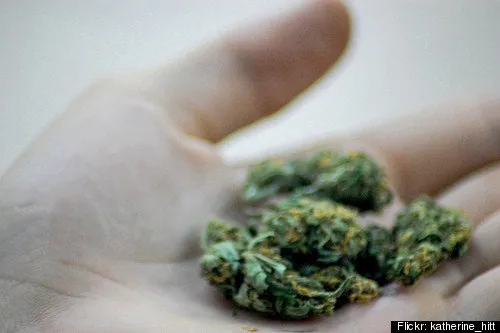
Steve is a horticulturist of sorts. He raises orchids, Japanese maples, and other plants at his southern Rhode Island home. Tending the plants helps ease his rheumatoid arthritis (RA) pain, he says. But the garden offers more than Zen; he grows one plant -- marijuana -- specifically to relieve RA pain and discomfort.


"If my pain is at a 10, it will take it down to a 6 or 6.5," he says. "I’m an old-man weight lifter. After I smoke I am able to work my shoulders and arms to keep my joints healthy. It gives me the desire and ability to get through a workout."


Steve has had permission to grow marijuana for medicinal purposes since 2006. He smokes it and cooks it in butter (for baking) and makes THC-containing solutions called tinctures (which can be added to foods and drinks) for himself and five other patients with various medical conditions. His home state is 1 of 16, along with the District of Columbia, where marijuana is permitted for medicinal use. 


More from Health.com:
10 Drug-Free Ways to Ease RA Pain
State-by-State Guide to Medicinal Marijuana
15 Things Not to Say to Someone With RA


Cannabis may be useful for people with RA and other chronic pain conditions because it can alleviate pain, reduce inflammation, and promote sleep. But unlike other pain-causing conditions, such as osteoarthritis, RA is associated with a higher risk of lung problems and heart attacks. (RA is an autoimmune condition that attacks the joints and causes multiple health problems.)


It’s not clear if smoking marijuana is a relatively safe pain reliever for people with RA, or if it could increase the risk of RA-associated conditions. And if cannabis is safe, it’s still debatable whether it’s safer to take it as a pill or mouth spray rather than smoking it. Smoking marijuana raises the heart rate and one study found that heart-attack risk rises fivefold in the hour after lighting up, according to the National Institute on Drug Abuse.


Medical marijuana remains controversial -- and thus under-studied -- in part because it is the most commonly abused illicit drug in the U.S.

How marijuana works


There are hundreds of chemicals in marijuana, but the best known is delta-9-tetrahydrocannabinol, or THC. THC is what produces the high that comes with smoking or eating products made from marijuana. 


But THC also binds with receptors in the brain that produce an analgesic affect. It may also reduce anxiety experienced by some people dealing with chronic pain.


Marijuana is typically smoked, which produces the most rapid delivery into the bloodstream, says Kathryn Cunningham, Ph.D., director of the Center for Addiction Research at the University of Texas Medical Branch, in Galveston.


It can also be taken through vaporization (heated into a mist and inhaled), and in edible products, such as baked goods and tinctures, which take longer to have an effect because they have to be broken down in the stomach, Cunningham says. 


There are also drugs such as Marinol (dronabinol) and Cesamet (nabilone), which are synthetic versions of THC in pill form that are available by prescription for AIDS patients and cancer patients undergoing chemotherapy, and a newer product called Sativex, a mouth spray with THC and cannabidiol. Sativex is not yet available in the United States, but is used in Canada and Europe for pain relief in people with cancer and multiple sclerosis. 


Marijuana is illegal on the federal level, but medicinal marijuana is permitted in some states, including Alaska, Arizona, California, Colorado, Delaware, Hawaii, Maine, Michigan, Montana, Nevada, New Jersey, New Mexico, Oregon, Rhode Island, Vermont, and Washington. Each state has its own guidelines including conditions it can be used for and possession limits (which range from 1 ounce to 24 ounces). Marijuana can be purchased through dispensaries, but most states also allow people to grow the product.

Research is limited


Medicinal marijuana isn’t regulated by the Food and Drug Administration, and there aren’t large-scale studies of its safety and efficacy for chronic pain conditions. (It doesn’t help that there are few manufacturers to fund research.) But there have been some small-scale studies looking at its use.


A 2006 study in Rheumatology looked at 58 RA patients over a five-week period. They were split into two groups -- one taking Sativex and the other a placebo. The group on Sativex had improvements in "morning pain on movement" and sleep quality compared to placebo users. (The study was funded by GW Pharmaceuticals, which makes Sativex.) 


"This is a good example of how to answer the question with scientifically sound experiments," Cunningham says, adding that larger studies are needed. "We don’t know how the drug affects the disease process, but it does seem to have a positive analgesic effect on RA."


Doctors at the University of Toronto and Dalhousie University in Halifax reviewed 18 clinical trials that included 766 people between 2003 and 2010. The trials studied the use of cannabis -- either smoked or in THC-based prescription products -- as a medical therapy for non-cancer-related pain, most often neuropathic pain (chronic pain that is usually due to nerve damage). 


Fifteen of the trials found that it worked better than a placebo for pain relief and four trials found that it improved patients’ sleep. A majority of the studies found that side effects like sedation, dry mouth, dizziness, and disturbed concentration were mild enough that people did not drop out of the studies. 


However, the analysis included only one study of RA patients -- the same 2006 Sativex study -- so it could not determine if the long-term use of smoked marijuana was associated with a higher risk of heart or lung complications.

Potential health risks


Smoking marijuana can increase a person’s heart rate for up to three hours, according to the National Institute on Drug Abuse. Marijuana also contains carcinogens (possibly 50 percent to 70 percent more than cigarettes), making smoking potentially harmful to RA patients, who may already suffer from lung problems. The Institute on Drug Abuse, however, reported that no studies have linked marijuana use to lung or upper respiratory cancers. 


Safety of unregulated products is also always a concern. John Oram, Ph.D., cofounder of CW Analytical, a California-based scientific lab that tests medical marijuana products for safety, quality, and potency, says that more than 90 percent of what is on the market is safe.


"But about 10 percent or less is dangerous, and we don’t know how unsafe it is and what problems it may cause," he says. Oram adds that labs like CW Analytical empower patients and doctors to make informed decisions about their alternative medicine options.


Hazards of these products can include things like bacteria and mold, which would be illegal to sell in regulated food items. Some products may also be prepared in kitchens that aren’t licensed, may not adhere to refrigeration schedules, or may be made with allergens like peanuts, but not labeled as such.


Oram says products should be tested within seven to eight weeks of purchase because that is the shelf life of cannabis. The dispensaries should have records of the date a product was tested for mold, yeast, bacteria, and pesticides, as well as its potency (or amount of THC). 


Not all doctors prescribe medicinal marijuana, even in states where it is permitted. Ogechi "Helen" Mbakwe, M.D., from Central Washington Internal Medicine and Endocrine Center, in Yakima, doesn’t.


Dr. Mbakwe is uncomfortable with the lack of control and regulation of medicinal marijuana. She says other medications, like methotrexate, treat the autoimmune disease at the root of the problem, and in turn can control pain and inflammation in combination with pain medications like nonsteroidal anti-inflammatory drugs . (Methotrexate and other drugs are known as disease-modifying antirheumatic drugs, or DMARDs, because they can actually slow down or prevent RA’s damaging effect on the body.)

On the other hand, while marijuana may help with pain symptoms, it does nothing for the disease progression or organ damage, Dr. Mbakwe says. 


"If we mask these [symptoms] by giving them marijuana and giving them euphoria, the disease progression will keep getting worse and things like organ damage and severe problems will still occur," she notes.


Steve, who has RA and lost one of his kidneys in 2004 after being diagnosed with cancer, feels he doesn’t have a lot of choices to manage his pain. Many RA medications can be harmful to the kidneys, and that is one reason he says he opts for marijuana to treat his symptoms.


Patients with kidney problems can still take DMARDs as long as their dose is adjusted and they are monitored closely, Dr. Mbakwe says. "DMARDs are not simply pain medications and are not interchangeable with pain medications. So the question of exchanging an RA medication with marijuana should not arise."


Another problem that Dr. Mbakwe encounters is that, even though she doesn’t recommend marijuana to her RA patients, she has many who use it for pain, and she says these patients often have a tendency to abuse narcotics.


"Most patients looking for this have other chronic pain issues and are likely on other controlled substances," Dr. Mbakwe says. "It can be difficult to see who has a tendency toward abuse potential."


Gregory A. Smith, M.D., medical director of the Los Angeles–based Comprehensive Pain Relief Group, is a pain management and addiction specialist. He says marijuana is not a drug, like methamphetamine, that you take once and are physically dependent upon. "Marijuana does not have that kind of chemical reaction in the brain," he says. "It is safer than a lot of the prescription narcotics that I detox people from."


About 28 million people try marijuana each year, and only between 8 percent and 10 percent of users exhibit addictive behavior like drug seeking, Cunningham says. "What we need to know is if it is addicting in pain patients and is it more so than opiate medications," which are commonly used to treat chronic pain, she says.


In the meantime, some patients will continue to use marijuana even though large studies haven’t tested its safety and efficacy.


Steve, who has been using marijuana for 30 years (long before it was medically legal), smokes a bowl and a half every day and more at night. He says this helps him sleep and relieves pain, and he hasn’t experienced any major side effects over the years, but admits that it can precipitate what he calls "couch lock." 


"It makes you lazy," he says.

FOLLOW HUFFPOST HEALTHY LIVING

Steve is a horticulturist of sorts. He raises orchids, Japanese maples, and other plants at his southern Rhode Island home. Tending the plants helps ease his rheumatoid arthritis (RA) pain, he say...
Filed by Amanda L. Chan  | 
 
 
  • Comments
  • 23
  • Pending Comments
  • 0
  • View FAQ
Comments are closed for this entry
View All
Favorites
Recency  | 
Popularity
Page: 1 2  Next ›  Last »  (2 total)
photo
HUFFPOST SUPER USER
sensimilla
Lead with your heart, and your mind will follow...
05:45 PM on 06/13/2011
cannabis is a miracle herb, it's uses are endless. Legalization cannot happen fast enough for all those out there suffering(esp in non mmj states!).
photo
HUFFPOST SUPER USER
msdusti
Stop staring at my micro-bio!!
12:13 PM on 06/12/2011
My former rheumatologist recommended it to me, and he's in INDIANA!! He couldn't legally recommend it, of course, but I told him I didn't want to be on all of those nasty arthritis meds. Look up the side effects for Methotrexate, Enbrel, Simponi, and the like. You couldn't pay me to use the stuff.
photo
Budista4Peace
Take the High Road. Legalize It!
03:21 AM on 06/10/2011
Need I say more? Budista ~highly~ recommends the herb,
HUFFPOST SUPER USER
jacquelinenh
HuffPo Addict
03:42 PM on 06/09/2011
Steve, Cannabis is for the pain management, but as a horticulturalist, I hope you are taking advantage of all the many wonderful herbs and plants that are useful in reducing painful inflammation... turmeric, ginger, blueberries, ginger, oregano (and more: http://www.womentowomen.com/inflammation/naturalantiinflammatories.aspx"
08:56 PM on 06/10/2011
How about ginger blueberry ganga muffins?
photo
Budista4Peace
Take the High Road. Legalize It!
12:59 AM on 06/11/2011
Sounds delicious. Recipe?
11:47 AM on 06/09/2011
Pain management is one of the most vital parts of o holistic treatment program. It is the cornerstone of any emergency room procedure. It is all about reducing pain and improving the quality of life by improving mobility and reducing distress.

http://bit.ly/jsQjwj
10:52 AM on 06/09/2011
Also, cannabis is a known immune system modulator. Researchers now speculate ( a a few are researching) the hypothesis that one of the reasons cannabis seems to treat some immune disorders effectively is because of how it affects the immune system. The government's intransigence with respect to clinical research is truly unfortunate.

For example:

Croxford, J. L. and T. Yamamura (2005). "Cannabinoids and the immune system: potential for the treatment of inflammatory diseases?" J Neuroimmunol 166(1-2): 3-18.
10:49 AM on 06/09/2011
HuffPost wrote:
"Medicinal marijuana isn’t regulated by the Food and Drug Administration, and there aren’t large-scale studies of its safety and efficacy for chronic pain conditions. (It doesn’t help that there are few manufacturers to fund research.)"

One should also note that in order to do clinical research on cannabis in the USA, one has to get permission from the National Institute of Drug Abuse. The NIDA is on record with the position that they do not allow any research into potentially positive uses of cannabis. There you have one even more relevant reason why there isn't much clinical research into cannabis: it's all now done overseas.
10:34 PM on 06/08/2011
Tell your Congressional Representatives -
It is time to "Change the Schedule of Cannabis, Cannabis Laws, and Drug Czar Laws"

Read and Sign the petition at
http://www.change.org/petitions/change-the-schedule-of-cannabis-cannabis-laws-and-drug-czar-laws

After you sign, email your friendlies, share on facebook, or twitter from the petition page. Have a website grab the widget so vistitors can sign without leaving your site.

In a resent study, Mortality Within the First 2 Years in Infants Exposed to Cocaine, Opiate, or Cannabinoid During Gestation - pediatrics.aappublications.org A total of 2,964 infants were drug-tested at birth to see if they were positive for drugs - cocaine, opiates and cannabis were studied and compared to drug free infants. The death rates were :

"No drugs at birth" deaths....... 15.7 deaths per 1000 live births

"Cocaine positive" deaths........17.7 deaths per 1000 live births

"Opiate positive" deaths...........18.4 deaths per 1000 live births

"Cannabis positive" deaths....... 8.9 deaths per 1000 live births

The "cannabis positive" infants rate of death is almost half of what the "No drugs" death rate is! When it comes to failure to thrive, cannabis shows a significant improvement in the outcome.

If the body is low on cannabinoids, just as with any other defiency, the body does not function correctly since the endocannabinoid system regulates all other systems in the body.
08:22 PM on 06/08/2011
If marijuana isn't your first choice, I have relied on melatonin for years. For a period I worked nights shifts from 10pm to 7am. When I drove home in the mornings, the route was exactly facing east so the sun was blazing right in my directions. Telling my body "Get up! It's morning" Then I'd arrive home to sleep and naturally, could not. I used Melatonin for only 2 weeks to reset my bodies sleep clock, also know as your circadian rhythm. It worked amazingly! You can find loads of sleeping tips in the ebook Get To Sleep Now! at http://instantlyfallasleep.com
MELATONIN is a naturally occurring hormone produced by the pineal gland, located in the centre of the brain. This hormone helps us fall asleep by chemically causing drowsiness and lowering your body temperature, and the melatonin signal is also part of the system your body uses to regulate your sleep-wake cycle.
Production of melatonin occurs during darkness, giving it the nickname “hormone of darkness”. High doses of melatonin have been shown to increase a person’s REM sleep time and dream activity throughout the night. It’s meant to be taken 30 to 90 minutes before hitting the sheets; it acts as a mild hypnotic, causing melatonin levels in your blood to rise before your brains own production accomplishes it.
07:28 PM on 06/08/2011
Steve, RA also makes you "lazy". 50% of RA sufferers go on disability within a year, mainly because of the fatigue.

One huge change I just made that helped me, is going off ALL caffeine. Caffeine seemed to combine with the meds I was taking, it totally took over my appetite. I was usually only drinking one cup of green tea a day before this.

When I stopped altogether, my appetite went back to normal, I keep losing 3 lbs a week without even trying (after 15 years where I couldn't lose a pound), my swelling is way down and my pain is much better as well.

I probably couldn't do it if I were working, but it's the first time in 15 years I have a shot at a normal life. I would bet anything that increased energy would also act like caffeine, and increase my appetite.
photo
HUFFPOST SUPER USER
420
wilderness is my church
06:54 PM on 06/08/2011
I have used it for arthritis, and it does reduce the pain. I have used it for eating disorders, man now we are talking, but it broke my bank, and now I am in Jenny Craigs weight loss program, oh the great herb I LOVE IT. Pass the Chunky Monkey
photo
Budista4Peace
Take the High Road. Legalize It!
03:24 AM on 06/10/2011
Cherry Garcia over here, please. :o)
05:40 PM on 06/08/2011
Some rheumatoid arthritis patients are having very good results with (adult) stem cell therapy. Here is a good video from a Texas woman discussing her experience: http://youtu.be/W3O3EP1DhuM
07:31 PM on 06/08/2011
from what my doc says, they have to wipe out your immunity first, and that kills 10% of the patients. A little high risk factor, in my book
10:14 PM on 06/08/2011
Hi Mary, this treatment does not require that your immune system be wiped out. You are comparing apples and oranges.
11:05 PM on 06/08/2011
There are more quack cures per square inch for RA, particularly out of the US. This place is in Panama. Particularly suspicious is that it claims to cure a number of diseases. I fell for a place that did that once, once is enough.

If this were true, my doc would have been on top of it, she's familiar with all the cutting edge stuff. The website says they are published in NIH, but don't give the exact link.

It also uses cord blood as well. Cord blood tends to grow in places you don't want it to.

To me, this looks like a scam.
02:44 PM on 06/08/2011
Mold is a fungus that grows on moist or damp places. Mold spores grow very rapidly in areas of excessive moisture including leakage that could have occured in roofs, pipes, walls, plant pots or areas where flooding has occured. Other products such as paper, cardboard, ceiling tiles, wood, and wood products that could be sitting in your garage or basement provide conducive growth environments for molds. Source: http://www.blackmoldremovalsupport.com Mold can be identified by its musty smell or color including black mold, blue & pink mold. While most mold is harmless, some black molds can be toxic & have health implications including mold poisoning.
This user has chosen to opt out of the Badges program
02:29 PM on 06/08/2011
If alcohol were ever scrutinized at the same level as cannabis, it would be illegal. I have no doubt that both have benefits and both can harm. Moderation is the key. Most people are reasonable about alcohol, but many people who truly know very little about cannabis can be completely unreasonable about cannabis.
photo
MichaelAKD
Be the change you wish to see in the world.
02:15 PM on 06/08/2011
before my sister passed away from C three mos. back she was using mmj to do what her prescribed meds would no longer do, control her nausea and pain and without any negative side effects. in fact towards the end medical marijuana aka mmj, it was literally the only way she could get an appetite, eat and hold it down. one day on top of everything else she had gotten the hiccups, had them for almost a full day before she saw me. she was sobbing and desperate, the hiccups were hurting here so much because of her situation and her doctor's advice was tried and all failed. then out of desperation an idea, mmj? to that point she had only used a marijuana tincture mixed into another liquid to drink for relief of her other symptoms, but this time we had her inhale hold for a few seconds and then,...not a single hiccup afterwards! it was so immediate and so affective neither of us could believe it. i was so glad it worked, she was in tears again but this time because of the relief. she got hiccups on final occasion did the same thing and had the same end result. mmj does have legitimate med. uses.