More

HuffPost Greatest Person Of The Day: Mike Stanton Turned His Own Tragedy Into Action

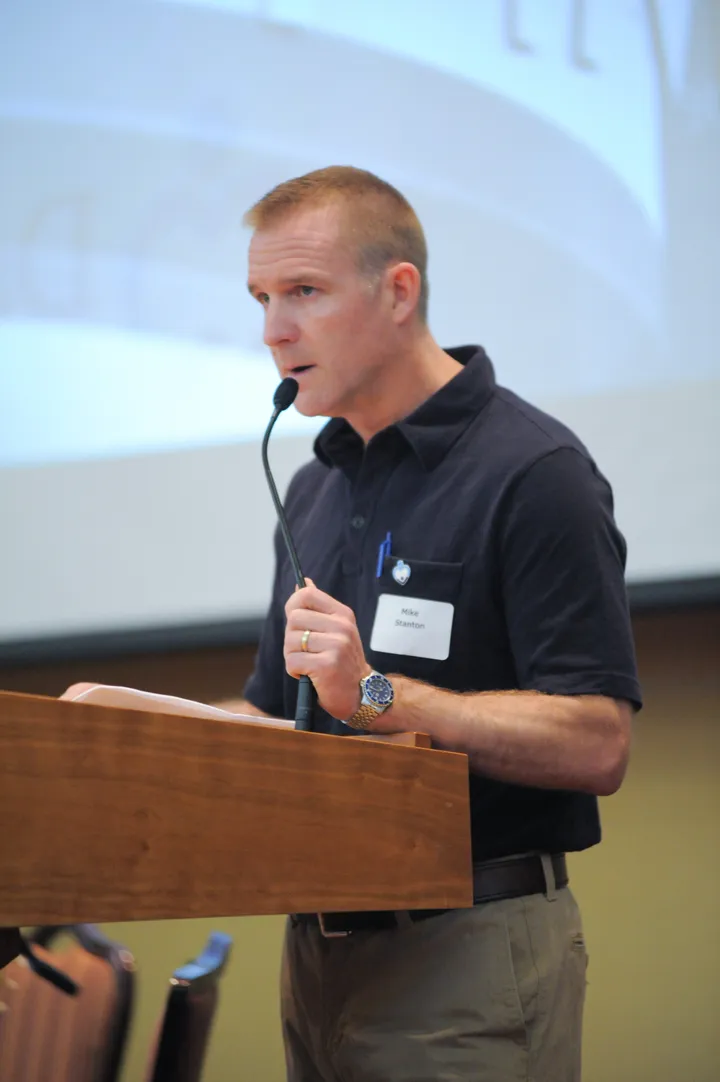
Mike Stanton

First Posted: 06/22/11 07:52 PM ET Updated: 08/22/11 06:12 AM ET

Danny Stanton was a healthy, happy kid. He and his three siblings -- younger brother Tommy, older brother Johnny, and older sister Mary Grace -- were extremely close. He loved sports; he was already a switch hitter and could ride a two-wheel bike at four years old. Danny's preschool teacher told his parents that the first thing Danny said to her on his first day of school was, "I just want to learn."

"He was just the most engaging, athletic, inquisitive kid you'd ever meet," his father, Mike Stanton, a police officer in Chicago, told HuffPost. "In every way in his life, he was unique."

But when he was only two years old, Danny experienced his first night seizure -- his eyes rolled back into his head and he started to shake violently. Mike and his wife, Mariann, didn't know what was happening to their son, but they rushed him to the hospital. After a round of tests, the doctors weren't able to determine what caused Danny's seizure. But they assured the Stantons that Danny would be OK; children often outgrow their seizures, doctors said, and they shouldn't worry.

"It was horrifying to wake up to that," Mike said. "But we were given this sense of comfort, that everything would be fine."

Danny experienced a few more seizures in the years that followed. Neurologists and other doctors met with him consistently, but none ever gave the indication that Danny's seizures could eventually be fatal. Danny was put on daily medication, but otherwise, he lived a normal life.

"But then, here we are now," Mike said.

Just over two years after Danny's first seizure, on a December morning in 2009, Mike and Mariann entered Danny's room to find him lifeless. Five EMT personnel attempted to revive him in their home, and he was again rushed to the hospital, but Danny could not be saved. He was a victim of SUDEP: Sudden Unexplained Death in Epilepsy.

Mike remembers getting home from the hospital that day. "My wife and I were up in our room looking at each other, asking: how could this happen? How could we not know that something like this could happen? We were so involved in his life, in his health, how did we not know this was a possible outcome?"

Rather than turn inward, Mike and his family made the decision to take action. They enlisted Mike's brother, Tom, who had a history of working with non-profits and legal organizations, and together, they formed the Danny Did Foundation -- its name a take on the words Mike wrote at the end of Danny’s death notice: “Please go and enjoy your life. Danny did.”

"When we started, we didn't have a real framework for how it should work," said Tom Stanton, who is now the executive director of the foundation. "But we just posted a little Facebook page, and Mike just started posting pictures of Danny, with captions -- very personal thoughts about his son. And then, all of a sudden, we had 3,000 fans within 48 hours."

Things grew from there. Initially, the foundation was just focused on drumming up awareness for SUDEP, but soon they began promoting prevention methods, purchasing seizure detection and prevention devices for families with children in need (such a device might have saved Danny's life) and sharing their findings with doctors and hospitals nationwide. The site currently features a slew of emphatic testimonials from families who have been helped by the foundation.

Mary Duffy, who is now the chief operating officer for the foundation, told Mike early on that they'd need to "start big and stay big" if they wanted to have an impact, and Mike has taken that mantra to heart. He and his family continue to work tirelessly for their cause, despite his own full-time job as a Chicago cop.

"The most important thing I want to communicate, through all of this, is Danny himself," Mike said. "It's Danny that drives us every day, without question."

Of course, Mike wishes someone else had started a similar foundation before Danny died. Their desire to raise awareness for SUDEP and epilepsy in general is mixed with the anger they feel about how little information they were given about Danny's condition.

"We certainly wonder sometimes why we had to do this," he said. "Why didn't somebody else do it first? If we had known what was possible, we might have treated it differently. The term epilepsy had never been raised to us. There was a real failure on the doctors' part to provide this information."

Currently, epilepsy claims the lives of 50,000 people each year; more than breast cancer. The Danny Did Foundation is "urgently committed" to getting the right information to doctors across the country -- to let them know that these seizures can be fatal, but with enough detection and care, there are ways to prevent fatalities. And they're here to help.

"We want a meaningful, measurable, and immediate impact," Mike said. "We don't want to wait around."

FOLLOW HUFFPOST IMPACT

Danny Stanton was a healthy, happy kid. He and his three siblings -- younger brother Tommy, older brother Johnny, and older sister Mary Grace -- were extremely close. He loved sports; he was already a...
 
 
  • Comments
  • 42
  • Pending Comments
  • 0
  • View FAQ
Comments are closed for this entry
View All
Favorites
Recency  | 
Popularity
This user has chosen to opt out of the Badges program
photo
01:38 AM on 07/07/2011
As a seizure patient and parent to a now adult seizure patient I know what daily life is like when managing seizure disorders ( epilepsy). Many individuals dealing with epilepsy do not have the knowledge needed, the support, or the resources in order to go about daily life without fear. In 2010 I decided to make a difference and start National Seizure Disorders Foundation for seizure patients, caregivers, and professionals in need of extensive support, unconditional love and acceptance, and ongoing education. In many cases I have experienced it is the professionals, the doctors, that need more education in the area of seizure disorders. Not just in treating epilepsy but preparing the patient and caregivers for the daily journey that is now a part of their lives. SUDEP is a tragedy and still remains quite a mystery. However, many families do not recover as you did. You were open to Danny's mission in life to raise awareness so that others may live. I honor Danny and celebrate his life often although I never knew him personally. Your strength to carry on with the Danny Did Foundation has inspired me to carry on with National Seizure Disorders Foundation. A heart felt thank you.

Terrific Tonya Heathco
National Seizure Disorders Foundation
http://nationalseizuredisordersfoundation.org
This comment has been removed due to violations of our [Guidelines]
01:57 AM on 06/29/2011
Wow! I am stunned. My son was diagnosed with Rolandic Epilepsy when he was 8 yrs old. Our neurologist didn't even want to put him on medication because he said the seizures were benign and he would just grow out of them. He eventually ended up putting him on Trileptal because the seizure became way to frequent. His sister was the first person the see him having one, and she was traumatized (she wouldn't sleep at night unless someone promised to stay up and watch him) but after speaking with the neurologist I promised her that nothing would happen to him. No one ever told us about SUDEP, and as I sit here now reading your story, I am angry. As a society we are constantly being bombarded about the importance of education and yet this is not something that parents' of children with epilepsy are not being educated on. TRAGIC! God bless you and I am so very sorry for you and your family's loss.
photo
HUFFPOST SUPER USER
JayZee
Biofilm Slayer
08:59 AM on 06/23/2011
Does Nerontin/Gabapetin lead to ALS?

Big Al thinks it does and so do I.
http://www.alsforums.com/forum/archive/index.php/t-1355.html
photo
HUFFPOST SUPER USER
JayZee
Biofilm Slayer
08:49 AM on 06/23/2011
This neuro defect is most curable with diet.
Ketogenic Diet
http://tinyurl.com/6e2lsga
08:54 AM on 06/23/2011
Controlled, not cured.
09:43 AM on 06/23/2011
Actually, keto can control seizures long enough to give the brain time to heal and stop seizing permanently. My son has been on keto for three years, and it has saved his life. I have many friends whose children have stopped having seizures thanks to the ketogenic diet, and have been able to stop taking anti-seizure meds, wean off the diet after a couple years of seizure freedom, and the seizures have not returned. I'd all that a cure. Not one size fits all, to be sure, but practically a miracle for some.
03:30 PM on 06/23/2011
Keto is great for some, but not all, just as not all medications work for everyone. My daughter has been on 9 different meds, LGIT diet, and has a Vagus Nerve Stimulator. She still has seizures regularly. Please don't give people false hope.
06:32 AM on 06/23/2011
Mike Stanton you are officially a Hero. I am so so so sorry to hear about your boy. I can't even begin to imagine what that must feel like. Thank you for everything you do.
photo
HUFFPOST SUPER USER
Lew-Lew 46
01:14 AM on 06/23/2011
I heard about this disorder (SUDEP) some time ago on a TV show on PBS. Before that I had never heard of it. The commentators pointed out that so little is known about the human brain and that this disorder is not alone when it comes to knowledgeable sources in the medical field. How many people go through live with this and may even die because of it and no one figured it out. I feel incredibly lucky. Thank you for sharing.
photo
HUFFPOST SUPER USER
TWeissMA
http://www.disabilitymessage.com
09:24 PM on 06/22/2011
"The term epilepsy had never been raised to us. There was a real failure on the doctors' part to provide this information."

When I came home from Fort Sill, Oklahoma with epilepsy after experiencing a heat stroke, the military presented me with a 10% disability rating. You might not believe how many veterans I have met who have had similar experiences with the VA. The first VA neurologist I encountered was rather, 'ho hum,' about the new disability I found myself with, leading me to reach for a civilian one who struggled for a number of years to get the seizures under control.

"Currently, epilepsy claims the lives of 50,000 people each year; more than breast cancer."

Epilepsy has nearly killed me more than once due to, 'status-epilepticus,' or non-stop seizure activity requiring medical intervention and the use of medications such as intravenous phenobarbitol and more. The experiences of Danny and his family are horrible, yet they do not surprise me. America has real, very serious issues with disability - ones that are not going to go away until this nation understands that we really are people just like everyone else.

Mike Stanton - you are a real-life superhero as far as I am concerned. Thank You.
09:55 PM on 06/22/2011
I have epilepsy and have for over 40 years and I am insulted by the term "disability". I have a medical condition which at can be bad but I am in NO WAY disabled.
photo
HUFFPOST SUPER USER
TWeissMA
http://www.disabilitymessage.com
09:58 PM on 06/22/2011
Interesting - I have experienced a form of disability for nearly the same length of time and I find the purely medical association to be offensive. When people require a medical diagnosis to receive the assistance they need it is a horrible thing at times. Personally, I am more than just a diagnosis.

There are those who avoid association with America's largest minority population - People with Disabilities - due to various reasons. Enjoy!
02:50 AM on 06/23/2011
I'm on disability and with the kind of seizures I have and the frequency, I will call it disabled.

I am no longer allowed to drive, operate heavy machinery, get on ladders higher than 6' (I used to house paint), hold babies, get in water, ride my bike, use my stove (microwave only), etc. I blanked out at my last job and had no idea what city I was in, what year it was, or who the people around me were (they were co-workers), and I couldn't find the bathroom. I'm not helpless but I'm not offended by the term disability. I was offended when doctors told me I was just being dramatic:))))
This user has chosen to opt out of the Badges program
photo
01:51 AM on 07/07/2011
I've heard many military veterans also experience epilepsy as a result of PTSD. I'll need to research into that. Have you any input? I'm compiling information for a new post at National Seizure Disorders Foundation and would appreciate your point of view.
08:41 PM on 06/22/2011
I cannot imagine the pain Mr. and Mrs. Stanton are living with. This is the first I have heard the term SUDEP.

I spent half of last year expecting to die in my sleep from a seizure. I was stunned to be alive at the first of the year.

It took three years to get diagnosed properly with epilepsy. During that time, doctors tried to convince me that I needed a shrink. It wasn't until EMT's showed up to the house twice in one day and the roommate got video footage of me having a seizure that they changed their tune. I finally found the right doctors and got diagnosed properly and put on some medication.

I still have nasty seizures at night...last week I woke up in bed with a bloody lip, cut foot, lump on my head, scraped elbow and knee, and a nice bruise on my shin. Best I can figure, I got up, fell, got back in bed, and have no memory of the incident. I have woken up on the floor in other rooms more than once with no memory of the incident.

My last boss seized up in the middle of the night and died and so did the downstairs neighbor. I told my therapist today that I'm terrified to go to bed at night and that I have started sleeping on the floor...at least I can't fall out of bed having a grand mal:)
photo
HUFFPOST SUPER USER
TWeissMA
http://www.disabilitymessage.com
09:31 PM on 06/22/2011
I can't sit with my back to a door; I have very real issues with personal space and people touching me after waking up to find endless numbers of, 'lookie-loo's,' staring down at me time after time on city streets. PTSD is very tied to epilepsy, but does the military recognize this? No. Do doctors? No.

Sounds like time the medical practice woke up and smelled the coffee to me; society as well. Maybe we need to start staring at everyone who wears tennis shoes with a disapproving look or something, just to make a point.
09:44 PM on 06/22/2011
I can tell when I have had a partial complex seizure in front of other people because they are looking at me with a horrified look on their face:) I cringe wondering what bizarre thing I have done this time.

I had one psychiatrist suggest that my seizures were PTSD related. But the same hospital wired my head for a five day long EEG and watched me have three seizures and came up with a different conclusion.

Now that you mention it, I have the same issues you do with personal space:) I'm not known for being cuddly.
HUFFPOST SUPER USER
amd02148
01:09 AM on 06/23/2011
Oh my god Luke I am so sorry to hear that. What drug did they ultimately put you on? I tried everything but Lamictal turned out to be a savior. Also see your doctor and tell him you want to take a test in the sleep lab. A lot of the problem is you tend to stop breathing when you have a seizure, see if you can get a CPAP machine. Priceless.
02:44 AM on 06/23/2011
First we tried Dilantin, then Depakote, then pre-gabelin....and now? Lamictal:))

I spent 5 days in the hospital wired up to an EEG while they videoed me, and even had people sit in my room 24/7 the first three days. I have to be careful daydreaming 'cause I notice I hold/stop my breathing.

And now I'm googling CPAP machine:)
01:08 PM on 06/23/2011
Also in my case. Lamictal has allowed me to function normally, I did not know when I would have a seizure or ourburst before. I also have a CPAP machine. During a test they found I stopped breathing 11x/hour. No wonder I was tired and depressed. Now, I am no longer terrified of having a seizure. By the way, I am not handicapped, disabled etc. I have a couple of physical challenges which make life more difficult, but I am able to function well with good diet, exercise, mindfulness and staying in the moment.