More

Purified Bottled Water Is Not Tap Water, Industry Argues

Bottled Water Tap Water

First Posted: 06/23/11 06:54 PM ET Updated: 08/23/11 06:12 AM ET

The International Bottled Water Association on Wednesday took on what it described as a "a myth repeated by some anti-bottled water activists that bottled water which comes from municipal water sources is just tap water in a bottle."

At least one group opposed to bottled water, however, shrugged at the public-relations gambit, suggesting that no matter how much processing is involved, bottled water is, on its face, an unnecessary product.

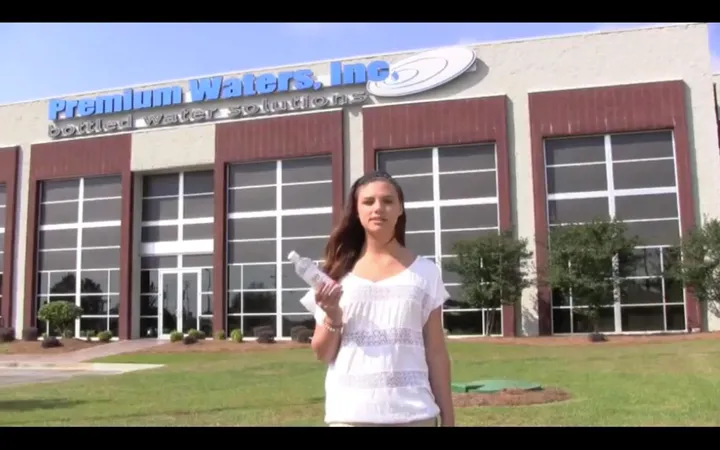
The trade group's new video, posted on YouTube, features an unnamed teenager who has appeared in numerous similar videos for the organization.

The young woman -- who independently approached the organization as a fan of bottled water, according to IBWA spokesman Tom Lauria, and who has been paid a small stipend for her efforts -- takes viewers on a guided tour of a plant belonging to Premium Waters, Inc. in Douglas, Ga.

Lauria said that the video was made in response to various claims -- including one famously made by the comedy duo Penn & Teller for their Showtime series "Bullshit" -- that consumers are being duped into buying, at a substantial markup, water they can get for pennies form their own taps.

"The real story here is how much work it takes to turn municipal tap water into a food product that can legally be labeled 'purified water,'" Lauria said. "What you're seeing is a huge effort at compliance with federal regulation."

Bottled water comes from a variety of sources, including springs, artesian wells, and yes, municipal water sources -- that is to say, from the tap. But according to the video, it's a long road from tap water to purified water -- a road involving several stages of filtering, reverse osmosis, ultra-violet light purification and other processing and testing before the product is ready for market.

"Some people insist that bottled water that comes from public water systems is just the same as tap water in a bottle. They make it seem like it just comes from a hose, but that's not true," explains the young video hostess, whose identity is not revealed, Lauria said, in deference to a request from her parents. "The process of producing bottled water using a public water system, is more complicated than people realize. The final product is quite different from regular tap water."

WATCH:

Whether being different means that purified water is better than tap water is an open question, and one that has repeatedly been raised by environmental groups. They say that -- even setting aside the environmental footprint of millions of unnecessary plastic bottles going to landfills, or into waterways, or along sides of roads -- regulation of the bottled water industry remains woefully inadequate.

The Food and Drug Administration regulates bottled water, while the Environmental Protection Agency monitors public drinking water.

"I think this is just another example of them feeling the need to respond to some of the consumer backlash against the bottled water industry," said Emily Wurth, director of the water program at the group Food & Water Watch. "They're not really dispelling too many myths."

Wurth pointed by way of example to a 2009 report from the U.S. Government Accountability Office that found, among other things, that bottled water, which is governed as a food item by the FDA, is less strictly regulated, overall, than municipal drinking water overseen by the EPA.

"FDA's bottled water standard of quality regulations generally mirror the Environmental Protection Agency's (EPA) national primary drinking water regulations," the GAO noted. But the "FDA's regulation of bottled water, particularly when compared with EPA's regulation of tap water, reveal key differences in the agencies' statutory authorities. Of particular note, FDA does not have the specific statutory authority to require bottlers to use certified laboratories for water quality tests or to report test results, even if violations of the standards are found."

"Among GAO's other findings, the state requirements to safeguard bottled water often exceed FDA's, but still are often less comprehensive than state requirements to safeguard tap water," the report said. "FDA and state bottled water labeling requirements are similar to labeling requirements for other foods, but the information provided to consumers is less than what EPA requires of public water systems under the Safe Drinking Water Act."

A report compiled by the Environmental Working Group in January was the latest to assess the transparency of bottled water makers on the sourcing, processing and purity testing of their products. In that analysis, the group found that 18 percent of brands do not reveal the geographic source of their water. Another 32 percent offer no information on purity tests, EWG found, while 13 percent "publish 'water quality' reports that lack any actual testing results."

The International Bottled Water Association responded to that report in detail, asserting among other things that the characterization of tap water being more tightly regulated than bottled water was false. The group noted that the GAO found that "no evidence that bottled water caused any illnesses during the previous five years."

"In contrast," the group further noted, "EPA scientists and researchers have estimated that tap water consumption is the cause of over 16 million cases of acute gastrointestinal illness (vomiting/diarrhea) in the United States each year."

Still, Wurth said the solution is to make sure that doesn't happen, rather than create a market for disposable bottles of water. "The way we see it, we should be putting our efforts into protecting our water sources," Wurth added, "so people aren't in a position where the feel they have to use bottled water."

Wurth also pointed to other long-standing issues with bottled water, including chemicals used in the manufacture of plastic bottles that are known to be endocrine disrupters.

Echoing the GAO report, Wurth also noted that 75 percent of water bottles produced U.S. are still discarded rather than recycled. And while those bottles represent less than 1 percent of the total municipal waste stream, according to government data, producing bottled water is far more energy intensive.

A number of college campuses have considered or implemented bottled water bans, and several cities have curtailed purchases of bottled water by city-owned facilities.

A ballot initiative in Concord, Mass., that would have made that city the first to issue a blanket ban on bottled water sales was narrowly defeated in April, although voters approved an educational initiative aimed at curbing bottled water use. The IBWA had threatened to sue if such a measure had passed.

Last month, the trade group reported that consumption of bottled water was up 3.5 percent in 2010, after two consecutive years of decline attributed to "poor economic conditions."

Total bottled water consumption hit 8.75 billion gallons last year, up from 8.45 billion gallons in 2009, while per-capita consumption increased 2.6 percent in 2010, according to the IBWA. That amounts, on average, to every person in America guzzling about 28.3 gallons of bottled water last year.

FOLLOW HUFFPOST GREEN

The International Bottled Water Association on Wednesday took on what it described as a "a myth repeated by some anti-bottled water activists that bottled water which comes from municipal water source...
 
 
  • Comments
  • 654
  • Pending Comments
  • 0
  • View FAQ
Comments are closed for this entry
View All
Favorites
Recency  | 
Popularity
Page: 1 2 3 4 5  Next ›  Last »  (18 total)
06:21 PM on 06/29/2011
It's funny that only 30 years ago, people who drank Perrier - the only bottled water at the time, at least in the United States, were routinely made fun of. Paying for water in a bottle was akin to paying for air, it was considered absurd. Yet now the bottled water market is huge. Buying bottled water in a country that has perfectly potable water coming right from the tap is really nothing more than a convenience.
HUFFPOST SUPER USER
Leo Mauler
01:38 PM on 06/29/2011
There is only one real reason for purchasing bottled water: its quick and portable. Tap water is the much better drinking water source in nearly all locations in the U.S.A., and if you buy a portable drinking water bottle then there really is no need to purchase any bottled water at all.
09:42 AM on 06/29/2011
The bottled water industry is also needed for emergency situations and water contamination, to find out how they regularly help in times of need visit http://bottledwatermatters.org/ !
HUFFPOST SUPER USER
Leo Mauler
01:26 PM on 06/29/2011
No it isn't. Bottled water doesn't contain the chlorine levels needed (quite small, really) to keep the bottled water safe to drink for long periods of time. Some of the water on the shelves right now contains enough bacteria to make you sick, and certainly enough to grow quite a lot while sitting in your dark moist location waiting for a natural disaster when it can get you sick.

If you must store water for emergencies, a tiny bit of chlorine bleach will make it safe to store for years, and if you use your own tank you can make sure it is safe. Bottled water requires that you blindly trust the corporation that bottled their local tap water after removing all the chemicals which made that water safe to drink.
09:38 AM on 06/29/2011
Also, if you want to find the facts about water and regulations that apply to them visit http://www.thefactsaboutwater.org/ !
HUFFPOST SUPER USER
Leo Mauler
01:41 PM on 06/29/2011
I'd find you easier to believe if all three websites weren't owned by the International Bottled Water Association.

The facts and regulations are that that EPA has thousands of people to measure and regulate tap water, and the FDA, which "regulates" bottled water, has a single person who has to divide his time between "regulating bottled water" and some other gargantuan task. There's just no comparison between the regulations, and no real reason to think that bottled water is safer than tap water.
airmikee99
I can has micro-bio?
04:59 PM on 06/30/2011
How much spam do you need to post in order to prove you're just a shill?
09:37 AM on 06/29/2011
To find information about the bottled water industry visit http://bottledwater.org/ !
HUFFPOST SUPER USER
Leo Mauler
01:33 PM on 06/29/2011
I'm suspicious of you being an industry shill. BottledWaterMatters.org and BottledWater.org are both owned by the same parent company, International Bottled Water Association (though you wouldn't know this about "BottledWaterMatters" if you had bad eyesight and were unable to read the fine print). "TheFactsAboutWater.org" makes an even greater effort to hide its connection to the International Bottled Water Association, but the organization that owns the website name "TheFactsAboutWater.org" is...the International Bottled Water Association.
photo
HUFFPOST SUPER USER
vidian6
Consultant with hard advice
03:06 AM on 06/29/2011
If this is true and bottle water isn't tap water. Then why has so many bottle water companies been cited for selling tap water. This is an undisputable fact.
HUFFPOST SUPER USER
Leo Mauler
02:00 PM on 06/29/2011
Most bottled water is tap water. Some bottled water is spring water. Spring water depletes the underground aquifer and damages local ecologies. Aquifer depletion has been cited as one of the primary causes of the Great Food Crisis of 2011.

But even though tap water has a variety of sources, including rain reservoirs and rivers, bottling it removes the chemicals which kill bacteria in water. Drinking bottled water is rather like drinking tap water after the local government has issued a "boil" order on tap water: you're choosing to drink water in which bacteria can grow and thrive.
03:01 PM on 06/28/2011
Duh the industry says this because they want you to buy water. I don't even know why people buy tap water or assume it 'tastes better'. if you want actually filtered water BUY A FILTER. They have resuable BPA-free water bottles that come with a built in filter.
http://www.fourgreensteps.com/community/green-tv?task=viewvideo&video_id=213
photo
HUFFPOST SUPER USER
Andrew Harvey
Don't F with the Jesus
02:57 PM on 06/28/2011
It people want to engage in paranoia about their water, its their business. Personally, I don't think there's a material difference between bottled water and what comes out of the tap, but that's a function of where you live.
casaroonc
Your micro-bio is empty
07:55 AM on 06/28/2011
Buy a R.O. unit put it under your sink & fill your own bottles (not plastic).
HUFFPOST SUPER USER
exilist
02:49 AM on 06/28/2011
Aquafina and dasani and the rest taste horrible. Dead water.
photo
HUFFPOST SUPER USER
William Brock
01:53 AM on 06/28/2011
The bottle water industry in America is a total fraud......Turning on the tap and filling a plastic, BPA laddened, bottle with a pretty label, does not make their water worth more than Gasoline for the car. Only one bottled water in the world is worth the price, and that is the ultra pure and fresh FIJI WATER...the rest are all frauds....
casaroonc
Your micro-bio is empty
07:53 AM on 06/28/2011
Mountain Valley is good as well. it used to only come in glass. I do believe it is considered the purest water on earth.
HUFFPOST SUPER USER
Leo Mauler
01:53 PM on 06/29/2011
Ahh yes, Mountain Vally spring water, which magically appears ex nihilo from the air...except that it doesn't. Spring water comes from the local aquifer. This means that bottled spring water is about as damaging to the environment as you can get with a bottled water, since all that water sucked out of the earth deprives the local flora and fauna of the local ecology of the water they need to survive. Aquifer depletion has been cited as one of the main causes of the Great Food Crisis of 2011.
HUFFPOST SUPER USER
Michael J OConnell
Enduring curiosty and quest for rationality
09:37 PM on 06/27/2011
See the documentary "Tapped" for a look at the bottled water industry.
CKMJr
I can't complain, but sometimes I still do.
06:04 PM on 06/27/2011
wonder if any of these crazy people could take the "Pepsi Challenge" with bottled water vs. tap water?
airmikee99
I can has micro-bio?
05:01 PM on 06/30/2011
Penn & Teller did that challenge on an episode of their BS series. A vast majority of the people taking their unscientific poll chose tap water over bottled water.
03:47 PM on 06/27/2011
Bottled water is one of the biggest scams of all time. If the water that comes out of the tap is too contaminated to drink, you no longer can call what you live in "civiliazation". So, if that's the case what do Americans do? Demand that their local/state governments provide the clean water their taxes pay for, and enforce environmental laws so corporations don't pollute? No - they just go buy corporate water instead. It's truly one of the most frighteningly ignorant and lazy concepts this country has ever produced. If you would have told people a hundred years ago that we'd be paying corporations for clean water, you'd have been called insane. And you are. Such is life now in The United States of America, Inc. (A Delaware Company).
photo
HUFFPOST SUPER USER
mass maritimer
liberty for all
09:32 AM on 06/27/2011
I buy distilled water first but if the store is out I will buy purified water.

Try this simple scientific experiment at home:

Take a tea bag and steep in two different cups. The first in distilled/purified water and the filtered through your water filter but from your tap.

Look at the color of the tea. Taste it.....

The distilled or purified water makes a clear, mineral and additive free tea. This experiment works on coffee for taste but tea you can easily visualize.

That said, make sure you recycle when you switch to the bottle.
This user has chosen to opt out of the Badges program
photo
02:13 PM on 06/27/2011
Drinking only distilled water or heavily purified water leads to mineral deficiencies. The whole point of drinking water is for the minerals.
photo
HUFFPOST SUPER USER
mass maritimer
liberty for all
04:16 PM on 06/29/2011
MYTH: Distilled water leaches minerals from our bones and cells, and causes mineral deficiencies because it lacks the minerals found in other types of water.

FACT: It is true that distilled water can leach inorganic minerals, but since it is neutralized once ingested, this concept does not apply to human health. Water has so little minerals in it, one should not depend on it for dietary benefits. We get minerals from food, not water. - Water the Ultimate Cure by Steve Meyerowitz, p. 80. Additionally, you can throw in a few of grains of rice per gallon of distilled water to create your own "mineral water."
photo
HUFFPOST SUPER USER
TaxpayingVoter
Wait....whut?
02:17 PM on 06/27/2011
Distilled water isn't good for drinking. It leeches the minerals out of your body.

It's made for things like indoor fountains or car batteries, things that one wouldn't want a mineral buildup on.