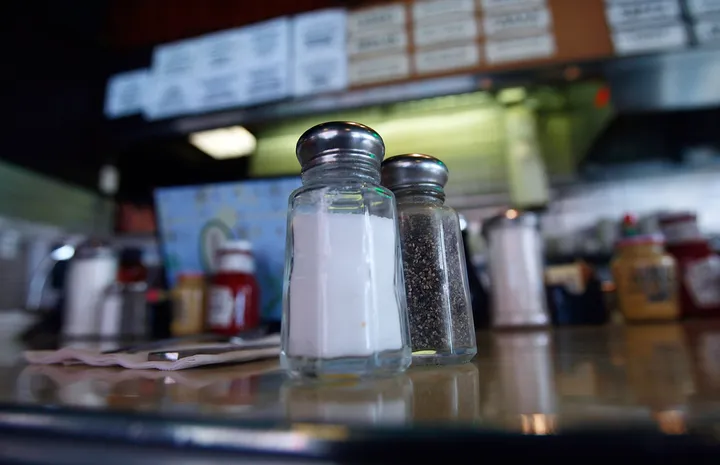
In an analysis that set off a fierce debate over the health effects of salt, researchers said on Wednesday they had found no evidence that small cuts to salt intake reduce the risk of developing heart disease or dying prematurely.
In a systematic review published by The Cochrane Library, British scientists found that while cutting salt consumption did appear to lead to slight reductions in blood pressure, that was not translated into lower death or heart disease risk.
The researchers said they suspected the trials conducted so far were not big enough to show any benefits to heart health, and called for large-scale studies to be carried out soon.
"With governments setting ever lower targets for salt intake and food manufacturers working to remove it from their products, it's really important that we do some large research trials to get a full understanding of the benefits and risks of reducing salt intake," said Rod Taylor of Exeter University, who led the review.
The Cochrane review attracted sharp criticism from nutrition experts. Francesco Cappuccio, head of the World Health Organization's collaborating center for nutrition at Warwick University, said it was "a surprisingly poor piece of work."
"This study does not change the priorities outlined worldwide for a population reduction in salt intake to prevent heart attacks and strokes, the greatest killers in the world," he said in an emailed comment.
Simon Capewell, a professor of Clinical Epidemiology at Liverpool University, said the review was "disappointing and inconclusive" and did not change public health consensus that dietary salt raises blood pressure.
Most experts are agreed that consuming too much salt is not good for you and that cutting salt intake can reduce hypertension in people with normal and high blood pressure.
Many developed nations have government-sanctioned guidelines calling on people to cut their salt or sodium intake for the sake of their longer-term health. The World Health Organization (WHO) lists reducing salt intake among its top 10 "best buys" for reducing rates of chronic disease.
In Britain, the National Institute of Health and Clinical Guidance (NICE) has called for an acceleration of the reduction in salt in the general population from a maximum intake of 6 grams(g) a day for adults by 2015 to 3g by 2025.
U.S. guidelines recommend Americans consume less than 2.3g of salt daily, or 1.5g for certain people who are more at risk for high blood pressure or heart disease.
While previous trials have found there is a blood pressure benefit from cutting salt, research has yet to show if that translates into better overall heart health in the wider population. High blood pressure, or hypertension, is a major risk factor for cardiovascular diseases -- the leading causes of death worldwide.
Taylor said he thought it did not find any evidence of big benefits because the numbers of people studied and the salt intake reductions were relatively small.
"The people in the trials we analyzed only reduced their salt intake by a moderate amount, so the effect on blood pressure and heart disease was not large," he said.
For this review, Taylor's team found seven studies that together included 6,489 participants. This gave the researchers enough data to be able to start drawing conclusions, they said. But even so, the scientists think they would need to have data from at least 18,000 people before they could expect to identify any clear health benefits.
Elaine Rush, a professor of nutrition at Auckland University of Technology in Australia, said that putting a spotlight on single trials and generalizing dietary advice for a single nutrient such as salt was "not helpful."
"What is helpful is for the food industry to reformulate products to reduce sodium and increase the nutrient quality of foods by using real ingredients," she said in an emailed comment.
Copyright 2011 Thomson Reuters. Click for Restrictions.
Our 2024 Coverage Needs You
It's Another Trump-Biden Showdown — And We Need Your Help
The Future Of Democracy Is At Stake
Our 2024 Coverage Needs You
Your Loyalty Means The World To Us
As Americans head to the polls in 2024, the very future of our country is at stake. At HuffPost, we believe that a free press is critical to creating well-informed voters. That's why our journalism is free for everyone, even though other newsrooms retreat behind expensive paywalls.
Our journalists will continue to cover the twists and turns during this historic presidential election. With your help, we'll bring you hard-hitting investigations, well-researched analysis and timely takes you can't find elsewhere. Reporting in this current political climate is a responsibility we do not take lightly, and we thank you for your support.
Contribute as little as $2 to keep our news free for all.
Can't afford to donate? Support HuffPost by creating a free account and log in while you read.
The 2024 election is heating up, and women's rights, health care, voting rights, and the very future of democracy are all at stake. Donald Trump will face Joe Biden in the most consequential vote of our time. And HuffPost will be there, covering every twist and turn. America's future hangs in the balance. Would you consider contributing to support our journalism and keep it free for all during this critical season?
HuffPost believes news should be accessible to everyone, regardless of their ability to pay for it. We rely on readers like you to help fund our work. Any contribution you can make — even as little as $2 — goes directly toward supporting the impactful journalism that we will continue to produce this year. Thank you for being part of our story.
Can't afford to donate? Support HuffPost by creating a free account and log in while you read.
It's official: Donald Trump will face Joe Biden this fall in the presidential election. As we face the most consequential presidential election of our time, HuffPost is committed to bringing you up-to-date, accurate news about the 2024 race. While other outlets have retreated behind paywalls, you can trust our news will stay free.
But we can't do it without your help. Reader funding is one of the key ways we support our newsroom. Would you consider making a donation to help fund our news during this critical time? Your contributions are vital to supporting a free press.
Contribute as little as $2 to keep our journalism free and accessible to all.
Can't afford to donate? Support HuffPost by creating a free account and log in while you read.
As Americans head to the polls in 2024, the very future of our country is at stake. At HuffPost, we believe that a free press is critical to creating well-informed voters. That's why our journalism is free for everyone, even though other newsrooms retreat behind expensive paywalls.
Our journalists will continue to cover the twists and turns during this historic presidential election. With your help, we'll bring you hard-hitting investigations, well-researched analysis and timely takes you can't find elsewhere. Reporting in this current political climate is a responsibility we do not take lightly, and we thank you for your support.
Contribute as little as $2 to keep our news free for all.
Can't afford to donate? Support HuffPost by creating a free account and log in while you read.
Dear HuffPost Reader
Thank you for your past contribution to HuffPost. We are sincerely grateful for readers like you who help us ensure that we can keep our journalism free for everyone.
The stakes are high this year, and our 2024 coverage could use continued support. Would you consider becoming a regular HuffPost contributor?
Dear HuffPost Reader
Thank you for your past contribution to HuffPost. We are sincerely grateful for readers like you who help us ensure that we can keep our journalism free for everyone.
The stakes are high this year, and our 2024 coverage could use continued support. If circumstances have changed since you last contributed, we hope you'll consider contributing to HuffPost once more.
Already contributed? Log in to hide these messages.