More

California Deploys Wasps, Scientists Highlight More Green Alternatives To Pesticides

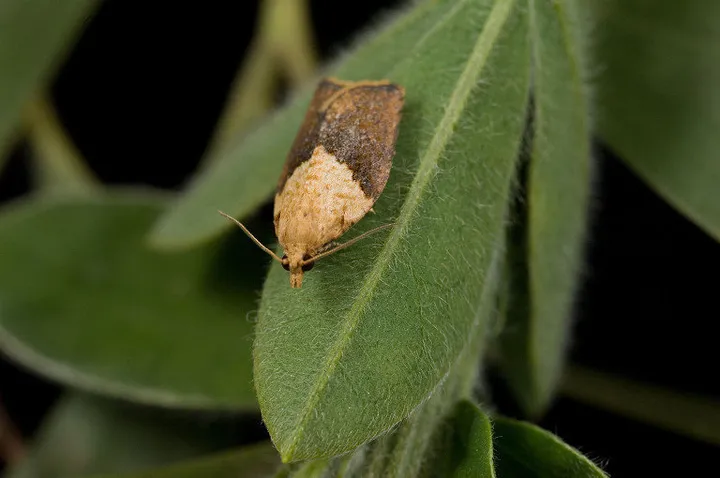
Light Brown Apple Moth

First Posted: 07/13/11 03:48 PM ET Updated: 09/12/11 06:12 AM ET

The 15 million wasp eggs scattered across neighborhoods in Sacramento and San Luis Obispo counties represent a rare return to historical methods of pest control.

Deployed last week, the eggs will soon give rise to tiny wasps (Trichogramma platneri), each no larger than a grain of rice. The stingerless species is naturally inclined to lay its eggs inside light brown apple moths' own eggs. Scientists hope the natural weaponry -- also soon to be deployed in San Mateo and San Joaquin counties -- will purge the pest's progeny and help stave off the need to launch a chemical attack to protect California's crops.

Despite the implementation of this alternative strategy for fighting agricultural pests, and a new broad pest management plan in the works for California, the aerial spraying of pesticides continues to dominate the field. An estimated one billion pounds of pesticides are applied to U.S. farms, forests, lawns and golf courses each year, despite the promise of alternative strategies, such as introducing predatory species or enhancing biodiversity in and around crops. The trend also continues in the face of mounting concerns over the potential risks posed by these chemicals -- with diabetes and poor prenatal brain development recently added to the list.

Monsanto, a U.S.-based agricultural organization, remains under the gun after a report suggested that industry regulators had known for decades that its Roundup weedkiller could cause birth defects.

"If we were to show that we could cut pesticide use to zero, there are a lot of [big business] people that would not be happy," said Miguel Altieri, an expert in agriculture and ecology at the University of California, Berkeley.

A quick Google Earth flyover of California's Central Valley -- around Lodi, Modesto and south to Fresno -- provides a good view of what high input of pesticides can look like. The major agricultural hub typically bears a low diversity of crops, large fields and few natural areas, said Claudio Gratton, an entomologist at the University of Wisconsin, Madison.

But it hasn't always been that way.

In the late 1800s, the cottony cushion scale decimated the state's citrus industry after the pest's unintentional importation with citrus trees from Australia. There were no natural predators nearby. So, entomologists returned to Australia in search of an insect that would prey on the scale. Intentional introductions can be disastrous -- often wrecking havoc on an ecosystem -- but a shipment of Vedalia beetles proved successful, and they remain a mainstay in citrus farm management.

In more recent decades, California farmers and vintners have added strips of alfalfa to cotton fields and blackberries around plots of grapes in an effort to provide a habitat for beneficial insects.

But the widespread introduction of "magic bullets," such as genetically modified crops and pesticides, slowly eroded interest, suggested Altieri. It became a lot easier to simply spray chemicals. And the subsequent growth of large monocultures, pesticide resistance, secondary pest outbreaks and pressure from big corporations and pest control advisers, he added, has further hooked farmers on the chemicals.

Meanwhile, new research continues to validate the wisdom of pre-chemical farmers, who generally tended to smaller plots and preserved more natural lands.

A study by Gratton and his Wisconsin colleagues across a seven-state region of the Midwest, published online Monday in the Proceedings of the National Academy of Sciences, found that landscape simplification -- the introduction and enlargement of monocultures or the shrinking of edges between farmland and natural habitat, for example -- was associated with insecticide application over an additional 5,400 square miles of land, an area the size of Connecticut.

In effect, larger crop fields and smaller natural lands makes "it easier for pests to make a living, and makes living harder for their natural predators," Gratton said. "Farmers respond by spraying increased amounts of pesticides."

The researchers also concluded that farmers still derive substantially more income from the additional cropland than they pay out for the pesticides: an estimated total of $26 billion versus $69 million across the Midwest in 2007.

Of course, that comparison only accounts for direct costs of the pesticides. A study in 2009 suggested that dependence on pesticides in the U.S. results in about $12 billion in environmental and societal damages, due to indirect costs such as crop losses and ground water contamination.

"If you continue doing these kinds of studies, and stack up all of these values like public health, then all of the sudden you have something that is a lot more significant to society than just looking at income derived from the land," said Gratton.

Further, as he noted, the choice for farmers is not all or nothing. Farmers can be strategic in placing patches of natural areas, even using perennial biofuel crops, such as switch grass, to attract natural predators.

"There are marginal lands such as low-lying wetlands and slopes that are very poor for producing food crops but are otherwise good for things like grasses and trees," he said. "This not only would potentially lower pesticide use, but also decrease runoff into streams, improve biodiversity and lower greenhouse gases."

Both Gratton and Altieri agreed that incorporating more diverse landscapes would also help California in its wasp-moth battle.

It would provide the wasps with greater habitat so that they could "stay, reproduce and expand," said Altieri.

Steve Lyle, director of public affairs for the California Department of Food and Agriculture (CDFA), noted that the state does look to a large pool of tricks to outwit pests.

"For decades, the department has been committed to integrated pest management. We choose softest approach possible first; pesticides are a last resort," he said.

Lyle highlighted examples, including the removal of fruit from grape vines to deter the devastating European grapevine moth and a long-running program to sterilize and release male metflies.

Changes to land use, such as preserving natural lands around a crop field, however, fall outside of his department's jurisdiction.

The CDFA has begun developing a broad new strategy in its war on agricultural pests. The environmental impact report will assess the effects of a number of pests that scientists believe could be detected in the state, and then evaluate a range of options to manage and control the pests.

The department will be accepting public input from stakeholders, private citizens oand environmental groups on the proposal until July 25. The final two of five public meetings will be held this week: Tuesday night at the San Francisco public library from 5:30 p.m. to 7:30 p.m., and at the same time Wednesday at the University of California, Fresno, Business Center.

However, the efforts are not enough, said Altieri, pointing out that only a tiny fraction of the funds for agricultural research in the University of California system go toward "low input approaches."

Altieri has helped lead a grassroots effort to spread interest in natural methods of pest control. The farmer-to-farmer program allows farmers to teach and observe one another implementing various strategies.

While the alternative tactics may not provide the same kind of instant gratification that can come from applying pesticides, not only will they result in a reduction of pests over time, Altieri suggested, but they will also prompt a return of pollinators and birds, enhance soil fertility and diminish soil erosion. In other words: a healthier ecosystem.

"Why do we always blame the pests? In order to have a pest, you have to have a system that is unhealthy," said Altieri. "Monocultures are the worst systems you can have. They invite pests. But you can increase immunity through diversification."

FOLLOW HUFFPOST SAN FRANCISCO

The 15 million wasp eggs scattered across neighborhoods in Sacramento and San Luis Obispo counties represent a rare return to historical methods of pest control. Deployed last week, the eggs will s...
 
 
  • Comments
  • 68
  • Pending Comments
  • 0
  • View FAQ
Comments are closed for this entry
View All
Favorites
Recency  | 
Popularity
Page: 1 2  Next ›  Last »  (2 total)
06:47 PM on 07/20/2011
Agricultural products (such as natural, nontoxic pesticides), food, and fuel can all be grown on the same plot of land by utilizing different parts of the same plant. Mustard is a hardy plant- a large amount of it is grown in Canada.

Mustard seed oil can be used for biodiesel. The byproduct of mustard seed oil production is a solid which can be applied to crops as an organic pesticide (bugs don't like spicy- try using cayenne pepper in your home garden). The leafy part of the plant can be used as salad greens.

Hemp is another crop with multiple uses. The seed can be used as food or fuel, and the stalk can be used to make clothing, plastic, paper, various building materials, and fuel.

Individuals need to take more responsibility in the production of their own food. Innovations in home food production need to be focused on.
01:32 PM on 07/16/2011
Too bad this article completely overlooked the growing field of biological agriculture. There are better alternatives to chemicals that are natural and effective. This type of products is caled biocontrol, and my company Novozymes is one of many that provide this solution.
10:43 AM on 07/15/2011
This is extremely important. Next year is the fiftieth anniversary of Rachel Carson's SILENT SPRING, in which she highlighted the importance of using nature to contain nature, which is evidently the best way. It is slightly disappointing it has taken us so long to truly hear her words, but we must now do as much as we can to avoid toxic pesticides and do more things like this.
11:36 PM on 07/13/2011
I'm sure the bees will be happy...if you can find any.
photo
HUFFPOST SUPER USER
Welshish
The sadder but wiser girl for me.
10:54 AM on 07/14/2011
My geraniums are not being pollenated, there are no bees or seed pods on them for the 2nd summer here in Mass. The park where I take my dog has a field of clover and I did see 2 honey bees in that, say, 5 acre field on Friday.
The lack of bees is very frightening.
photo
HUFFPOST SUPER USER
Apathetic Apostle
Independent
06:00 PM on 07/13/2011
Maybe we should move away from large scale farming to local community farms which support its own community and do not contribute pesticides into our round water and oceans. I live in Oxnard which is a huge agricultural area, and I can often smell the pesticides in the ocean next to the Santa Clara Rivermouth. This is not some evironazi scare, but pure observation from a local.
06:55 PM on 07/13/2011
In the last 10-15 years Oxnard has lost much of its agricultural land to development as the population grew from ~ 125000 to 250000. Do you think you are at greater risk from the environmental degradation of urbanization or growing strawberries? Sometimes the better path is not obvious
08:08 AM on 07/14/2011
I live in an urban area and I grow my own strawberries, grapes, peaches, potatoes, green beans, squash, cucumbers, asparagus, blueberries, apples, plums apricots, nectarines, pumpkins, okra, radishes, cabbage, broccoli, onions, garlic, sunflowers, eggplant, tomatoes, blackberries, black raspberries. I also keep bees.
photo
HUFFPOST SUPER USER
Welshish
The sadder but wiser girl for me.
10:38 PM on 07/13/2011
Sure makes me think that the autism epidemic in CA is related to pesticides.
Pesticides are not benign. They are neurotoxins.
11:51 PM on 07/13/2011
Sure makes me think that the ______ epidemic in __ is related to pesticides­ (and chemicals of all kinds). Unless you live in the boonie's and raise it or grow it yourself, it is almost impossible to not ingest something undesirable.
05:59 PM on 07/13/2011
Permaculture is the New, old thing. As in so many challenges, we think we have to keep inventing the wheel when the answer is right here. We are the real pests when we insist on the newest, shiny machines to deplete our soil of nutrients. Monoculture depletes the soil. Permaculture enhances and retains nutrients.
This user has chosen to opt out of the Badges program
photo
05:27 PM on 07/13/2011
Wow - bunches of people in here with some great suggestions!
HUFFPOST SUPER USER
lhanderson86
05:21 PM on 07/13/2011
We need to focus on more natural alternatives. There are mosquitos in India and Souther Africa that are RESISTANT to DDT. We have to stop spraying chemicals that insects are going to adapt to over a certain period of time.
05:08 PM on 07/13/2011
I grow oranges & tangerines commercially here in So Cal. Like a lot of my fellow growers I follow the recommendations of the University of California's Integrated Pest Management plan (IPM). I belong to a co-op insectary where we grow our own beneficials to distribute to our groves- for a couple of decades now. Our watershed is monitored for any kind of chemical run-off.

Yet, some years I loose 30% of my crop to things like Red Scale. I do have pesticides occasionally applied to the trees - or I'm out of business. That is the point of IPM- to minimize application of chemicals but with the recognition of the financial realities of farming. Some things just do not have natural controls- witness the progressive decline of the Florida Citrus industry because of the Asian Citrus Psyllid & the HLB disease it carries.

IPM is a sound,science-based method of agriculture management. I can not support the concept of "organic" farming as I can not tolerate its intrinsic dishonesty - more expensive food with no consumer or community benefits.
We farmers are more sensitive to these issues than you back-yarders might think- and base our practices on sound science, rather than the screeching of "environmental saviors" who write articles like this.
06:10 PM on 07/13/2011
You sounded like a farmer, who loves his land, but you proved yourself not to be a "husbandman". Your need to denigrate "back yarders" shows your lack of understanding of those who share your eco system. Florida and its citrus industry suffer from man made disasters that were foretold and predictable. There is truth to the saying, "You can't mess around with Mother Nature". She always finds a way to get our attention, to our sorrow.
06:36 PM on 07/13/2011
I use "back-yards" descriptively, not pejoratively. Mine is not a hobby, I have to make this work - while being the best steward possible. That weight is not shared by the back-yarder who thinks we can fix all this with marigolds.
Please look for info on the Citrus Psyllid & HLB. This has the potential to effectively destroy the California citrus industry.
Thanks for listening.
photo
HazelPethigFan
I don't know until I know
08:18 PM on 07/13/2011
Trebla is being polite. I will not be. To claim a farmer shows "lack of understanding" about agriculture by a backyard non-farmer like you is absurd. You non-farmers dream of a farm world that never existed. And the world you are trying to create borders on bizarre.

For example, this article mentions the pesticide Roundup. Anti-technology/anti-GMO folks on HuffPost dislike roundup. But did you know there are numerous pesticides used on ORGANIC farms that are more hazardous than Roundup? Google "Copper Sulfate" . It's a 'natural' fungicide used on organic farms. Oh wait...let me do it for you:
http://web.pppmb.cals.cornell.edu/resourceguide/mfs/06copper.php

Here's the warning for this pesticide used on ORGANIC farms:
"Copper sulfate is highly toxic to fish. Even at recommended rates of application, this material may be poisonous to trout and other fish, especially in soft or acid waters. Its toxicity to fish generally decreases as water hardness increases. Fish eggs are more resistant than young fish to the toxic effects of copper sulfate. Copper sulfate is toxic to aquatic invertebrates, such as crab, shrimp, and oysters. It is used as a pesticide to control tadpole shrimp in rice production."

Sound like nice stuff? Again, this pesticide is commonly used on ORGANIC farms.

Life is full of nuance..better get ready for a lot of it.
photo
imusintheevening
With,without,who'll deny it's whatthe fights about
04:56 PM on 07/13/2011
Once again, California leads the way.
photo
Monk Monkey
Watching probability clouds precipitate
04:50 PM on 07/13/2011
OOooooohhh - so surprising! This is basic comprehension for any ecologist.
HUFFPOST SUPER USER
GandenT
04:49 PM on 07/13/2011
It seems obvious that industrialized monoculture planting would create an all-you-could-ever-eat buffet for pests who specialize in exploiting the crop in question. I guess the upside is that millions of farm families got to lose their farms and livelihoods as both were absorbed by government backed mega-corps.
HUFFPOST SUPER USER
alteredstory
Hold on to the center
04:33 PM on 07/13/2011
Mmm, pest control by parasitoids!

Who said death by zombie can't be useful?
This user has chosen to opt out of the Badges program
photo
Hopethisworks
Fed Up With Both Parties
04:31 PM on 07/13/2011
For you home gardeners, look into companion gardening. Plant some marigolds with your tomatoes to keep them pest free.
photo
HUFFPOST SUPER USER
Chad Wheeler
07:09 PM on 07/13/2011
There is a great book called something like "Roses Love Garlic" that goes into a lot of detail about this. I am using this to plan my new garden. Also bought praying mantis eggs this year to release into the garden.
04:31 PM on 07/13/2011
Gardening tips:

Place bluebird houses around vegetable garden. They will eat cabbage butterflies and feed the larvae to their young.

Have problems with brown rot on peaches? Plant the earliest varieties available and preferably cling-stone peaches. The June Gold is a great peach for backyard gardeners. I had a great JG crop and no spray of any variety was required.
photo
HUFFPOST SUPER USER
Welshish
The sadder but wiser girl for me.
10:31 PM on 07/13/2011
My grandfather always built Purple Martin houses for the same reason, those Purple Martins will eat the bugs right off the garden plants. Plus, those houses that they like are the ones that are like little apartment buildings for birds, so cute.