More

Cyber Defense Agency Faces Challenges From Within

Uscert

First Posted: 07/29/11 06:09 PM ET Updated: 09/27/11 06:12 AM ET

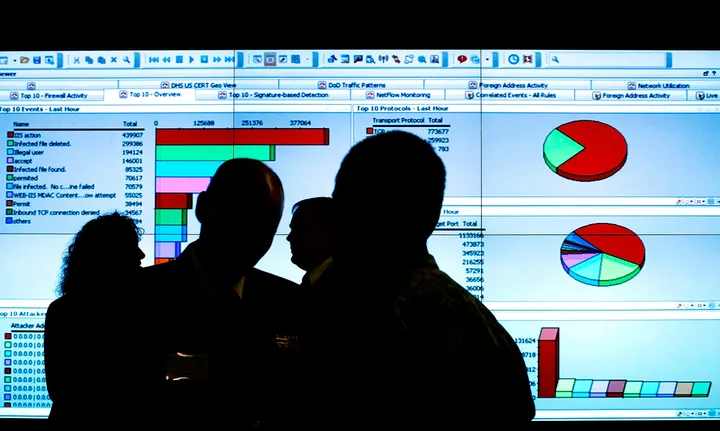
Last year, the nation's computer systems reported more than 100,000 cyber threats, or one every five minutes. The job of analyzing and preventing them was assigned to a government agency that has faced repeated criticism for lacking enough resources and authority, as well as a consistent leader, to help it accomplish an increasingly daunting task.

That agency, the U.S. Computer Emergency Readiness Team, faced more turnover at the top last Friday when Randy Vickers abruptly resigned. His replacement, Lee Rock, is the agency's fifth director in the past six years.

The Department of Homeland Security, which oversees the agency, said Vickers resigned for personal reasons. But former directors and outside experts say the job of leading the agency has become overwhelming as the threats of cyber attacks continue to mount.

"Imagine being a firefighter in West Texas where there's no fire code and the entire state is filled with arsonists," said Tom Kellermann, chief technology officer of the security firm AirPatrol Corp. "Would you keep the job for long?"

The rapid turnover of leadership at the agency raises questions about the government's cyber strategy and its ability to retain cyber personnel as hackers expose embarrassing gaps in government security. In May, Philip Reitinger, another top DHS cyber official, also resigned.

This comes as hackers have increased their focus on breaking into federal government computer systems. Over the last five years, the number of reported cyber attacks against federal networks has spiked dramatically, from about 5,500 to nearly 42,000.

Most came from hackers spreading viruses by tricking employees into revealing usernames and passwords, according to a report this spring by the Office of Management and Budget.

On Thursday, a report by the Government Accountability Office highlighted another potential weakness: less than one third of federal agencies using social media have failed to create security policies for their accounts, leaving them potentially vulnerable to hackers.

In June alone, the hacker group Lulz Security, or LulzSec, took credit for bringing down the home page of the Central Intelligence Agency and hacking the network of an Atlanta-based FBI affiliate.

Defending against the sheer volume of attacks would be a challenge for any agency, but US-CERT appears unequipped to battle today's rapidly evolving array of cyber threats, Kellermann said.

"Every single one of them has felt overwhelmed and unappreciated," Kellermann said of former agency directors. "The agency is fundamentally under-resourced. It's stretched too thin. They don’t have the capacity to do what's really necessary here."

Created in 2003, US-CERT serves as the cyber security arm of the Department of Homeland Security. Under proposed legislation from the Obama administration, the department would have an expanded role in protecting federal networks from cyber threats.

DHS officials insist the agency is on the right track. Despite Vickers' departure, "we have a continued direction and focus in prevention, preparedness and restoral responsibilities across the board," Roberta Stempfley, DHS's acting assistant secretary for cyber security and communications, told lawmakers this week.

The agency receives reports on cyber threats, issues computer security software, sends alerts about computer viruses and helps coordinate response to cyber attacks in both the public and private sector.

Last year, for example, an employee of a company accidentally inserted a virus-infected flash drive into a company laptop. The company called on US-CERT, whose employees played the role of cyber doctor, diagnosing the virus and helping to remove the infection, which spread to nearly 100 computer systems, according to congressional testimony from a DHS cyber official.

But other agencies are not required to take cybersecurity prescriptions from US-CERT, which has no enforcement authority, according to a report issued last year by DHS Inspector General Richard Skinner.

"Without the enforcement authority to implement recommendations, US-CERT continues to be hindered in coordinating the protection of federal cyberspace," the report found.

The agency has also been criticized for not having enough staff. In January 2010, the agency only had 45 employees, relying on contractors to fill staff shortages. The agency now has 72 federal employees, a DHS spokesman said.

At a conference in March, Vickers acknowledged being overextended as the agency's role expanded to coordinate cyber defense with other countries.

"We're getting a big footprint and unfortunately the footprint is growing faster than the resources," Vickers said at the Government Security Conference & Expo in Washington D.C.

Vickers also expressed confusion about the agency's role in a "cyber event of national significance," asking members of the audience whether a cyber attack against a water treatment facility in Iowa called for help from his agency.

"If anybody in this room can tell me where that threshold is, you'll probably win the new Nobel Peace Prize for cybersecurity because that is the toughest thing to define," he said.

Jerry Dixon, a former agency director, blamed staff shortages on the overly long hiring process used to fill critical positions, causing skilled personnel to take jobs in the private sector instead. Due to a rigorous clearance process, it takes the agency nine to 12 months for new applicants to begin working at the agency, according to the inspector general's report.

"You miss out on a lot of great talent that way," Dixon said in an interview.

Mischel Kwon, who resigned as agency director in 2009 after little more than a year, told a House committee in March the agency suffered from "a lack of governance and lack of authorities to carry out the poorly defined mission."

Kwon also said the agency collects "little to no real data" on the actual attacks occurring against federal computer systems and the agency was "buried too deep" within the DHS bureaucracy.

"As it stands today, US-CERT is constantly caught up in political priorities and much time is spent thrashing around, attempting to service too many projects and stakeholders," she said.

A 2008 report by the Government Accountability Office criticized the agency for not being able to predict attacks or quickly communicate them to the proper agencies. The report also said the agency was operating "without organizational stability and leadership" within DHS.

Until the agency addresses those issues, "it will not have the full complement of cyber analysis and warning capabilities essential to effectively performing its national mission," the report concluded.

Richard Stiennon, chief research analyst at IT Harvest, said the agency's role of tracking and reporting cyber threats is outdated because most companies and government agencies already receive that information from anti-virus companies.

What the agency needs to be doing, he said, is not just report current threats, but also predict those looming in the future, when hackers will devise thousands of new ways to break into the nation's cyber fortress.

"The problem is the bad guys need just one little chink in the armor," Stiennon said. "The government has to protect everything."

FOLLOW HUFFPOST TECH

Last year, the nation's computer systems reported more than 100,000 cyber threats, or one every five minutes. The job of analyzing and preventing them was assigned to a government agency that has face...
 
 
  • Comments
  • 25
  • Pending Comments
  • 0
  • View FAQ
Comments are closed for this entry
View All
Favorites
Recency  | 
Popularity
Page: 1 2  Next ›  Last »  (2 total)
08:30 AM on 07/31/2011
"more than 100,000 cyber threats"---

"THREAT"? --- what is a "threat"? This article looks like a propaganda material to justify legislation to "increase the power of the govt -- FBI, local police, CIA, NSA, etc.".
This user has chosen to opt out of the Badges program
photo
04:26 PM on 07/30/2011
1. Give CERT enforcement capability for CyberSecurity for all Government Agencies.
a. All Agencies would be required to submit their security plans and implementations for approval.
b. All Agencies would have their perimeters monitored for attacks 24x7 by CERT.

2. CERT would develop Cybersecurity Standards that ALL government agencies would be required to meet.

3. The New Head of CERT would be recruited from outside of the ranks of Government (and no I do NOT mean the hacking community, who I view as criminals)

4. The New head of CERT would have the ability to fire the head of cyber security for any Agency that did not comply with CERT developed standards.
photo
HUFFPOST SUPER USER
Knowledgeseeker
01:10 PM on 07/30/2011
there going to be many Jobs opportunities in this field.
photo
HUFFPOST SUPER USER
Grace Note
Is it just me?
11:59 AM on 07/30/2011
I wish Anonymus et al would get something on the Supreme court.
This user has chosen to opt out of the Badges program
photo
Eris23
Justice is in indefinite detention.
09:50 AM on 07/30/2011
"The Department of Homeland Security, which oversees the agency"

Problem #1.
10:45 PM on 07/29/2011
I wish everybody would stop calling Lulz sec and Anonymous 'hackers'. They are just a bunch of 14 year old trolls from 4chan who join chat rooms where a single organizer can direct all their internet traffic to a single source simultaneously in a ddos attack. It's very easy to do, and there are many easy protection mechanisms against ddos attacks, if a web host even bothers to protect against it. They keep getting undeserved glorified infamy from article writers who get wound up by big numbers like "42000 cyber attacks!" when most of those are just harmless pings on the network.

'Hacker' used to mean something, now it's just a buzzword.
This user has chosen to opt out of the Badges program
photo
Eris23
Justice is in indefinite detention.
09:51 AM on 07/30/2011
Sometimes it's lame. Sometimes it isn't. The problem isn't really with referring to Anonymous as hackers. It's with referring to Anonymous as a group.
photo
HUFFPOST SUPER USER
womenforaction
Julene Allen-Dell'Amor founder of Women for Action
09:26 PM on 07/29/2011
The problem with these government agencies is that their employees are overworked and the work ethic is poorly performed. Cases are piled up and employees can not get to them fast enough. Sometimes their equipment is outdated. There is way too much bureaucracy, while the taxpayers are at expense.
08:42 PM on 07/29/2011
The problem here is that all the proposed solutions are complete privacy invasions, undemocratic, and unamerican.

The growing trend of contracts between corporations and policy from the government that are treating ISPs as a police force is astounding. Most call for ISPs to punsh users by redirecting them to other pages(censorship), throttling their service, or blocking them all together. This is unconstitutional and sidesteps due process. People are getting punished without their day in court.
HUFFPOST SUPER USER
Katina Cooper
08:19 PM on 07/29/2011
The agency collects little or no data on the viruses? Sounds like an agency that does not need to exist. I wonder how many millions could be saved by getting rid of this agency that collects little or no real data because it's too deep in another agency?
HUFFPOST SUPER USER
Derrik Oates
05:05 AM on 08/02/2011
As a cyber security professional I can not impress upon you the dire state of our nations cyber security. So NO we do not need to get rid of this entity, but it does need a complete bottom to top overhaul. Because they are overwhelmed and have no clear mission.
photo
HUFFPOST SUPER USER
Mechelle Gray
Excuse Me, Exxxcccuse Me!
07:47 PM on 07/29/2011
Have you seen this:

The House Judiciary Committee approved legislation on Thursday that would require Internet service providers (ISPs) to collect and retain records about Internet users’ activity.

CNET reported the bill would require ISPs to retain customers’ names, addresses, phone numbers, credit card numbers, bank account numbers, and temporarily-assigned IP addresses for 12 months.

The bill passed by a vote of 19 to 10, and is aimed at helping law enforcement track down pedophiles.

“The bill is mislabeled,” Rep. John Conyers (D-MI), a senior member of the panel told CNET. “This is not protecting children from Internet pornography. It’s creating a database for everybody in this country for a lot of other purposes.”
photo
HUFFPOST SUPER USER
DON McDONALD
Politics is NOT a spectator sport, get involved
07:33 PM on 07/29/2011
A thought, when it comes to top of the line talent, you get (with luck) what you pay for...the federal government is lucky to be able to even hire from the bottom of the barrel with what it pays and the way it hires.

Those who spend their spare time yelling, "No government employee should make more than an average taxpayer, and they're all lazy leaching bums anyway", do NOT help the situation...

Talent follows the money and appreciation...
photo
HUFFPOST SUPER USER
tbryant80
I am an Independent, not a troll for partisan poli
06:18 PM on 07/29/2011
As with the HB Gary Federal incident, if the government and its contractors, stopped being the "bad guys" (i.e. hackers), maybe there would not be so many cyber attacks.
This user has chosen to opt out of the Badges program
photo
Eris23
Justice is in indefinite detention.
09:53 AM on 07/30/2011
The powerful are usually deaf to anything that may curtail their perceived power.
photo
HUFFPOST SUPER USER
johnb123
All I ask..just be reasonable....do things my way
06:09 PM on 07/29/2011
I think I.T. personal should be given a set of Nunchaku's to walk around the company and put down cyber threats. :)
photo
HUFFPOST SUPER USER
johnb123
All I ask..just be reasonable....do things my way
06:02 PM on 07/29/2011
"Most came from hackers spreading viruses by tricking employees into revealing usernames and passwords, according to a report this spring by the Office of Management and Budget."

A company's biggest cyber threat are its own employees.

Paulo1
Thanks for reading, (even if you disagree)
05:56 PM on 07/29/2011
Um Pardon me but I would like to propose a minor solution to this problem.

The biggest threat to the net is not Anonymous or LulzSec it is China and its government sponsored hacking units. While these smucks at ludicriously named U.S. Computer Emergency Readiness Team are trying to go after a bunch of hacktivists the country is at risk. If they were actually smart they would publicly state that their mission is not to protect corporate wrongdoing or lies by the government but to actually protect our data and our infrastructure. Then I believe they would have Anonymous and LuLzSec actively helping them rather than taking down their sites. Nothing works harder than an idealistic kid on a computer. and I would rather see them working against the Chinese hackers than arrested.
08:31 PM on 07/29/2011
It's the next cold war and it's been going on for the past decade.
photo
HUFFPOST SUPER USER
bcinu2
Slow down and go Faster
09:58 PM on 07/29/2011
The way I look at it is that us-cert is basically the front for the government, as they have to be able to distract from the real unit set up and far from the public view. At least if I were running one of the spy agencies I would set it up something like this. For many years the government has been able to acquire, retain and store info on millions on millions of people. They had their own hack into the various telecommunications from almost the beginning.

So if we are hearing about us-cert, you have to figure their is a real covert unit with worldwide ability to fight the war covertly........bc
photo
Michael Odza
Social media businessman, reader
09:04 AM on 07/30/2011
Very nice spy novel thinking, very logical, possibly true. Only problem: you're describing what our government might be doing to collect info on people, but the problem being discussed is how ineffective our own defenses seem to be. A winning team needs both offense and defense. And judging by the quality of our defense, I'd guess our offense isn't actually that good either!