iPhone app iPad app Android phone app Android tablet app More

U.S. Credit Downgrade By S&P Darkens Economic Outlook, Stokes Recession Fears

Credit Downgrade

First Posted: 08/06/11 04:56 PM ET Updated: 10/06/11 06:12 AM ET

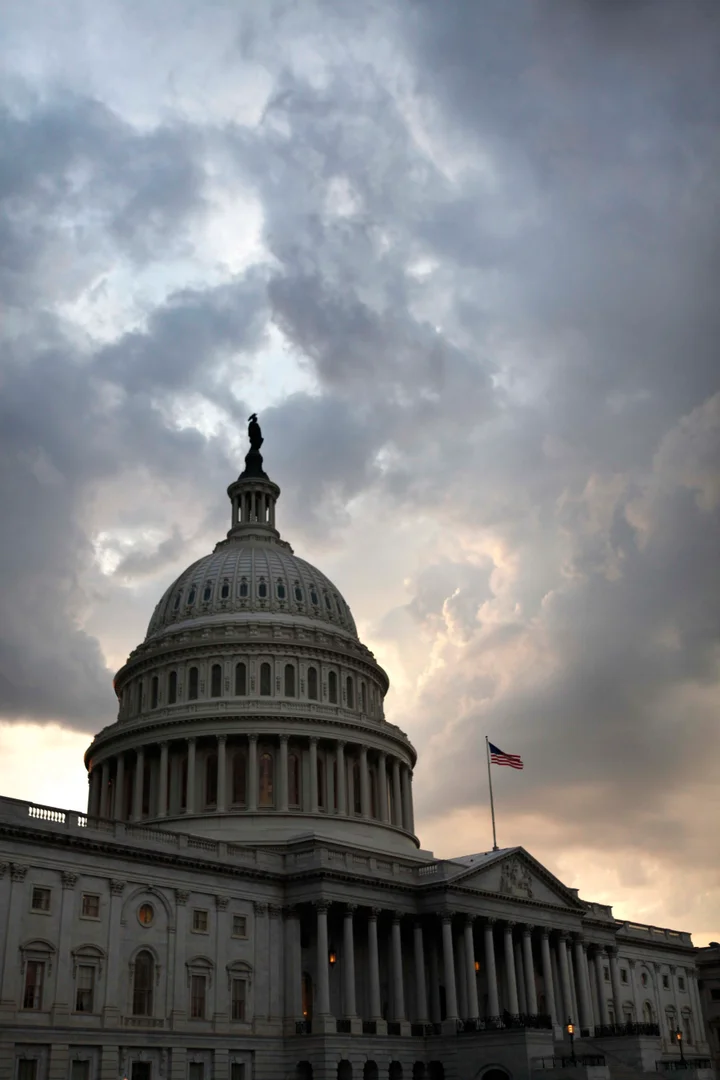
NEW YORK -- With the United States government now shorn of its top credit rating by Standard & Poor's, experts are increasingly worried that the American economy is headed back into recession, while Europe appears vulnerable to another shock.

The announcement that the rating agency had reduced the U.S. government's AAA rating for the first time in history came after days of punishing declines in the stock market, and has now cast a shadow over economic prospects in the months ahead. A recent stream of indicators has provoked concern that the economy could be headed for another recession, with the growth rate slowing considerably, unemployment stubbornly elevated and the stock market swooning. Some experts say the downgrade could be the final trigger, making credit more expensive and sowing broad unease.

"People will be pulling money out of equity markets, out of commodity markets, and putting it into cash -- essentially, stuffing money in your mattress," said Andrew Lo, a professor of finance at the MIT Sloan School of Management, in an interview Saturday. "This is the worst thing to have happened, given the weak economy we already have."

"Some straw has to break the camel's back," he added. "This may be the straw."

The psychological impact of the downgrade might cause stocks to fall Monday and could exacerbate the sovereign debt crisis in Europe, experts say. Over time, it could raise the interest rates on 10-year and 30-year Treasury debt, making it more expensive for the federal government to borrow money, further worsening the deficit. The downgrade could also push up the cost of loans that are tied to the Treasury rate, making it more expensive for Americans to get funds to buy a car or a house.

The effects could reach Europe, where nations that share the euro currency are contending with a debt crisis that seems to deepen by the week. While S&P didn't announce plans to reduce the ratings of European countries following its U.S. Treasury downgrade, experts said European downgrades might be inevitable, to maintain consistency in the rating system. That in turn could spark a new round of panic.

S&P's decision comes at a time of critical economic weakness, as the American economy seems increasingly vulnerable to another contraction just two years after the official end of the recession that began in December 2007. Gross domestic product grew at an annual rate of just 0.85 percent in the first half of the year, the government announced in July. Seen in relation to population growth, GDP actually shrank in the first three months of the year.

After other data releases showed the manufacturing sector weakening and consumer spending drying up, the Dow Jones Industrial Average lost 513 points on Thursday, in the biggest one-day drop since the depths of the financial crisis.

It remains unclear what the precise effects of S&P's downgrade will be, or when they might materialize. Some experts believe the global economy will be able to absorb the downgrade without much turmoil. But others, like Lo, take a more pessimistic view.

S&P laid blame for its decision to assign the AA+ rating directly on the political process in Washington. Even though lawmakers reached a decision on Aug. 2 to raise the government's debt ceiling and avoid a potentially disastrous default, the deficit-reduction package that accompanied the deal won't sufficiently improve the government's fiscal health in the coming years, S&P said in a release Friday. A factor in that projection, S&P said, is that Republicans seem unwilling to allow the Bush-era tax cuts to expire.

"The majority of Republicans in Congress continue to resist any measure that would raise revenues, a position we believe Congress reinforced by passing the act," S&P said.

The ratings agency said political dysfunction provoked the downgrade, noting that Congress seems to lack the ability to aid the weakening economy. And now, as S&P acknowledged, the downgrade might introduce a new source of strain.

"The political brinksmanship of recent months highlights what we see as America's governance and policymaking becoming less stable, less effective, and less predictable than what we previously believed," the company said. "The statutory debt ceiling and the threat of default have become political bargaining chips in the debate over fiscal policy."

Although interest rates on long-term U.S. Treasury debt might rise as a result of the downgrade, rates on short-term debt could fall, as investors throw money at safe-haven assets. The yields on Treasury bills, which have the shortest lifespans of the government's debt securities, could fall below zero, if investors turn to U.S. debt that is keeping its rating intact.

Interest rate movement in bond markets, moreover, might be minimal at first. Investors' attitudes about the economy influence their demand for Treasury debt; with the outlook grim, investors have been fleeing from risk, eager to lend money to the U.S. government and happy to accept low compensation. Yields on 10-year Treasury notes neared 2.4 percent, a low not seen since last fall, as the Federal Reserve was beginning a second massive economic stimulus.

But over the next few years, yields on a variety of investments that are influenced by the Treasury rate might rise, implying that a whole range of assets would be treated as riskier.

"When there's more demand for credit, that's when we're likely to see a re-pricing of risk," Mark Vitner, a senior economist at Wells Fargo, said Saturday. "In the very near term, our borrowing costs are going down, due entirely to economic weakness."

In the coming week, the downgrade could cause a period of selling, as investors shun risk. Stocks, commodities and the U.S. dollar might all take hits in the coming days, experts said.

Over time, a downgrade could increase the federal government's cost of borrowing by $100 billion a year, said Terry Belton, global head of fixed income strategy at JPMorgan Chase, in a conference call last week.

As the federal government reduces spending, the fiscal health of states and localities could suffer. Many cities depend on states for aid, and some states in turn depend on the federal government. If those governments face increased strain over the coming years, their credit ratings could also be vulnerable.

In a July report, S&P said there are certain ratings that "move in lockstep" with the U.S. sovereign rating. Those include home loans backed the federal government and the debt of government-related entities. The mortgage giants Fannie Mae and Freddie Mac might see their ratings docked.

And more sovereign downgrades could follow, experts said.

"If the U.S. Treasury is not AAA, it's hard to justify anyone else being AAA," said Matt Fabian, managing director of the Concord, Mass.-based Municipal Market Advisors, in an interview Saturday. "France, or Microsoft, or some of the muni issuers like Utah or North Carolina -- it's hard to see them as AAAs if the feds aren't."

With a crisis building in Europe, sovereign downgrades on the continent could push markets to a breaking point, said Lo, of MIT. Borrowing costs for the economically weaker nations that share the euro have skyrocketed in recent weeks, with jittery investors fearful of widespread panic. On Thursday, a subtle implication in an announcement from the European Central Bank was enough to spark a temporary sell-off of Italian debt, and cause a plunge in the Italian stock market.

If S&P does not downgrade other governments, the logic of its rating system might fall apart, Fabian said.

"They would just be accelerating the demise of ratings," he said in an interview late last month. "They are reducing the utility of their own product."

FOLLOW HUFFPOST BUSINESS
Subscribe to the HuffPost Money newsletter!
NEW YORK -- With the United States government now shorn of its top credit rating by Standard & Poor's, experts are increasingly worried that the American economy is headed back into recession, while E...
 
 
  • Comments
  • 22,997
  • Pending Comments
  • 0
  • View FAQ
Comments are closed for this entry
View All
Favorites
Bloggers
Recency  | 
Popularity
Page: 1 2 3 4 5  Next ›  Last »  (319 total)
05:47 PM on 08/16/2011
I'm amazed that the super brains that run our government still believe that we came out of the recession two years ago. They must only see the auto manfacturers and bankers balance sheets. after the bail out The midddle class has been hurting without a break sense the housing bubble burst. Thr S&P down graded us because we refused to correct our continuing spending benge without any responcible reduction to our debt. Anybody that thinks will understand that the S&P sounded a wake up call. Now the S&P will be the new kicking post on the blame game. Time to get responcible leadership.
08:04 AM on 08/12/2011
Like others, I too have been experiencing my own credit downgrade. No headlines, no hearings.
HUFFPOST SUPER USER
sachfoxo
OPTICIAN , MUSICIAN , MAGICIAN
04:15 PM on 08/11/2011
Thank You
10:45 AM on 08/09/2011
So AA+ is the new AAA. No biggie.
09:18 PM on 08/08/2011
If only Michelle Bachmann had been president and the Tea party had been a little more powerful, and the US hadn't raised the debt ceiling and we'd defaulted, everything would be sooooo much better.

NOT.
HUFFPOST SUPER USER
icemanbill23
05:44 PM on 08/09/2011
No, not better immediately but at least America would have taken their medicine with some prospect of recovery in the distant future. Treatment for a terminal disease is never pleasant.
05:49 PM on 08/16/2011
Gosh there are some Huffpost readers who understand the problem. To both of Thank you.
07:18 PM on 08/08/2011
LEAST I'LL GET A GREAT PRICE ON STOCKS TOMORROW! BECAUSE ALL THE RICH PEOPLE TRUSTED THE S&P THANK YOU:)
This user has chosen to opt out of the Badges program
photo
06:48 PM on 08/08/2011
What, exactly, has happened since Friday?
S&P lowered the US credit rating.
The Dow tanked.
Did the electric power grid in this country suddenly shut down? Did Ford or Boeing or WalMart shut their doors and lay off all of their employees? How about any of the companies whose stocks make up the Dow or the S&P 500? Did they shut their doors over the weekend and lay everyone off? Did your local supermarket suddenly run out of food? How about your car? Did it suddenly die on the road and fall apart?
HELL, NO.
Our government is as $crewed up as it's been for the past few years but the country is still plodding along and paying our bills.
A year ago today, the Dow was 200 points lower than it closed today. 18 days later it tanked at just under 10,000. And within a month after that it had topped 10800 and was on its way back up.
This is a stampede of the sheep on Wall Street goaded on by the stockholders who expect everything and want to risk nothing. For them it's time to bail out. But there are still wolves out there who will wait until the sheep slow down and will start to buy like crazy.
One more thing- these folks don't do anything for the economy except exchange pieces of paper. They didn't produce a dam thing that wasn't here yesterday.
photo
HUFFPOST SUPER USER
ctheleroys
Voteforthepeople!
03:11 PM on 08/09/2011
The layoffs will come soon enough. Food,gas,rents all just went up in price. Banks just went up on credit card and mortgage interest rates because you know all they need is a glimmer of a reason to do so. I'm sorry. Am I sounding a little bitter? I am tired of others running my personal finances into the ground and laughing all the way to (stock) market.
This user has chosen to opt out of the Badges program
photo
03:39 PM on 08/09/2011
Nope. Not sounding bitter at all. Just stating facts as you see them.
My major point was the stock market panic. There was no need for it and no rationale behind it. The government's credit rating was downgraded, not the businesses.
This comment has been removed due to violations of our [Guidelines]
03:16 PM on 08/08/2011
Blaming the teaparty for the country's credit downgrade is tantamount to blaming your doctor when he finds a problem during your physical. Who in their right mind thinks that borrowing more solves anyone's credit problems.

If your household income was 3 K a month and your spouse was spending 5 K a month what would you do ?

A. Beg credit card companies for higher credit limits ? ( our present solution )
B. Work 3 jobs to increase revenue ? ( Dems solution raise taxes )
C. Balance your income to your expenses ( Gee what a novel concept )
D. Blame others but do nothing constructive ( White House solution )

If all of us ran our household budget the way the government does there would be no credit. Why does Congress even bother establishing a debt limit ? They have approved every request for it to be increased. Now we are supposed to blame the very people who alerting us to this.
What ever happened to common sense ?
04:00 PM on 08/08/2011
waaa waa waa~!
07:34 PM on 08/08/2011
f/f
03:02 PM on 08/08/2011
If two people are running down the street and they stop, how can you tell which one is the Tea Party supporter. Answer, He's out of breath but wont breath!
photo
4QDC
Bring it on Hoffa!
11:18 PM on 08/16/2011
What does that even mean? That makes no sense whatsoever. Seriously ... get a joke writer at the very least.
12:14 PM on 08/17/2011
Oh, you liked it that's why you read it and responded to it. In addition you have to a least have some intelligence to get any joke, and obviously you good person do not.
02:49 PM on 08/08/2011
All of this as a results of the actions of the Republicans and Tea Party idiots, Check out the quote from S&P on the reason for the Downgrade.

S&P laid blame for its decision to assign the AA+ rating directly on the political process in Washington. Even though lawmakers reached a decision on Aug. 2 to raise the government's debt ceiling and avoid a potentially disastrous default, the deficit-reduction package that accompanied the deal won't sufficiently improve the government's fiscal health in the coming years, S&P said in a release Friday. A factor in that projection, S&P said, is that Republicans seem unwilling to allow the Bush-era tax cuts to expire
04:50 PM on 08/08/2011
You hit it right on the head. The Republicans came out right after the last election and made it clear they would not agree with anything the democrats put forth. We need cuts and I believe we can afford it easily because of all the waste but we also need to increase revenue which the republicans won't allow. It's time for the wealthy to start paying. they've had a free ride long enough. Clearly the theory of "trickle down economics" was a lie since all it managed to do was create a whole generation of greedy and corrupt americans. The money never trickled any further than their own wallets. We have to cut the budget AND increase revenues. Once our debt is paid then we can afford the pet projects and social programs but not until then. Both sides have to give. As a hard working middle class woman, I'm tired of carrying the load for the poor and the rich. WE THE PEOPLE have to stand up and tell our elected officials they work for us and either get the job done right or their fired.
08:23 PM on 08/08/2011
fedupperiod, I agree with much of what you've wrote, but as a student of economics, I understand that we can not cut ourselves to prosperity. A healthy economy depends on money circulating throughout the system, the lack of will kill growth in the short and long run. Giving tax cut's to people who will not spend it does us no good, if the people who received thse cut's were spending that money right here in America, I'd say give them more, but over the last 10-years of the cut's they have not.

These are facts documented by economic history. You can see if for you'r self, just goggle economic trend lines dating back to say 1900. It may not be the most exciting read but much can be learned about our macro, and micro systems.
07:37 PM on 08/08/2011
The political process where Harry Reid refused to even debate Congressional bills, S & P said that if the Paul Ryan budget had passed this would not have happened. Harry Reid is the fulcrum upon which our economy, and maybe the world's, teeter totters.
08:28 PM on 08/08/2011
You didn't read the report did you. Had the Ryan idiot budget been passed, further cutting money from the system, all of the rating agencies would have made down grades. This is what S&P really said, and it had nothing to do with debt, it had to do with the obstructionist politics of the Tea Party.

"S&P laid blame for its decision to assign the AA+ rating directly on the political process in Washington­. Even though lawmakers reached a decision on Aug. 2 to raise the government­'s debt ceiling and avoid a potentiall­y disastrous default, the deficit-re­duction package that accompanie­d the deal won't sufficient­ly improve the government­'s fiscal health in the coming years, S&P said in a release Friday. A factor in that projection­, S&P said, is that Republican­s seem unwilling to allow the Bush-era tax cuts to expire”
02:47 PM on 08/08/2011
DOWN GRADE THE S&P! GET RID OF THE BS THEY NEED TO KEEP THERE MOUTHS SHUT. BLAME THE S&P. BET THERE PPL ARE BUYING STOCK AT A LOWER PRICE LMAO!
photo
HUFFPOST SUPER USER
Tanya OaksBrooks
Sarcastic, left-wing, science-loving rocker chick
09:19 PM on 08/08/2011
It's a shame there is no "flag as nothing but babbling nonsense" button.
11:45 AM on 08/08/2011
As long as recent history has not already been rewritten, we all remember that Obama and Boehner had worked out a deal to cut 4 TRILLION in spending AND increase revenue by revamping the tax code to eliminate corporate loop holes and raise taxes on the wealthy. It was my understanding that the Tea Baggers would not sign off on any deal that would make the tax code more equitable or raising any taxes. I know I heard about that "deal" more than once. And it didn't get done. Why? Tea Baggers. That's it. Plain and simple. What more is there to discuss on this? Any one making this anything other than the Tea Baggers EXTORTING the citizens of this country because of their ideology is just making this too complex. It was and is that simple.
photo
HUFFPOST SUPER USER
Reno Fickler
Head Lifeguard/Dead Sea Marina
11:36 AM on 08/08/2011
Sorry HP, I didn't need a 'credit down-grade' to ascertain the financial status of America (and me).
Just got my monthly bank statement, thank you.
02:50 PM on 08/08/2011
Blame your Tea Party and Republican friends for this mess!
04:54 PM on 08/08/2011
Absolutely!!!!!!!!! I have a better idea. let's take anyway all their tax loopholes and subsidies and make them pay their fare share of the load for a change.
photo
CrnkyOldMan
I'll accept Co's as people when TX executes one
10:48 AM on 08/08/2011
Way to go Baggers! You made a crisis, refused to negotiate, and continue to ruin the economy….right on schedule. Keep licking those boots!
11:14 AM on 08/08/2011
They didnt cut enough, try reading once in awhile
photo
HUFFPOST SUPER USER
stape45
No brag, just fact.
11:54 AM on 08/08/2011
Have you read about a decade of insufficient revenues yet? We can't cut our way to prosperity anyway. (Rocket Science 101)
photo
SunnyDaySam
To Err is Human, to Forgive is Canine
01:09 PM on 08/08/2011
Wrong. You read the report:
"our revised base case scenario now
assumes that the 2001 and 2003 tax cuts, due to expire by the end of 2012,
remain in place. We have changed our assumption on this because the majority
of Republicans in Congress continue to resist any measure that would raise
revenues, a position we believe Congress reinforced by passing the act."

page 4: http://www.ft.com/cms/af2c4fac-bfc2-11e0-90d5-00144feabdc0.pdf