
"Here's the big secret that no one wants to talk about: We're not very good at keeping what's inside a cow's intestines out of the meat."
The roomful of young doctors at Oakland Children's Hospital chuckled as retired cardiologist Jeff Ritterman whispered audibly, his hand hiding his mouth. He went on to explain in less dramatic fashion how the widespread use of antibiotics to treat sick livestock, prevent the spread of disease in cramped conditions or simply promote animal growth has fueled the proliferation of antibiotic-resistant bacteria that is now making many infections in humans harder to treat.
Some human infections now resist multiple antibiotics; the pathogens include methicillin-resistant Staphylococcus aureus (MRSA), a pathogen responsible for taking more lives each year than AIDS.
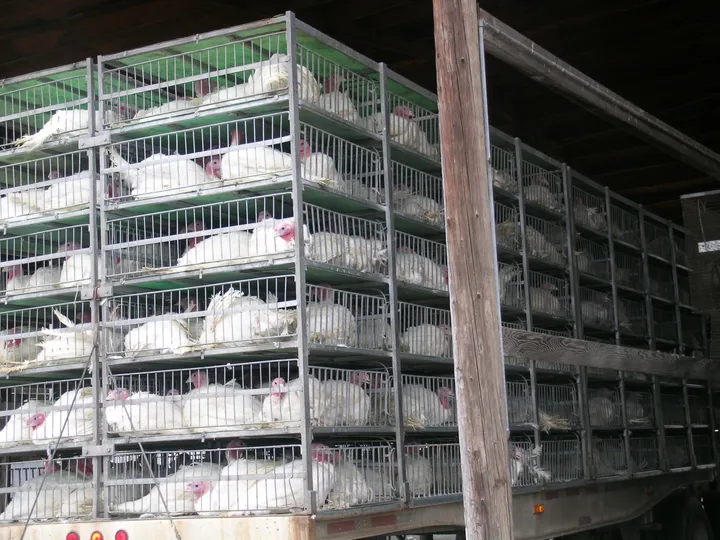
Earlier this month, stores and consumers across the country discarded 36 million pounds of ground turkey in the second-largest recall in U.S. history. More than 100 people became sick from the salmonella-tainted meat; at least one person died.
The firms feeding animals antibiotics question direct links to such outbreaks, but these kinds of tragedies come as little surprise to the medical community, which has long been confronted with the consequences of antibiotic resistance. "Everyone has seen cases of MRSA. Every doctor is schooled in how many seconds to wash their hands, and nurses are told to get rid of their nails," Ritterman, now a city councilmember in Richmond, Calif., told The Huffington Post. "It's a helpless feeling when your patient dies of an infection that you can't cure."
More than 75 years after antibiotics first debuted as the miracle cure, treating an infection today often requires greater doses, a second drug or even riskier options.
"Antibiotics are probably as big of an advance in medicine as there has ever been," Ritterman said. "We are undoing our greatest achievement."
Eating contaminated meat is not the only route to an antibiotic-resistant infection. Contact with animals, meat or milk -- and even exposure to bacteria via the air or water -- can pose a public health threat. Of course, blame has also long been directed at the widespread use of antibiotics within medicine.
Doctors have begun limiting the antibiotic prescriptions they write, aware that misuse or overuse of the drugs enables antibiotic-resistant bacteria to proliferate faster than their antibiotic-susceptible counterparts. In other words, what doesn't kill them makes them stronger -- potentially turning them into "superbugs" that can outsmart medicine's current range of weaponry.
But while most doctors are familiar with the growing threat of antibiotic resistance, fewer are aware of the shared responsibility of agribusiness.
"That part of the antibiotic resistance story is largely hidden for docs," said Ritterman, adding that he was shocked upon first hearing that 80 percent of the nation's antibiotics go to livestock.
Doctors are learning, though, thanks partly to programs like the one at which Ritterman spoke, as well as a growing number of environmental health workshops and online modules. More clinicians now know, for example, that antibiotics approved by the U.S. Food and Drug Administration for growth promotion in the early 1950s remain a huge part of the nation's livestock industry even though the government acknowledged the attendant health risks to humans more than 30 years ago.
According to the FDA, about 90 percent of the antibiotics consumed by livestock are given to them via animal feed or water. Critics suggest that most of these drugs are used at low doses to bulk up the animals, speeding them to market. Exposure to antibiotics at levels insufficient to kill the bacteria are more likely to result in antibiotic resistance.
Many in the food-animal production business beg to differ. Richard Carnevale, vice president for regulatory, scientific and international affairs at the Animal Health Institute, which represents pharmaceutical companies, argued that using the drug in the feed doesn't necessarily mean that it is being used "sub-therapeutically".
"We don't really think that the antibiotics given to animals in feed are big contributors to the problems in human medicine," Carnevale said. Nearly half of the antibiotics used in agriculture, he said, are not even part of human medicine's antibacterial arsenal.
"Antibiotics are used to keep animals as healthy as possible, and healthy animals are at the base of a safe food system," said Carnevale. He added that U.S. producers are "always looking for ways to change the way they do things to improve animal health," but that removing antibiotics would "increase production costs."
While the battle wages in the United States, other countries including the entire European Union have banned the use of antibiotics for livestock growth promotion. The industry appears to be holding up just fine as resistance rates drop, according to recent Danish studies. Further, a U.S. study published last week in Environmental Health Perspectives found that going organic and stopping the use of antibiotics resulted in quick and significant reductions in antibiotic resistance.
Lucia Sayre, co-executive director at the San Francisco Bay Area chapter of the advocacy group Physicians for Social Responsibility, says tapping the power and respect of the medical community can provide the necessary boost to change the food industry.
"Nobody believes anyone more than their docs and nurses," Sayre said, citing a recent Gallup Poll that found 70 percent of people trusted their doctor's advice without a second opinion. "We're trying to max their voice."
And when physicians and nurses realize that efforts in the doctor's office are not enough, she added, many -- like Ritterman, the retired cardiologist -- are eager to be vocal, whether educating patients and fellow doctors or advocating for regulatory reforms.
"A doctor may be able to help individuals in their office, but changes in policy can lift the health of an entire population. We need to really advance American medicine to the policy stage," Ritterman said. "Doctors are trained to see the world through a health lens. Politicians, businessmen and economists are not."
Entire hospitals are also in on the effort. Many have adopted the concept of "Meatless Mondays" -- using the money they save on Monday to buy grass-fed meat for Tuesday, for example. Many offer a variety of alternative sources of protein such as tofu and lentils. Fletcher Allen Health Care in Burlington, Vt., serves an estimated 2 million meals a year to patients, visitors and employees. Among other healthy improvements to their menu, they have been phasing out foods produced with non-therapeutic antibiotics antibiotics. Today, about 90 percent of their beef meets this goal.
"I kept seeing more and more cases of antibiotic resistance at the hospital. It doesn't make sense to keep doing it the way we're doing it, not to mention that cases of resistance are costly," said Diane Imrie, director of nutrition services at Fletcher Allen. A study published in the journal Clinical Infectious Diseases in 2009 found that antibiotic-resistant infections cost U.S. hospitals more than $20 billion annually.
Food and beverages mean big business in the health care sector, totaling about $14 billion a year. "Through a combination of clinicians talking to patients about personal choices and getting institutional purchasers like hospitals on board, I believe we can really change the food system," said Sayre, who helps coordinate a healthy-food campaign that includes nearly 350 hospitals, including Fletcher Allen.
Sayre has also helped coordinate physicians in their push for new federal environmental health legislation. More than 1,000 signatures have been collected for the Preservation of Antibiotics for Medical Treatment Act, introduced in March after getting buried in Congress in 2007 and 2009. Another 378 groups have now endorsed the bill, including the American Medical Association and the American Academy of Pediatrics.
"Antibiotics are one of the most useful and important medical advances in recent history. Their effectiveness, however, is being compromised by bacterial resistance, arising in part from excessive use of antibiotics in animal agriculture," wrote Michael D. Maves, executive vice president of the association, in a letter of support for the legislation.
Meanwhile, the FDA has issued a draft of "Guidance on the Judicious Use of Medically Important Antimicrobial Drugs in Food Producing Animals." The agency is currently reviewing comments and determining next steps, according to FDA spokeswoman Stephanie Yao, who said that while there is no estimated timeframe for implementing final recommendations, the agency is making it a priority.
The Centers for Disease Control and Prevention also puts the issue "among its top concerns." And in June, a U.S. Department of Agriculture contractor reviewed the science and concluded that there is a strong link between rising cases of resistant infections and antibiotic use on factory farms. But as Mother Jones reported at the end of July, the "blunt" report disappeared shortly after it was posted on the Internet. (The Union of Concerned Scientists managed to recover a cached link.)
A USDA spokesman said that the document had been "removed because it was published without the review required by USDA departmental regulations to ensure objectivity, accuracy, reliability and an unbiased presentation." Yet Mother Jones pointed to an earlier Dow Jones story that quoted a USDA spokesperson saying that the more than 60 studies compiled in the report were all from "reputed, scientific, peer-reviewed and scholarly journals."
As the U.S. government stalls, other countries are moving ahead. Denmark, the world's leading exporter of pork, began phasing out non-therapeutic use of antibiotics more than 15 years ago.
And empirical evidence suggests that the pigs are at least as healthy as ever, according to Frank M. Aarestrup, the head of the European Union Reference Laboratory for Antimicrobial Resistance and a member of the World Health Organization Collaborating Center for Antimicrobial Resistance in Foodborne Pathogens at the National Food Institute.
"An early 'unscientific' estimate from the Danish agricultural industry identified increased mortality and reduced growth in piglets, while poultry and slaughter pigs were completely unaffected," Aarestrup, who is based at the Technical University of Denmark, wrote in an email. "More recently we have made a more thorough scientific analysis of the effects on the productivity and basically found no or in fact perhaps even a positive effect of the restriction."
AHI, the pharma lobbying group, sides with the initial analysis of Denmark’s antibiotic use. "The data doesn't show any indications that they’ve had any impact on patterns or levels of human resistance," Carnevale said. "It's also clear that animal health has been negatively impacted. The use of antibiotics to treat disease has more than doubled as a result of health problem had in animals."
"There was unfortunately no systematic monitoring in humans before the restrictions. Thus without a baseline it is difficult to give hard facts," Aarestrup conceded. "At least we have documented a major effect on reducing resistance in food animals and food products."
Many U.S. experts on antibiotic resistance are frustrated that it has taken their country so long to take action. The FDA expressed their concern regarding the severity of the problem as early as the 1970s, and Ellen Silbergeld, a professor at Johns Hopkins School of Public Health, suggested that the dangers have been obvious for far longer.
In 1945, upon accepting his piece of the Nobel Prize in Medicine for the discovery and isolation of penicillin, Scottish biologist Alexander Fleming delivered an ominous warning. "The time may come when penicillin can be bought by anyone in the shops. Then there is the danger that the ignorant man may easily underdose himself and, by exposing his microbes to non-lethal quantities of the drug, make them resistant," said Fleming, who had observed antibiotic resistance in his lab.
His warning went largely unheeded. Soon after, the FDA approved use of the drugs in livestock feed, and the effectiveness of penicillin quickly plummeted.
In a May 2011 lawsuit filed against the FDA for failing to curtail antibiotic use in animal feed, the plaintiff, the National Resources Defense Council, an environmental advocacy group, cited research suggesting that nearly half of the meat and poultry products in the U.S. contained drug-resistant strains of Staphylococcus aureus -- of which more than half were resistant to multiple classes of antibiotics.
It is "all about the genes," Silbergeld said. "Bacteria are much smarter than we are. We should be thinking of them as masters of cloud computing, as they can access the entire genetic knowledge within their species."
When a person is treated for an infection by a strain of pathogenic bacteria, Silbergeld said, the bacterial target of treatment has access to the entire bacterial community in the gut and its genetic resources for resisting antibiotics. This sharing, or "horizontal transfer" of genes, is highly efficient. As a result, she said, bacteria that had never been exposed to antibiotics could become resistant to them.
Even the genes that bestow drug resistance to some sexually transmitted gonorrhea infections can be found in E. coli and other bacteria of the intestinal tract, noted Stuart Levy, a Tufts University microbiology professor who focuses on antibiotic resistance. The first “superbug” strain of a sexually transmitted disease was reported in July, after researchers discovered that none of the currently recommended treatments would kill the bacteria.
"Gonorrhea didn’t invent its own resistance," Levy said. "It picked it up from other bacteria thanks to the misuse of antibiotics."
Yao, the FDA spokeswoman, said the public health issue is further compounded by "the fact that the development of new antimicrobial drugs is not keeping pace with newly emerging drug-resistant pathogens." Newer sources of antibiotics are harder to find and therefore not always cost-effective for the pharmaceutical industry to pursue.
Drugmakers acknowledge this shortfall. "The clinical need for new antibiotics is reaching crisis level, yet the antibiotic pipeline is running dry and fewer and fewer companies are working to develop drugs in this space," Elias Zerhouni, president of global research and development for the France-based pharmaceutical company Sanofi, said in a statement.
"New approaches will be essential if we are to keep ahead of the resistance problems, and they will require a regulatory and business environment that is both public health and market driven that encourages risk–taking and rewards success," Eric Utt, director of medical and science policy at Pfizer wrote in an email.
This effort may be all the more urgent if the political resistance to continues to stymie reform efforts. Public health experts say they hope the influence of the medical community will help advance regulation.
"It's wonderful that physicians are looking at this," said Silbergeld. "Anything that can get the word out about the nature of this real crisis we're in, including the loss of efficacy of our drugs, is crucial."
"At the end of the day," Ritterman said, "determining our policy by what's healthiest for humans, which is also healthiest for animals and the planet, will move us away from a trajectory of destruction and towards one of restoration and nourishment."
Additional reporting by Robin Wilkey