iPhone app iPad app Android phone app Android tablet app More

Keystone XL Pipeline Project: Disappointments All Around

Keystone Pipeline

First Posted: 09/01/11 06:48 PM ET Updated: 11/01/11 06:12 AM ET

Late last month, Rep. Fred Upton, the Michigan Republican who chairs the powerful House Energy and Commerce Committee, laid out what he perceives to be the virtues of the Keystone XL oil pipeline project, which would connect a vast unconventional oil patch in Canada to the Texas Gulf Coast.

"According to the Department of Energy, this one project will 'essentially eliminate' oil imports from the Middle East," Upton said in a CNBC interview. "It will create more than 100,000 jobs and strengthen our relationship with a close ally and trading partner. A project like this should be a no-brainer, and there's simply no good reason it has been stuck in the State Department's red tape for nearly three years."

The project has undoubtedly been stuck. But the rest of Upton's assertions -- the jobs, the reduction in dependence on Middle East oil -- are matters of increasingly heated debate. So, too, are the project's potential environmental impacts.

Indeed, even as current and former federal officials send every signal that the pipeline will get a nod, hundreds of Americans opposed to the pipeline have offered themselves up for arrest in peaceful acts of civil disobedience in front of the White House.

Supporters of the pipeline point to the potential for job creation and freedom from Middle East oil. Opponents fear pipeline leaks and an explosion of greenhouse gases that would arise from the full-tilt development of Canada's unconventional oil deposits.

Both might be a bit disappointed if they get their way.

The Keystone XL venture is a proposed $7 billion, 1,700-mile stretch of pipeline that would carry a form of crude extracted from vast, sticky deposits of sand, clay, water and a gelatinous form of oil called bitumen in what's known as the Athabasca oil sands of Canada to refineries on the Texas Gulf Coast.

When oil prices were low, the vast amount of additional water and energy (and greenhouse gas pollution) needed to scrub and process these sorts of hydrocarbons into something suitable for market was simply uneconomical compared to conventional sources of crude. With oil prices closer to the $100 per barrel mark, the oil sands start looking like a better bet.

Many analysts expect that elevated oil prices are here to stay, so there are clear market drivers at play -- and a shiny new pipeline could translate into jobs. But how many?

The "more than 100,000" number that Upton and others cite has been called into question by critics. It arises largely from a study by the Perryman Group, on behalf of TransCanada, the Calgary-based pipeline company behind the Keystone project. That study concluded that the Keystone XL line would result in nearly 119,000 full-time equivalent jobs.

But Ryan Salmon, an energy policy advisor with the National Wildlife Federation has pointed out that the job estimates associated with Keystone have actually been all over the place -- and in fact, have steadily increased as debate over the project intensified.

Some of the discrepancy almost certainly has to do with the question of direct versus indirect jobs. TransCanada and its supporters like to include the estimated number of ancillary jobs that would be created should the pipeline go ahead -- the retail and service jobs that would presumably spring up to support the direct construction jobs created up and down the pipeline.

But even here, some of the estimates would appear somewhat optimistic. Of the roughly 119,000 jobs the TransCanada/Perryman analysis estimates would be created, for example, only about 29,000 are associated with new construction across all six states through which the pipeline would run. The remaining 90,000 arise from all manner of support industries, from coal mining to insurance jobs -- including some 23,000 projected retail jobs.

Whether or not those are fair extrapolations is a matter of continued debate, but even if the numbers are accurate, other questions remain.

Chief among these involves the assertion that crude from the Keystone Project will "essentially eliminate" dependence on Middle East oil. That talking point first entered the debate via a study commissioned by the Department of Energy and published late last year.

That report, conducted by the research firm Ensys Energy, does say that "a combination of increased Canadian crude imports and reduced U.S. product demand could essentially eliminate Middle East crude imports
longer term." But what's either been lost on or ignored by Upton and others is that this assertion has nothing to do with the Keystone XL pipeline project.

As noted at the time by Liz Barratt-Brown, a senior attorney with the Natural Resources Defense Counsel, the Ensys study instead showed that tough policies aimed at curbing America's appetite for oil -- supported, perhaps, by crude from Canada that will be available regardless of whether the Keystone XL line is built -- would provide the basis for cutting the cord with the Middle East.

Indeed, Ensys felt compelled to issue a clarification on this point:

The EnSys report makes clear that it is the low demand scenario, (which assumes strong policy actions to reduce U.S. oil use), supported by potentially increasing US imports of Canadian crudes, that "could essentially eliminate Middle East crude imports longer term," not the Keystone XL pipeline. As the EnSys report clearly states in its executive summary, the Keystone XL pipeline would not of itself have any significant impact on U.S. oil imports.

That sentiment has been echoed by oil market analysts, including Philip K. Verleger Jr., a senior advisor with The Brattle Group, a major consulting firm. In an email to The Huffington Post, Verleger said Keystone was irrelevant to American dependence on Middle East oil. "The global economy is built on free trade," he said, adding that Keystone's oil would ultimately be sent abroad, either in the form of product exports or crude.

"In time, Canadian producers will recognize their mistake," Verleger said. "Keystone will become the world's longest bowling alley."

Such are the assertions made by a new study, released Wednesday by the green energy advocacy group Oil Change International.

From that report:

The construction of Keystone XL will not lessen U.S. dependence on foreign oil -- rather, it will feed the growing trend of exporting refined products out of the United States, thereby doing nothing to enhance energy security or to stabilize oil prices or gasoline prices at the pump. If completed, it will successfully achieve a long term objective of Canadian tar sands producers--to gain access to export markets.

Among other things, the study points to Valero, a huge exporter of refined petroleum products with a large stake in the Keystone XL project. The analysis asserts that Valero's business model is contingent on receipts of tar sands oil via the Keystone XL that it can then put on the foreign market.

Bill Day, a spokesman for Valero, said this was untrue. "While Valero has said that it is exporting an increasing amount of products, particularly from the Gulf Coast, the volume of exports remains relatively small," Day said. "The vast bulk of our products are made for domestic consumption."

Shawn Howard, a spokesman for TransCanada, was more blunt in his critique of the OIC report -- and of the increasingly vocal opposition in the United States to his company's pipeline proposal.

"This is part of the desperation and misinformation that these groups are going to continue to put out," Howard said. "At some point this ridiculousness needs to stop. We welcome a discussion on whether the pipeline is in the national interest of the United States. We welcome a discussion about safety of our pipeline. But we just wish they would tell the truth.

"We will be carrying U.S. and Canadian crude to a number of refineries in the U.S.," he added, "and the market for that oil is the U.S. East Coast and the Midwest."

But even if that's true, it's worth noting that another Ensys analysis, conducted along with Navigistics Consulting on behalf of the U.S. Energy and State Departments and published in mid-August, looked extensively at oil market scenarios in which the Keystone XL project is mothballed.

The report concluded that the wide range of other options for moving tar sands crude -- from rails and barges, to other existing and proposed pipeline projects -- make the Keystone XL far from an imperative.

From the report:

Again, while it is possible to conceive of a situation wherein one or two large scale developments are prevented, it is correspondingly almost impossible for us to conceive of a situation where a wide range of pipeline expansions/reversals and projects along existing rights-of-way, rail and barge terminal developments and movements in the U.S./Canadian crude oil supply system are all prevented from occurring.

In other words, for good or ill, Canada's so-called dirty oil is likely to get here anyway.

WATCH: Rep. Fred Upton (R-Mich) holds forth on the virtues of the Keystone XL pipeline:

FOLLOW HUFFPOST GREEN

Late last month, Rep. Fred Upton, the Michigan Republican who chairs the powerful House Energy and Commerce Committee, laid out what he perceives to be the virtues of the Keystone XL oil pipeline proj...
 
 
  • Comments
  • 307
  • Pending Comments
  • 0
  • View FAQ
Comments are closed for this entry
View All
Favorites
Recency  | 
Popularity
Page: 1 2 3 4 5  Next ›  Last »  (7 total)
09:18 PM on 10/11/2011
If the oil flowing through the Keystone XL pipeline is for export, then I am against it.
07:58 AM on 09/05/2011
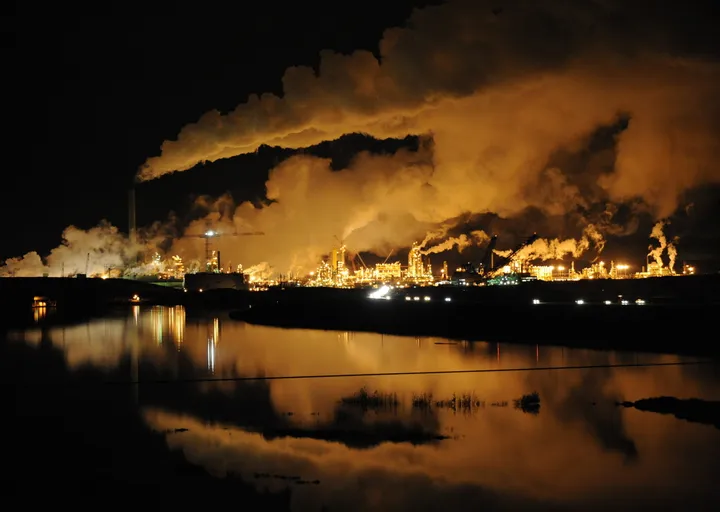
Love the choice of photo used to illustrate a pipeline. You think the author has a "soapbox"?
01:30 AM on 09/05/2011
We need to when ourselves off of oil. All this does is increase our reliance on it. We will never have true alternative energy reform until we stop with this game of cat and mouse. I'm against the pipeline on the aforementioned reasons but also because I don't trust one damn oil company that there won't be spills and that it won't do anything for gas prices. I've always thought if you want to get American's serious about energy reform then tax gas/coal heavily.
08:32 PM on 10/11/2011
How do you feel about paying twice as much for electricity, gasoline, and everything made from plastic?

How you feel about the price of EVEYTHING going up considerably?

How do feel about millions of people losing their jobs and homes because of what you propose?
photo
HUFFPOST SUPER USER
rickthaluddite
What noisy cats are we
03:18 PM on 09/04/2011
The one given that we have is that mining the oil sands will continue in perpetuity. This is where we need to begin this discussion. Are we going to continue at our current pace of get it out of the ground as fast as we can with no real plan for the future. We all see that exxon hypnotist who says there's hundreds of years of oil and blue skies and rainbows forever...
This user has chosen to opt out of the Badges program
12:48 PM on 09/04/2011
The reality is that Canadien tar sands crude is definitely not the "dirtiest" oil that Americans are driving on.

Mature Californian oil fields also require additional energy inputs to extract their remaining crude. Nigerians oil fields are notorious "flarers" of natural gas. Both sources of crude emit more CO2 per barrel than the Albertan oil sands, and both contribute significantly to the American oil market.

Keystone is a focal point not because it is itself a particularly risky project, or because the tar sands are particularly dirty, but because propagandists like Tom Zeller have found them to be a convenient avenue for presenting out-of-context, anti-industrial propaganda. Luckily, "earth worshippers" like Zeller have increasingly less sway among the electorate, and thus projects like this move forward despite his irrational screeds.
photo
HUFFPOST SUPER USER
tooldude
01:32 PM on 09/03/2011
To all of you who are dead set against oil sands products, you are all aware that this oil has been in production for well over 20 years. There is a good chance you have already been using it in one way or another. Canada is your largest supplier of oil. Shame on all of you, burning "dirty" oil.
HUFFPOST SUPER USER
rracer619
09:24 AM on 09/04/2011
Funny thing. This brought back memeories of the great Alaskan pipeline that was supposed to help reduce oil imported from the Middle East some 30-40 yrs. ago. Now it sits rusting and costing huge amounts of money to keep it running. Americans refuse to end their love affair with oil and gas. People don't teach their children to drive only when necessary...only that who cares how much it costs as long as you can get it. Parents give their kids a gas card /credit card and allow them to just drive around aimlessly. They don't really have anywhere to be for any good reason...they're just going because they can.
07:56 AM on 09/05/2011
You need to be called out

"Now it sits rusting and costing huge amounts of money to keep it running."

That is flat out (thing that our President is unfortunately addicted to)
09:42 AM on 09/03/2011
The Holy Grail of the Climate Changers and President Obama, a robust carbon tax, is only two rhetorical questions away:

1) If the solution to too much CO2 in the air is to use less fossil fuels, why is NOT the solution to too much federal debt to use less government?
2) If the optimal amount of CO2 in the atmosphere is 350 ppm (current=389 ppm) because that is the maximum concentration of CO2 that life as we know it can continue, why is 18% of GDP (current =25% GDP) NOT the optimal size of government because that is the size that most likely yields maximum economic growth (of 4.1% historically)?

Google "LMADster" for more info.
annyp
A Canuck, eh!
02:59 AM on 09/03/2011
If the pipeline line is rejected, it will be railed or trucked meaning more jobs for Canada. One way or the other it will be going to Texas.
photo
HUFFPOST SUPER USER
tooldude
01:22 PM on 09/03/2011
Is there a Texas in China? Thats where it will go if Keystone is scrapped. Kittimat already has a deepwater port, and China has heavily invested already.
annyp
A Canuck, eh!
02:06 PM on 09/03/2011
You are probably right about China. I forgot about the Kitimat port. Not worth the fight with the controversy in the US.
photo
HUFFPOST SUPER USER
Steve Lives
The Venus Project ... look it up
02:26 AM on 09/03/2011
How much does it cost to build a refinery? Is it anywhere near 7 billion? I'm not thinking so, so if I'm wrong, my argument may backfire on me. The highest price tag I saw (google) was 4 Billion. So why not build the refinery right next to the oilsands? We are nuking that area anyway, might as well add another bomb, instead of spreading it across 1700 miles.
photo
HUFFPOST SUPER USER
tooldude
01:23 PM on 09/03/2011
You need more than one refinery to process this crude into all its different uses.
photo
HUFFPOST SUPER USER
Steve Lives
The Venus Project ... look it up
03:24 PM on 09/03/2011
OK, but building multiple refineries would still cost less, and provide more jobs here wouldn't it? I don't know, but it seems to me that the pipeline is the most expensive way to do this.
10:03 PM on 09/02/2011
Hmmm... and how much money does Mr. Upton get from Big Oil and Energy...
09:38 PM on 09/02/2011
The Keystone Pipeline is only a disappointment, if one believes that fossil fuels are evil, and won't be used in advanced economies, starting tomorrow !
08:32 PM on 09/02/2011
C+ journalism.

"Both might be a bit disappointed if they get their way. "

One way, two points of view. What are you talking about? How can each get what each wants?

It is a zero sum game. One's gain is the other's loss.

Also, why only video from Upton?
HUFFPOST SUPER USER
Cariboofly
Aye, Ready, Aye & Semper Fi
08:15 PM on 09/02/2011
OK, so the US being dependent on Middle East Oil is eco-friendlier than Alberta oil sands? How so? Don't ships burn dirty old bunker sea oil all the way along and a cross two oceans to get it to the U.S. ? Is oil extraction in the Middle East all that eco-friendly? Add it all up. If we want to play "coulda, woulda, shoulda" then is a pipeline more or less vulnerable to a massive spill and following ecological damage, compared to oil tankers supplying the same amount of crude?
photo
HUFFPOST SUPER USER
Kristopher Leang
training to take down the elite
07:54 PM on 09/02/2011
congradulations canada just created 100,000 american middle class to high paying jobs! we just have to give them our resources!. of course the rippling effect 100,000 paying jobs would have had in canada would have been stupendous for our own citizens. thank you canadian cons who screwed over your grandchildren and future generations. just so you could be fear mongering fascists allowing grumps who had record low tuition costs and good social servies, but now want to "cut them back" particularly the ones they no longer need but used.. selfish people..
09:33 PM on 09/02/2011
Strange comment , indeed. !! Canada is developing it's resources and selling them into the world's best energy market.

Silly Canadians !!!
photo
HUFFPOST SUPER USER
Kristopher Leang
training to take down the elite
09:40 PM on 09/02/2011
best in which way? and how does that address the fact our resources just created 100 thousand. nice dogging. yes silly canadians when we ahve record gas prices, and people are barely getting by. we could help the canadian people easily and still make a nice profit. but logic isn't a conservative trait. nice try though
photo
HUFFPOST SUPER USER
Steve Lives
The Venus Project ... look it up
02:32 AM on 09/03/2011
They could build a modern, efficient refinery right next to tarsands and produce jobs in Canada, for far less. Instead of sending it thousands of miles to 50 year old refineries. Things that make you go, hmmmmmm.
photo
HUFFPOST SUPER USER
tooldude
01:27 PM on 09/03/2011
One of those people who thinks that crude has only one purpose and that is to be turned into gasoline? You need several differnt process facilities to get the full potential out of this product, otherwise you are wasting most of the crudes components.
photo
HUFFPOST SUPER USER
Sam Huston
Fair, Balanced and Informed
07:06 PM on 09/02/2011
If the US doesn't want the oil, I am sure China will take every drop they can get.

If the progressive greenies get their way, America will be transformed into a third world nation within your lifetime. By then Canada will be rounding up and deporting illegal American immigrants seeking work just like we used to do with mexicans before Mr. hope and change came around.
photo
HUFFPOST SUPER USER
tooldude
01:29 PM on 09/03/2011
By then the US will be begging Canada to change her laws and allow fresh water pipelines to be built to the south.