

More

Low Birth Weight Linked To Autism, Study Shows

Birth Weight Autism

Posted: 10/17/11 04:54 PM ET

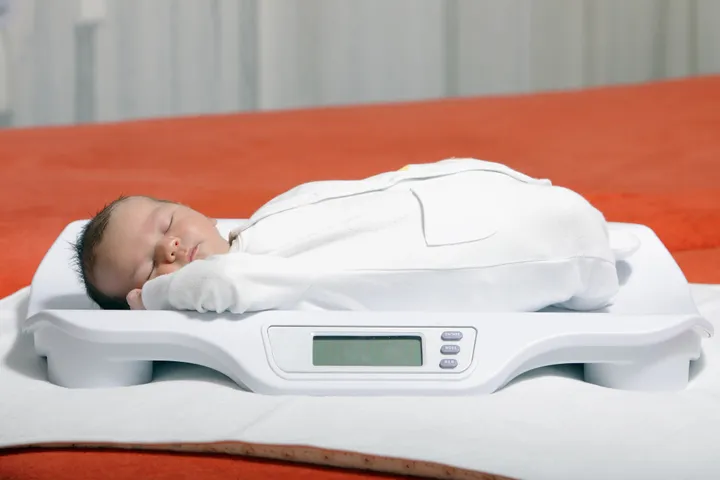
Babies who are unusually small at birth have a higher-than-average risk of developing an autism spectrum disorder (ASD) later in life, a new study in the journal Pediatrics suggests.

Beginning in 1984, researchers followed 1,105 babies who weighed less than 4 pounds, 7 ounces at birth, and they found that 5 percent of them met the criteria for ASD by age 21 -- a rate roughly five times higher than that in the general population of children.

The rate seen in the study is "quite striking" and underscores the importance of screening all children -- especially those who are born at a low birth weight -- for ASD at a young age, says lead researcher Jennifer Pinto-Martin, Ph.D., the director of the Center for Autism and Developmental Disabilities at the University of Pennsylvania School of Nursing, in Philadelphia.


More from Health.com:
Questionnaire May Help Predict Autism at 1 Year
Antidepressant Use in Pregnancy May Up Autism Risk
CDC: Autism, ADHD Rates on the Rise

"Developmental screening is often something that is pushed to the side," she says. "It's important that we do a really good job of screening every single child."

Roughly 3 percent of U.S. newborns fall into the low-weight category used by the researchers (2,000 grams or less). Babies of this size are typically born prematurely, though certain pregnancy complications can also cause low birth weight in full-term babies.

Several previous studies have suggested that underweight or premature infants have a higher risk of autism. As with the new study, however, it's not clear from this research whether low birth weight directly contributes to ASDs.

"For years we have known there's a higher risk of delay and some impairments in some domains of development in low-birth-weight babies," says Diego Chaves-Gnecco, M.D., a pediatrician at the Children's Hospital of Pittsburgh who specializes in development and behavior.

But it's difficult to attribute autism and other developmental problems to premature birth or low birth weight "because so many factors could be involved," says Chaves-Gnecco, who was not involved in the study.

Pinto-Martin and her colleagues periodically screened the children in the study for various developmental disabilities and delays beginning at age 2. When the participants were 16, the researchers screened slightly more than half of them for ASD. About 19 percent screened positive under a broad definition of ASD.

When the kids were 21, the researchers assessed a representative sample and found that 14 of 119 met the formal criteria for an ASD diagnosis. Extending these findings to the study participants as a whole, the researchers estimated the rate of ASD at 5 percent.

By comparison, the Centers for Disease Control and Prevention (CDC) estimates that 0.9 percent of 8-year-olds in the United States have an ASD. (The CDC uses age 8 as an index age for measuring the overall rate of ASD, since most cases are identified by that age.)

"All pediatricians and primary care providers" should be doing the type of screening the researchers used throughout the study, Chaves-Gnecco says. "The earlier the diagnosis, the more intensive the services and the better the prognosis is for the child."

As the study suggests, however, there is a big difference between screening positive for a disability and receiving an autism diagnosis. This study is the first to assess ASD in low birth weight babies using the official diagnostic criteria for ASD.

Low birth weight babies "often have multiple disabilities—cognitive disabilities, hearing and vision disabilities, and motor disabilities -- and all of these can create a positive result on a developmental screen," Pinto-Martin says. "But that doesn't necessarily mean they would get a diagnosis of autism."

Although researchers have yet to confirm a cause-and-effect relationship between low birth weight and autism, the new findings may help explain the recent increase in the ASD rate in the U.S., Pinto-Martin says.

"The number of children with a diagnosis of autism is on the rise and [we] haven't been able to explain why," she says. "It's partly a function of awareness and better diagnosis, but we do a better job of keeping tiny babies alive and this may be one consequence of that."

FOLLOW HUFFPOST HEALTHY LIVING

Babies who are unusually small at birth have a higher-than-average risk of developing an autism spectrum disorder (ASD) later in life, a new study in the journal Pediatrics suggests. Beginning...
Filed by Amanda L. Chan  | 
 
 
  • Comments
  • 16
  • Pending Comments
  • 0
  • View FAQ
Comments are closed for this entry
View All
Recency  | 
Popularity
This user has chosen to opt out of the Badges program
photo
Midnightrain
Hume was the greatest!
11:08 AM on 10/20/2011
The point is that the health of the woman correlates to the health of the infant. The health of a nation correlates to the health of women and children. It is our backward and misguided policies which contribute to adverse health outcomes among our women and children. Low birthweight is mainly caused by premature birth, and premature birth can be prevented by good nutrition and good prenatal care. However, there are also social determinants of health, such as education, income, family and community connectedness, and living in communities of caring and sharing - all of the things that buffer rugged individualism and consumerism. Women and children are increasingly becoming casualties of both of these things - rugged individualism and a consumer-based economy.
photo
HUFFPOST SUPER USER
Num1Christy
Progressive Ohioan
10:32 AM on 10/20/2011
What does this study consider "low birth weight"? So vague...
03:11 PM on 10/21/2011
"Beginning in 1984, researchers followed 1,105 babies who weighed less than 4 pounds, 7 ounces at birth, and they found that 5 percent of them met the criteria for ASD by age 21 -- a rate roughly five times higher than that in the general population of children."

What I don't understand is if they mean just babies born prematurely, babies born full term, or a combination of both, and does the study account for lower weights in multiples?
photo
Achieve Beyond
National Pediatric Therapy and Autism Services Com
10:21 AM on 10/20/2011
This is another of many correlations that will be published on autism in the near future. Autism awareness is growing with the rising amounts of diagnosed children on the spectrum across the country and the new laws being passed for insurance companies to cover autism treatments. With the increases in research on this subject, any sort of loose correlations to a child having autism will be be published until a definitive answer is produced. In the meantime, child evaluations combined with early intervention therapy is the best way to help special needs children on the autism spectrum.

J. Drewes
Bilinguals Inc. / Achieve Beyond Pediatric Therapy
http://www.bilingualsinc.com
11:10 PM on 10/19/2011
"the number of children diagnosed with autism is on the rise and we don't know why." Well, it is finally nice to hear someone admit that there has been a true rise (it's not just "better diagnosing"). I bet the CDC knows why; I'm sure they know why there is such a rise in autism. And of course premies, at a lower birth weight, would have a relatively higher dose of vaccine ingredients. My God, you even give one hour babies hep B vaccines in your country!
VA Jill
Retired RN, Army mom. Bring the troops home!
11:40 AM on 10/18/2011
Gee, and just earlier this week it was hyper-growth in infancy. They have no clue why someone's brain just develops differently and all these conflicting studies are just so much hot air.
02:06 PM on 10/18/2011
My son had hyper growth and he now has autism. His birth weight was normal at 8lbs.
VA Jill
Retired RN, Army mom. Bring the troops home!
06:54 PM on 10/18/2011
And mine, like all my kids, weighed in at around 6 1/2 lbs., did not have hyper growth, and is autistic. They really don't know. Every single study is mostly guesswork. You should know that you can make statistics "prove" anything.
HUFFPOST SUPER USER
onionboy
Blessed are the Cheese Makers
07:31 PM on 10/18/2011
They actually didn't assign causality to the low-birth weight.
HUFFPOST SUPER USER
onionboy
Blessed are the Cheese Makers
06:37 PM on 10/17/2011
This is interesting. One question...if anyone knows the answer. They advocate for earlier screening methods. Is there a validated screening tool earlier than toddler age?
photo
HUFFPOST SUPER USER
syntax facit saltum
We do not live in a 2 story universe
10:17 PM on 10/18/2011
I am just guessing, because this is outside of my field, but I would imagine that joint eye gaze sessions between caregiver and infant (visual pointing and the infant following the eye gaze of the caregiver to a place of joint attention-- that is, successfully establishing joint attention) might play a role in some of the kinds of assessments made at a really young age.
HUFFPOST SUPER USER
onionboy
Blessed are the Cheese Makers
04:21 PM on 10/19/2011
I kind of figured the same. I just wasn't sure if there was actually something established and validated. The earlier an accurate diagnosis can be made, the better; as far as I'm concerned.